
TL;DR

Prime made for students and young adults
- Fast, free delivery for dorm and study essentials
- Prime Video and Amazon Music included
- Member-only deals
A new phone app prototype enables users to objectively track teeth whitening progress via shade scores, potentially transforming home whitening routines. Validation against dental standards is underway.
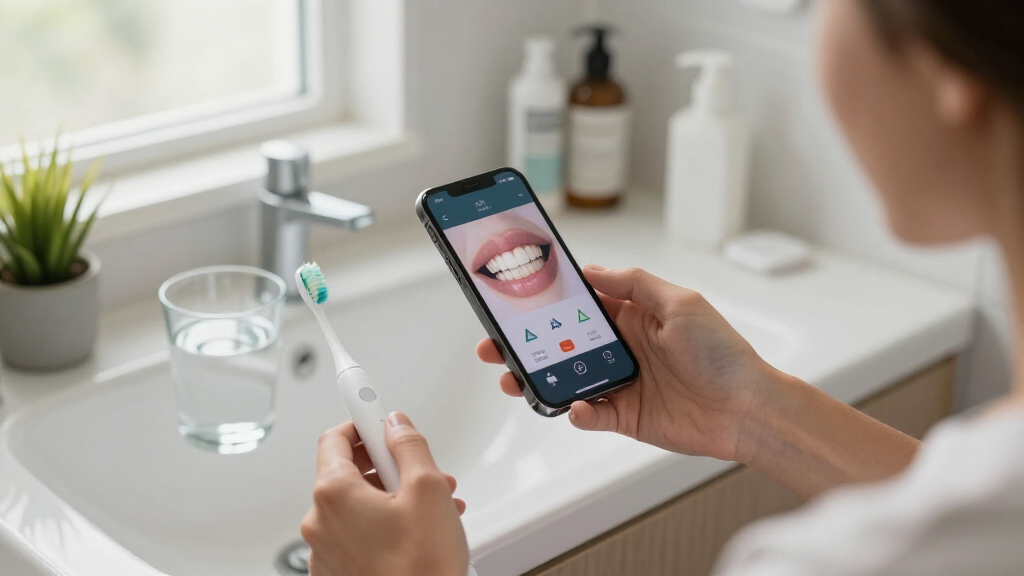
A new application prototype leverages phone cameras and guided lighting to objectively measure tooth shade changes during home whitening treatments, offering a potential breakthrough for consumers seeking reliable results.
The innovation targets **home whitening users** who currently rely on subjective visual assessments in the bathroom mirror, often leading to inconsistent and uncertain outcomes. The app uses guided-lighting and calibrated photo capture to approximate the shade readings typically performed by dentists, aiming to provide an objective measure of whitening progress.
According to developers, the system plots tooth shade scores over time, compares them against the dental shade scale, and tracks which products produce measurable improvements. The initial MVP involves a guided-photo flow that captures images, analyzes tooth color, and displays a score that can be monitored across weeks.
Validation efforts include benchmarking app-generated shade scores against dentist-standard VITA readings in a study involving fifty users. Early results suggest a strong correlation, which could support the app’s use as a measurement layer in the home whitening market. Revenue models include subscriptions and affiliate sales of whitening products proven to move shade scores.
Implications for Consumer Teeth Whitening Effectiveness
This development could significantly improve **consumer confidence** in home whitening by providing objective, measurable results. Currently, many users rely solely on visual cues, which are subjective and often unreliable, leading to repeated product cycles and frustration. An accurate, easy-to-use shade measurement tool could reduce guesswork, optimize product selection, and enhance user satisfaction.
Moreover, the approach could introduce a new measurement layer to the **home whitening industry**, increasing transparency and possibly encouraging product innovation. For companies, validated shade tracking could serve as a competitive differentiator, while for consumers, it offers a more scientific basis for evaluating whitening effectiveness.
As an affiliate, we earn on qualifying purchases.
Growing Demand for Objective Home Whitening Metrics
The global teeth whitening market has expanded rapidly, driven by consumer desire for brighter smiles and the proliferation of over-the-counter products like strips, trays, and LED kits. Despite this growth, there remains a lack of objective measurement tools accessible to consumers, who often rely on visual assessment, which can be inaccurate.
Historically, dentists have used calibrated shade guides like VITA to measure tooth color precisely, but such assessments are impractical for home use. Recent advances in smartphone camera technology and guided-lighting have created opportunities to bring similar accuracy into the consumer space. Several startups and tech companies are now exploring apps that can provide shade scores, but most are still in early development or validation stages.
The current effort by this startup aims to bridge this gap, providing a practical, validated tool for consumers to track their whitening progress objectively, potentially reducing product waste and increasing satisfaction.
“Our goal is to give consumers a reliable, easy way to see real progress in their whitening journey, similar to what dentists do in the clinic.”
— an anonymous developer
home teeth whitening progress tracker
As an affiliate, we earn on qualifying purchases.
As an affiliate, we earn on qualifying purchases.
Validation and Accuracy of Phone Shade Scores
While early benchmarking shows promising correlation with dentist VITA readings, the full validation process is ongoing. It remains to be confirmed whether the app’s shade scores are consistently accurate across diverse lighting conditions, skin tones, and tooth colors. Additionally, the long-term reliability of the system and its ability to detect small shade changes over time are still under evaluation.
Further studies involving larger and more varied user groups are needed before the technology can be widely adopted or integrated into commercial products.
As an affiliate, we earn on qualifying purchases.
Next Steps in App Development and Validation
The development team plans to complete the validation study with fifty users, comparing app scores against dentist assessments. If results are favorable, they will refine the guided-lighting and image-processing algorithms to improve accuracy and user experience. Subsequent steps include pilot testing with commercial whitening products and exploring partnerships with oral-care brands.
A broader rollout of the app as a subscription service could follow, alongside further research into integrating additional features such as personalized whitening recommendations and progress tracking.
As an affiliate, we earn on qualifying purchases.
Key Questions
How does the phone app measure tooth shade?
The app uses guided-lighting and the phone’s camera to capture images of the teeth, then analyzes the color data to assign a shade score based on the dental shade scale.
Is this technology already available for consumers?
No, the system is currently in prototype testing and validation stages. It is not yet commercially available but shows promising potential.
How accurate are the shade scores compared to dentist assessments?
Initial benchmarking indicates a strong correlation with dentist VITA readings, but further validation is needed before widespread use.
Will this app help me choose the best whitening products?
If validated, the app could recommend products based on their proven ability to improve shade scores, making product selection more evidence-based.
What are the limitations of this technology?
Current limitations include sensitivity to lighting conditions, variations in phone camera quality, and the need for further validation to ensure consistent accuracy across different users.
Source: IdeaNavigator AI
Halloween Picks
halloween
As an affiliate, we earn on qualifying purchases.