The ancient Greeks explained nature through myths, attributing thunderstorms to Zeus’s thunderbolts and seasons to gods like Demeter and Persephone. They saw divine forces controlling weather, oceans, and natural changes, shaping the environment with divine intent. These stories helped them understand a unpredictable world without scientific laws. If you want to discover how these myths evolved into scientific explanations and laws, keep exploring how Greek ideas shifted from divine stories to empirical understanding.
Key Takeaways
- Greeks explained natural phenomena through myths attributing events to gods like Zeus and Poseidon.
- Divine control over weather and natural forces shaped their understanding of nature’s unpredictability.
- Myths linked divine actions to natural cycles, such as seasonal changes involving gods like Demeter and Persephone.
- Stories emphasized the active role of gods in shaping the environment, linking divine and physical worlds.
- This mythological perspective preceded scientific laws, serving as early frameworks for interpreting nature.
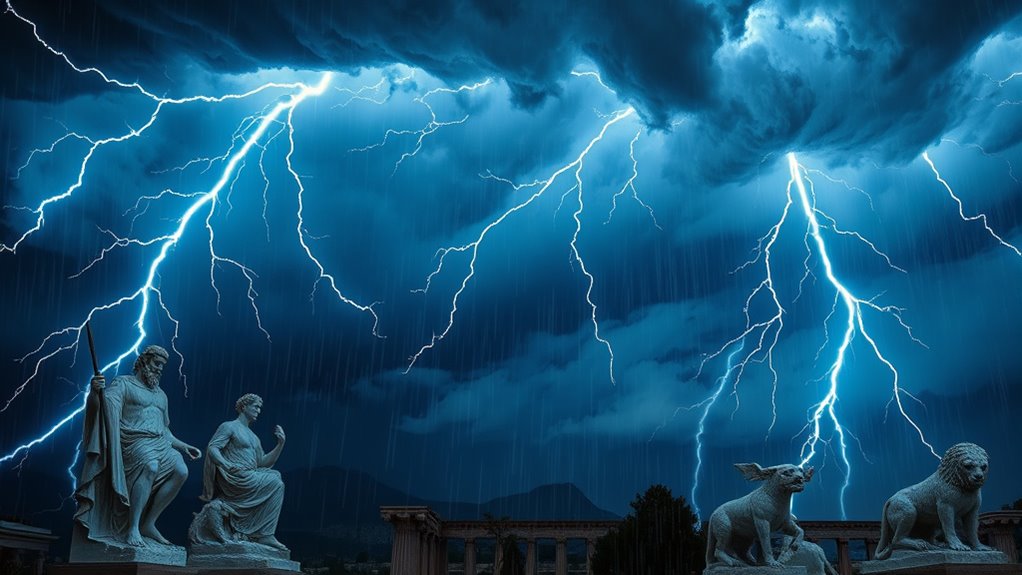
Many Greek myths explain the natural world by attributing its features and phenomena to the actions of gods and mythical creatures. These stories serve as ancient attempts to provide mythical origins for everything around you. Instead of scientific observations, the Greeks relied on divine explanations to make sense of natural events. For example, if you see thunderstorms, you might imagine Zeus hurling his thunderbolts from Mount Olympus, symbolizing his power over the sky and weather. These myths help you understand the world not through empirical evidence but through stories rooted in divine activity. The Greeks believed gods directly influenced natural phenomena, shaping everything from the changing seasons to the flow of rivers. This worldview connected the divine with the physical environment, giving each aspect of nature a divine purpose or origin. Additionally, the Greeks often used myth to explain natural phenomena through divine intervention, emphasizing the active role of gods in shaping the natural world.
In Greek mythology, gods like Poseidon controlled the seas, often causing storms or calm waters through their moods. The sea wasn’t just a vast body of water but a domain governed by divine forces. When sailors faced rough waters, they might have prayed or made sacrifices to Poseidon, hoping to appease him and secure safe passage. These divine explanations provided a framework for understanding the unpredictable ocean, where natural forces seemed beyond human control. Similarly, the changing seasons were explained through stories involving gods like Demeter and Persephone, whose mythological origins connected agricultural cycles with divine actions. These stories offered a sense of order, linking the natural world to the divine domain, and reinforced the idea that gods actively shaped human life and nature.
Frequently Asked Questions
How Did Greek Myths Influence Scientific Thought?
Greek myths influenced your scientific thought by providing mythical origins for natural phenomena, which inspired early explanations of the world. You might have believed divine intervention caused events like thunderstorms or eclipses, shaping your understanding of nature. Over time, these stories encouraged you to seek rational, natural explanations, laying the groundwork for scientific laws. This shift from divine intervention to observation and reasoning marked the beginning of scientific inquiry.
Were All Greek Explanations Based on Myths or Logic?
You’d think every Greek explanation was just myth, but that’s not true. While myth vs. reason shaped much of their thinking, they also used logic and observation to understand the world. Not all ideas depended on divine intervention—some Greeks sought natural laws and rational explanations. They balanced myth with reason, creating a foundation that eventually led to scientific thinking, proving their explanations weren’t solely based on divine stories.
Did Greek Explanations Change Over Time?
Yes, Greek explanations changed over time. Initially, they relied on mythical origins, attributing natural phenomena to gods and legends. As philosophical shifts occurred, thinkers like Aristotle introduced logical reasoning, moving away from myth. This progression marked a significant shift from myth-based explanations to more systematic, scientific ideas, laying the groundwork for modern science. Your understanding of nature evolved from divine stories to rational inquiry.
How Did Greek Ideas Compare to Other Ancient Civilizations?
You’ll find that Greek ideas stand out dramatically compared to other ancient civilizations, especially in their shift from myth to science. While Egyptians relied heavily on myth and supernatural explanations, Greeks emphasized reason and observation, reflecting their unique cultural differences. This scientific approach revolutionized understanding of nature, making Greek ideas more analytical and systematic, whereas others clung to mythic stories. It’s like comparing a grand, mystical tapestry to a clear, logical map.
What Role Did Philosophy Play in Greek Natural Explanations?
Philosophy played a vital role in Greek natural explanations by encouraging you to engage in philosophical inquiry and apply rational reasoning. Instead of relying on myths, Greeks questioned the world around them, seeking logical causes for natural phenomena. Through thinkers like Aristotle and Thales, you learn that philosophy helps uncover principles behind nature, fostering a scientific approach rooted in evidence and critical thinking rather than superstition.
Conclusion
You might be surprised to learn that over 80% of early scientific terms still derive from Greek mythology. This shows how deeply their stories shaped our understanding of nature. From Zeus’s thunderbolts to modern scientific laws, Greeks laid the foundation for explaining the world around you. Their myths weren’t just stories—they were the first steps toward scientific discovery. So next time you hear about a “hydrogen” or “atom,” remember, the Greeks started it all with myth and curiosity.