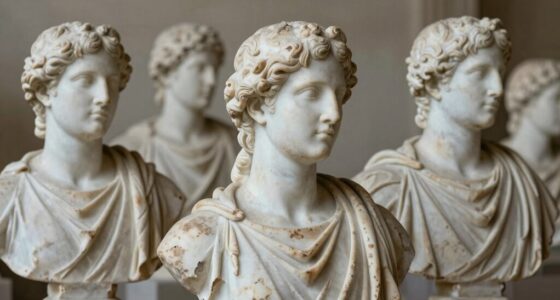

In the Odyssey, women—both divine and mortal—significantly influence Odysseus’s journey. Goddesses like Athena guide and protect him, while Circe and Calypso test his resolve with their magic and temptations. Mortal women such as Penelope embody loyalty and resilience, shaping the hero’s moral strength. Their powers and virtues show how women deepen the epic’s lessons. Keep exploring to uncover how these women’s roles continue to impact Odysseus’s destiny.

Get school and study supplies delivered free — and shop member deals
- Fast, free delivery on millions of items
- Access to Prime Big Deal Days deals on October 6–7
- Prime Video, Amazon Music and more included
Key Takeaways
- Divine women like Circe, Calypso, and Athena significantly influence Odysseus’s journey through guidance, temptation, and protection.
- Goddesses such as Athena provide wisdom and strategic support, shaping Odysseus’s decisions and safe passage.
- Mortal women like Penelope embody virtue, loyalty, and resilience, maintaining moral integrity and emotional strength.
- Divine intervention can be both helpful and treacherous, reflecting gods’ unpredictable influence on mortal fate.
- Women, both divine and mortal, shape the epic’s moral lessons through their virtues, powers, and pivotal roles in Odysseus’s story.

Women of the Odyssey
Who are the women of the Odyssey, and what roles do they play in this timeless epic? As you explore the story, you’ll find that these women are more than mere background figures; they are powerful influences shaping Odysseus’s journey. Mythical heroines and divine interventions intertwine, highlighting their significance in the narrative. These women embody strength, wisdom, and resilience, often acting as catalysts for pivotal moments, revealing the complex ways women influence heroism and fate.
Circe, the enchantress, stands out as a prime example of a mythical heroine. When Odysseus and his men land on her island, she initially appears as a dangerous divine figure, wielding her magic to turn men into pigs. But her role develops into a complex relationship, blending danger with care. She ultimately aids Odysseus, offering guidance and shelter, demonstrating that divine interventions can be both treacherous and benevolent. Her influence reminds you that divine powers can shape mortal lives in unpredictable ways, often testing heroes’ resolve.
Calypso, another divine figure, embodies temptation and longing. She holds Odysseus captive on her island, offering immortality if he stays. Her divine intervention complicates his journey, embodying the gods’ sometimes capricious nature. Despite her allure, Odysseus’s desire to return home underscores the importance of human perseverance amid divine interference. Calypso’s role emphasizes that divine beings can both hinder and help, shaping the hero’s destiny through their choices and whims.
Calypso’s divine temptation tests Odysseus’s perseverance and highlights gods’ capricious influence on mortal fate.
Penelope, the loyal wife, exemplifies mortal strength and wit. While not a goddess, her cleverness and steadfastness influence Odysseus’s path. She resists pressure to remarry, maintaining hope and patience over years of his absence. Her resilience acts as a moral compass, reminding you that mortal women can wield subtle power through intelligence and emotional strength. Penelope’s unwavering loyalty becomes a quiet but potent force, showing how mortal women’s virtues shape the epic’s moral fabric.
Finally, the goddess Athena plays a pivotal role as Odysseus’s divine supporter. Her divine interventions guide, protect, and advise him throughout his voyage. She embodies wisdom and strategic thinking, often intervening to ensure his safe return. Her involvement highlights how divine heroines can act as mentors and protectors, steering mortals toward their destiny. Athena’s presence underscores the profound influence divine beings have on mortal affairs, shaping heroic journeys through divine guidance.
In the Odyssey, women—whether divine or mortal—are essential actors. They influence outcomes, challenge heroes, and embody qualities that shape the epic’s timeless lessons. Their roles reveal that women’s power extends beyond the physical, manifesting through divine intervention, wisdom, and resilience. Recognizing the significance of divine intervention helps deepen your understanding of how these divine and mortal women collectively influence the epic’s enduring message.
As an affiliate, we earn on qualifying purchases.
Frequently Asked Questions
How Did Women Influence Odysseus’s Leadership Decisions?
Women influence your leadership decisions by demonstrating female empowerment and challenging traditional gender dynamics. When Circe and Calypso offer guidance or temptations, you must weigh their insights and power, shaping your choices. Penelope’s loyalty and cleverness also influence your strategy, showing how women’s strength and intelligence affect your journey. Their roles remind you that leadership isn’t just about strength but recognizing the crucial influence women hold in shaping your fate.
What Are the Underlying Themes in Women’s Roles Throughout the Odyssey?
You see, the underlying themes in women’s roles highlight gender dynamics and subtle power struggles. Women in the Odyssey often symbolize influence behind the scenes, shaping events through their intelligence, cunning, and emotional strength. They remind you that, despite societal expectations, women hold crucial power in steering relationships and challenges, quietly asserting their presence and reshaping the course of Odysseus’s journey with grace and strategic insight.
How Do Divine Women Compare to Mortal Women in the Story?
Divine women in the Odyssey often wield power through divine intervention, shaping Odysseus’s fate and guiding him with their supernatural influence. Mortal women, on the other hand, rely on mortal loyalty, offering emotional support and fidelity that affect his journey’s outcome. While divine women manipulate events from above, mortal women’s loyalty grounds Odysseus, highlighting contrasting sources of strength and influence in his adventure.
Which Women’s Stories Are Most Overlooked or Misunderstood?
You might overlook the hidden narratives of women like Penelope and Circe, but their stories reveal powerful female agency. Penelope’s cleverness and faithfulness often get overshadowed by heroics, while Circe’s transformation abilities showcase her strength. Recognizing these women’s roles helps you see their true influence and agency in Odysseus’s journey, emphasizing that their stories are essential, often misunderstood parts of the epic’s fabric.
How Do Women’s Portrayals Reflect Ancient Greek Societal Values?
You might think women in the Odyssey challenge societal expectations, but their portrayals often reinforce ancient Greek values. Ironically, stories of female empowerment are limited, showing women as either divine or obedient figures. This reflects a society that valued female obedience and defined women by their relationships to men. Their roles highlight how Greek society used women to uphold norms, even when they had moments of strength or independence.
As an affiliate, we earn on qualifying purchases.
Conclusion
As you reflect on Odysseus’s journey, remember the women who gently steered his course—each whispering wisdom or offering comfort like a soft breeze guiding a sail. These figures, whether divine or mortal, quietly shaped his path through storms and calm. They remind you that even in the chaos, it’s often the subtle influences—like a whisper or a gentle hand—that lead us toward our destination, shaping stories in ways words cannot always express.
divine intervention in Greek mythology
As an affiliate, we earn on qualifying purchases.
As an affiliate, we earn on qualifying purchases.
As an affiliate, we earn on qualifying purchases.
Fall Picks
fall essentials
As an affiliate, we earn on qualifying purchases.