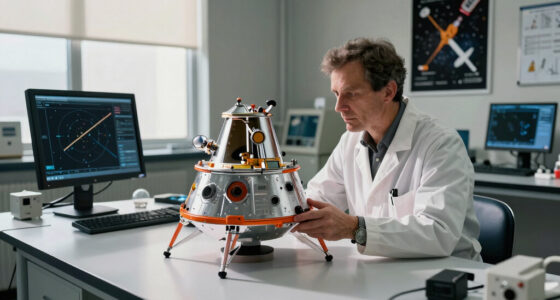
In 2025, ocean exploration is pushing new depths with advanced tech like autonomous vehicles and AI-powered sensors. These tools let you explore previously unreachable areas, uncover lost cities, and identify marine ecosystems that hold essential secrets. International teamwork amplifies efforts, allowing access to remote regions and sharing discoveries worldwide. If you keep exploring, you’ll uncover how these breakthroughs reveal Earth’s hidden stories, ecosystems, and mysteries waiting beneath the surface.
Key Takeaways
- Advanced deep-sea robots and sensors in 2025 enable exploration of previously inaccessible ocean depths and ecosystems.
- International collaboration accelerates discoveries of lost civilizations, shipwrecks, and hidden underwater features.
- AI-driven data analytics improve real-time understanding of marine environments and identify new species.
- Technological innovations reveal bioluminescent habitats and unique oceanic life, enhancing knowledge of Earth’s history.
- Future explorations will uncover critical insights into climate change impacts and oceanic resources for sustainable management.
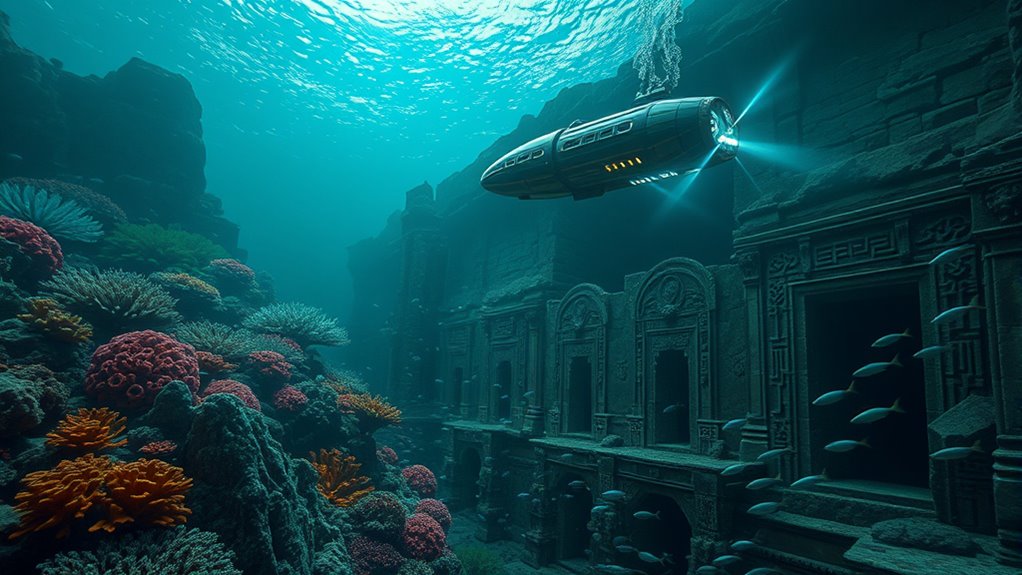
As we look toward 2025, ocean exploration is entering a new era driven by technological innovation and international collaboration. With advances in deep sea technologies, you’ll find yourself uncovering the rich tapestry of marine biodiversity that thrives in the planet’s most hidden depths. These innovations allow you to reach previously inaccessible areas of the ocean, revealing a world teeming with life you never knew existed. From bioluminescent creatures to unusual ecosystems, this new wave of exploration is transforming your understanding of oceanic life and its essential role in Earth’s health.
Deep sea technologies have become the backbone of modern ocean exploration. Autonomous underwater vehicles (AUVs) and remotely operated vehicles (ROVs) now navigate the abyss with precision, capturing high-resolution images and collecting invaluable data. These tools help you monitor delicate habitats, track migratory patterns, and identify new species with unprecedented detail. As you observe these ecosystems, you gain insights into their resilience and vulnerabilities, informing conservation efforts and highlighting the importance of protecting marine biodiversity. The integration of advanced sensors and AI-driven analytics means that you can process vast amounts of data in real-time, accelerating discoveries and making exploration more efficient than ever before. Additionally, the development of advanced imaging technologies has significantly enhanced the clarity and depth of underwater observations, opening new frontiers for discovery.
Deep sea robots capture high-res images, track species, and process data instantly, revolutionizing ocean exploration and conservation efforts.
International collaboration plays a pivotal role as well. No single nation can fully explore the ocean’s depths alone, so you’re part of a global effort that combines resources, expertise, and technology. This cooperative approach enables you to access remote locations, share findings openly, and build detailed maps of the seafloor. It’s a collective journey, where scientists, engineers, and policymakers work together to reveal the ocean’s secrets. Through these partnerships, you’re helping to identify potential new resources, understand climate change impacts, and find ways to sustainably manage oceanic environments.
Looking ahead to 2025, your role in ocean exploration is poised to expand further. As deep sea technologies become more sophisticated and accessible, you’ll be able to explore deeper, longer, and more systematically. This progress means discovering unexplored ecosystems that could hold keys to medical breakthroughs, new materials, or insights into Earth’s history. You’ll also witness efforts to locate lost civilizations and shipwrecks, unraveling stories buried beneath kilometers of water. Ultimately, your inquisitiveness combined with cutting-edge technology and global cooperation will deepen humanity’s connection to the ocean and its myriad mysteries, ensuring that the secrets of the deep are better understood and preserved for future generations.

How Are Marine Robots Shaping Our Future? (Johns Hopkins Wavelengths)
As an affiliate, we earn on qualifying purchases.
As an affiliate, we earn on qualifying purchases.
Frequently Asked Questions
What New Technology Will Be Used in Ocean Exploration 2025?
In 2025, you’ll see advanced underwater robotics and deep sea sensors revolutionize ocean exploration. These technologies allow you to reach greater depths, gather detailed data, and explore previously inaccessible areas. Underwater robots navigate complex terrains, while deep sea sensors monitor environmental conditions in real-time. Together, they help you uncover hidden ecosystems, discover lost cities, and solve mysteries beneath the ocean’s surface more efficiently than ever before.
How Will Discoveries Impact Global Climate Change Understanding?
Imagine uncovering hidden truths about our planet’s future. Your discoveries will deepen understanding of marine carbon and climate feedback, revealing how ocean processes influence global warming. By exploring uncharted depths, you’ll help clarify how the ocean absorbs carbon and affects climate patterns. These insights could guide better policies, ultimately helping to mitigate climate change effects and protect ecosystems for generations to come.
Which Countries Are Leading the Ocean Exploration Initiatives?
You’ll find that the United States, China, and the European Union lead ocean exploration initiatives. They prioritize marine policy and foster international partnerships to advance underwater research. These countries invest heavily in technology and collaborative efforts, aiming to uncover new marine ecosystems and resources. Your understanding of global ocean efforts highlights how these nations are shaping the future of marine science and international cooperation.
What Are the Potential Risks to Underwater Ecosystems?
You should be aware that underwater ecosystems face significant risks like marine pollution, which contaminates water and harms marine life, and habitat destruction caused by deep-sea mining and construction. These activities disrupt delicate habitats, endanger species, and decrease biodiversity. As you explore or support ocean initiatives, prioritize sustainable practices to help reduce pollution and habitat damage, ensuring these essential ecosystems remain healthy for future generations.
How Can Public Participation Be Involved in Ocean Exploration 2025?
You can get involved in Ocean Exploration 2025 through citizen science projects and educational programs. By participating in data collection, reporting discoveries, or attending workshops, you help expand our understanding of the oceans. Your involvement supports research efforts, raises awareness, and inspires others to care about marine conservation. Engaging actively guarantees that a broader community contributes to uncovering ocean mysteries and protecting these essential ecosystems.

ORCATORCH D530 395nm UV Fluorescence Scuba Dive Light
- Battery Information: No standalone lithium batteries included
- Reveals Marine Fluorescence: 395nm UV light uncovers hidden marine colors
- Designed for Fluorescence Diving: Specialized for coral and marine fluorescence exploration
As an affiliate, we earn on qualifying purchases.
As an affiliate, we earn on qualifying purchases.
Conclusion
By 2025, you’ll see ocean exploration reach new depths, uncovering lost cities and hidden mysteries. Did you know that over 80% of our oceans remain unexplored? This means there’s so much more to discover, from ancient civilizations to untouched ecosystems. As technology advances, you’ll have front-row seats to these incredible discoveries, reminding you that the ocean still holds countless secrets waiting to be revealed. Get ready to plunge into the future of underwater exploration!

The Future of Ocean Exploration: AI-Enabled Underwater Imaging (Oceans Book 5)
As an affiliate, we earn on qualifying purchases.
As an affiliate, we earn on qualifying purchases.

Ultrasonic Distance Measuring Sensor, Obstacle Avoidance Ranging Module for Underwater Robot, 6 Meter DC 5‑24V IP68 Waterproof
- Compact Size: Small blind spot and high accuracy
- IP68 Waterproof: Suitable for underwater use
- Obstacle Avoidance: Replaces traditional cameras for underwater navigation
As an affiliate, we earn on qualifying purchases.
As an affiliate, we earn on qualifying purchases.