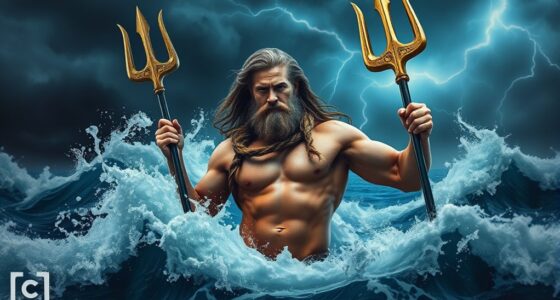
In the myth of Zeus versus Typhon, you see a dramatic clash between order and chaos, with Zeus representing divine stability and Typhon embodying destructive natural fury. Typhon, a giant with serpent heads and earth-shaking wings, threatens to unravel cosmic balance. Zeus fights back with thunderbolts, symbolizing control over storms and natural forces. Exploring this myth reveals deeper insights into how ancient cultures viewed the power of nature and their gods’ role in taming it.

Get school and study supplies delivered free — and shop member deals
- Fast, free delivery on millions of items
- Access to Prime Big Deal Days deals on October 6–7
- Prime Video, Amazon Music and more included
Key Takeaways
- The myth depicts Zeus battling Typhon, a chaotic monster symbolizing natural fury and destruction.
- Typhon’s monstrous form includes serpents, wings, and a thunderous voice threatening divine order.
- Zeus uses his thunderbolt to confront and subdue Typhon, representing control over storms and natural disasters.
- The battle symbolizes the cosmic struggle between chaos and order, with Zeus protecting the world from destruction.
- Zeus’s victory signifies humanity’s triumph over natural chaos and highlights divine power in controlling nature’s fury.
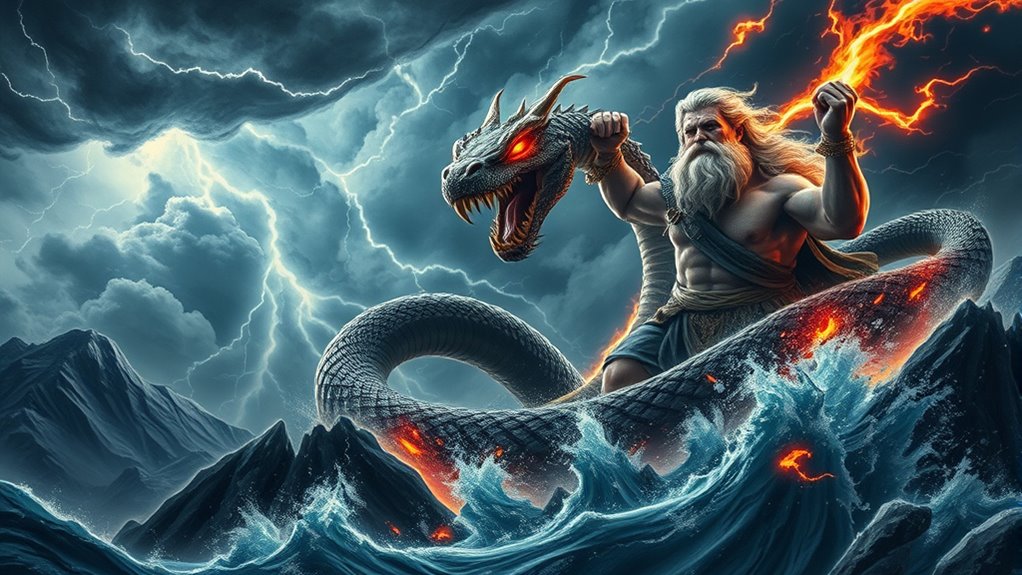
Have you ever wondered what happens when the king of gods faces a monstrous threat from beneath the earth? In Greek mythology, this scenario unfolds vividly during the epic clash between Zeus and Typhon, a creature born from chaos and fury. This story is a prime example of storm mythology, where divine battles reflect the raw power of nature itself. You can imagine Zeus, wielding his mighty thunderbolt, standing tall as the protector of order, ready to confront the chaos that Typhon embodies. As the storm clouds gather, this myth pits divine power against primal destruction, symbolizing the eternal struggle between civilization and nature’s fury.
In this myth, Typhon is no ordinary monster. He’s described as a giant with a hundred serpent heads, wings that shake the earth, and a voice that could shake the mountains. His arrival signals a cataclysmic upheaval, a force of nature so wild it threatens to dismantle the divine order. Zeus, however, doesn’t shy away from the challenge. Instead, he takes on Typhon in a series of divine battles, where thunder roars and lightning flashes as symbols of divine wrath. These confrontations aren’t just fights; they’re representations of storm mythology, illustrating how the gods harness the elements to defend the cosmos from chaos. Each blow from Zeus’s thunderbolt is like a lightning strike in a fierce storm, a reminder of the gods’ control over the natural world.
The battle between Zeus and Typhon is intense and relentless. As Typhon unleashes his fury, the earth trembles, and the skies darken with storm clouds. Zeus retaliates with his thunderbolts, aiming to subdue this monstrous threat. Their confrontation is a dramatic dance of divine power, echoing the tumult of a violent storm. This myth not only highlights the might of Zeus but also emphasizes the importance of divine battles in Greek myth, where gods combat forces of disorder to maintain balance. Through their fight, the myth captures the essence of storm mythology—an age-old narrative where the chaos of nature is tamed by divine strength, ensuring that order prevails. Additionally, these stories reflect ancient people’s understanding of natural phenomena and their attempt to explain and control natural disasters.
Ultimately, Zeus’s victory over Typhon signifies the triumph of civilization over chaos, a victory rooted in the power of storm mythology. The myth underscores the idea that even in the face of nature’s fiercest fury, divine forces can restore balance. You see this story as a reflection of ancient people’s understanding of storms and natural disasters, illustrating how gods like Zeus embody control over these destructive forces. Their divine battles serve as timeless allegories for humanity’s struggle to face and master the chaos lurking beneath the surface of the natural world.
Greek mythology Zeus thunderbolt figurine
As an affiliate, we earn on qualifying purchases.
As an affiliate, we earn on qualifying purchases.
Frequently Asked Questions
How Did Zeus and Typhon Influence Ancient Greek Culture?
You see that Zeus and Typhon shaped ancient Greek culture by embodying divine authority and mythological symbolism. Zeus, as the king of gods, represented order, power, and justice, inspiring reverence and moral values. Typhon symbolized chaos and nature’s fury, reminding Greeks of the unpredictable forces beyond human control. Their stories reinforced societal beliefs, emphasizing the importance of respecting divine power and understanding nature’s duality.
Are There Any Modern Interpretations of the Zeus vs. Typhon Myth?
You’ll find modern adaptations of the Zeus versus Typhon myth in pop culture, with over 50 movies, books, and video games referencing their battle. These stories reinterpret their conflict as symbols of chaos versus order, inspiring contemporary fantasy and superhero narratives. By integrating mythological themes, creators explore human struggles with nature and power, making the ancient myth relevant and compelling for today’s audiences.
What Symbols Represent Zeus and Typhon in Greek Art?
In Greek art, you’ll see Zeus symbolized by lightning symbolism, often depicted with a thunderbolt in hand, emphasizing his power over storms. Typhon is represented with serpent imagery, showcasing his chaotic, serpentine form, often entwined or emerging from the ground. These symbols highlight their divine roles—Zeus as the ruler of the sky and Typhon as the embodiment of destructive chaos, making their mythic struggle visually striking.
How Does the Myth Explain Natural Disasters Today?
You see, this myth symbolizes natural disasters like earthquakes through legends of chaos and divine wrath. Storm symbolism, embodied by Zeus’s thunder and Typhon’s destructive power, helps explain unpredictable events. When you experience tremors or storms today, these stories remind you that ancient legends personify nature’s fury, illustrating that such disasters are forces beyond human control, akin to mythic battles between gods and monsters that mirror nature’s unpredictable power.
Are There Similar Myths About Gods and Monsters in Other Cultures?
Yes, many cultures have myths featuring divine conflicts with mythical beasts. For example, Norse mythology tells of Thor battling giants, while Chinese myths describe dragons representing natural forces. These stories often symbolize the struggle between order and chaos, similar to Zeus fighting Typhon. You’ll find these divine conflicts across cultures, emphasizing how humans historically explained natural disasters through tales of gods and monsters.
As an affiliate, we earn on qualifying purchases.
Conclusion
As you imagine the battle between Zeus and Typhon, picture a thunderstorm raging across the sky, lightning cracking like Zeus’s fierce strikes and winds howling like Typhon’s fury. This myth reminds you that nature’s power is both awe-inspiring and unpredictable—like a wild storm that, even in chaos, brings renewal. Just as Zeus tamed Typhon’s chaos, you can find strength in facing life’s tempests, knowing they can lead to growth and renewal.
storm mythology themed educational kit
As an affiliate, we earn on qualifying purchases.
As an affiliate, we earn on qualifying purchases.
ancient Greek gods and monsters collectible
As an affiliate, we earn on qualifying purchases.
As an affiliate, we earn on qualifying purchases.
Fall Picks
fall essentials
As an affiliate, we earn on qualifying purchases.