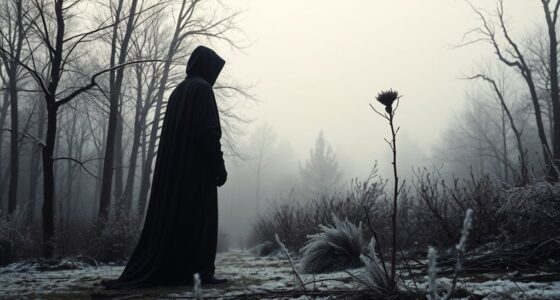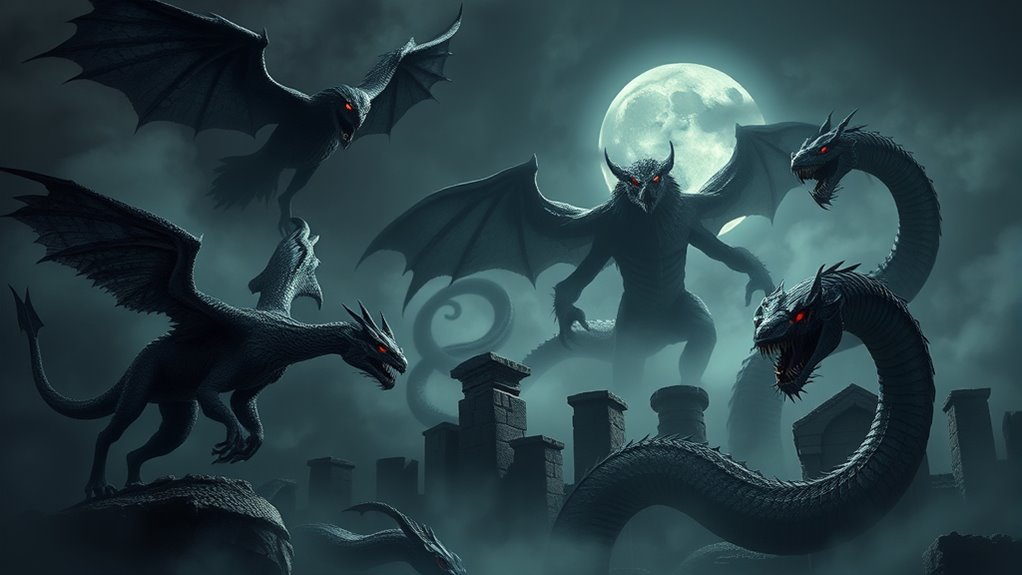

The monsters associated with Halloween come from ancient myths and cultural stories, reflecting fears, morals, and explanations of natural phenomena. You’ll find vampires originating from European legends, symbolizing fears of death, and werewolves representing primal instincts and human duality. Ghosts and spirits come from beliefs about the afterlife, embodying unresolved ties to the living. These creatures evolved over centuries, blending tradition with modern stories—discover how their roots shaped today’s spooky tales as you explore further.

Prime made for students and young adults
- Fast, free delivery for dorm and study essentials
- Prime Video and Amazon Music included
- Member-only deals
Key Takeaways
- Halloween creatures originate from ancient myths and cultural stories that reflect societal fears and moral lessons.
- Vampires trace back to Eastern European folklore and Chinese legends symbolizing fears of death and the unknown.
- Werewolves have roots in Greek and Norse mythologies representing primal instincts and human duality.
- Ghosts and spirits stem from beliefs about the afterlife and lingering unresolved issues of the deceased.
- Demons and supernatural entities combine mythological origins with modern pop culture to explain evil and misfortune.

Halloween is a night filled with spooky legends and mythical creatures that capture our imagination. These creatures, rooted in ancient myths and stories, have evolved over centuries into symbols of fear, mystery, and fun. As you explore the origins of these monsters, you’ll discover how their representations have shifted from cultural beliefs to modern adaptations, shaping how we celebrate Halloween today. Many of these creatures began as part of cultural representations that reflected societal fears, moral lessons, or explanations for natural phenomena. Over time, storytellers and artists have reimagined them, blending tradition with innovation to keep their stories alive. Today, you might see these monsters depicted in costumes, movies, and haunted houses, but their roots remain deeply embedded in history and myth.
Halloween creatures evolved from ancient myths into modern symbols of fear and fun.
Take the vampire, for instance. Its origins trace back to various cultural representations worldwide, from Eastern European folklore to Chinese legends. Historically, vampires symbolized fears of death and the unknown, often serving as warnings against immoral behavior. Modern adaptations have transformed vampires into romantic figures in books and movies, emphasizing charm and allure over menace. Yet, the core idea of an undead creature that feeds on the living persists, connecting past fears to contemporary storytelling. Similarly, the werewolf has ancient roots as a symbol of primal instincts and the duality of human nature. It appears in many cultures, from Greek mythology to Norse legends, often representing the struggle between civilization and savagery. Today, popular media portrays werewolves as tragic figures or fierce monsters, a reflection of their mythological origins but tailored to suit current tastes.
The ghost, another staple of Halloween, stems from cultural representations of spirits and the afterlife. In many traditions, ghosts embody the lingering regrets or unresolved issues of the deceased. Modern adaptations have expanded their role, turning them into characters in horror films, haunted house attractions, and even comedy sketches. These updates keep the concept fresh while still echoing the ancient idea that the dead can influence the living. Likewise, demons and spirits have long been part of cultural representations that serve to explain evil or misfortune. Today, they’re often depicted as supernatural villains or misunderstood entities in popular culture, blending myth with entertainment. Additionally, understanding the refrigeration cycle helps explain how heat pumps operate efficiently, which is a modern technological advancement that can be linked to how we manage heat and cold—concepts rooted in the same principles that underpin mythological explanations for natural phenomena.
Ultimately, these mythical creatures of Halloween have a rich history rooted in cultural representations that serve to explain human fears and societal norms. Modern adaptations keep these legends relevant, transforming ancient stories into symbols of entertainment and exploration of our darker sides. As you celebrate Halloween, remember that these creatures are more than just costumes—they’re echoes of stories that have traveled through time, shaping how we view the mysterious and the supernatural.
As an affiliate, we earn on qualifying purchases.
Frequently Asked Questions
How Did Halloween Monsters Influence Modern Horror Movies?
Halloween monsters greatly influence modern horror movies by shaping popular horror movie tropes, like creepy costumes and frightening villains. When you see zombies, vampires, or werewolves, they’re rooted in these mythic creatures, making your costumes more terrifying and authentic. These monsters set the standard for horror themes, inspiring movies that use supernatural elements to scare audiences. Your love for Halloween costumes and horror films connects directly to these ancient legends that still thrill us today.
Are There Any Real Historical Figures Behind These Mythical Creatures?
You might think mythical creatures are purely fiction, but some have roots in real historical figures or mythological origins. For example, the legend of Dracula is inspired by Vlad the Impaler, a 15th-century ruler known for his brutality. Similarly, the myth of the Wendigo may stem from Algonquian legends. These figures blend history and myth, giving monsters a chillingly real edge that still captivates us today.
How Did Ancient Cultures Interpret and Portray These Monsters?
You see, ancient cultures interpreted and portrayed monsters through rich cultural and mythological symbolism, reflecting their fears, morals, and societal values. They used these creatures as allegories for natural forces, spiritual beliefs, or moral lessons. These monsters often symbolized chaos, evil, or the unknown, serving as warnings or explanations for mysterious phenomena. Their vivid depictions helped embed these symbols into cultural stories, rituals, and Halloween traditions that persist today.
What Symbols Are Commonly Associated With These Mythical Beings?
You see dark folklore symbols like jagged claws, glowing eyes, and twisted figures that embody fear and mystery. These beings often carry talismans or are depicted with moonlit shadows, representing spiritual symbolism tied to the unknown and the supernatural. These symbols evoke a sense of eerie power, connecting you to ancient fears and legends, reminding you of the unseen forces lurking beyond the veil of everyday life.
Do Any of These Monsters Appear in Global Halloween Traditions?
Yes, many of these monsters appear in global Halloween traditions, reflecting cultural variations and mythological symbolism. You’ll find creatures like ghosts, spirits, and demons in celebrations worldwide, each embodying local legends and fears. These beings symbolize the boundary between life and death, serving as reminders of cultural stories. By participating in these customs, you connect with the deeper mythological symbolism that influences Halloween’s spooky, festive atmosphere across different cultures.
As an affiliate, we earn on qualifying purchases.
Conclusion
As you carve your pumpkin and light your candle, remember the monsters of myth that once haunted our ancestors’ dreams—like shadows lurking just beyond the flickering flame. These creatures, born from ancient fears, remind you that even in darkness, stories and symbols transform what we fear into things we can face. Halloween isn’t just about costumes; it’s a dance with the ghosts of history, inviting you to confront the monsters of myth that still live in your imagination.
As an affiliate, we earn on qualifying purchases.
mythical creature Halloween props
As an affiliate, we earn on qualifying purchases.
As an affiliate, we earn on qualifying purchases.
Halloween Picks
halloween
As an affiliate, we earn on qualifying purchases.