
Mythology of Cyclopes closely mirrors Bronze Age metallurgy, portraying them as master smiths with formidable forging skills. These legends symbolize society’s admiration for craftsmanship, strength, and technological progress in metalworking. Their single eye represents focused vision, reflecting artisans’ precision. Forges in myths serve as secret places of transformation, much like the actual workshops of ancient smiths. Exploring these stories reveals how myth echoed and inspired the innovations in bronze tools and weapons—continue to uncover more fascinating connections.

Prime made for students and young adults
- Fast, free delivery for dorm and study essentials
- Prime Video and Amazon Music included
- Member-only deals
Key Takeaways
- Mythology depicts Cyclopes as master smiths, reflecting societal admiration for bronze forging skills during the Bronze Age.
- The single eye symbolizes focused craftsmanship, mirroring the intense concentration required in metallurgical work.
- Forges in myths resemble secret workshops where fire and hammer transformed raw materials, paralleling real Bronze Age metallurgy.
- Mythic stories symbolize technological progress, emphasizing innovation, skill, and the transformative power of metalworking.
- Cyclopean imagery and myths served both as allegories and cultural reflections of societal values around craftsmanship and mastery.
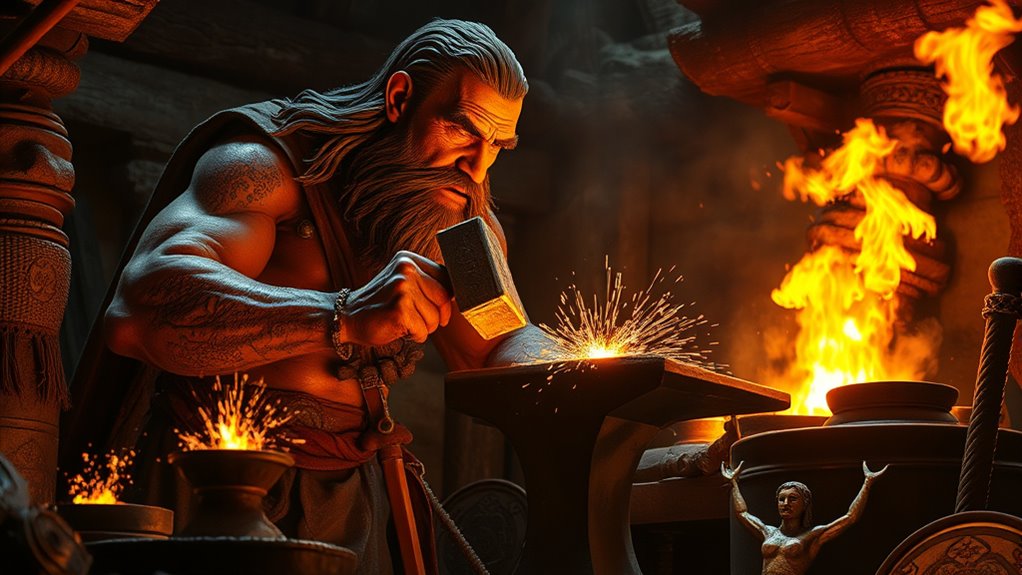
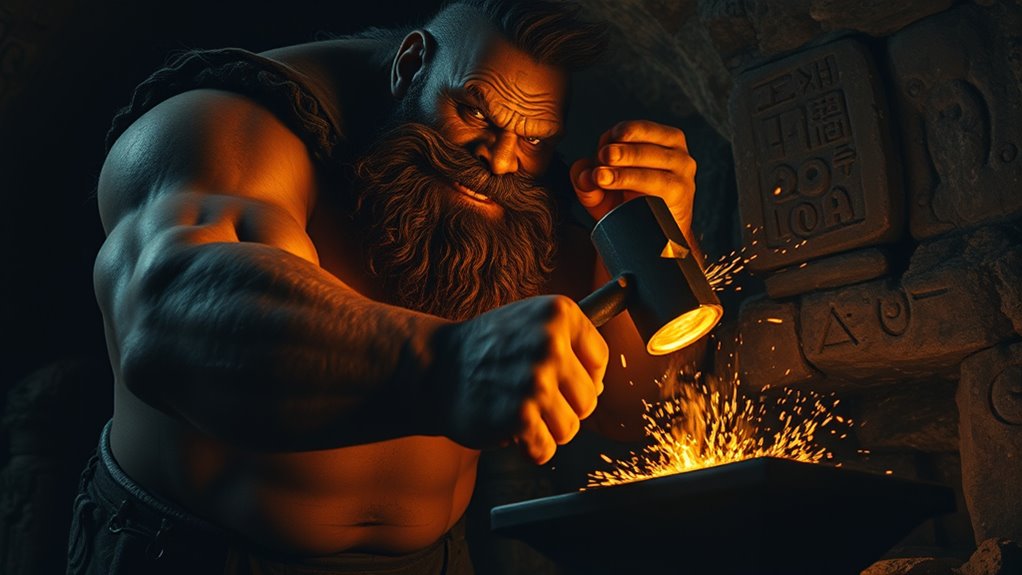
During the Bronze Age, mythology and metallurgy were deeply intertwined, shaping how societies understood their world and their gods. You can see this connection vividly in stories of one-eyed giants, the Cyclopes, who were often depicted as formidable smiths and master craftsmen. These mythical beings, with their singular eyes, symbolize both raw strength and skilled craftsmanship—traits that mirror the significant advances in bronze forging during that era. As you explore ancient forges, you realize how these stories likely echoed real practices, where early metallurgists harnessed their skills to craft tools and weapons that changed societies.
The image of the Cyclops as a master smith isn’t just legend; it’s a reflection of the importance of metalworking in the Bronze Age. These one-eyed giants are often associated with forging in dark, subterranean forges—places where fire and hammer created the tools that built civilizations. You might imagine ancient smiths working in similar forges, their fires illuminating the night as they shaped copper, tin, and eventually bronze, transforming raw materials into functional and decorative objects. The stories of the Cyclops may have served as mythic allegories for the intense labor, skill, and secret knowledge required to operate these forges, which were often hidden away from public view.
The idea of one-eyed giants also symbolizes the focused vision needed in metallurgy. Smiths of the Bronze Age had to rely on keen insight and precise craftsmanship to produce durable weapons and tools. The mythic Cyclops, with its single eye, may have represented the intense concentration and singular purpose that skilled artisans needed. These ancient forges were centers of innovation, where new techniques in casting and alloying emerged, driven by the craftsmen’s mastery and mythic inspiration alike.
As you explore more deeply into archaeological finds, you notice the close relationship between myth and technological progress. The stories of these giants may have served as allegories for the awe and reverence surrounding the craft of metallurgy. The ancient forges, like the lairs of these mythical smiths, were places of transformation—not just of materials but of societies. The myth of the Cyclopes and their forge work echoes in the very tools and weapons you can still find today, revealing how mythology both reflected and inspired technological mastery during the Bronze Age.
Popular right now

De'Longhi Dinamica Plus Fully Automatic Espresso Machine

Philips 4400 Series Fully Automatic Espresso Machine with LatteGo Milk System

eufy E25 Robot Vacuum and Mop Combo with HydroJet Roller Mop
As an affiliate, we earn on qualifying purchases.
Frequently Asked Questions
How Accurate Are Mythological Descriptions of Ancient Smithing Techniques?
You might wonder how accurate mythological descriptions of ancient smithing techniques are. While they often contain metallurgy symbolism that reflects cultural values or beliefs, myth accuracy varies. Some myths exaggerate or romanticize real practices, blending fact and fiction. You should consider that these stories serve symbolic purposes more than technical accuracy, offering insight into ancient societies’ perceptions rather than precise metallurgical methods.
Did Other Mythologies Depict Similar Giant or Divine Blacksmith Figures?
You might think mythologies only feature gods and heroes, but many also depict giant smiths working in divine forges. These giant smiths appear in Norse and Greek myths, embodying strength and craftsmanship. Their stories highlight the importance of metallurgy across cultures, showing that giants often symbolize the raw power behind divine creations. So, yes, other mythologies do portray giant smiths, emphasizing the universal significance of forging in ancient beliefs.
Are There Archaeological Findings Linking Cyclopes to Bronze Age Metallurgy?
You might wonder if archaeology links cyclopes to Bronze Age metallurgy. While direct evidence is scarce, some Cyclopean artifacts, like massive stone constructions, suggest advanced metalworking skills. These mythical figures are often associated with mythical metalwork, hinting at a cultural memory of impressive smithing feats. Although concrete links are limited, these artifacts and legends reflect a deep connection between giant mythic smiths and early metallurgical achievements.
How Did Metallurgical Advancements Influence Mythological Storytelling?
Imagine the forging of legends—metallurgical advancements shape mythological symbolism, transforming raw materials into stories that echo through ages. You see, as metallurgy evolved, so did cultural transmission, embedding new tools, skills, and discoveries into myth. These stories become a mirror reflecting human ingenuity, inspiring awe and passing knowledge forward. So, your myths aren’t just tales—they’re crafted by the fires of progress, forever intertwined with humanity’s technological journey.
Can Mythological Accounts Reveal Actual Bronze Age Metallurgical Practices?
You wonder if mythological accounts can reveal actual bronze age metallurgical practices. Mythical craftsmanship often reflects ancient metallurgy’s achievements and limitations, serving as a cultural memory. These stories encode techniques, tools, and societal values related to metallurgy, offering clues to real practices. While not strictly factual, myth can mirror the skills and innovations of ancient metallurgists, providing valuable insights into how bronze was produced, shaped, and revered in that era.
Conclusion
Imagine forging a mighty sword in the glow of fire, each strike echoing the myths of giants and gods. Just as those ancient smiths shaped metal into legends, their stories mirror the raw power and wonder of bronze-age metallurgy. You can see how myth and craft intertwine, each reflecting humanity’s relentless drive to create and conquer. In every hammer’s fall, there’s a whisper of history — a reminder that our stories are forged just like the metals we shape.