
You see how ancient rituals gradually transformed into Greek theater through Thespis’s innovation. He stepped out of the chorus, introducing dialogue and individual characters, turning storytelling into a dramatic form. This shift helped performances become more emotional and engaging, blending myth, spectacle, and human experience. If you explore further, you’ll discover how these early changes laid the foundation for modern drama and theatrical art.
Key Takeaways
- Early Greek rituals evolved into theatrical performances through storytelling, symbolism, and communal ceremonies honoring gods and natural forces.
- Thespis is credited with introducing dialogue and individual characters, transforming ritualistic storytelling into dramatic art.
- The development of theatrical techniques enhanced emotional expression, audience engagement, and complex storytelling in Greek theater.
- Religious festivals, especially those honoring Dionysus, laid the foundation for the transition from ritual to theatrical performance.
- The evolution from ritual to drama fostered shared cultural identity through myth-based narratives, shaping the birth of Greek theater.

Have you ever wondered how ancient rituals evolved into the dramatic performances we enjoy today? It all begins with the mythic origins of early societies, where storytelling and symbolism played a crucial role in understanding the world. In those times, communities gathered around fires to perform religious ceremonies that honored gods, explained natural phenomena, and reinforced social bonds. These rituals often involved chanting, singing, and dance—elements that fostered a sense of collective identity. Over time, these performances became more elaborate, blending storytelling with spectacle, setting the stage for what would eventually become theater.
Ancient rituals evolved into theater through storytelling, symbolism, and communal performances that celebrated gods and reinforced social bonds.
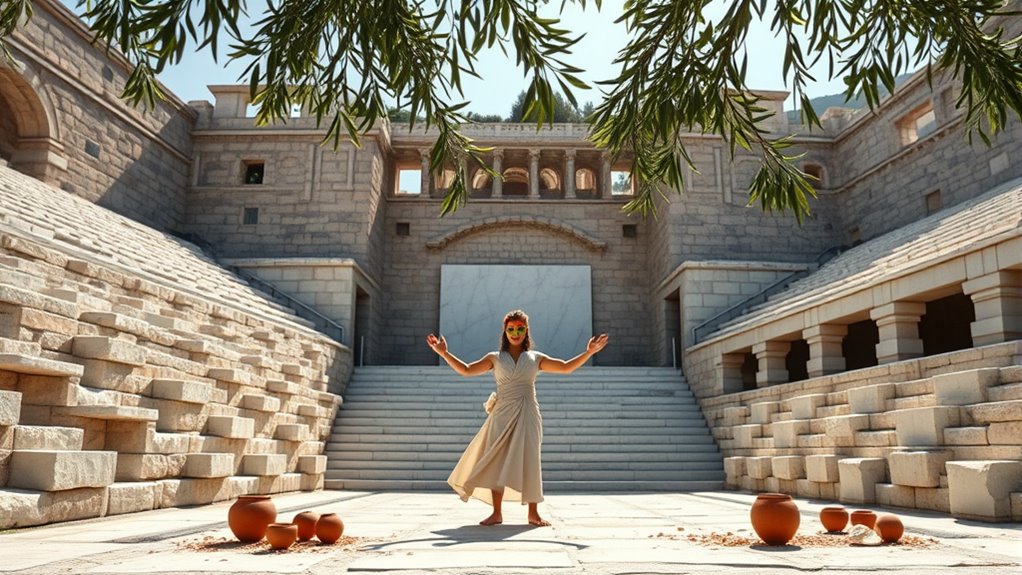
In ancient Greece, religious ceremonies laid the foundation for theatrical development. These festivals, especially those honoring Dionysus, featured processions and rituals that celebrated divine myths and heroic deeds. You can imagine how, amidst the chorus of voices and rhythmic movements, storytellers began experimenting with ways to make these tales more engaging. They moved beyond mere recitation, adding dialogue and interaction to draw audiences deeper into the mythic worlds. This shift from simple religious ceremonies to more theatrical presentations marked a turning point, where performance became an art form rooted in myth but designed to entertain and educate.
It’s in this setting that Thespis, often called the first actor, appears. He’s credited with stepping out of the chorus to speak as a single character, introducing dialogue that allowed stories to unfold more dramatically. By doing so, Thespis transformed the ritualistic storytelling of religious ceremonies into a form of performance that emphasized individual characters and narrative conflict. You can picture how this innovation gave audience members a more immersive experience, as they followed the characters’ journeys and emotional struggles rather than just listening to a chorus of voices. Thespis’s contribution effectively marked the birth of Greek drama, bridging the spiritual origins of ritual with the theatrical techniques that would influence Western theater for centuries.
Furthermore, the development of theatrical techniques allowed storytellers to enhance emotional expression and storytelling complexity, fostering a richer audience engagement. From those early mythic origins rooted in religious ceremonies, Greek theater evolved into a sophisticated art form that combined storytelling, performance, and spectacle. The shift allowed stories of gods, heroes, and moral lessons to be told in ways that captivated audiences and fostered a shared cultural identity. Today’s drama continues to draw from these ancient beginnings, where ritual and myth laid the groundwork for the complex and expressive art form we now cherish. You can see how the evolution from ritual to drama was driven by a desire to connect emotionally, narratively, and spiritually—an enduring legacy of those earliest performances.
Frequently Asked Questions
How Did Thespis Influence Later Greek Tragedians?
Thespis revolutionized tragedy development by introducing an actor who dialogues with the chorus, shifting performances from chorus-dominated rituals to dramatic storytelling. His acting techniques, such as adopting distinct roles and personalized gestures, set a foundation for future Greek tragedians. You can see his influence in their use of character development and emotional expression, which became essential elements in shaping the depth and complexity of Greek tragedies.
What Materials Were Used in Early Greek Theatrical Costumes?
Your theatrical costumes in early Greece were like a painter’s palette, crafted from ancient fabric such as linen and wool. You’d add decorative accessories like masks, crowns, and sashes to bring characters to life. These materials helped actors transform, making performances vibrant and memorable. The use of simple, yet effective, textiles and adornments allowed them to convey emotion and identity on the grand stage of Greek theater.
Did Thespis Perform in His Own Plays?
Yes, Thespis performed in his own plays. As a pioneer of ancient acting, he is believed to have stepped into the role of a character himself, blending the playwright’s identity with that of the performer. This innovation marked a shift from ritualistic performances to theatrical storytelling, allowing him to showcase his talent and influence the development of Greek theater. You can see his impact in the way acting and playwright roles evolved.
How Did Greek Festivals Incorporate Theatrical Performances?
During Greek festivals, you see that theatrical performances were an essential part of ancient festival rituals and Dionysian celebrations. These festivals, like Dionysia, incorporated plays and performances to honor Dionysus. You’d witness citizens and actors participating together, with competitions and parades showcasing tragedies and comedies. The performances weren’t just entertainment—they were integral to religious observances, creating a vibrant, communal atmosphere that connected art, worship, and social unity.
What Is the Legacy of Thespis in Modern Theater?
Thespis’s legacy in modern theater is profound, as his innovations in acting and storytelling set foundational standards. You see his influence in the development of character-driven performances, dialogue, and the use of masks, which continue to shape theater innovation today. His work also has a lasting cultural influence, inspiring playwrights, actors, and directors to explore new storytelling techniques and deepen audience engagement across centuries.
Conclusion
As you step back and see the journey, it’s clear that Thespis transformed ritual into drama, planting a seed that blossomed into Greek theater’s grandeur. His innovations turned sacred chants into stories that echo through history, like a river flowing from ancient roots to modern stages. You now carry the understanding that theater’s birth was a delicate dance between tradition and creativity—an eternal flame ignited by one man’s daring leap from ritual to drama.