

Despite living in a world of instant digital connections, you may feel lonelier than ever because online interactions often lack genuine emotion and depth. Social media can create the illusion of closeness while real relationships require face-to-face contact and authentic conversations. Relying too much on virtual exchanges can heighten feelings of disconnection and isolation. To better understand how to bridge this gap, discover practical strategies that help you foster real human bonds and restore meaningful connections.
Key Takeaways
- Online interactions often lack emotional nuance, leading to superficial connections that fail to satisfy human social needs.
- Digital platforms showcase idealized lives, creating perceived social gaps and feelings of inadequacy or exclusion.
- Excessive reliance on devices can replace meaningful face-to-face contact, deepening feelings of loneliness.
- Virtual communication may hinder the development of genuine emotional bonds and authentic relationships.
- Balancing screen time with real-world interactions is essential to combat social disconnection and foster true belonging.
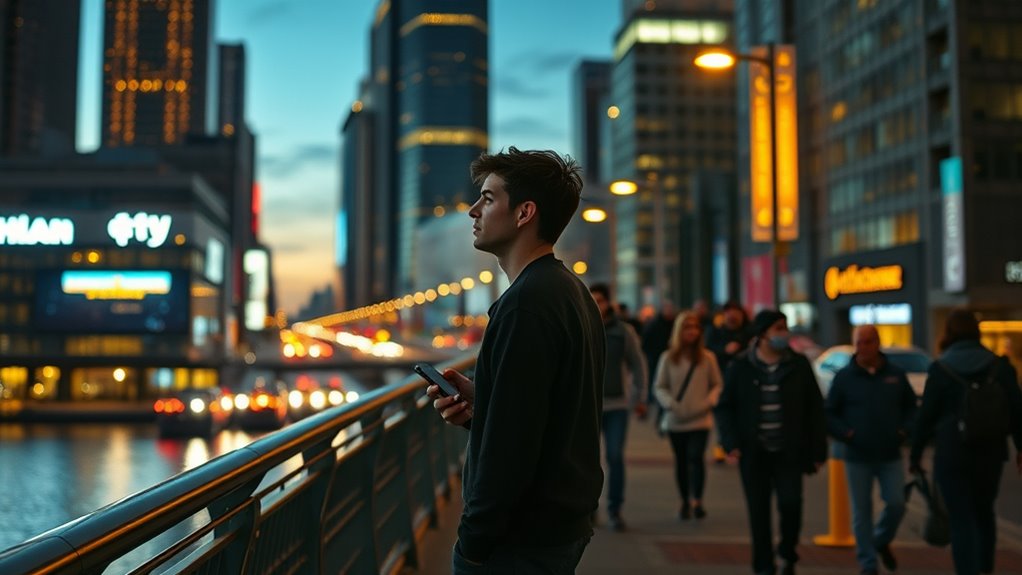
In recent years, loneliness has become a widespread issue affecting people of all ages and backgrounds. Despite living in an era where you’re constantly connected through technology, many find themselves feeling more isolated than ever. This paradox stems from what’s often called digital isolation—where your online interactions, instead of fostering genuine connection, contribute to feelings of social disconnection. You might scroll through social media feeds that showcase everyone’s seemingly perfect lives but feel an increasing gap between your virtual interactions and real-world relationships. While it’s easy to think that being online means you’re never truly alone, the truth is that digital tools can sometimes replace meaningful face-to-face contact, leaving you feeling more lonely.
Despite constant connectivity, digital interactions often deepen loneliness and social disconnection.
When you rely heavily on digital communication, you risk losing the depth and authenticity that come with in-person interactions. Text messages and social media comments are quick and convenient, but they often lack the emotional nuance that helps you truly connect with others. Over time, this can lead to social disconnection—a feeling that, despite being plugged into a digital world, you’re missing out on real human connection. You might find yourself feeling isolated even amidst a sea of online friends and followers because virtual interactions rarely replace the warmth of a genuine conversation or shared experience.
This phenomenon isn’t just about missing out on social events; it’s about the quality of your relationships. Digital isolation can cause you to feel like you’re alone in a crowd, misunderstood, or disconnected from those around you. As social disconnection grows, you might notice increased feelings of loneliness, anxiety, or depression. It’s a cycle: the more you turn to your devices for comfort or distraction, the more you may withdraw from face-to-face contact, which deepens your sense of isolation. The irony is that technology, which was designed to bring people closer, can sometimes do the opposite.
Understanding this, you need to recognize the importance of balancing screen time with real-world interactions. Making time for in-person meetings, engaging in community activities, or simply having meaningful conversations can help combat social disconnection. Additionally, engaging in activities that promote emotional regulation can help foster resilience against feelings of loneliness. Remember, digital tools are meant to supplement your relationships, not replace them. Building genuine connections requires effort, presence, and authenticity—elements that no amount of scrolling can fully replicate. By consciously prioritizing real-world interactions, you can break free from the cycle of digital isolation and find a sense of belonging and connection that truly fulfills you.
Frequently Asked Questions
How Does Technology Both Connect and Isolate Us Simultaneously?
Technology connects you through virtual empathy, allowing instant communication and emotional support across distances. However, it also isolates you by blurring digital boundaries, making it easy to feel overwhelmed or disconnected despite constant contact. You might substitute real conversations with screens, reducing meaningful interactions. So, while technology offers connection, it can simultaneously create emotional barriers if you don’t set boundaries or engage genuinely.
What Role Does Mental Health Play in Loneliness?
Have you ever felt alone in a crowded room? Your mental health plays a vital role in loneliness, shaping how you connect or withdraw. When you build emotional resilience, you better handle feelings of isolation. Reducing stigma around mental health encourages openness, helping you seek support without shame. By prioritizing mental well-being, you foster genuine connections and combat loneliness, transforming solitude into strength.
Are Certain Demographics More Affected by Loneliness Than Others?
Yes, certain demographics are more affected by loneliness. Age disparities play a role, with older adults often feeling more isolated due to health issues or loss of social connections. Cultural differences also influence loneliness, as some societies emphasize community and family bonds, while others prioritize individualism. You might notice that these factors make specific groups more vulnerable, highlighting the need for targeted support and understanding.
How Can Communities Effectively Combat Social Isolation?
Imagine your community as a garden, thriving through shared care. You can combat social isolation by fostering community engagement—organizing events, creating welcoming spaces, and encouraging participation. Strengthen social support networks that act like roots anchoring individuals firmly. When everyone pitches in, connections deepen, and loneliness withers like a neglected plant. Your active involvement transforms the community into a vibrant ecosystem where everyone feels seen, supported, and less alone.
What Are the Long-Term Societal Impacts of Increased Loneliness?
You might not realize it, but increased loneliness weakens social cohesion and erodes community resilience over time. When individuals feel isolated, trust declines, and social bonds fray, making communities less able to support each other during crises. This long-term societal impact leads to higher mental health issues, reduced civic participation, and fractured neighborhoods. To counteract this, fostering stronger connections and inclusive environments is essential for maintaining a resilient, cohesive society.
Conclusion
So, you might wonder, in a world that’s more connected than ever, why do so many still feel alone? The truth is, genuine relationships can’t be replaced by screens or notifications. To combat this loneliness epidemic, you need to prioritize real, meaningful interactions. Are you willing to put down your devices and reconnect with those around you? Remember, true connection isn’t just about being online; it’s about truly being present with others.