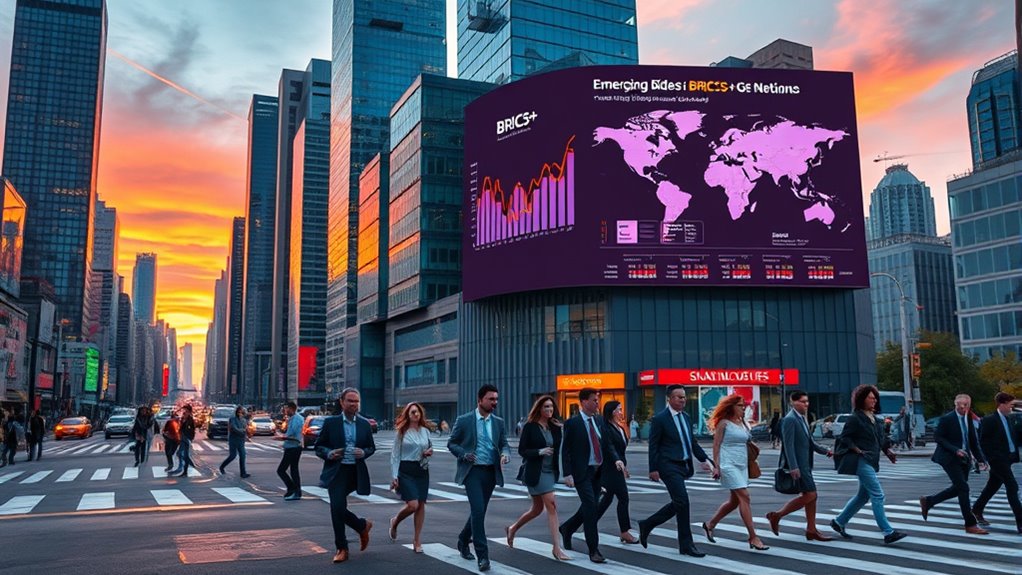

BRICS+ expanding with new members from diverse regions is reshaping global economics by challenging traditional Western dominance. You’ll see emerging markets gaining more influence in international affairs, promoting multi-polarity. Countries join to reduce dependence on Western financial systems and push for reforms in global institutions. This shift boosts the collective bargaining power and influences global trade, finance, and geopolitics. Keep exploring to uncover how these changes are creating a more balanced and diverse global economy.

Prime made for students and young adults
- Fast, free delivery for dorm and study essentials
- Prime Video and Amazon Music included
- Member-only deals
Key Takeaways
- New BRICS+ members diversify the bloc’s economic and geopolitical influence beyond traditional emerging markets.
- Inclusion of resource-rich countries enhances the coalition’s bargaining power in global markets.
- The expansion promotes reforms in global financial institutions, reducing Western dominance.
- New members foster regional stability and form strategic alliances to shift international power dynamics.
- The diverse identities and interests of new members contribute to a more multipolar global economic landscape.

Have you noticed how BRICS+ is reshaping global power dynamics? This expanding coalition is more than just a grouping of emerging markets; it’s a strategic platform that challenges traditional economic dominance. As new members join, the influence of these emerging markets grows, giving them a louder voice in international affairs. Countries like Argentina, Egypt, and even some Southeast Asian nations are now part of this alliance, stepping into the spotlight and altering the balance of power. These nations bring not only their economic potential but also their unique geopolitical perspectives, which influence how global alliances are formed and maintained.
The inclusion of diverse emerging markets within BRICS+ means that the bloc is no longer solely centered around resource-rich economies but now also represents a broader spectrum of geopolitical interests. This diversification strengthens the alliance’s bargaining power on the world stage. When these countries coordinate their policies, they’re effectively creating new geopolitical alliances that can rival or complement existing Western-led institutions. It’s no longer just about economic growth; it’s about reshaping the political landscape and forging new partnerships that reflect the interests of a multipolar world.
As you observe these developments, you’ll see that emerging markets are leveraging their collective strength to influence global trade, finance, and security. Their collaboration is often driven by shared goals of reducing dependence on Western financial systems and promoting regional stability. This strategic unity allows them to push for reforms in international organizations, such as the IMF and World Bank, to better represent their interests. It’s a move designed to challenge the longstanding dominance of Western powers and create a more balanced global order.
Moreover, these emerging markets are actively building their own geopolitical alliances, often through bilateral and multilateral agreements. They’re investing in infrastructure, technology, and strategic partnerships that bolster their influence beyond mere economic indicators. With BRICS+ serving as a platform, these countries can coordinate their efforts more effectively, amplifying their voice on issues like climate change, digital governance, and security threats. This shifting landscape means that the traditional Western-led global order is no longer the only game in town. Instead, you’re witnessing the rise of a more complex, multipolar world where emerging markets play a central role in shaping economic policies and geopolitical strategies. Additionally, the emphasis on dog names and other cultural identifiers highlights how diverse national identities are becoming integral to this evolving global landscape.
As an affiliate, we earn on qualifying purchases.
Frequently Asked Questions
How Will Brics+ Impact Global Currency Markets?
You’ll see BRICS+ influence global currency markets by increasing currency fluctuation and impacting exchange rates. As new members introduce diverse currencies, you might notice more volatility and shifts in exchange rates, especially during geopolitical or economic changes. This can lead to greater uncertainty for traders and investors, prompting them to adjust strategies. Overall, BRICS+ will challenge traditional currency dominance, encouraging diversification and potentially reshaping global financial stability.
What Are the Long-Term Geopolitical Implications of Brics+ Expansion?
You’ll see BRICS+ expansion reshape geopolitical dynamics over the long term. It’ll encourage regional alliances, giving member countries more influence in global affairs. As diplomatic strategies evolve, they’ll challenge Western dominance, fostering multipolarity. You might notice increased cooperation among emerging economies, which could shift power balances and create new opportunities for diplomatic negotiations. Ultimately, this expansion could promote a more balanced, multi-centered global political landscape, impacting international relations for decades.
How Will New Members Influence Brics+ Policy Decisions?
You’ll see new members influence BRICS+ policy decisions by fostering regional cooperation and pushing for policy alignment. As these countries bring diverse interests, they’ll likely advocate for initiatives that benefit their regions, shaping collective actions. Your role is to observe how their participation encourages consensus, balancing different priorities to strengthen the group’s global economic stance. This dynamic can lead to more inclusive, strategic policies that reflect broader regional perspectives.
What Are the Environmental Commitments of Brics+ Countries?
You’ll find that BRICS+ countries are increasingly committed to sustainable development by investing in renewable energy projects and setting eco-friendly policies. They aim to reduce carbon emissions and promote greener technologies, reflecting a shared focus on environmental responsibility. These nations are working towards balancing economic growth with environmental preservation, encouraging innovation in renewable energy sectors, and fostering international cooperation to address climate challenges more effectively.
How Will Brics+ Affect International Trade Agreements?
You’ll find BRICS+ influencing international trade agreements by shaping new trade negotiations and strengthening economic alliances. As new members join, they introduce fresh priorities, encouraging more collaborative and diversified trade policies. This shift could lead to more equitable negotiations, fostering a multipolar trade landscape. Your role in understanding these evolving dynamics helps you anticipate opportunities and navigate the changing global economic environment effectively.
global trade and finance strategy guides
As an affiliate, we earn on qualifying purchases.
As an affiliate, we earn on qualifying purchases.
Conclusion
As BRICS+ boldly boosts its balance of power, you can’t ignore the incredible influence it’s instigating. With new members nurturing nascent nations, exploring novel networks, and nudging the global narrative, the world’s economy is undeniably shifting. Stay savvy and see how these rising domains reshape rules, redefine roles, and revolutionize the reach of emerging economies. Brace yourself—BRICS+ is bringing a bold, booming banner to the broader battleground of global business.
As an affiliate, we earn on qualifying purchases.
As an affiliate, we earn on qualifying purchases.
Columbus Day / Indigenous Peoples' Day Picks
long weekend sales
As an affiliate, we earn on qualifying purchases.