
The Ship of Theseus is an ancient puzzle that questions whether an object remains the same after all its parts are replaced. It makes you think about what truly defines identity—whether it’s the physical material, the shape, or the purpose. If the ship looks, acts, and functions the same, many argue it remains the same vessel. Curious to explore how this paradox challenges your ideas of change and self? Keep exploring for deeper insights.
Key Takeaways
- The Ship of Theseus is an ancient thought experiment questioning whether an object remains the same after all parts are replaced.
- It explores whether identity depends on physical material or on continuity of form, purpose, and function.
- The puzzle illustrates broader concerns about personal and object identity amid constant change.
- Fully replacing parts challenges the idea of whether the original entity persists or becomes something new.
- It highlights the complexity of defining what truly makes an object or person themselves beyond their physical components.

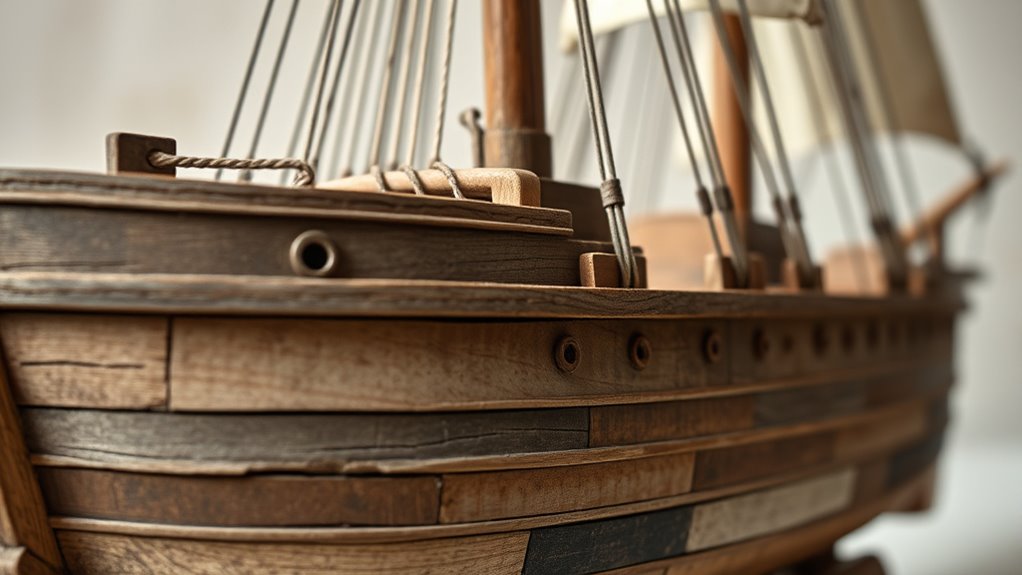
Have you ever wondered whether an object remains the same after all its parts have been replaced? This question lies at the heart of the Ship of Theseus, an ancient puzzle that challenges our understanding of identity. Imagine a ship, once owned by the legendary Theseus, preserved in a museum. Over time, every single plank, sail, and nail gets replaced—piece by piece—until none of the original materials remain. The question then arises: Is this still the same ship? Or has it become something entirely new? This dilemma forces you to contemplate what truly defines an object’s identity—whether it’s the material substance or something else.
Is a fully replaced ship still the same, or has it become something new?
In contemplating this, you realize that the idea of identity continuity becomes central. If the ship maintains its form, purpose, and function, can it still be considered the same vessel despite the complete material substitution? Here, the puzzle reveals a tension between the physical makeup of the ship and its essence. On one hand, the ship’s identity might seem to hinge on its original materials; on the other, it could be rooted in its ongoing existence and function. This distinction helps you understand that identity isn’t solely about what something is made of but also how it persists over time. When all parts are replaced, the ship’s material substance has changed entirely, yet its identity might still endure through its continuity and recognizable form.
This thought experiment nudges you to think about what makes something fundamentally itself. Is it the specific materials that compose it, or is it the pattern, structure, and purpose that give it its identity? If the original planks were replaced with new ones, but the ship still looked, sailed, and served the same purpose, are you justified in calling it the same ship? Conversely, if you assemble all the old parts into a new vessel, is that the original ship or a different one? These questions highlight how material substitution complicates notions of identity, making you revisit whether physical composition or the continuity of existence holds more weight.
Through this reflection, you come to see that the Ship of Theseus isn’t just about ships—it’s a metaphor for understanding change itself. It challenges you to think about how objects, and perhaps even people, maintain their sense of self amid constant change. Ultimately, the puzzle prompts you to ask: what truly makes something itself? Is it the stuff it’s made of or the ongoing story and function it embodies? The answer isn’t straightforward, but pondering it deepens your grasp of identity and change.
Frequently Asked Questions
How Does the Ship of Theseus Relate to Modern Identity Debates?
You see how the Ship of Theseus relates to modern identity debates by highlighting issues of identity continuity. When parts are replaced over time, questions arise about whether the ship remains the same. Similarly, in cultural preservation, you might ask if a culture retains its identity after changes. This puzzle encourages you to contemplate how much change is needed before something ceases to be what it once was.
What Are Some Real-World Examples of the Ship of Theseus Problem?
You might see the Ship of Theseus problem in real-world examples like cultural identity shifts or organizational change. When a company updates its mission, or a nation adopts new customs, they transform over time. You replace parts, yet the core remains. These scenarios challenge whether the essence stays intact or becomes something entirely new, illustrating how identity persists or evolves amid constant change—just like the legendary ship.
How Do Different Philosophical Schools Interpret the Ship of Theseus?
You find that different philosophical schools interpret the Ship of Theseus in diverse ways. For example, essentialists argue that identity persists despite changes in material composition, believing the ship remains the same. Conversely, nominalists contend that identity is based on labels or functions, so changing material destroys its original identity. These schools debate whether identity persistence relies on continuity or merely on conceptual designation, shaping how you understand change and sameness.
Can the Ship of Theseus Be Applied to Personal Identity Over Time?
You can see the Ship of Theseus as a mirror for your own journey of personal change. Over time, as you replace parts of yourself—beliefs, habits, memories—your sense of identity continuity might feel fragile or resilient. Just like the ship, your personal identity can be viewed as a dynamic process, evolving yet remaining fundamentally you. This puzzle encourages you to reflect on what truly defines your essence amid constant change.
What Scientific Theories Support or Challenge the Puzzle’s Premise?
Neuroscience implications suggest that personal identity relies on brain continuity and neural patterns, supporting the idea that changing parts might not alter who you are. Quantum mechanics challenges this by proposing that consciousness could be a superposition of states, meaning identity might be more fluid than fixed. These theories both support and challenge the puzzle’s premise, pushing you to contemplate whether identity is rooted in physical components or something more abstract.
Conclusion
Now, imagine replacing every part of your favorite chair over time—does it remain the same? The Ship of Theseus challenges you to contemplate what truly defines your identity. Just like a person who undergoes surgeries and changes habits, you may wonder if you’re still “you.” This ancient puzzle makes you think about the essence of self—whether it’s the material or the memories that make you, or something else entirely.