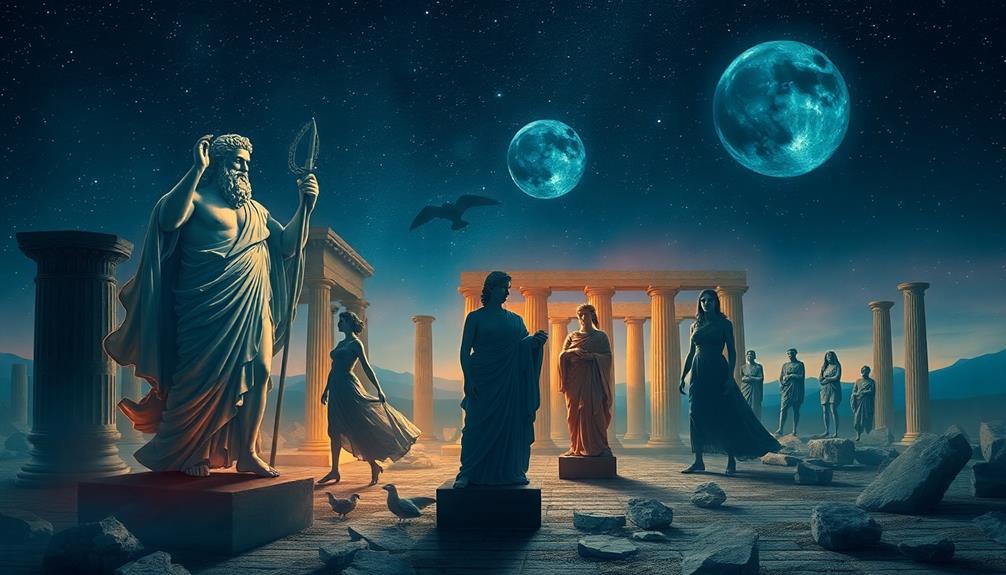
Greek myths deeply influenced ancient warfare by embedding ideas of heroism, divine intervention, and divine justice into military culture. Soldiers believed gods actively favored their side, guiding strategies and rewarding piety. Heroes like Achilles embodied martial virtue, inspiring soldiers to emulate their divine-heroic traits. Warfare was seen as a sacred act reflecting cosmic order and divine will. To uncover how these mythic ideas shaped tactics and societal values, explore the powerful links between myth and military practice.
Key Takeaways
- Greek myths portrayed heroes whose divine parentage and favor legitimize their military actions and inspire soldiers.
- Tales of divine intervention and favor shaped warfare strategies, emphasizing piety and divine approval.
- Mythic narratives reinforced the idea that victory depended on divine will, influencing military values and practices.
- Heroic ideals from Homer, like honor and resilience, motivated warriors to emulate divine-heroic models.
- Mythology integrated divine acts into warfare, fostering a martial culture that linked heroism with divine legitimacy.

Greek myths are deeply intertwined with ancient warfare, shaping how societies understood heroism, honor, and the divine’s role in battles. These stories didn’t just entertain; they served as moral guides and ideological tools that influenced soldiers and commanders alike. When you think of heroic deeds in Greek mythology, you picture warriors risking everything for glory, often fueled by the belief that their actions pleased the gods. These heroic deeds weren’t simply about personal bravery—they embodied the ideals of honor and reputation that defined a warrior’s life. Heroes like Achilles and Odysseus became the models of martial virtue, inspiring warriors to emulate their courage and resilience. Their feats on the battlefield were celebrated as divine tests of valor, blurring the line between human effort and divine approval.
Divine intervention played a *pivotal* role in shaping the course of warfare in Greek myth. The gods were not distant spectators but active participants, often influencing outcomes through direct involvement. You see this in the stories of the Trojan War, where gods like Athena, Hera, and Aphrodite take sides, aiding their favored warriors with strategic guidance, magical weapons, or even divine fury. These interventions reinforced the idea that success in battle depended not only on human skill but also on divine favor. When a hero like Hector or Ajax fought bravely, they often did so with the belief that divine powers watched over them, rewarding their piety or punishing their hubris. This divine backing elevated their achievements, making victory a reflection of both mortal effort and divine will. Additionally, the concept of divine justice was central to these narratives, emphasizing that the gods’ approval was essential for victory and honor in war.
The mythic narratives also served to legitimize warfare in Greek society. Heroes’ divine parentage or divine approval symbolized that their military actions were part of a larger cosmic order. You’re reminded that warriors sought to emulate these divine-heroic models, believing that their own deeds could secure divine favor or immortality. These stories fostered a martial culture where honor, heroic deeds, and divine intervention were tightly linked, influencing not just myth but real military practices. Leaders and soldiers drew inspiration from these tales, shaping their strategies and values. They understood that victory wasn’t just about weapons or tactics but also about aligning themselves with divine forces, making their martial endeavors sacred acts that honored the gods and preserved societal ideals.
Top picks for "homer battlefield greek"
Open Amazon search results for this keyword.
As an affiliate, we earn on qualifying purchases.
Frequently Asked Questions
How Did Greek Myths Shape Soldier Training and Discipline?
Greek myths shaped your soldier training and discipline through heroic training and discipline rituals. You were inspired by legendary heroes like Achilles and Hercules, who exemplified strength and valor. These stories reinforced the importance of bravery and endurance, motivating you to follow strict discipline rituals that fostered unity and resilience. Mythology became a moral guide, encouraging you to emulate heroic qualities in battle and maintain unwavering discipline.
Were Mythological Symbols Used in Ancient Greek Military Insignia?
You’ll find that mythological symbols played a key role in ancient Greek military insignia. They used mythical emblems and divine symbols to inspire soldiers and evoke divine protection. These divine icons, such as gods or legendary creatures, appeared on shields, banners, and armor, creating a powerful connection to myth and legend. This use of divine symbols wasn’t just decoration—it fueled courage and unity in battle, making every insignia a symbol of divine favor.
Did Mythological Stories Influence Warfare Strategies and Tactics?
Yes, mythological stories influenced warfare strategies and tactics. You see, heroic combat often inspired soldiers to emulate legendary feats, boosting morale and bravery. Divine intervention, believed to be granted by gods, shaped strategic decisions and battlefield conduct. These stories encouraged warriors to seek favor from gods, believing divine help could turn the tide of battle, making mythic themes central to ancient Greek military mindset and tactics.
How Did Gods’ Favor Impact Ancient Greek Military Campaigns?
You might think divine intervention was just myth, but in reality, gods’ favor deeply impacted Greek campaigns. Sacred rituals and offerings aimed to secure divine favor, believing gods’ support would turn the tide of battle. Ironically, soldiers often relied more on these rituals than their skills. When gods approved, victories seemed assured; when ignored, campaigns risked failure, showing just how much luck and divine favor shaped Greek warfare.
Were Mythological Themes Depicted in Ancient Greek Military Art?
Yes, mythological themes are vividly depicted in Greek military art. You’ll notice mythical creature representations like griffins and centaurs, symbolizing divine strength and chaos. Heroic narrative motifs, such as scenes of warriors battling monsters or divine interventions, emphasize valor and divine favor. These artistic elements serve to inspire troops, reinforce cultural values, and connect warfare with legendary stories, making battles more than just physical clashes—they’re mythic events.
Conclusion
You now hold the secret power behind ancient warriors’ might—Greek myths weren’t just stories; they fueled armies, inspired heroes, and shaped battles that changed history forever. Without these myths, the legendary wars might have been mere shadows, forgotten and insignificant. So next time you think of ancient warfare, remember: it was the gods, monsters, and epic tales that made warriors invincible, turning mere mortals into legends whose stories echo through eternity.