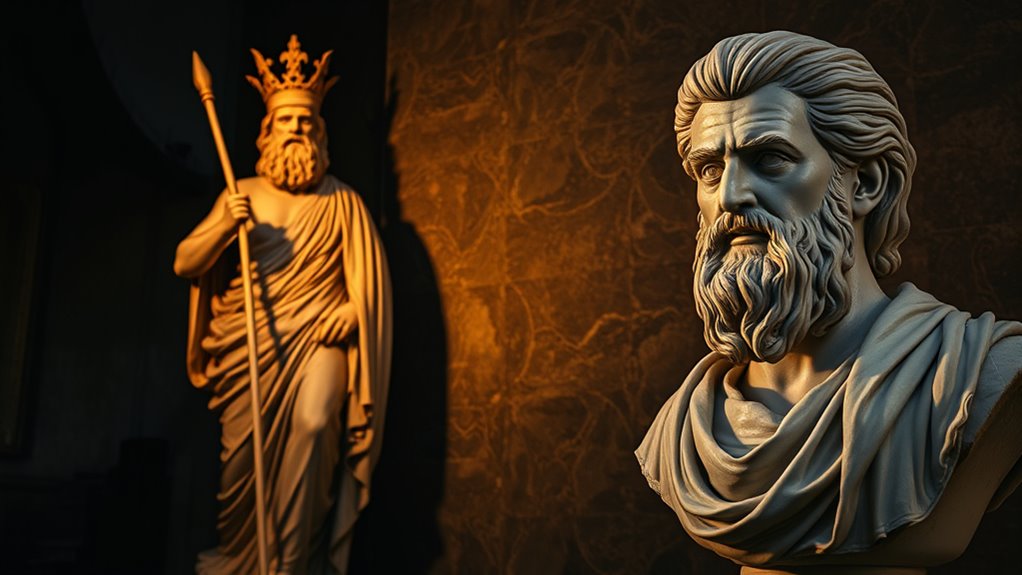

You’ll see that Asclepius, as the Greek god of healing, symbolizes divine power and spiritual rituals, with temples serving as sacred healing sites. In contrast, Hippocrates shifted focus to science, emphasizing observation, diagnosis, and evidence-based medicine. Both shaped medicine’s roots—one through myth and divine intervention, the other through reason and empiricism. Understanding their differences reveals how ancient healing evolved—from faith-based practices to scientific inquiry—something you’ll discover more about as you explore further.

Prime made for students and young adults
- Fast, free delivery for dorm and study essentials
- Prime Video and Amazon Music included
- Member-only deals
Key Takeaways
- Asclepius symbolizes divine healing through rituals, sacred snakes, and temples, representing mythological roots of ancient Greek medicine.
- Hippocrates shifted focus to natural, rational causes of disease, pioneering empirical observation and scientific approaches in medicine.
- Asclepius’s myth emphasizes healing as a divine act, while Hippocrates’s teachings promote evidence-based, human-centered medical practice.
- The staff of Asclepius remains a symbol of medicine, blending spiritual symbolism with healing, whereas Hippocrates established ethical standards like the Hippocratic Oath.
- Their combined legacy illustrates the evolution from mythological, faith-based healing to systematic, scientific medical practice.
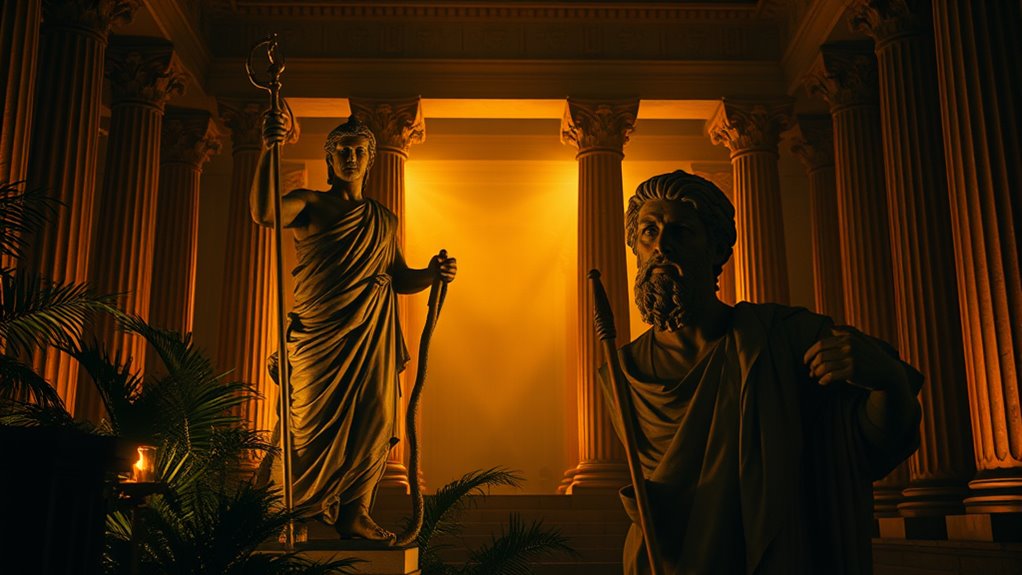
Have you ever wondered how the ancient figures of Asclepius and Hippocrates shaped the foundations of medicine? Their influence spans mythological healing practices and the evolution of medical philosophy, setting the stage for modern medicine. Asclepius, the Greek god of healing, embodies mythological healing, representing divine power to cure ailments through sacred rituals, sacred snakes, and healing temples known as Asclepieia. These temples weren’t just places of worship; they functioned as early clinics where patients sought cures through dreams, offerings, and divine intervention. Asclepius’s myth emphasizes the importance of healing as a divine act, intertwining spirituality with medicine. His staff, entwined with a serpent, remains a universal symbol of medicine today, symbolizing renewal and healing. This mythological healing highlights the ancient belief that health was linked to divine favor, and healing involved spiritual devotion as much as physical treatment.
Conversely, Hippocrates shifted the focus from divine intervention to a more rational approach, laying the groundwork for medical philosophy. Known as the “Father of Medicine,” he emphasized observation, diagnosis, and natural causes of disease, advocating for a systematic, evidence-based approach. His teachings moved medicine away from mythological healing toward a scientific perspective, emphasizing that illness had physical causes rather than divine punishment alone. Hippocrates introduced principles that still underpin medical ethics today, notably the Hippocratic Oath, which underscores professionalism, confidentiality, and the duty to do no harm. His approach marked a significant turning point, asserting that the body’s health could be understood through careful study and rational thought, rather than solely through religious rituals.
While Asclepius’s mythological healing underscores the spiritual roots of health in ancient Greece, Hippocrates’s medical philosophy laid the groundwork for empirical medicine. Together, they represent two different but interconnected origins of healthcare—one rooted in divine myth and spiritual practice, the other in reason and scientific inquiry. You can see how these dual influences shaped the evolution of medicine, blending faith and reason, spirituality and science. Their legacy endures today, reminding us that healing is a complex interplay of belief and knowledge. Understanding both aspects helps appreciate how medicine has developed from divine mythological concepts to the evidence-based science that guides us now. In essence, Asclepius and Hippocrates personify the transition from mythological healing to medical philosophy, a journey that continues to influence how we approach health and wellness.
As an affiliate, we earn on qualifying purchases.
Frequently Asked Questions
How Did Asclepius’ Worship Influence Ancient Greek Medical Practices?
You see, Asclepius’ worship shaped ancient Greek medical practices through healing rituals and sacred symbols. His temples became healing centers where patients performed rituals, offered sacrifices, and sought divine intervention. The sacred serpent on his staff symbolized healing and renewal, influencing medical symbols today. This blend of divine worship and practical healing methods fostered a holistic approach, emphasizing both spiritual and physical health in Greek medicine.
What Were the Key Differences Between Asclepius’ and Hippocrates’ Approaches?
Imagine stepping into ancient healing scenes, where divine intervention beckons and empirical observation guides. You see Asclepius’s followers trusting gods for cures, believing in divine power. Meanwhile, Hippocrates insists on careful observation, natural causes, and rational methods. The key difference? Asclepius’s approach relies on divine healing, while Hippocrates champions science, laying the groundwork for medicine based on evidence rather than gods.
Did Hippocrates Acknowledge Any Divine Influence in Medicine?
Yes, Hippocrates acknowledged some divine influence in medicine through divine acknowledgment, but he emphasized rational, natural causes over religious influence. You can see this in his writings, where he often attributes health and disease to natural factors, yet recognizes that divine forces might play a role in healing. Hippocrates aimed to develop a scientific approach, balancing religious beliefs with observation and reason, rather than relying solely on divine intervention.
How Did the Cult of Asclepius Evolve Over Time?
Like a river flowing and changing course, the cult of Asclepius evolved from humble healing rituals to a widespread religious movement. It integrated divine symbolism, emphasizing Asclepius as a god of medicine, with temples becoming healing sanctuaries. Over time, followers embraced dreams and rituals as divine messages, transforming healing into a spiritual experience. This evolution solidified Asclepius’s role as a central divine figure in ancient Greek medicine.
Are There Modern Medical Practices Derived From Asclepius or Hippocrates?
You’ll find modern medical practices inspired by Hippocrates, like emphasizing ethical standards and patient care. Herbal remedies are still used alongside pharmaceuticals, reflecting ancient healing traditions. While Asclepius’s direct influence is less evident today, his association with healing temples influenced holistic approaches. Overall, contemporary medicine blends these ancient principles, prioritizing ethical practice and natural remedies to improve health and well-being.
As an affiliate, we earn on qualifying purchases.
Conclusion
So, here’s the irony: while Asclepius and Hippocrates laid the groundwork for medicine, today’s practices often ignore their wisdom. You might think modern medicine has advanced beyond gods and ancient texts, yet we still chase cures and miracles, pretending technology alone is enough. Maybe, in the end, the true healing secret isn’t found in science or gods but in respecting history’s humble beginnings—and realizing we’re still learning how to truly heal.
ancient Greek healing temples replica
As an affiliate, we earn on qualifying purchases.
As an affiliate, we earn on qualifying purchases.
As an affiliate, we earn on qualifying purchases.
Columbus Day / Indigenous Peoples' Day Picks
long weekend sales
As an affiliate, we earn on qualifying purchases.







![Terence Tao: Math 2.0 [Pdf]](https://greeksceptic.com/wp-content/uploads/2026/10/terence-tao-math-2-0-pdf-featured-260x140.jpg)