Euhemerus believed that gods were originally mortals who gained fame or notoriety over time, with myths evolving from real people and events. He challenged the idea that divine beings were supernatural, asserting instead that legends grew exaggerated through storytelling across generations. This skeptical view encourages you to see myths as historical legends rather than sacred truths. Keep exploring, and you’ll discover how his ideas reshape our understanding of ancient stories and beliefs.

Prime made for students and young adults
- Fast, free delivery for dorm and study essentials
- Prime Video and Amazon Music included
- Member-only deals
Key Takeaways
- Euhemerus believed gods originated from mortal figures who achieved fame or notoriety in history.
- He argued myths are exaggerated stories based on real people and events over time.
- Euhemerus’s approach challenges the literal divine status of mythic characters.
- His skepticism promotes analyzing myths as reflections of actual historical figures and occurrences.
- This perspective encourages rational inquiry into legends, viewing them as human storytelling rather than divine truth.
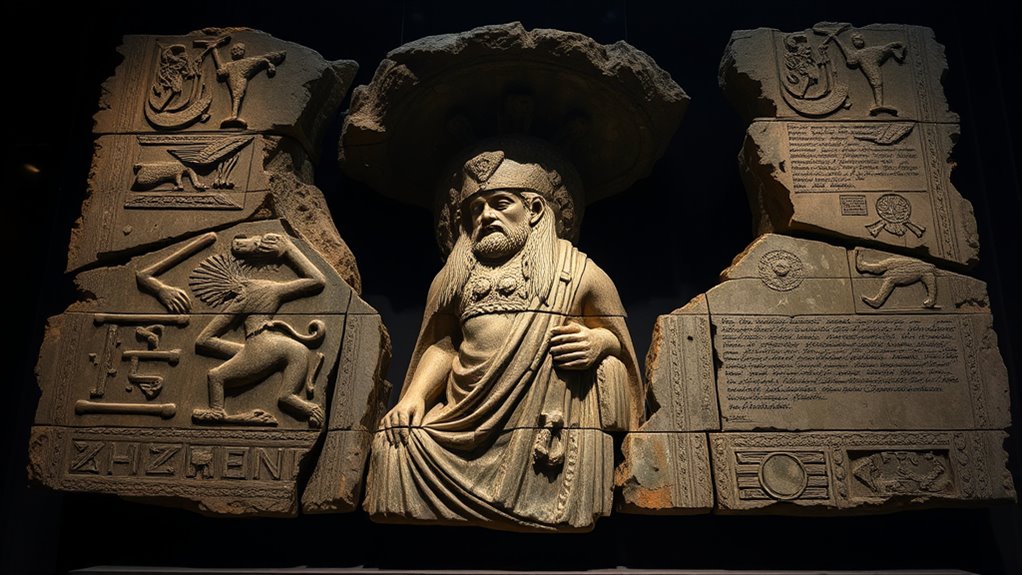
Euhemerus, an ancient Greek thinker, approached myths with a skeptical eye, challenging their divine origins. Instead of accepting stories about gods as literal truths, he proposed that many myths were based on real people and events, later exaggerated over time. His idea was rooted in myth realism, a perspective that seeks to find historical kernels within legendary tales. You might wonder why he believed that gods were actually mortals who achieved fame or notoriety. Euhemerus argued that history and myth are intertwined, with stories transforming over generations into divine legends. He saw these myths not as literal truths but as reflections of actual figures, perhaps kings or heroes, whose deeds grew larger in the retelling. This approach is a radical departure from traditional religious views, emphasizing a form of historical skepticism that questions the divine status attributed to mythic characters. By applying historical skepticism, he encourages a more rational examination of legendary narratives.
As you explore Euhemerus’ ideas, you realize that he’s not denying the cultural importance of myths but reinterpreting them through a more rational lens. By applying historical skepticism, he seeks to understand how stories about gods might have originated from real events or notable individuals. For instance, a legendary hero might have been a revered king or military leader whose life was mythologized over time. By doing so, Euhemerus bridges the gap between history and myth, encouraging you to see legends as reflections of human history rather than divine intervention. This perspective invites you to question traditional narratives, pushing you to seek tangible evidence behind stories that have been sacred or legendary for centuries.
His approach also influences how you interpret ancient texts and artifacts. When you encounter a myth, instead of accepting it at face value, you’re prompted to consider the possibility that it’s rooted in historical reality. Euhemerus’ ideas challenge you to think critically, to sift through layers of storytelling in search of what might truly have happened. His historical skepticism underscores the importance of evidence and rational inquiry, even when dealing with stories that seem too fantastic to be true. You learn to appreciate myths not just as religious or cultural symbols but as products of human storytelling, shaped by memory, tradition, and social needs. Through Euhemerus’ lens, you see myth as an evolving reflection of history—imperfect, but often grounded in real people and events.
Frequently Asked Questions
How Did Euhemerus’ Ideas Influence Later Mythography?
Euhemerus’ ideas greatly influenced later mythography by encouraging a more skeptical myth interpretation, viewing gods as historical figures rather than divine beings. His approach shifted focus toward understanding myths as cultural memories, inspiring scholars to analyze myths through a historical lens. This historical influence led to a more critical perspective on myth origins, shaping modern studies of myth interpretation and fostering a tradition of examining myths within their cultural and historical contexts.
Are Euhemerus’ Theories Accepted by Modern Historians?
You’ll find that modern historians generally don’t fully accept Euhemerus’ theories. While his idea that myths originate from actual historical figures influences ancient interpretations, contemporary skepticism questions whether myths can be reduced solely to real events or people. Instead, they see myth as a complex mix of cultural, religious, and psychological factors, making Euhemerus’ literal interpretation less convincing in today’s scholarly landscape.
Did Euhemerus Believe All Gods Originated From Humans?
You might think Euhemerus believed all gods originated from humans, but he actually suggested that some gods could have historical roots, while others were purely mythological. His approach emphasizes a skeptical myth interpretation, aiming for historical accuracy by tracing divine stories back to real people or events. So, he didn’t fully deny divine origins but promoted a more evidence-based view, blending history and myth in understanding ancient religion.
How Did Euhemerus’ Skepticism Impact Religious Practices of His Time?
Your skepticism shattered the foundation of mythical literalism, turning gods into legendary humans and sparking radical religious reinterpretation. It was like an earthquake in faith, making people question divine omnipotence and inspiring new views that gods were just revered heroes. This upheaval challenged traditional practices, prompting followers to see myths as historical stories rather than divine truths, ultimately transforming religious life into a more human-centered, skeptical worldview.
What Are the Main Criticisms of Euhemerus’ Approach to Myth?
You might criticize Euhemerus’ approach for oversimplifying myth by prioritizing historical accuracy over cultural context. His view assumes gods are mere humans, ignoring cultural biases and symbolic meanings behind myths. This perspective can dismiss the spiritual significance and diverse interpretations of mythic stories, leading you to see it as too reductionist. Such criticisms highlight how Euhemerus’ focus on skepticism may overlook the richness and complexity of mythic traditions.
Conclusion
So, now you see how Euhemerus challenges the stories you’ve always believed. He urges you to look beyond the surface and question what’s been handed down through generations. Don’t let myths blind you; sometimes the truth is hidden in plain sight. Remember, it’s often wise to see through the fog and realize that what’s myth today might be history tomorrow. Keep your eyes open—sometimes, the truth is just waiting to be uncovered.
Fall Picks
fall essentials
As an affiliate, we earn on qualifying purchases.