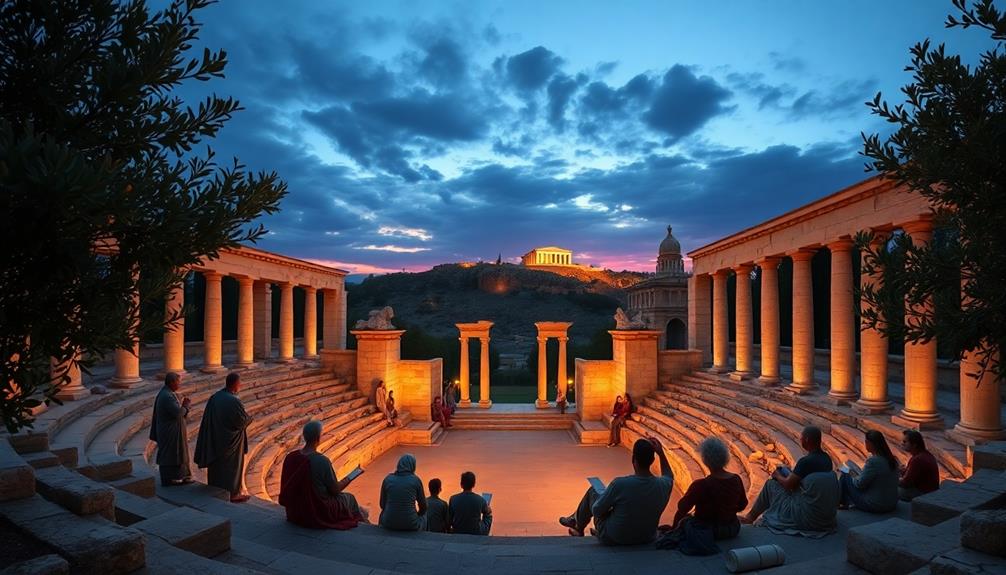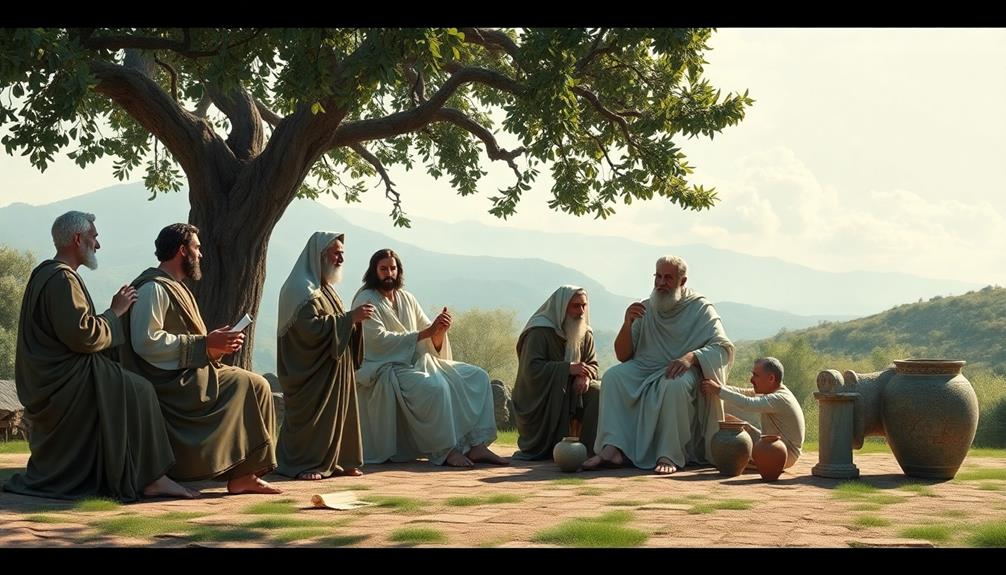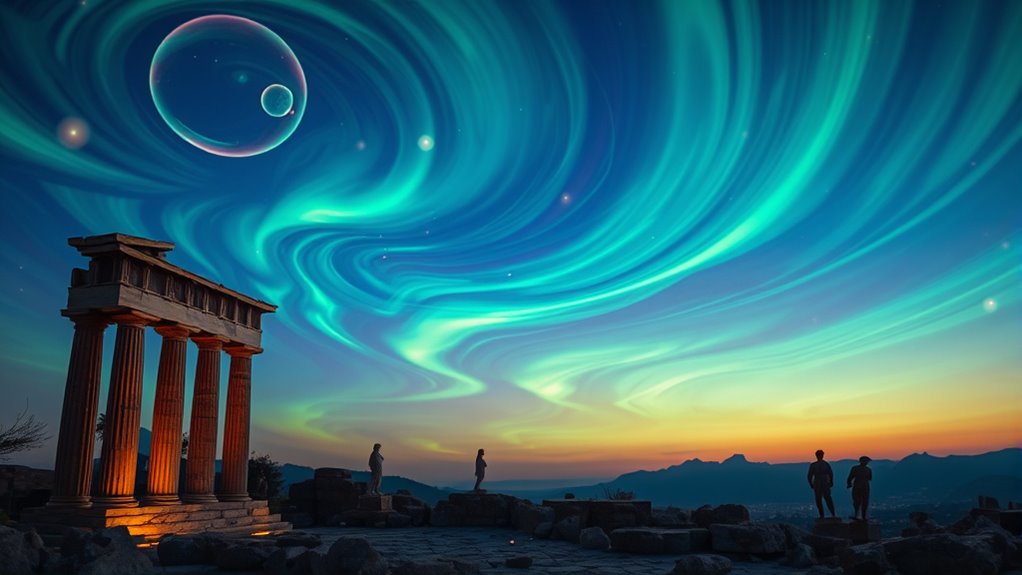

Ancient Greeks often saw strange lights in the sky as divine signs or messages from the gods. They interpreted luminous objects, fiery chariots, and glowing phenomena as symbols of divine intervention or omens during important events. Art and mythology show how these lights were linked to gods and mythic stories, blending natural phenomena with spiritual meaning. If you keep exploring, you’ll discover how these ancient interpretations reflect their understanding of the cosmos and what they believed about celestial mysteries.

Prime made for students and young adults
- Fast, free delivery for dorm and study essentials
- Prime Video and Amazon Music included
- Member-only deals
Key Takeaways
- Greeks saw strange sky lights as divine omens signaling gods’ messages or warnings during significant events.
- Mythological stories describe fiery chariots and luminous objects, often interpreted as divine or celestial symbols.
- Art and pottery depict glowing objects alongside gods, reinforcing the view of these phenomena as divine or supernatural.
- Natural explanations like meteors, comets, or atmospheric illusions are considered, but cultural interpretations often frame these as divine signs.
- Ancient Greeks integrated mysterious lights into their worldview, blending myth, religion, and natural phenomena to interpret the sky.
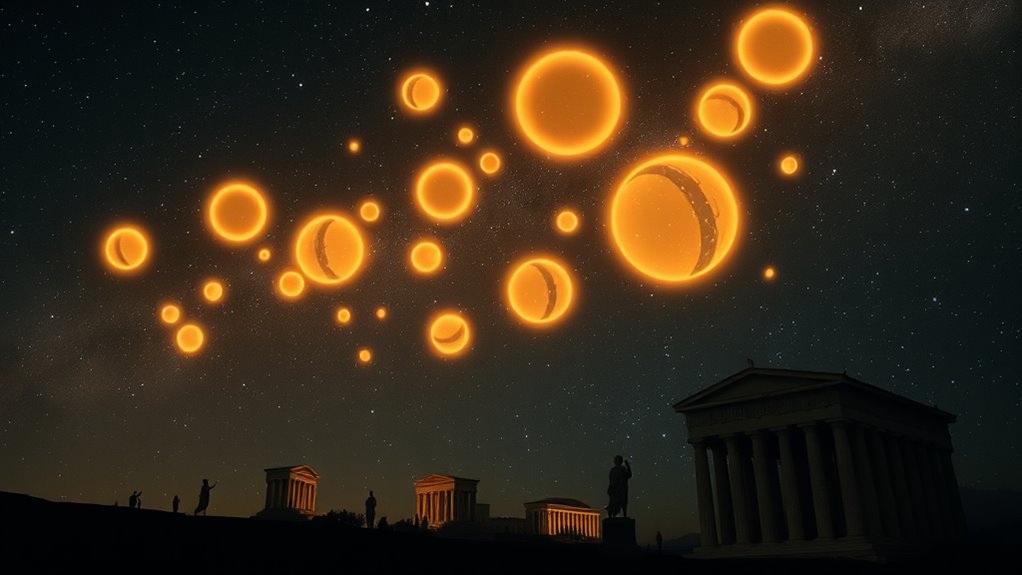
Throughout history, many ancient civilizations have left behind mysterious artifacts and stories that some interpret as evidence of UFO encounters. The Greeks, in particular, recorded numerous instances of strange lights and aerial phenomena that they considered celestial omens or mythological symbols. These stories weren’t just about the sky’s display; they held deep significance, often linked to divine messages or signs from the gods. When you explore ancient Greek texts and artwork, you notice a recurring theme: luminous objects that defy natural explanation, appearing suddenly and then vanishing just as mysteriously.
Ancient Greece recorded mysterious lights seen as divine omens and mythological symbols.
The Greeks believed these celestial omens carried messages, sometimes warnings or blessings from the gods. These phenomena often appeared during important events, like battles or natural disasters, leading people to interpret them as divine signals. For example, in Homer’s *Iliad*, chariots and fiery charioteers are seen in the sky, which some modern theorists liken to unidentified flying objects. The Greeks also associated strange lights with mythological symbols, such as the fiery chariots of the sun god Helios or the shimmering wings of the goddess Aphrodite. These symbols reinforced the idea that extraordinary sky displays were divine messages or signs of divine presence.
You see similar ideas in ancient Greek art and pottery, where strange glowing objects are depicted alongside gods and heroes. These images suggest that observers of the time understood these phenomena as more than natural events—they were symbols of divine intervention or celestial power. Some scholars argue that these mythological symbols served as a way for the Greeks to interpret what they saw in the sky, blending mythology with natural phenomena. Modern UFO enthusiasts see parallels: what ancient people called signs from gods, others interpret as encounters with extraterrestrial craft. Additionally, atmospheric illusions might have contributed to how these luminous phenomena appeared to ancient observers, complicating the interpretation of these events.
The idea that these celestial omens could be more than mere myth isn’t new. Skeptics point out that many of these descriptions could have been inspired by natural phenomena like meteors, comets, or atmospheric illusions. But the consistent theme of divine messages and symbolic representations suggests that ancient Greeks saw these lights as meaningful, possibly even as contact with otherworldly beings. As you study these stories, it’s clear that their cultural lens shaped how they interpreted unusual sky events—viewing them as divine symbols or mythological omens rather than simple natural occurrences. Whether they were real UFO encounters or powerful mythological symbols, these stories reveal how ancient Greeks understood and integrated the mysterious lights they observed into their worldview, blending the divine with the cosmic.
ancient Greek mythological art prints
As an affiliate, we earn on qualifying purchases.
As an affiliate, we earn on qualifying purchases.
Frequently Asked Questions
Did Ancient Greeks Have Any Scientific Explanations for These Lights?
Ancient Greeks lacked modern science, so they relied on ancient astronomy and mythological symbolism to explain strange lights. They often saw these lights as divine signs or celestial phenomena linked to gods and myths. You can see how their interpretations blended astronomy with myth, attributing these mysterious lights to gods’ actions or cosmic events. Their explanations reflect a worldview where myth and observation intertwined, shaping how they understood the sky.
How Did Greek Myths Influence Interpretations of Strange Sky Phenomena?
You see, Greek myths shape how you interpret strange sky phenomena by linking them to mythical creatures and divine interventions. When you see unusual lights, you might think of gods sending signs or mythical creatures like phoenixes or winged serpents. These stories influence your perception, making celestial events seem like messages from gods or sightings of divine beings, blending natural observations with legendary explanations that deepen your cultural understanding of the sky.
Were Similar Sky Sightings Reported in Other Ancient Civilizations?
You’ll find that ancient civilizations worldwide did report similar celestial sightings, turning them into mythological sky events. From Chinese dragon dances to Mayan fire-spitting skies, these cultures observed and recorded mysterious lights and shapes. These ancient celestial sightings often sparked stories that explained natural phenomena, showing how humans across the globe saw the sky as a canvas for mythological tales. It’s a reminder that the sky’s wonders have always inspired awe.
What Symbols or Artifacts Depict Ancient Celestial Encounters?
You’ll notice celestial symbols and artifacts that depict ancient celestial encounters, such as etchings on pottery, carvings on monuments, and jewelry featuring star-like shapes. These artifacts often serve as interpretations of mysterious lights or objects seen in the sky, reflecting how ancient cultures viewed and recorded their encounters with the cosmos. By studying these symbols, you can gain insight into how early civilizations understood and revered celestial phenomena.
How Do Modern UFO Theories Compare to Ancient Greek Accounts?
Like sailors steering through fog, modern UFO theories chase ancient sky mysteries, often echoing mythological celestial beings. You see, both draw on the idea that strange lights and phenomena hint at extraterrestrial visits or divine encounters. While ancient Greeks interpreted these as gods or spirits, today’s theories propose alien visitors. The core is similar: humans seek explanations for mysterious lights, blending myth and science in a quest for understanding beyond the stars.
celestial omen replica artifacts
As an affiliate, we earn on qualifying purchases.
As an affiliate, we earn on qualifying purchases.
Conclusion
So, next time you gaze up at the night sky, remember that ancient Greeks might have seen those mysterious lights as divine or alien visitors. Their stories hint that UFOs aren’t just a modern obsession but a phenomenon as old as civilization itself. It’s almost as if the universe is playing an eternal game of hide-and-seek, leaving us with more questions than answers. Who knows? Maybe those ancient lights were the universe’s greatest secret—waiting to be uncovered by curious minds like yours.
As an affiliate, we earn on qualifying purchases.
Greek gods and myth symbols figurines
As an affiliate, we earn on qualifying purchases.
As an affiliate, we earn on qualifying purchases.
Halloween Picks
halloween
As an affiliate, we earn on qualifying purchases.