

The 2026 World Cup will showcase 48 teams across North America, marking a major shift in global football. Expect innovative stadiums with smart seating, advanced cooling, and immersive fan experiences. The event emphasizes sustainability, accessibility, and a vibrant atmosphere both inside and outside venues. This new era aims to create unforgettable moments and broader participation. To discover how these changes will transform your World Cup experience, keep exploring what’s coming next.
Key Takeaways
- The 2026 World Cup expands to 48 teams, promoting greater diversity and inclusive participation across regions.
- Hosted across North America, featuring advanced stadiums with innovative cooling, smart seating, and immersive viewing experiences.
- Enhanced fan facilities focus on accessibility, sustainability, and interactive environments to create memorable matchday experiences.
- Stadiums incorporate eco-friendly materials and energy-efficient systems, emphasizing environmental sustainability and infrastructural upgrades.
- The tournament aims to transform into a vibrant cultural celebration, setting new standards through technology, sustainability, and fan engagement.
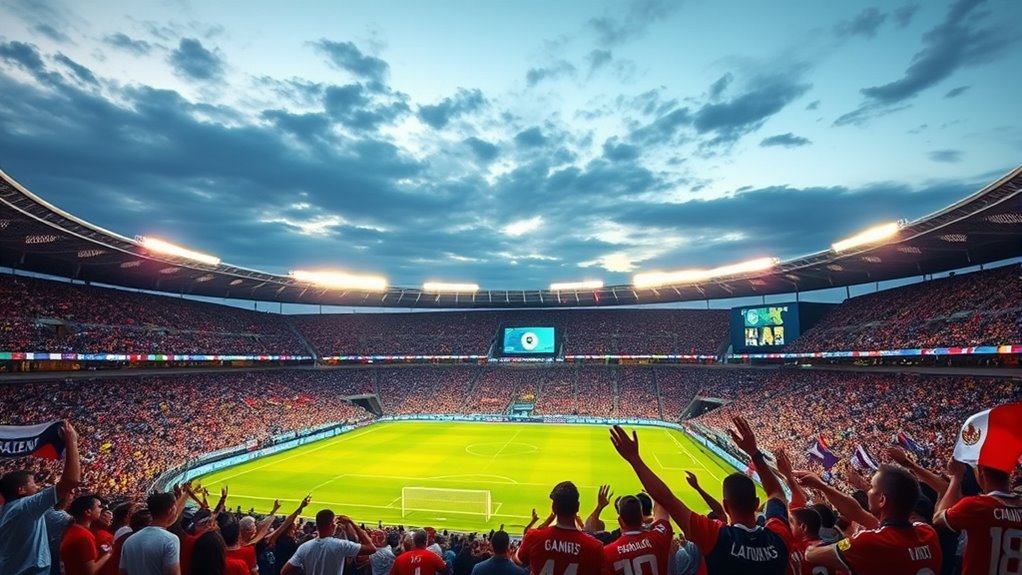
As the 2026 World Cup approaches, anticipation is building across the globe, promising a tournament like no other. This year, the event will feature 48 teams competing across North America, marking a significant expansion from previous tournaments. With more teams and matches, the organizers are pushing the boundaries of stadium innovations to enhance your fan experience. You can expect cutting-edge technology integrated into the venues—think of stadiums equipped with advanced cooling systems, smart seating, and immersive viewing options that bring every moment closer to you. These innovations are designed not just to increase comfort but also to create a more interactive and engaging environment, whether you’re watching live or from home.
The stadium designs prioritize fan experience by incorporating features that make attending matches more memorable. For example, some venues will have state-of-the-art large screens, high-fidelity sound systems, and augmented reality zones, allowing you to interact with the game in ways never before possible. Accessibility is also a key focus, with facilities that cater to all fans, ensuring everyone can enjoy the excitement. Additionally, the use of sustainable materials and energy-efficient systems in stadium construction reflects a commitment to environmental responsibility, aligning with global efforts to reduce carbon footprints while still delivering world-class venues. Moreover, many stadiums will incorporate sustainable materials and energy-efficient systems to reduce environmental impact, emphasizing a global shift toward eco-friendly infrastructure.
Traveling between matches, you’ll benefit from streamlined transportation networks and modern infrastructure upgrades. These improvements aim to minimize hassle, so you can focus on the game day experience. Many stadiums are conveniently located near urban centers, making it easier to explore local sights, food, and culture. The fan zones and communal spaces around the venues will also be lively hubs for gathering, offering entertainment, merchandise, and food that celebrate the global diversity of football. This focus on fan experience transforms the tournament into more than just a series of matches; it becomes a cultural celebration where you’re immersed in vibrant atmospheres, both inside and outside the stadiums.
All these innovations show that the 2026 World Cup isn’t just about the matches—it’s about elevating your overall experience. From the moment you buy your ticket to the final whistle, you’ll notice how technology, sustainability, and fan-centric design come together to create a truly memorable event. This tournament aims to set new standards for global football, making every aspect of your journey as exciting and comfortable as the games themselves.
Frequently Asked Questions
How Will the Expanded Format Impact Tournament Competitiveness?
The expanded format will boost tournament competitiveness by increasing group stage diversity, giving more teams a chance to advance. You’ll see more surprises and upsets, making knockout dynamics more unpredictable and exciting. With more teams involved early on, fans witness fresh talent and strategies. This setup encourages teams to perform at their best from the start, ultimately creating a more engaging, competitive, and thrilling World Cup experience for everyone involved.
Which Cities Will Host the Most Matches in 2026?
You’ll find most matches in cities like New York, Los Angeles, and Dallas, where massive stadiums with high capacities stand like giants ready to host the excitement. These urban hubs boast premier transportation infrastructure, making it easy to hop between venues. As you walk through vibrant streets, imagine the electric atmosphere, packed with fans from around the world, all converging to celebrate football’s biggest stage.
Are There New Qualification Rules for the 48-Team Format?
Yes, there are new qualification rules for the 48-team tournament structure. You’ll notice a more streamlined qualification process, with additional automatic spots for host nations and expanded regional qualifiers. This adjustment aims to make the qualification process more inclusive and competitive, giving more teams a chance to participate. The new rules also emphasize fairness, ensuring teams from different confederations have equitable opportunities to qualify for the exciting expanded tournament.
How Will the Tournament Affect Local Economies in Host Cities?
Think of the World Cup as a vibrant beacon that ignites your city’s spirit. It’ll bring an economic boost and a tourism surge, filling hotels, restaurants, and shops with enthusiastic fans. Local economies thrive as visitors spend freely, creating jobs and increasing revenue. This global event transforms your city into a lively hub of culture and excitement, leaving a lasting legacy of growth and unity long after the final whistle blows.
What Technological Innovations Will Be Used During the Event?
During the event, you’ll experience cutting-edge technology like virtual reality, enhancing fan engagement and immersive viewing. AI officiating will streamline decisions, reducing errors and increasing fairness on the pitch. These innovations make the tournament more exciting and efficient, transforming how you watch and interact with football. Expect a seamless blend of sport and technology that elevates the overall experience for fans, players, and officials alike.
Conclusion
As the 2026 World Cup approaches, you’re about to witness a new chapter in global football with expanded teams and fresh talent. Embrace the excitement and unpredictability, because as they say, “the more things change, the more they stay the same.” This tournament promises unforgettable moments and surprises that will keep you on the edge of your seat. Get ready—history is about to be made on the world’s biggest stage.