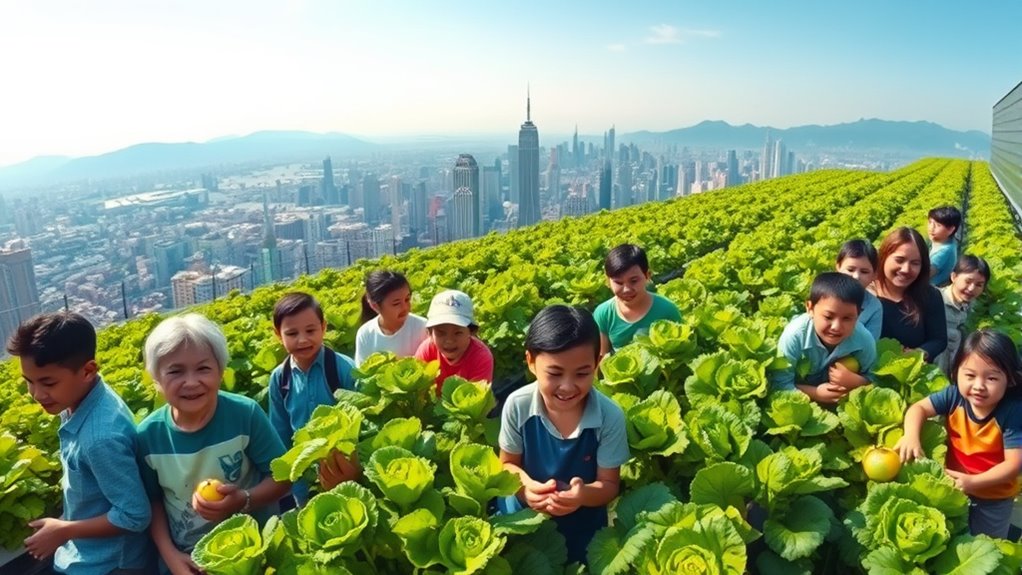

To guarantee food security in 2025 despite climate change, you need to support and adopt sustainable farming practices like crop diversification, soil conservation, and water management. These methods help create resilient systems that can adapt to environmental stresses, reduce reliance on chemicals, and protect natural resources. Achieving this goal requires coordinated efforts from governments, farmers, and consumers alike. If you stay engaged, you’ll discover how collective action can secure our food future in a changing climate.
Key Takeaways
- Achieving food security by 2025 requires widespread adoption of sustainable farming practices that enhance resilience to climate change.
- Climate change threatens traditional agriculture, necessitating innovations and policies that promote adaptive, eco-friendly food production methods.
- Collective efforts from governments, farmers, scientists, and consumers are essential to create resilient, sustainable food systems.
- Sustainable agriculture can help mitigate climate impacts, preserve resources, and ensure long-term food availability.
- Addressing climate challenges and promoting responsible consumption are critical to feeding a growing global population by 2025.

Will global efforts be enough to guarantee food security by 2025? It’s a pressing question, especially as climate change continues to challenge traditional farming methods. To meet the world’s growing demand for food, you need to understand the importance of sustainable farming practices that prioritize long-term health of the land and water resources. These methods aim to minimize environmental impact while maximizing productivity, ensuring that farmers can produce enough food without degrading the ecosystems they rely on. By adopting sustainable farming techniques, you help build climate resilience into agricultural systems, making them better equipped to withstand extreme weather events like droughts, floods, and heatwaves. Such resilience doesn’t happen by accident; it requires deliberate investment in practices like crop diversification, soil conservation, and water management.
Investing in sustainable farming boosts climate resilience and secures long-term food supply.
You might wonder whether these efforts are enough to tackle the scale of the challenge. The truth is, climate resilience in farming isn’t just a buzzword—it’s a necessity if we’re to secure food supplies in the coming years. When farmers implement sustainable practices, they create systems that are more adaptable and less vulnerable to climate shocks. This means fewer crop failures, reduced reliance on chemical inputs, and healthier soils that can store more carbon, helping to mitigate climate change itself. By strengthening these resilient systems, you’re not only safeguarding your food sources but also supporting biodiversity and the overall health of the planet.
However, transforming agriculture into a climate-resilient, sustainable enterprise isn’t easy. It requires coordinated efforts from governments, farmers, scientists, and consumers. Governments can incentivize sustainable farming through policies and subsidies, encouraging farmers to adopt eco-friendly practices. Farmers, on their part, need access to innovative technologies and knowledge to implement these changes effectively. Consumers, meanwhile, can support sustainable farming by choosing ethically produced and locally sourced food. The collective push toward climate resilience and sustainable farming isn’t just about protecting the environment; it’s about securing a reliable food future for everyone.
In the end, while global efforts are critical, they must be complemented by local action and individual choices. Sustainable farming practices that prioritize climate resilience hold the key to feeding a growing population amid a changing climate. If everyone pulls in the same direction—policy, innovation, and responsible consumption—you stand a better chance of ensuring food security by 2025 and beyond.

Mountain Valley Seed Co No-Till Garden Farm and Garden Cover Crop Mix Seeds
🌱 Diverse 9-Seed Cover Crop Mix – Non-GMO & Heirloom – Includes Austrian Field Pea, Hard Red Winter…
As an affiliate, we earn on qualifying purchases.
As an affiliate, we earn on qualifying purchases.
Frequently Asked Questions
How Will Technological Innovations Impact Global Food Distribution by 2025?
You’ll see technological innovations like precision farming and drone delivery revolutionize global food distribution by 2025. Precision farming lets you optimize crop yields, reduce waste, and adapt to climate challenges. Drones will help you deliver food quickly to remote or disaster-affected areas, ensuring better access. These tools make the system more efficient, resilient, and responsive, ultimately helping you feed a growing population despite climate pressures.
What Role Will Policy Changes Play in Ensuring Food Equity Worldwide?
You’ll see policy reform and international cooperation become essential for worldwide food equity. For example, nearly 80% of food aid depends on effective policies and collaboration. These changes will promote fairer resource distribution, support sustainable practices, and bolster resilience against climate impacts. By actively advocating for global policy shifts, you help ensure that vulnerable populations gain access to nutritious food, creating a more equitable and secure future for all.
How Might Urban Agriculture Influence Rural Food Security in 2025?
Urban farming can boost rural resilience by creating new markets and sharing innovative practices. When you support urban agriculture, you help connect city and countryside, encouraging resource sharing and knowledge transfer. This collaboration strengthens rural communities, making them more adaptable to climate impacts. By fostering urban farming, you contribute to a more resilient food system, ensuring both urban and rural areas can better withstand future challenges to food security.
What Are the Most Effective Strategies to Combat Food Waste Globally?
You can considerably reduce food waste by boosting consumer awareness about its environmental and economic impacts. Educate yourself and others to choose wisely and store food properly. Additionally, support supply chain optimization—streamlining logistics and reducing spoilage—that ensures less waste from farm to table. When you prioritize these strategies, you help create a more sustainable system, showing that small actions can lead to big changes in global food security.
How Will Climate Change Affect Nutritional Quality of Staple Crops?
Climate change will likely cause nutritional degradation in staple crops, reducing crucial nutrients like iron and vitamin A. You can counter this by supporting crop biofortification efforts, which enhance nutrient levels despite changing conditions. As temperatures rise and weather patterns shift, focusing on resilient, nutrient-rich crops becomes essential. By advocating for and adopting biofortified crops, you help guarantee better nutrition and food security despite climate challenges.
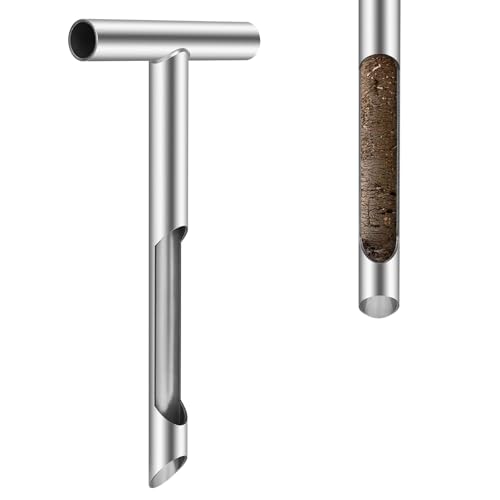
AUZEKER 12 Inch Soil Sampler Probe, Stainless Steel Soil Core Sampling Tool with T-Handle, Heavy Duty Soil Probe for Lawn, Garden, Farm & Soil Testing
Accurate Soil Core Sampling: Designed to collect clean, consistent soil cores for soil testing, analysis, and monitoring, helping…
As an affiliate, we earn on qualifying purchases.
As an affiliate, we earn on qualifying purchases.
Conclusion
By 2025, you’ll face the challenge of feeding a growing world, adapting to climate shifts, and embracing innovation. You’ll need to improve practices, embrace technology, and foster resilience. You’ll work to guarantee equality, protect resources, and build sustainable systems. You’ll endeavor to nourish communities, empower farmers, and secure futures. Because in this journey, your actions matter, your commitment counts, and your choices shape the future of food security for everyone.

Irrigation Systems Management
As an affiliate, we earn on qualifying purchases.
As an affiliate, we earn on qualifying purchases.

Sailnovo 56 Egg Incubator for Hatching Eggs with Automatic Egg Turning and Auto Humidification, Egg Candler, Temperature Control, Large Egg Incubator for Chicken, Duck, Quail Eggs White
【Large 56-Egg Capacity & High Hatching Rate】The Sailnovo Intelligence Egg Incubator offers efficient hatching with uniform temperature control,…
As an affiliate, we earn on qualifying purchases.
As an affiliate, we earn on qualifying purchases.