

In 2025, human rights are deeply impacted by technology, leading to both progress and setbacks. Digital tools empower advocacy and help protect vulnerable groups, but unchecked surveillance challenges privacy and civil liberties. Data exploitation risks threaten refugee safety and justice efforts, while digital activism faces misinformation and suppression. Despite advancements, maintaining rights requires strong regulation and transparency. To understand how these issues unfold and what solutions emerge, continue exploring this evolving landscape.
Key Takeaways
- Technological advancements have both strengthened human rights advocacy and introduced new privacy and surveillance challenges.
- Digital surveillance aids in protecting vulnerable populations but risks infringing on civil liberties and privacy.
- Refugee rights are increasingly vulnerable due to digital data exploitation and lack of safeguards.
- Online platforms enhance human rights documentation and activism but face threats from misinformation and censorship.
- Effective legal frameworks and digital rights protections are essential to balance progress and prevent setbacks in justice efforts.
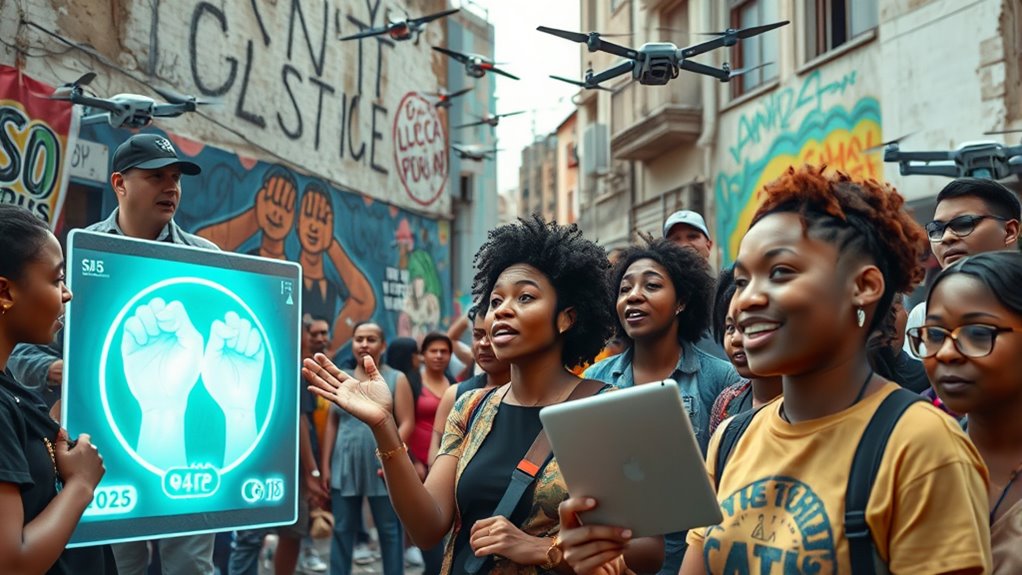
By 2025, human rights have become more interconnected with technology, shaping how you claim and defend your freedoms. Digital surveillance plays a significant role in this landscape, offering both opportunities and challenges. On one hand, governments and organizations use advanced monitoring tools to combat crime, terrorism, and human trafficking. These efforts can help protect vulnerable populations, including refugees fleeing conflict zones. On the other hand, the same surveillance systems threaten your privacy and civil liberties, especially when used without proper oversight. If you’re a refugee or advocating for refugee rights, you might find that digital surveillance can be a double-edged sword. While it can help authorities identify and assist displaced populations more efficiently, it can also lead to increased profiling and discrimination. Refugees are often vulnerable to state and non-state actors who exploit digital data to track their movements or deny them asylum. As a result, safeguarding refugee rights now requires not only legal protections but also strict regulations on surveillance practices. You need to be aware of how your digital footprint influences your safety and rights, especially when charting complex migration systems. The use of technology in refugee contexts underscores the importance of transparency and accountability, ensuring that data collection respects human dignity and privacy. Additionally, implementing multi-layered security measures can help mitigate risks associated with digital vulnerabilities and protect sensitive information. Meanwhile, strides have been made in using digital tools to amplify human rights advocacy. You can now access online platforms and social media to document abuses, mobilize support, and hold authorities accountable. Yet, these same digital channels can be exploited by malicious actors to spread misinformation or suppress dissent. Balancing these risks demands constant vigilance and robust digital rights protections. As technology advances, so does the potential to defend or undermine human rights. Your ability to participate in digital activism depends on the robustness of legal frameworks that protect your freedom of speech and privacy.

Digital Privacy Field Manual: How to Protect Your Identity, Devices, and Data in a Surveillance World
As an affiliate, we earn on qualifying purchases.
As an affiliate, we earn on qualifying purchases.
Frequently Asked Questions
How Have Technological Advances Impacted Global Human Rights Protections?
You see that technological advances have both helped and hindered global human rights protections. Digital surveillance allows authorities to monitor populations, often infringing on privacy rights, while data privacy concerns grow as personal information becomes more accessible online. You might feel empowered by tools that expose abuses, but also vulnerable to increased surveillance. Managing these advances requires vigilance to ensure technology promotes justice without compromising fundamental rights.
What Role Do Private Corporations Play in Promoting or Hindering Human Rights?
When it comes to human rights, private corporations are often caught between a rock and a hard place. You must see that their role hinges on corporate responsibility and business ethics. They can either champion justice, promoting fair labor and equality, or hinder progress through exploitative practices. Your choices as a consumer or advocate influence whether companies act as allies or obstacles in the global fight for human rights.
How Are Marginalized Communities Specifically Affected by Recent Human Rights Trends?
You see that recent human rights trends can either improve or worsen the lives of marginalized communities. When discrimination awareness rises, social inclusion efforts increase, helping these groups gain recognition and rights. However, setbacks often lead to increased exclusion, discrimination, and inequality. Your awareness and actions can help promote social inclusion, challenging prejudice, and supporting marginalized communities in their struggle for justice and equal treatment.
What Strategies Are Most Effective for Enforcing International Human Rights Laws?
You can effectively enforce international human rights laws through diplomatic pressure and legal enforcement. While some argue these strategies are slow, they create real change by compelling governments to respect rights. Stay active in supporting international organizations, use diplomatic channels to hold violators accountable, and advocate for stronger legal frameworks. Your engagement can push nations toward justice, ensuring human rights are upheld globally.
How Has Climate Change Influenced Human Rights Issues Worldwide?
Climate change has profoundly impacted human rights globally by causing climate migration, forcing people to leave their homes due to environmental disasters. You see this as a challenge to environmental justice, as vulnerable communities face increased risks and limited support. To address this, you need to advocate for policies that protect climate migrants and promote equitable resource distribution, ensuring everyone’s rights are upheld amidst environmental shifts.
surveillance countermeasures for refugees
As an affiliate, we earn on qualifying purchases.
As an affiliate, we earn on qualifying purchases.
Conclusion
As you reflect on 2025, remember that progress isn’t linear, and setbacks are part of the journey. While strides have been made, challenges remain, and the fight for justice continues. Stay committed, because, as the saying goes, “The only thing necessary for the triumph of evil is for good men to do nothing.” Your voice and actions matter in shaping a more equitable future—never underestimate your power to make a difference.

African Digital Cultures: Platforms, Performances, and Perspectives
As an affiliate, we earn on qualifying purchases.
As an affiliate, we earn on qualifying purchases.

Lovell DESTRUCT PRO – USB Hard Drive Eraser & Data Destruction Tool – 3 Phase Crytopgraphic Wipe – Super Fast SMART Technology – Multi-Drive Compatibility – Works With HDD, SSD, & External Hard Drives
- Permanent Data Erasure: Completely and permanently erase files
- Secure Data Reset: Factory reset for a clean start
- Revolutionary USB Device: Compact tool for thorough data destruction
As an affiliate, we earn on qualifying purchases.
As an affiliate, we earn on qualifying purchases.