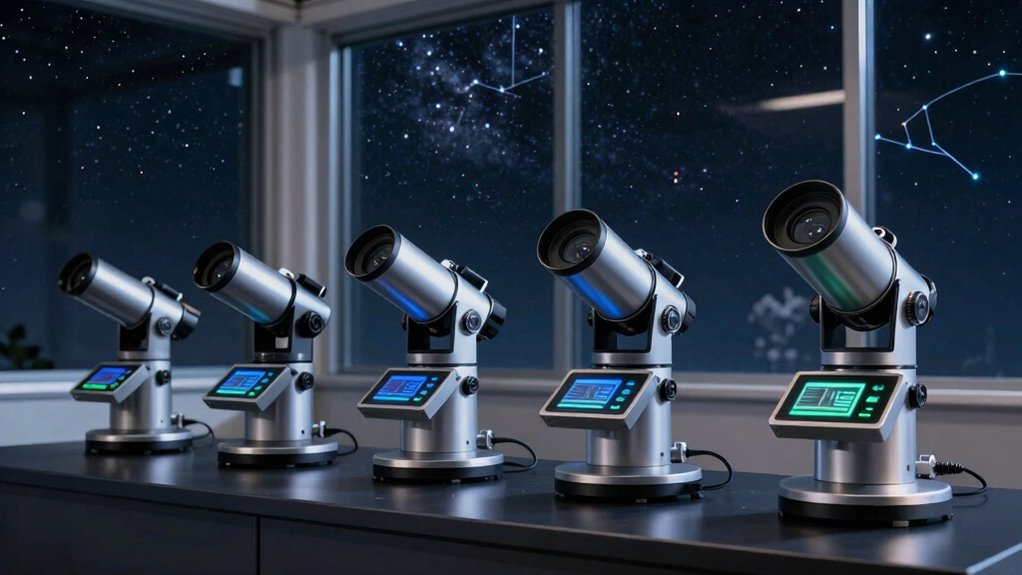

Starting with a computerized telescope can significantly enhance your stargazing experience, especially for beginners. For those who want powerful views of planets and deep-sky objects with minimal manual effort, the Celestron NexStar 8SE stands out with its large 8-inch aperture and automated GoTo system. If portability and software integration are priorities, the Celestron NexStar 127SLT offers a compact design with a bright, color-corrected view. For absolute beginners who prefer smartphone-guided setup, the Celestron StarSense Explorer DX 130AZ delivers ease of use and bright images. Each of these options balances features and complexity differently, so your choice ultimately depends on how much you value power, portability, or simplicity.

Get school and study supplies delivered free — and shop member deals
- Fast, free delivery on millions of items
- Access to Prime Big Deal Days deals on October 6–7
- Prime Video, Amazon Music and more included
Key Takeaways
- The Celestron NexStar 8SE provides high power for detailed lunar and planetary views, but is more complex and costly.
- The NexStar 127SLT offers a good balance of portability and automatic object tracking suitable for both beginners and casual enthusiasts.
- Smartphone-guided models like the StarSense Explorer DX 130AZ excel in ease of use but have limitations in optical power compared to larger telescopes.
- All options require some initial setup and alignment, with tradeoffs between simplicity and advanced features.
- Choosing the right telescope depends on whether you prioritize power, portability, or ease of use for your sky adventures.
| Celestron NexStar 8SE Computerized Telescope – Schmidt-Cassegrain |  | Best Overall Power and Detail | Aperture: 8 inches | Optics: Schmidt-Cassegrain | Mount: Computerized GoTo | VIEW ON AMAZON | See Our Full Breakdown |
| Celestron NexStar 127SLT Maksutov-Cassegrain Computerized GoTo Telescope |  | Best for Portability and Bright Views | Aperture: 127mm | Optical Design: Maksutov-Cassegrain | Database: 40,000+ objects | VIEW ON AMAZON | See Our Full Breakdown |
| Celestron StarSense Explorer DX 130AZ Smartphone Guided Newtonian Telescope |  | Best for Smartphone Guided Simplicity | Telescope Type: Newtonian reflector | Aperture: 130mm | Mount Type: Altazimuth | VIEW ON AMAZON | See Our Full Breakdown |
| Celestron 114LCM Computerized Reflector Telescope for Beginners |  | Best for Budget and Simplicity | Optics: All glass | Mount: Computerized GoTo | Number of objects: 4,000 | VIEW ON AMAZON | See Our Full Breakdown |
| Celestron StarSense Explorer LT 114AZ Smartphone Guided Telescope |  | Best for Smartphone-Guided Beginners | Telescope Type: Newtonian reflector | Aperture: 114mm | Eyepieces: 10mm and 25mm | VIEW ON AMAZON | See Our Full Breakdown |
| computerized telescopes for beginner | Aperture | Eyepieces |
|---|---|---|
| Celestron NexStar 8SE Computer | 8 inches | — |
| Celestron NexStar 127SLT Maksu | 127mm | — |
| Celestron StarSense Explorer D | 130mm | 10mm and 25mm |
| Celestron 114LCM Computerized | — | 25mm & 9mm |
| Celestron StarSense Explorer L | 114mm | 10mm and 25mm |
More Details on Our Top Picks
Celestron NexStar 8SE Computerized Telescope – Schmidt-Cassegrain
The Celestron NexStar 8SE is a powerful 8-inch Schmidt-Cassegrain telescope, making it ideal for viewers who want high-detail lunar, planetary, and deep-sky observations. Its fully automated GoTo mount with SkyAlign technology simplifies object location, reducing manual star-hopping. Compared to smaller models, this telescope offers much greater light-gathering ability, but it comes with a higher price and a more complex setup process. It’s better suited for those willing to learn the basics of alignment and calibration, and who desire serious observing power in a portable package.
Pros:- Large 8-inch aperture for detailed lunar/planetary views
- Automated GoTo system with SkyAlign for easy object locating
- Compact and portable design for its size
- Upgradeable with accessories
Cons:- Requires initial setup and alignment
- More complex to operate than smaller, manual scopes
- Higher cost compared to entry-level options
Best for: Beginners who want serious observing power and don’t mind a steeper learning curve
Not ideal for: Absolute beginners seeking simple, ultra-portable setups or minimal setup fuss
- Aperture:8 inches
- Optics:Schmidt-Cassegrain
- Mount:Computerized GoTo
- Object Database:40,000+ objects
- Warranty:2 years
Our verdict“This telescope offers impressive power and automation for beginners ready to handle a slightly complex setup.”
Celestron NexStar 127SLT Maksutov-Cassegrain Computerized GoTo Telescope
The NexStar 127SLT combines a 127mm Maksutov-Cassegrain optical tube with a portable, lightweight design. Its automated GoTo system allows quick object location, making it ideal for beginners who want reliable tracking without the bulk of larger scopes. The bright, color-corrected views of planets and the Moon stand out compared to traditional refractors or reflectors of similar size. However, its slightly more complex optical design may pose a small learning curve for absolute beginners, and its power is less than the 8-inch model. This makes it a good middle ground for those wanting decent detail without sacrificing portability.
Pros:- Portable and lightweight for travel
- Automated object tracking and locating
- Bright, color-corrected planetary views
- Includes astronomy software
Cons:- Requires some setup and alignment
- Limited to amateur astronomy, not professional-grade
- Optical design may have a slight learning curve
Best for: Beginners interested in planetary and lunar observation with portability
Not ideal for: Users seeking deep-sky astrophotography or larger aperture power
- Aperture:127mm
- Optical Design:Maksutov-Cassegrain
- Database:40,000+ objects
- Tripod:Adjustable steel
- Included Software:Starry Night Special Edition
- Warranty:2 years
Our verdict“This telescope balances ease of use and portability with enough power for planetary enthusiasts and casual sky watchers.”
Celestron StarSense Explorer DX 130AZ Smartphone Guided Newtonian Telescope
The StarSense Explorer DX 130AZ uses your smartphone to analyze the night sky and guide you to celestial objects, making it especially accessible for newcomers. Its 130mm Newtonian reflector provides bright, detailed views of the Moon, planets, and deep-sky objects, with a full-height tripod for stability. The app-based guidance simplifies the process of finding objects, reducing the learning curve. Nonetheless, it requires a compatible smartphone with Android 12+ or iOS 18+, and manual tracking can be less precise for advanced observations. This model is excellent for those who want an engaging, tech-assisted entry into astronomy without complex setup.
Pros:- Uses smartphone for real-time sky recognition
- Bright, detailed 130mm aperture
- Includes multiple eyepieces and full-height tripod
- Simple setup and operation
Cons:- Requires a compatible smartphone
- Manual mount less stable for precise tracking
- Limited optical power compared to larger scopes
Best for: Beginners who prefer smartphone guidance and easy operation
Not ideal for: Advanced users seeking precise manual tracking or astrophotography
- Telescope Type:Newtonian reflector
- Aperture:130mm
- Mount Type:Altazimuth
- Eyepieces:10mm and 25mm
- Finderscope:Red dot
- Compatibility:Android 12+, iOS 18+
Our verdict“This model offers a straightforward, engaging experience ideal for beginners wanting guided sky exploration via their phone.”
Celestron 114LCM Computerized Reflector Telescope for Beginners
The Celestron 114LCM offers an affordable entry point into computerized astronomy with its all-glass optics and a GoTo mount capable of locating over 4,000 objects. It’s designed for easy backyard observing, featuring a full-height aluminum tripod, two eyepieces, and free astronomy software. While its 114mm aperture is smaller than larger models, it still provides decent views of the Moon and brighter deep-sky objects. The setup process is straightforward, but the scope’s basic features mean it’s best suited for beginners who want to learn the ropes without a hefty investment. More advanced users might find its capabilities limiting.
Pros:- Automatic star locating simplifies observing
- Includes multiple eyepieces and finderscope
- Portable and lightweight
- Free astronomy software
Cons:- Limited to beginner features
- Optics may not satisfy advanced astronomers
- Requires setup and alignment
Best for: Budget-conscious beginners wanting automated features
Not ideal for: Those seeking high-power viewing or astrophotography
- Optics:All glass
- Mount:Computerized GoTo
- Number of objects:4,000
- Eyepieces:25mm & 9mm
- Tripod:Full-height aluminum
- Software:Starry Night Basic
Our verdict“This telescope makes automation accessible at an affordable price, perfect for newcomers learning the basics.”
Celestron StarSense Explorer LT 114AZ Smartphone Guided Telescope
The StarSense Explorer LT 114AZ combines a 114mm Newtonian reflector with smartphone-based sky analysis, making it accessible for absolute beginners. Its red dot finder and full-height tripod facilitate straightforward setup, while the app provides real-time guidance and object suggestions. This model is especially appealing for those who want to explore the night sky with minimal manual star-hopping. However, the 114mm aperture offers less light collection than larger telescopes, limiting its ability to resolve faint deep-sky objects. It’s best suited for casual stargazing and educational use.
Pros:- Easy smartphone-guided setup
- Bright, detailed views of Moon and planets
- Includes multiple eyepieces and full-height tripod
- User-friendly interface
Cons:- Requires a compatible smartphone
- Less stable manual tracking
- Limited aperture for faint objects
Best for: Beginners seeking an easy, app-assisted sky exploration tool
Not ideal for: Users wanting high-power viewing or detailed astrophotography
- Telescope Type:Newtonian reflector
- Aperture:114mm
- Eyepieces:10mm and 25mm
- Mount Type:Altazimuth
- Compatibility:Android 12+, iOS 18+
- Included Accessories:Red dot finderscope, smartphone dock
Our verdict“This telescope offers a simple, guided experience perfect for newcomers eager to learn the night sky with their phone.”

How We Picked
Our selection process focused on telescopes that combine automation with beginner-friendly features. We prioritized models with automated object locating, ease of setup, and good optical quality suitable for starting astronomers. Each product was compared based on aperture size, software integration, portability, and user interface, ensuring options that cover a range of needs—from high power and advanced features to simple smartphone guidance. Tradeoffs such as price, complexity, and optical power were carefully considered, aiming to recommend models that offer real value for those just entering the hobby.
Factors to Consider When Choosing Computerized Telescopes For Beginners
Choosing a computerized telescope as a beginner involves balancing power, ease of use, portability, and budget. Key factors include aperture size, which influences image brightness and detail; automation features like GoTo and sky software, which make object location easier; and setup complexity. Think about whether you want a telescope primarily for planetary detail, deep-sky objects, or casual stargazing. I’ll walk through these considerations and help clarify which features matter most for your specific needs.
Power and Aperture
The aperture determines how much light your telescope can gather, directly affecting the brightness and detail of the images you see. Larger apertures, like 8 inches, unlock more detail and are better for deep-sky objects, but they tend to be bulkier and more expensive. Smaller apertures, such as 114mm or 130mm, are more portable and easier to handle but may limit faint object observation. Consider your viewing priorities—whether you want detailed planetary views or broader deep-sky exploration—and choose accordingly.
Automation and Software
Most beginner-friendly models feature some form of automation, such as GoTo mounts that automatically locate objects, or smartphone apps that guide your skywalks. These features dramatically reduce the learning curve and time spent star-hopping, making your sessions more productive and enjoyable. However, more automation often comes with higher costs and setup complexity. Decide if you prefer an all-in-one experience with integrated software or are comfortable with manual operation and learning the skies more traditionally.
Portability and Ease of Setup
If you plan to take your telescope on trips or to star parties, portability becomes essential. Compact models like the NexStar 127SLT or smartphone-guided scopes are easier to transport and set up, while larger scopes like the NexStar 8SE might require more effort but offer greater viewing power. Also, consider the ease of initial alignment—some models feature quick alignment procedures, making them more accessible for casual use.
Budget and Future Growth
Prices vary widely among beginner models, with smaller, simpler scopes costing less but offering fewer features. If you anticipate progressing in astronomy, investing in a slightly more capable model might be wise, especially if it offers upgrade options or better software. Conversely, if you’re just starting and want something straightforward and affordable, models like the 114LCM or StarSense Explorer LT provide excellent entry points without a hefty investment.
Frequently Asked Questions
Do I need prior experience to operate a computerized telescope?
While some setup and alignment are necessary, most modern computerized telescopes are designed with beginners in mind. Features like SkyAlign or smartphone guidance simplify the process, making it accessible even for those new to astronomy. Expect a short learning curve, but it’s manageable with included instructions or tutorials.
How important is aperture size for a beginner telescope?
Aperture size directly impacts what you can see; larger apertures gather more light, revealing fainter objects and more details. For beginners, a 114mm to 130mm aperture is often a sweet spot—powerful enough to enjoy planets and some deep-sky objects without sacrificing portability or ease of use.
Can smartphone-guided telescopes replace traditional models?
Smartphone-guided models excel in simplicity and user engagement, making them ideal for absolute beginners or casual observers. However, they typically have smaller apertures and less overall power than traditional computerized scopes. For more serious viewing or future growth, investing in a larger, more capable model might be beneficial.
Are these telescopes suitable for astrophotography?
Most beginner models focus on visual observation and are not optimized for astrophotography. Larger apertures and stable mounts are required for quality imaging. While some models can support basic smartphone astrophotography, serious astrophotographers should consider more advanced equipment as their skills develop.
What additional accessories might I need?
Basic accessories like extra eyepieces, a star diagonal, or a portable power source can enhance your experience. As you progress, you might also consider filters, a motorized mount upgrade, or a dedicated camera for astrophotography. For most beginners, the included accessories and software are sufficient to start exploring the night sky.
Conclusion
For those seeking maximum power and detail right from the start, the Celestron NexStar 8SE offers a compelling package, though it demands some initial effort. Beginners prioritizing portability and ease of use might prefer the NexStar 127SLT or smartphone-guided options like the StarSense Explorer DX 130AZ. Budget-conscious newcomers will find the 114LCM or StarSense Explorer LT 114AZ to be excellent starting points. Ultimately, your choice should align with your aspirations in astronomy—whether it’s casual viewing, planetary detail, or deep-sky exploration—and how much complexity you’re comfortable managing at the outset.
Fall Picks
fall essentials
As an affiliate, we earn on qualifying purchases.