Finding the right educational science kit for a student usually comes down to one tradeoff: breadth versus depth. Kits like the National Geographic Earth Science Kit deliver over a hundred small activities that keep younger students engaged, while focused options like the Evviva Sciences Microbiology Kit and the EUDAX Basic Electricity Discovery Kit go much deeper into a single discipline, which is what older students actually need for real learning. My top overall pick is the Amazing Chemistry Set from National Geographic, because it balances volume, safety, and genuinely teachable experiments better than anything else in this lineup. Budget-minded buyers should shortlist the UNGILINGA 150-Experiment Kit, and parents of curious 8-year-olds will find the Earth Science Kit hard to beat. The ranking below explains who each kit serves best — and who should skip it.

Get school and study supplies delivered free — and shop member deals
- Fast, free delivery on millions of items
- Access to Prime Big Deal Days deals on October 6–7
- Prime Video, Amazon Music and more included
Key Takeaways
- Breadth-focused kits (National Geographic Earth Science and Amazing Chemistry) won for younger and mixed-age households, while single-discipline kits from EUDAX and Evviva scored higher for middle and high school students.
- The EUDAX electricity kits dominated the physics category — but the two versions overlap heavily, so buyers should pick based on the student’s grade level rather than buying both.
- Reusable kits like the 240-piece Molecular Model Kit and the Bridges & Skyscrapers Engineering Kit cost more upfront but deliver far better long-term value than consumable experiment kits that run dry after a weekend.
- The Science Magic Kit entertained best but taught least — every recommendation had to clear a bar for actual scientific content, and this one only makes sense for reluctant learners who need a hook.
- Microscope and agar-plate kits demand adult supervision and sterile handling, which makes them the wrong gift for unsupervised play but the right choice for science-fair ambitions.
| Evviva Sciences Microbiology Science Project Kit with Pre-Poured Agar Plates |  | Best for Serious Older Students | Agar Plates: 10 pre-poured | Included Tools: 10 cotton-tipped sticks, 1 pipette, 1 plastic vial | Age Range: 15+ | VIEW LATEST PRICE | See Our Full Breakdown |
| National Geographic Earth Science Kit with 100+ Activities for Kids 8-12 | 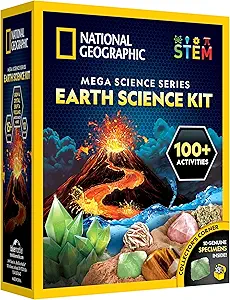 | Best Overall | Brand: National Geographic (Blue Marble) | Age Range: 8 years and up | Activities: 100+ experiments and activities | VIEW LATEST PRICE | See Our Full Breakdown |
| UNGILINGA 150 Experiments Science Kits for Kids Chemistry Lab STEM Toys |  | Best Value for Experiment Count | Number of Experiments: 150 | Educational Focus: Science, Chemistry, Physics, Earth Science | Includes: Tools and materials for experiments | VIEW LATEST PRICE | See Our Full Breakdown |
| Molecular Model Kit (240 Pieces) for Organic and Inorganic Chemistry Learning |  | Best for Chemistry Coursework | Number of Pieces: 240 atoms and bonds | Material: Food-grade, eco-friendly plastics | Educational Range: Middle school through graduate level | VIEW LATEST PRICE | See Our Full Breakdown |
| EUDAX Physics Science Lab Learning Circuit Kit, Electricity Experiment Set for Students |  | Best for Physics Classrooms | Grade Level: Grades 7-11 | Subjects: Electricity and magnetism | Includes: Wires, bulbs, switches, LED, electromagnet, hand crank generator, wind power car, compass, storage box, screwdriver, wrench | VIEW LATEST PRICE | See Our Full Breakdown |
| Carson Dellosa STEM Challenges, Hands-On Science Kits |  | Best for Classroom Teachers | Number of Cards: 30 | Dimensions per Card: 7 ¾ x 5 ½ inches | Includes Divider: Yes | VIEW LATEST PRICE | See Our Full Breakdown |
| EUDAX Labs Junior Science Magnet Set for Education and Experiments |  | Best for Physics Demonstrations | Brand: EUDAX | Model Number: EU-CLTZ-16P | Number of Items: 16 | VIEW LATEST PRICE | See Our Full Breakdown |
| National Geographic Microscope for Kids with Up to 400x Magnification |  | Best First Microscope | Magnification: Up to 400x | Prepared Slides: 6 plant slides | Rocks & Minerals: 6 included | VIEW LATEST PRICE | See Our Full Breakdown |
| Structural Engineering: Bridges & Skyscrapers Science & Engineering Kit |  | Best for Engineering-Minded Builders | Number of Models: 20 | Building Pieces: 285+ | Manual Pages: 36 | VIEW LATEST PRICE | See Our Full Breakdown |
| EUDAX Physics Science Lab Learning Circuit Kit, Electricity Experiment Set for Students |  | Best Budget Circuit Starter | Components: 2 AA battery holders, 2 bulb holders, 5 bulbs, 1 switch, 6 cables, 1 small wrench | Storage: Included storage box | Batteries Required: 2 AA (not included) | VIEW LATEST PRICE | See Our Full Breakdown |
| EUDAX School Physics Labs Basic Electricity Discovery Circuit and Magnetism Experiment Kits for High School Students |  | Best for High School Physics | Grade Level: 9-11 (high school) | Electricity Components: 56 items | Magnetism Components: 21 items | VIEW LATEST PRICE | See Our Full Breakdown |
| National Geographic Science Magic Kit for Kids with 100+ Experiments and Magic Tricks |  | Best for Younger Kids and Reluctant Scientists | Age Range: 8 years and up | Boxed Experiments: 20 magic experiments | Bonus Content: Booklet with 85+ additional experiments | VIEW LATEST PRICE | See Our Full Breakdown |
| National Geographic Amazing Chemistry Set with 100+ Experiments for Kids Ages 8-12 |  | Best Chemistry Starter Kit | Age Range: 8-12 years | Boxed Experiments: 100+ | Bonus Experiments: 85 (using household items) | VIEW LATEST PRICE | See Our Full Breakdown |
More Details on Our Top Picks
Evviva Sciences Microbiology Science Project Kit with Pre-Poured Agar Plates
This kit earns its place as the most academically credible pick in this roundup, and it is aimed at a different buyer than the crowd-pleasing National Geographic Earth Science Kit. Instead of 100 quick activities, this option goes deep on one discipline: growing and observing bacterial cultures on 10 pre-poured agar plates. That focus pays off for high school biology students who need a real science fair project rather than an afternoon of entertainment. Compared with the UNGILINGA 150 Experiments kit, the scope is narrow, but the plates arrive sterile and ready to use, which removes the messiest failure point in home microbiology. The tradeoff is real: with only 10 plates, mistakes are costly, and the 15+ age rating reflects genuine safety considerations around culturing bacteria. Adult oversight and careful technique are non-negotiable here.
Pros:- Pre-poured sterile agar plates eliminate the hardest prep step
- Focused depth on one discipline rather than scattered shallow activities
- Includes ebook and step-by-step instructions
- Tools like pipettes and swabs arrive in the box
Cons:- Only 10 plates leaves little room for trial and error
- Ages 15+ only; bacterial culturing demands careful handling and supervision
Best for: High school students (15+) working on biology science fair projects or preparing for AP-level lab work
Not ideal for: Parents shopping for younger kids or casual weekend fun — the single-subject focus and sterile-handling requirements make it a poor match for playful exploration
- Agar Plates:10 pre-poured
- Included Tools:10 cotton-tipped sticks, 1 pipette, 1 plastic vial
- Age Range:15+
- Documentation:Instruction manual and experiment ebook
- Subject Focus:Microbiology / bacterial culturing
- Best Use Case:Science fair projects, high school biology labs
Our verdict“Buy this for a motivated high schooler who needs one rigorous, real-world experiment rather than a hundred trivial ones.”
National Geographic Earth Science Kit with 100+ Activities for Kids 8-12
This is the pick I would hand most families first, because it balances volume, polish, and educational quality better than anything else here. With over 100 activities spanning volcanoes, crystals, and geologic digs, plus a full-color learning guide, it reads like a curated curriculum rather than a bag of parts. The UNGILINGA 150 Experiments kit technically offers more experiments, but National Geographic’s instructions and branding give it an edge in clarity and reliability for the 8-12 range. It also doubles as a shared family activity in a way the solo-focused Evviva microbiology kit never could. Tradeoffs exist: several activities need household materials beyond the box, and adult supervision is required for some projects. Families expecting zero setup will be mildly disappointed, but the payoff in repeat engagement is hard to beat.
Pros:- Over 100 activities give exceptional long-term value
- Full-color learning guide ties each activity to real Earth science
- Broad subject variety keeps different interests engaged
- Trusted brand with clear, kid-friendly instructions
Cons:- Some experiments require extra household materials
- Adult supervision needed for several activities
- Instructions can overwhelm children at the younger end of the range
Best for: Families with kids aged 8-12 who want months of varied hands-on science with minimal per-activity cost
Not ideal for: Households wanting a single deep-focus subject — if your child is obsessed with circuits or chemistry specifically, the EUDAX or UNGILINGA kits serve that better
- Brand:National Geographic (Blue Marble)
- Age Range:8 years and up
- Activities:100+ experiments and activities
- Subjects:Volcanoes, crystal growing, geologic digs, Earth science
- Learning Materials:Detailed full-color learning guide
- Model Number:NGMEGAEARTH
- Category Rank:#18 in Educational Science Kits
Our verdict“The safest default choice for elementary and middle school kids — varied, well-documented, and built for repeat use.”
UNGILINGA 150 Experiments Science Kits for Kids Chemistry Lab STEM Toys
If the guiding question is maximum experiments per dollar, this kit wins on raw numbers, offering 150 activities against the National Geographic Earth Science Kit’s 100+. The range is broader too — chemistry, physics, and earth science in one box — which makes it a strong fit for households where nobody has settled on a favorite discipline yet. Where it falls short of National Geographic is polish: the age range is vaguely specified, and instructions, while serviceable, lack the editorial refinement of a big-brand guide. Like most kits in this roundup, it leans on household supplies for some experiments, and supervision is expected. Compared with the EUDAX circuit kit, it trades depth for breadth — a jack-of-all-trades choice rather than a specialist tool. For budget-conscious gift-givers, that breadth is exactly the point.
Pros:- 150 experiments — the highest count in this lineup
- Spans chemistry, physics, and earth science in one box
- Kid-friendly tools and materials included
- Easy-to-follow instruction format for independent play
Cons:- Age suitability is not clearly stated by the manufacturer
- Some activities require additional household items and adult supervision
Best for: Budget-conscious parents and gift-givers who want maximum variety and activity count without a big-brand price
Not ideal for: Buyers who need a clearly defined age rating or rigorous, curriculum-grade documentation — the vague labeling makes it a gamble for classroom use
- Number of Experiments:150
- Educational Focus:Science, Chemistry, Physics, Earth Science
- Includes:Tools and materials for experiments
- Instructions:Easy-to-follow printed guide
- Age Range:Kids (not clearly specified by manufacturer)
- Learning Style:Hands-on STEM exploration at home
Our verdict“The most experiments per dollar here, best for families who value variety and volume over brand polish.”
Molecular Model Kit (240 Pieces) for Organic and Inorganic Chemistry Learning
This is the only pick here built for actual coursework support rather than entertainment. Where the National Geographic Earth Science Kit is about sparking curiosity, this 240-piece model set is about passing organic chemistry — letting students physically build molecules and grasp stereochemistry and 3D geometry that flat textbook diagrams can’t convey. It scales from middle school through graduate level, a wider span than any other product in this roundup, and the food-grade plastic construction is a thoughtful touch for younger siblings nearby. The tradeoffs mirror its purpose: it is not a game, produces no eruptions or reactions, and ships without detailed instructions, so a student without a textbook or teacher guidance may not know what to build. Compared with the UNGILINGA chemistry experiments kit, this trades spectacle for precision — a study aid, not a toy.
Pros:- Makes abstract 3D molecular geometry tangible
- Spans middle school to graduate-level coursework
- Food-grade, eco-friendly plastic construction
- 240 pieces support building large and complex structures
Cons:- No detailed instructions included — requires textbook or teacher context
- Purely educational; zero entertainment or experiment value
Best for: Middle school through college students taking chemistry who need to visualize molecular structures for exams and lab work
Not ideal for: Younger kids or buyers seeking fun experiments — there are no reactions, fizz, or activities, just quiet model building
- Number of Pieces:240 atoms and bonds
- Material:Food-grade, eco-friendly plastics
- Educational Range:Middle school through graduate level
- Subjects:Organic and inorganic chemistry, stereochemistry
- Model Number:XYHTYBD-07
- Instructions:Not included in detail
Our verdict“A targeted study tool for chemistry students, not a toy — buy it to pass a class, not to fill a rainy afternoon.”
EUDAX Physics Science Lab Learning Circuit Kit, Electricity Experiment Set for Students
This kit fills a gap the generalists can’t: serious electricity and magnetism experiments for grades 7-11. Building circuits, electromagnets, and even a hand-crank generator and wind power car teaches physics principles the National Geographic Earth Science Kit only glances past, and with far more rigor than the UNGILINGA multi-subject set. The inclusion of a storage box, screwdriver, and wrench signals its classroom DNA — this is meant to be assembled, disassembled, and reused across many lessons, not consumed once. It pairs naturally with the molecular model kit on this list: both are curriculum tools rather than toys. Two honest drawbacks: the 2 AA batteries are not included, so add them to your cart, and some experiments lean complex enough that beginners will flounder without a teacher or engaged parent alongside them.
Pros:- Covers circuits, electromagnets, and generators in one reusable set
- Grade 7-11 alignment matches real physics curriculum
- Storage box and hand tools included for organization and reuse
- Builds toward projects like a hand-crank generator and wind power car
Cons:- Batteries (2 AA) not included
- Some experiments are complex for beginners without adult or teacher guidance
Best for: Middle and high school students (grades 7-11) studying physics who benefit from building circuits rather than reading about them
Not ideal for: Younger children or independent learners without supervision — wiring circuits and electromagnets can frustrate beginners working alone
- Grade Level:Grades 7-11
- Subjects:Electricity and magnetism
- Includes:Wires, bulbs, switches, LED, electromagnet, hand crank generator, wind power car, compass, storage box, screwdriver, wrench
- Power Source:2 AA batteries (not included)
- Instructions:Detailed English manual
- Reusability:Components designed for repeated assembly and disassembly
Our verdict“The go-to choice for a grades 7-11 physics student who learns best by wiring things up themselves.”
Carson Dellosa STEM Challenges, Hands-On Science Kits
Carson Dellosa STEM Challenges takes a different approach than most kits in this roundup: instead of supplies, you get 30 full-color challenge cards spanning physical, life, earth, and space science. That format makes sense for teachers running classroom centers or homeschool parents rotating activities across grades 2-5 — something the EUDAX circuit kit, with its narrower electricity focus, can’t match. Each card includes a materials list, hints, and explanations, so a substitute teacher or parent can pick up mid-unit without a lesson plan.
The tradeoff is real, though. Unlike the National Geographic Earth Science Kit, which arrives with consumables ready to go, these challenges lean on common household materials you must gather yourself. And because activities vary in complexity, a single grade-level classroom may find some cards too easy and others a stretch.
Pros:- Covers four science disciplines across grades 2-5 with a single purchase
- Cards include materials lists, hints, and explanations so adults don’t need a science background
- Portable format with a divider makes organization and classroom rotation simple
- Reusable year after year, unlike consumable experiment kits
- Works equally well for classroom centers, lessons, and homeschooling
Cons:- Requires you to gather common household materials for each activity — nothing hands-on is included
- Activity complexity varies noticeably, so some cards will miss the mark depending on grade level
- Locked into the 30 topics on the cards with no room to extend beyond them
Best for: Elementary teachers and homeschool parents who want a flexible, reusable activity system covering multiple science topics across grade levels
Not ideal for: Buyers expecting an all-in-one box with included materials — you’ll need to source supplies yourself for every activity
- Number of Cards:30
- Dimensions per Card:7 ¾ x 5 ½ inches
- Includes Divider:Yes
- Recommended Grades:2-5
- Science Topics:Physical, life, earth, and space science
- Format:Full-color challenge cards with materials lists, hints, and explanations
- Intended Use:Classroom centers, lessons, and homeschool
Our verdict“A smart buy for educators who value breadth and reusability over included supplies, provided they’re willing to gather materials on their own.”
EUDAX Labs Junior Science Magnet Set for Education and Experiments
Where the EUDAX Physics Circuit Kit teaches electricity, this 16-piece magnet set covers the other half of elementary physics: magnetism. The variety is what earns it a spot — bar magnets, a U-shape magnet, ring ceramics, a compass, magnetic cars, and an iron filings box let students actually see fields and polarity instead of just reading about them. For a science fair demonstration or a classroom unit on forces, this option delivers more visual punch than a card-based product like Carson Dellosa STEM Challenges, which would require you to source magnets separately.
Two caveats shape who should buy it. The ceramic magnets are brittle and will chip or snap if snapped together carelessly, so younger students need supervision. And unlike the National Geographic microscope kit’s thorough lab guide, instructions here are thin — adults should plan their own experiment sequence.
Pros:- 16-piece assortment covers bar, U-shape, ring, and interactive magnet experiments
- Iron filings box and compass make invisible magnetic fields visible to students
- Well suited to science fairs, classroom demos, and homeschool physics units
- Fosters observation and inquiry skills through open exploration
Cons:- Ceramic magnets are brittle and break or chip easily if mishandled
- Small components pose a hazard for younger children and require supervision
- Limited detailed experiment instructions — adults must design the learning path
Best for: Teachers, homeschool parents, and science-fair students who need a versatile magnet assortment for demonstrating physics principles visually
Not ideal for: Parents of very young children or those wanting guided, instruction-led lessons — small parts and thin documentation demand adult-led planning
- Brand:EUDAX
- Model Number:EU-CLTZ-16P
- Number of Items:16
- Age Range:Kids
- Magnets Included:2 bar, 1 U-shape, 6 ring ceramic
- Accessories:Plastic compass, suspension base, 2 magnetic cars, iron filings box
- Intended Use:STEM education, science experiments, classroom demonstrations
Our verdict“The best pick in this lineup for hands-on magnetism demonstrations, as long as an adult is prepared to guide the experiments.”
National Geographic Microscope for Kids with Up to 400x Magnification
This kit earns its role by removing the usual frustrations of kids’ microscopes. Large focus knobs, a soft-touch eyepiece, and an adjustable platform mean a young student can operate it independently — a genuine advantage over kits that expect adults to run every step. It also arrives with real specimens: six prepared plant slides, six rocks and minerals, and six blank slides, plus a lab guide and merit badge stickers that add structure and motivation. Compared with the EUDAX Magnet Set, which offers little guidance, this product stands out for turning hardware into a guided learning experience.
The ceiling is the limitation. At 400x maximum magnification, this is an entry-level tool — a middle schooler wanting to examine cells in detail will outgrow it, and younger children still need an adult nearby. If deep biology exploration is the goal, this pick makes less sense than a chemistry-focused set like the National Geographic Amazing Chemistry Set.
Pros:- Child-friendly controls — large focus knobs and adjustable platform enable independent use
- Includes 18 specimen items (prepared slides, rocks, minerals) plus blank slides for own samples
- Lab guide with structured activities and merit badge stickers keeps kids engaged
- Complete starter package — no additional purchases needed to begin exploring
Cons:- 400x magnification cap limits detail on cells and microorganisms
- Younger children require adult supervision and help with slide preparation
- Included specimens run out quickly for students who explore intensively
Best for: Parents of curious elementary students (roughly 6-10) buying a first microscope with everything needed to start immediately
Not ideal for: Older or advanced students who need magnification beyond 400x for serious biology work
- Magnification:Up to 400x
- Prepared Slides:6 plant slides
- Rocks & Minerals:6 included
- Blank Slides:6 included
- Accessories:Pipette, specimen dish, tweezers, lab guide, merit badge stickers
- Design Features:Large focus knobs, soft-touch eyepiece, adjustable platform
Our verdict“An excellent first microscope for elementary-age kids that trades magnification power for ease of use and guided content.”
Structural Engineering: Bridges & Skyscrapers Science & Engineering Kit
Most kits in this roundup teach science through experiments; this one teaches it through construction. With 285+ interchangeable pieces and a 36-page manual, students build 20 models — bridges, skyscrapers, and structural elements — while absorbing concepts like force, load, compression, and tension. The Parents’ Choice Gold Award backs up the educational substance, and the build-based format suits kids who learn by making rather than mixing chemicals, as with the UNGILINGA chemistry lab. Compared with the National Geographic microscope, it demands more sustained attention and rewards it with deeper engineering intuition.
That depth is also the gate. This model is rated intermediate, so it fits roughly ages 9-10 and up; younger builders will need an adult co-builder, and the 36-page manual requires real reading comprehension. It’s also a closed system — once the 20 models are built, exploration is bounded by the included pieces only.
Pros:- 20 buildable models demonstrate genuine engineering principles, not just assembly
- 285+ interchangeable pieces allow rebuilding and variation beyond the manual
- 36-page manual provides step-by-step guidance with experimental context
- Parents’ Choice Gold Award signals validated educational quality
Cons:- Intermediate skill level excludes younger or first-time builders without adult help
- Closed piece set limits projects to what the included components allow
- Longer build times demand sustained focus some students won’t have
Best for: Kids around 9 and up who love building and are ready to connect hands-on construction with real physics and engineering concepts
Not ideal for: Younger children or families wanting quick 15-minute activities — builds take time, patience, and reading ability
- Number of Models:20
- Building Pieces:285+
- Manual Pages:36
- Skill Level:Intermediate
- Concepts Covered:Force, load, compression, tension
- Model Types:Bridges, skyscrapers, structural elements
- Awards:Parents’ Choice Gold Award
Our verdict“The strongest pick here for a patient, builder-minded student ready to graduate from toy sets to real structural engineering concepts.”
EUDAX Physics Science Lab Learning Circuit Kit, Electricity Experiment Set for Students
This kit does one thing cheaply and well: teaching series and parallel circuits. Bulb holders, switches, cables, and battery holders let students wire real circuits and watch the difference between the two configurations — a foundational electricity lesson the EUDAX Magnet Set doesn’t touch. Compared with the larger EUDAX School Physics Labs Discovery Kit, this version is the affordable entry point, packing essentials into a storage box for science fairs, camps, and STEM clubs. Students come away understanding current behavior because they built it themselves.
The tradeoffs are budget-shaped. Batteries aren’t included, so the kit isn’t truly ready out of the box, and the scope stops at basic circuits — no motors, sensors, or advanced components for a student who already knows ohm’s law. Where the Structural Engineering kit grows through 20 models, this one exhausts its experiments relatively quickly.
Pros:- Teaches series and parallel circuits through genuine hands-on wiring
- Includes full component set with a storage box for organization
- Very affordable entry point for electricity fundamentals
- Well suited to science fair projects, STEM camps, and classroom clubs
Cons:- Requires 2 AA batteries that are not included, so it isn’t usable out of the box
- Limited to basic circuit experiments with no path to more advanced projects
Best for: Budget-conscious parents and club leaders who need a low-cost, hands-on introduction to series and parallel circuits
Not ideal for: Students past the basics — the kit covers only simple circuits and will be finished quickly by advanced learners
- Components:2 AA battery holders, 2 bulb holders, 5 bulbs, 1 switch, 6 cables, 1 small wrench
- Storage:Included storage box
- Batteries Required:2 AA (not included)
- Core Experiments:Series and parallel circuits
- Intended Use:STEM education, science projects, camps, and clubs
- Skills Developed:Hands-on wiring, creativity, electrical concepts
Our verdict“A low-cost, focused tool for a first electricity unit — buy it for the fundamentals, not for depth.”
EUDAX School Physics Labs Basic Electricity Discovery Circuit and Magnetism Experiment Kits for High School Students
Most science kits in this roundup top out around middle school, but this one is built for grades 9-11, covering electricity and magnetism at a level that actually maps to a high school physics curriculum. With 56 electrical components and 21 magnetism items, students can build working circuits, electromagnets, and generators rather than watching color-changing liquids fizz. Compared with the National Geographic Amazing Chemistry Set, which prioritizes visual spectacle for younger kids, this kit demands real assembly and conceptual thinking — that’s the point. The tradeoffs are real, though: batteries aren’t included (you’ll need 3 AAs), and it won’t stretch to advanced or AP-level experiments. Compared with EUDAX’s simpler circuit-only kit, this version adds the full magnetism component set, making it the better pick for coursework.
Pros:- Curriculum-aligned coverage of both electricity and magnetism for grades 9-11
- 77 total components allow building real circuits, electromagnets, and generators
- Full-color manual walks students through each experiment
- Includes repair tools and a storage bag to keep pieces organized
Cons:- Requires 3 AA batteries that aren’t included
- Meaningful assembly required for most projects
- Too basic for advanced or AP-level physics students
Best for: High school students (grades 9-11) studying physics who need hands-on circuit and magnetism practice that matches their curriculum
Not ideal for: Parents of elementary or middle school kids — the assembly and concepts assume older students and will frustrate younger ones
- Grade Level:9-11 (high school)
- Electricity Components:56 items
- Magnetism Components:21 items
- Repair Tools:2 pcs included
- Manual:Full-color page manual
- Batteries:Not included (requires 3 AA)
- Storage:Includes storage bag
- Subjects:Electricity and magnetism
Our verdict“The clear choice for high schoolers who need genuine physics lab practice at home, not just science-themed entertainment.”
National Geographic Science Magic Kit for Kids with 100+ Experiments and Magic Tricks
This kit takes the opposite approach from the EUDAX physics set: instead of curriculum rigor, it uses magic tricks as the hook to pull kids aged 8 and up into STEM concepts. You get 20 magic experiments in the box plus a bonus booklet with 85+ more, so the content runway is long for the price. Compared with the National Geographic Amazing Chemistry Set, this one trades lab authenticity — no test tubes or pipettes here — for performance value, since kids can actually show off tricks to friends and family. That social angle is genuinely motivating for kids who resist traditional science activities. The catch is the ceiling: like the chemistry set, it’s rated 8+, but it skews younger, and teens will find it juvenile. Some experiments also need adult supervision.
Pros:- Over 100 total experiments and tricks across the kit and bonus booklet
- Magic framing makes science socially rewarding for kids who perform tricks for others
- Materials for all 20 boxed experiments are included
- Encourages creativity alongside STEM learning
Cons:- Age ceiling is low — unsuitable for older children or teens
- Adult supervision needed for some experiments
- Lighter on genuine scientific depth than chemistry-focused alternatives
Best for: Parents of kids 8-10 who want to spark interest in science through fun, performance-style magic tricks
Not ideal for: Older kids and teens — the magic-trick framing reads as babyish past age 11 or so
- Age Range:8 years and up
- Boxed Experiments:20 magic experiments
- Bonus Content:Booklet with 85+ additional experiments
- Total Activities:100+
- Brand:Blue Marble (National Geographic)
- Model Number:NGMEGAMAGIC
- Packs Included:1
- Focus:Magic tricks and STEM projects
Our verdict“The best pick for converting a science-avoidant 8-to-10-year-old into a curious experimenter through the lure of magic.”
National Geographic Amazing Chemistry Set with 100+ Experiments for Kids Ages 8-12
For kids in the 8-12 range who want real lab work, this is the strongest chemistry entry in this roundup. Unlike the Science Magic Kit, which wraps science in performance, this set includes actual test tubes, beakers, and pipettes, giving kids an authentic bench-chemist feel while still delivering the crowd-pleasers: bubbling solutions, color-changing liquids, and glowing test tubes. The bonus guide adds 85 experiments using household items, which extends value well beyond the boxed 15. Compared with the UNGILINGA 150 Experiments kit, National Geographic’s brand reputation and tool quality give it an edge, though UNGILINGA wins on raw experiment count. The main friction points: younger children will need supervision, and some experiments call for household items you may not have on hand, so plan a grocery check before experiment day.
Pros:- 100+ boxed experiments covering bubbling, color-changing, and glowing reactions
- Includes real scientific tools (test tubes, beakers, pipettes) for authentic lab practice
- Bonus guide adds 85 more experiments using common household items
- Award-winning set from a trusted science-education brand
Cons:- Adult supervision needed for younger children
- Some experiments require household items not included in the box
Best for: Kids ages 8-12 who are ready for genuine lab-style chemistry with real tools rather than toy-only experiments
Not ideal for: Households wanting a fully self-contained kit — some experiments require supplemental household ingredients
- Age Range:8-12 years
- Boxed Experiments:100+
- Bonus Experiments:85 (using household items)
- Tools Included:Test tubes, beakers, pipettes
- Materials Included:Supplies for boxed experiments
- Subject:Chemistry
- Highlight Activities:Bubbling solutions, color-changing liquids, glowing test tubes
- Brand:National Geographic
Our verdict“The best first chemistry set for elementary and middle schoolers, balancing real lab tools with the fun factor that keeps them experimenting.”

How We Picked
I evaluated each kit on five criteria: educational depth (does it teach concepts or just produce visual effects), experiment volume and replayability, age-appropriate safety, supplies and documentation quality, and value per dollar. A kit with 100 shallow activities did not automatically outrank one with 15 rigorous experiments — I weighted depth more heavily for students above age 12 and breadth more heavily for elementary ages, since that mirrors how these kits are actually used in classrooms and at home.
The ranking also reflects a practical reality: consumable kits lose value the moment the reagents run out, while reusable kits like the molecular model set and structural engineering kit keep teaching for years. Kits that required extensive adult supervision were not penalized, but they were flagged, because surprise supervision requirements are the most common source of disappointed buyers in this category. Finally, I checked for redundancy across the lineup so that no two recommendations serve the same buyer — which is why the two EUDAX circuit kits are differentiated strictly by student age.
Factors to Consider When Choosing Educational Science Kits For Students
The right science kit depends less on the kit itself and more on the student, the supervision available, and how long you want the learning to last. These are the factors that actually change the buying decision.Consumable vs. Reusable: The Hidden Cost Difference
Most buyers underestimate how quickly consumable kits expire. A chemistry set with 100 experiments sounds enormous, but if each activity takes ten minutes, the entire kit can be finished in a couple of enthusiastic weekends — and refill packs are rarely included. Reusable kits like molecular model sets, magnet sets, and structural engineering kits can be rebuilt, reconfigured, and revisited across an entire school career. My advice: match the kit type to the goal. If you want a holiday-break attention-grabber, consumable breadth is fine. If you want a tool that supports homework and exam prep for years, buy reusable.
Match the Discipline to the Curriculum, Not the Toy Aisle
A common mistake is buying a kit because it looks impressive rather than because it matches what the student is studying. A molecular model kit is nearly useless to a third grader but genuinely valuable to a high schooler taking organic chemistry. The EUDAX electricity kits map directly onto middle and high school physics units, which makes them study aids rather than toys. Before buying, check the student’s current or upcoming science topics — a kit that reinforces classroom material gets used ten times more often than one chosen at random.
Age Ratings Are Floors, Not Ceilings
Manufacturers label kits optimistically to widen the buyer pool. A kit marked for ages 8 and up often means an 8-year-old can watch it work while an adult does half the steps. For students under 10, expect to be a lab partner, especially for anything involving heat, chemicals, or sterile materials like agar plates. Conversely, don’t assume a teen will be bored by an ‘8-12’ kit — the National Geographic chemistry sets include real reactions that hold up at 13 or 14. Read the supervision requirements, not just the age sticker.
Documentation Quality Separates Real Kits From Toy Sets
The single biggest predictor of whether a kit teaches anything is the manual. Weak kits include one-page cartoon instructions with no explanation of why anything happens; strong kits explain the science behind each activity and suggest follow-up experiments. National Geographic generally includes well-structured guides with scientific context, which is part of why their kits rank highly here. Before buying any kit, look for sample pages of the instruction manual online — if it’s all pictures and no explanations, treat it as entertainment rather than education.
Science Fair vs. Casual Play: Different Products Win
If the goal is a science fair project, you need a kit that produces measurable, documentable results — microbiology kits with agar plates, circuit kits with predictable experiments, and engineering kits with load-testing challenges all fit. Breadth-focused activity kits rarely work for fairs because each experiment is too small to build a project around. If the goal is simply keeping a curious kid busy on weekends, the calculus flips entirely, and the 100+ activity kits become the smarter buy. Decide the primary purpose before comparing prices.
Watch for Redundancy in Multi-Kit Households
Families often accumulate overlapping kits without realizing it. The two EUDAX circuit kits in this roundup share a large fraction of their experiments, and several National Geographic kits repeat the same classic reactions under different themes. Before adding a new kit, inventory what’s already on the shelf. A household with a chemistry set and an earth science kit gets far more new value from a physics or engineering kit than from a second chemistry-themed product with a different box.
Frequently Asked Questions
What is the best science kit for a science fair project?
For science fairs, the Evviva Sciences Microbiology Kit is the strongest choice in this lineup because pre-poured agar plates let students design a genuine hypothesis-driven experiment — comparing bacterial growth across surfaces, for example — with measurable, photographable results. The EUDAX electricity kits are a close second for physics-oriented projects, since circuit experiments produce clean, repeatable data. Avoid the large multi-activity kits for fairs; their experiments are designed to take minutes, not to sustain a multi-week investigation. Judges reward methodology and data, and only discipline-specific kits support that structure.
Are the big 100+ experiment kits actually educational, or just entertainment?
They sit somewhere in between, and the honest answer depends on the manual. The National Geographic kits tend to include real scientific explanations behind each activity, which elevates them above pure toy sets, while some cheaper competitors offer visual spectacle with no conceptual content. For elementary-age students, breadth kits are genuinely effective because repeated exposure to many small phenomena builds scientific curiosity. For students over about age 12, they underperform — a single-discipline kit teaches more, even with fewer total experiments.
Which kit is best for a high school student?
The 240-piece Molecular Model Kit is the clear winner for any student taking chemistry, because it directly supports coursework on molecular geometry and bonding rather than just entertaining. The EUDAX Basic Electricity and Magnetism Kit is the pick for physics students, and the microbiology kit suits biology students with lab access. Resist the temptation to buy elementary-marketed kits for teens — the experiments are too simple to hold their attention or add academic value. High schoolers need tools, not toys.
Do these kits require adult supervision?
Anything involving chemicals, heat, or sterile materials does, and this includes the chemistry sets, the agar-plate microbiology kit, and the circuit kits when first assembled. The molecular model kit, magnet set, and structural engineering kit are the safest choices for independent use by older children. As a working rule, plan on active supervision under age 10, nearby supervision from 10 to 13, and independent use with a check-in for teens on first attempts. Kits that claim zero supervision needed for chemical experiments should be treated with skepticism.
Is it better to buy one broad kit or several single-subject kits?
If the student’s interests are still forming, one broad kit is the smarter first purchase — it reveals which discipline actually excites them, and you can invest in a deep single-subject kit afterward. If the student already shows a clear preference, skip the broad kit entirely; the money goes further toward a focused product with better equipment and documentation. Households with multiple children often get more total value from a broad kit plus one shared deep kit, since kids at different ages can use them simultaneously. The one combination I’d avoid is two broad kits, which mostly duplicate each other’s content.
Conclusion
For best overall, the National Geographic Amazing Chemistry Set wins on the strength of its volume, safety, and unusually good instruction manual. The best value pick is the UNGILINGA 150-Experiment Kit, which delivers more activities per dollar than anything else here, though with thinner documentation. For best premium, the Structural Engineering Bridges & Skyscrapers Kit justifies its price with reusable components and genuinely challenging builds. Best for beginners goes to the National Geographic Earth Science Kit — its 100+ activities require almost no prior knowledge and forgive messy execution. For specific needs: high school chemistry students should get the Molecular Model Kit, physics students the EUDAX Basic Electricity Kit, science fair competitors the Evviva Microbiology Kit, and reluctant learners who need an entertainment hook the Science Magic Kit. Match the kit to the student sitting in front of you, not the one on the box, and any of these thirteen will do its job.
Halloween Picks
halloween
As an affiliate, we earn on qualifying purchases.