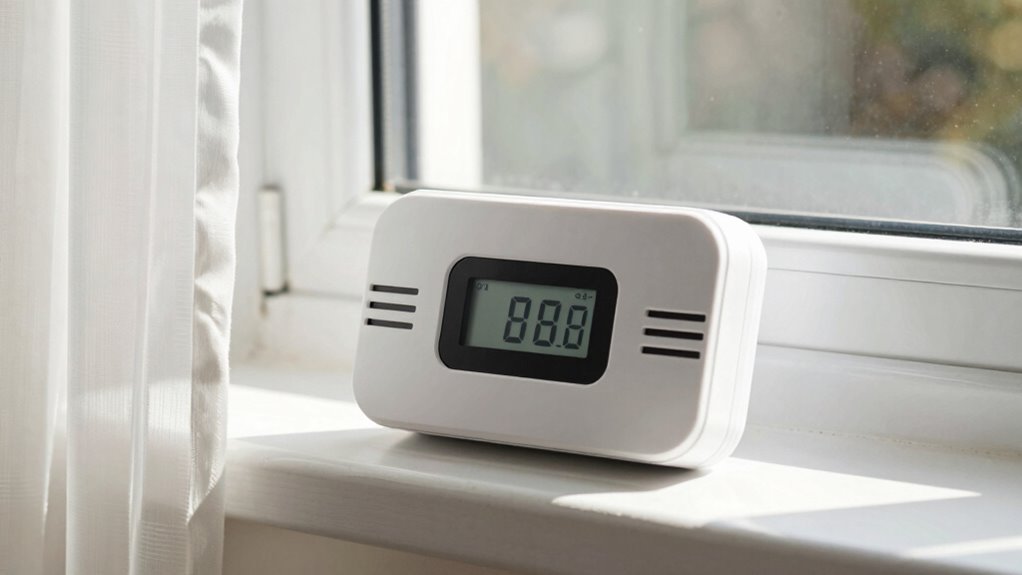

Radon detectors show you levels of radon gas that you can’t see or smell, which is why testing is so important. Since radon is odorless and invisible, you can’t rely on your senses to detect it. The detectors provide real-time information about dangerous radon buildup in your home. If you want to understand exactly what hidden risks might be lurking, keep going to discover more about how radon testing keeps you safe.
Key Takeaways
- Radon detectors provide real-time measurements of radon levels, which are invisible and odorless to humans.
- They continuously monitor air quality, alerting you to unsafe radon concentrations before symptoms occur.
- Detectors reveal hidden radon presence through numerical readings, not detectable by smell or sight.
- They help identify radon infiltration sources that are otherwise unnoticed.
- Radon detectors enable proactive mitigation to reduce long-term health risks associated with unseen exposure.

Radon detectors are essential tools that can uncover hidden health risks lurking in your home. Even if your living spaces seem clean and safe, radon gas can quietly accumulate without any noticeable smell or sight. This is why proper radon measurement becomes critical—because it’s the only way to truly know if you’re exposed to dangerous levels of this radioactive gas. Radon, being odorless and invisible, can seep into your home through tiny cracks in the foundation or gaps around pipes, often unnoticed until it’s too late. Without a detector, you might be completely unaware of the potential health implications that exposure poses.
Radon gas sneaks into homes silently; proper detection is vital for safeguarding your health and peace of mind.
When you invest in a radon detector, you’re equipping yourself with a tool that provides reliable, real-time readings of radon levels in your home. These devices work continuously, monitoring the air and alerting you if levels become unsafe. This is especially important because radon exposure is linked to serious health issues, notably lung cancer—the second leading cause of it worldwide. The health implications of prolonged radon inhalation can be severe, often developing silently over years of exposure. Many people don’t realize that their homes could be quietly compromising their health, simply because radon gas isn’t detectable without proper measurement. Understanding radon infiltration can help you better grasp how it enters and accumulates in your home.
By performing regular radon measurement, you can determine whether your home’s radon levels are within safe limits or if they require action. Early detection allows you to take steps to mitigate the risk, such as improving ventilation or installing radon reduction systems. The key is understanding that radon is a sneaky threat—its presence isn’t something you’ll notice without the right tools. Understanding radon can help you better grasp why testing is so vital. Additionally, knowing the sources of radon in your home can assist in identifying the most effective ways to reduce exposure.
The health implications of ignoring radon levels can be devastating, but with the right detector, you gain peace of mind and the ability to protect yourself and your family. Regular testing is a proactive approach that can make a significant difference in your household’s health.
As an affiliate, we earn on qualifying purchases.
Frequently Asked Questions
How Often Should I Test for Radon in My Home?
You should test your home for radon at least once every two years, especially if you’ve done radon mitigation or moved to a new area. Regular air quality testing helps catch radon levels early before they become a health risk. If you notice changes in your home’s ventilation or after any construction, guarantee testing frequency. Consistent testing ensures your home stays safe and helps keep indoor air quality high.
Are Radon Detectors Safe to Use Myself?
Yes, radon detectors are safe for you to use yourself. They’re designed for easy, at-home testing, but remember to follow the manufacturer’s instructions carefully for accurate results. Regular detector maintenance, like testing a detector’s functionality and replacing it when needed, guarantees reliable readings. If your radon levels are high, consider radon mitigation to reduce risk. Always prioritize safety and proper testing procedures for peace of mind.
Can Radon Levels Vary Seasonally?
Yes, radon levels can vary seasonally. During winter, you might see higher radon readings because homes are sealed tighter for heating, reducing ventilation. Conversely, in summer, increased ventilation can lower radon levels. This fluctuation impacts indoor air quality, making radon mitigation essential year-round. Regular testing helps you monitor these changes, ensuring your home stays safe and radon levels remain within recommended limits.
What Health Issues Are Caused by Radon Exposure?
Radon silently whispers danger into your home, causing radon health issues you might not notice. Prolonged exposure can lead to lung cancer, making radon symptoms sneaky and easy to overlook. You won’t see or smell radon, but its impact is real—causing respiratory problems and increasing cancer risk. By testing regularly, you catch this invisible threat early, protecting your lungs from a silent, deadly foe.
Do All Homes Have the Same Radon Risk?
Not all homes face the same radon risk. Factors like building age, construction type, and ventilation affect exposure levels. You might need radon mitigation if your home has poor ventilation or cracks in the foundation allowing radon entry. Improving building ventilation can lower radon levels considerably. Regular testing helps you understand your specific risk, so you can take action to protect your health and reduce radon exposure effectively.
As an affiliate, we earn on qualifying purchases.
Conclusion
Don’t rely on your nose or sight to detect radon—trusting your senses won’t keep you safe. Radon detectors uncover hidden dangers lurking in your home, revealing levels you’d never notice otherwise. While some believe natural ventilation suffices, studies show that radon can accumulate unnoticed, increasing health risks over time. Using a detector is the only sure way to identify and mitigate this invisible threat, giving you peace of mind and protecting your loved ones from silent, deadly exposure.
As an affiliate, we earn on qualifying purchases.
As an affiliate, we earn on qualifying purchases.