Greek mythology board games range from strategic contests among the gods to quick trivia and family card games. I rank Ravensburger Horrified: Greek Monsters as the best overall for its cooperative monster-hunting theme, while Santorini stands out for accessible tactical play and Cyclades: Legendary Edition for a more ambitious mythology-driven strategy game. The main tradeoff is how much you want the myths to shape play: some games build them into decisions, while others use Greek figures as a setting for trivia or card play. Players should also weigh complexity, group size, and whether solo or cooperative play matters. Read on for the full breakdown and guidance on choosing the right fit.

Prime made for students and young adults
- Fast, free delivery for dorm and study essentials
- Prime Video and Amazon Music included
- Member-only deals
Key Takeaways
- Horrified: Greek Monsters leads the lineup because its cooperative monster challenges make the mythology part of the play, rather than just a theme.
- Santorini is the clearest pick for approachable strategy, while Cyclades: Legendary Edition offers a deeper, more involved contest for experienced groups.
- The lighter options serve different purposes: Zeus on the Loose favors quick card play, while the quiz and trivia games center knowledge and recall.
- Hercules and the 12 Labors is the standout for solo play, giving mythology fans a more focused challenge without needing a group.
- Greek names and artwork do not guarantee a myth-driven game; buyers seeking thematic decisions should prioritize the monster, labor, and strategy games over trivia formats.
| What Do You Know About Greek Mythology? Quiz Deck |  | Best for Mythology Learning | Format: Quiz deck | Topic: Greek mythology | Players: Not specified | VIEW LATEST PRICE | See Our Full Breakdown |
| Ravensburger Horrified: Greek Monsters Cooperative Strategy Board Game |  | Best Cooperative Strategy | Brand: Ravensburger | Players: 1–5 | Recommended age: 10 years and up | VIEW LATEST PRICE | See Our Full Breakdown |
| Hercules and the 12 Labors Solo Card and Dice Game |  | Best for Solo Play | Brand: Envy Born Games | Players: 1 | Recommended age: 14 years and up | VIEW LATEST PRICE | See Our Full Breakdown |
| Zeus on the Loose Card Game |  | Best for Quick Family Math | Brand: Happy Camper | Players: 2–5 | Recommended age: 8 years and up | VIEW LATEST PRICE | See Our Full Breakdown |
| Top Trumps Greek Mythology Card Game |  | Best for Younger Players | Brand: Top Trumps | Theme: Greek mythology | Age range: 6 years and up | VIEW LATEST PRICE | See Our Full Breakdown |
| Pantheum: Demigods of Olympia Board Game |  | Best for Solo Strategy | Players: 1–4 | Recommended age: 12+ in the title; additional details list 5+ | Playtime: 45–60 minutes | VIEW LATEST PRICE | See Our Full Breakdown |
| Santorini: Second Edition Greek Strategy Board Game |  | Best for Quick Family Strategy | Players: 2–4 | Minimum age: 8+ | Playing time: 15–20 minutes | VIEW LATEST PRICE | See Our Full Breakdown |
| Cyclades: Legendary Edition Greek Mythology Strategy Board Game |  | Best for Strategic Group Play | Players: 2–6 | Recommended age: 14 years and up | Playing time: 60–90 minutes | VIEW LATEST PRICE | See Our Full Breakdown |
| Games Room Trivia: Mythology Trivia Game |  | Best for Portable Mythology Trivia | Number of questions: 140 | Players: 2+ | Recommended age: 13 years and up | VIEW LATEST PRICE | See Our Full Breakdown |
| Greek mythology board game | Players | Playing time | Recommended age | Included components |
|---|---|---|---|---|
| What Do You Know About Greek M | Not specified | Not specified | — | — |
| Ravensburger Horrified: Greek | 1–5 | Approximately 60 minutes | 10 years and up | Game board, monster mats and figures, hero tiles and standees, tokens, cards, dice, item bag, and rulebook |
| Hercules and the 12 Labors Sol | 1 | — | 14 years and up | Cards and game-specific miscellaneous pieces |
| Zeus on the Loose Card Game | 2–5 | 15 minutes | 8 years and up | 55 cards and Zeus figurine |
| Top Trumps Greek Mythology Car | 2 or more | Not specified | — | Deck of 33 cards |
| Pantheum: Demigods of Olympia | 1–4 | — | 12+ in the title; additional details list 5+ | Game pieces; description mentions cards, standees, tiles, and tokens |
| Santorini: Second Edition Gree | 2–4 | 15–20 minutes | — | — |
| Cyclades: Legendary Edition Gr | 2–6 | 60–90 minutes | 14 years and up | 5 god tiles |
| Games Room Trivia: Mythology T | 2+ | — | 13 years and up | — |
More Details on Our Top Picks
What Do You Know About Greek Mythology? Quiz Deck
A portable quiz deck for learning Greek mythology, this pick turns names, stories, and figures into quick knowledge checks. It suits students and curious beginners who want a low-setup way to revisit myths, while more experienced mythology fans can use it to test what they remember. Compared with Games Room Trivia: Mythology Trivia Game, which also centers on trivia, this deck is specifically framed around Greek mythology; it is a narrower fit for anyone seeking myths from multiple traditions. It also asks less of a group than a strategy game such as Horrified: Greek Monsters, but it offers less tactical play and story progression. Its compact format is handy for short sessions, though the supplied details do not describe the question count or any digital companion.
Pros:- Questions focus on Greek mythology
- Portable format works for quick quizzes
- Accessible to beginners while still testing enthusiasts
- Offers an educational way to revisit classical stories and figures
Cons:- Quiz format provides less strategic play than Horrified: Greek Monsters
- Less in-depth than a textbook or longer-form mythology game
- No digital companion is mentioned
Best for: Students, families, and Greek mythology newcomers who want short, portable quiz sessions
Not ideal for: Players looking for a board game with tactical decisions, a developing story, or substantial depth
- Format:Quiz deck
- Topic:Greek mythology
- Players:Not specified
- Age recommendation:Not specified
- Playing time:Not specified
- Digital companion:Not mentioned
Our verdict“Choose this deck for portable Greek mythology recall practice; pick Horrified: Greek Monsters if you want cooperative strategy and monster challenges.”
Ravensburger Horrified: Greek Monsters Cooperative Strategy Board Game
Horrified: Greek Monsters is the strongest fit here for a group that wants Greek mythology to shape the actual play: players cooperate to protect Elysium, with six monsters presenting different challenges. That variety gives the game more strategic range than the quick card comparisons in Top Trumps Greek Mythology, while its shared goals make it a more social choice than the solo-focused Hercules and the 12 Labors. The tradeoff is a longer session of about an hour and a need for players willing to coordinate their decisions. Its solo option broadens its use, though the cooperative structure remains central. The monster figures, mats, tokens, cards, and dice support a more involved table setup than the compact decks in this roundup.
Pros:- Six monsters provide distinct challenges
- Cooperative play encourages shared planning
- Supports one to five players, including solo play
- Includes monster figures, mats, cards, dice, and other thematic components
Cons:- About 60 minutes is a longer commitment than Zeus on the Loose
- Players need to coordinate to handle the monster challenges
- Its larger collection of components calls for more setup than a compact card deck
Best for: Groups or solo players ages 10 and up who want a roughly hour-long cooperative game built around Greek monsters
Not ideal for: Players who prefer a quick, low-setup card game or want competitive play without shared planning
- Brand:Ravensburger
- Players:1–5
- Recommended age:10 years and up
- Playing time:Approximately 60 minutes
- Edition:Classic Edition
- Monsters:6
- Included components:Game board, monster mats and figures, hero tiles and standees, tokens, cards, dice, item bag, and rulebook
- Model number:60002045
Our verdict“Choose Horrified for cooperative, monster-focused strategy; choose Top Trumps for a faster and simpler Greek mythology card game.”
Hercules and the 12 Labors Solo Card and Dice Game
A solo adventure built around Hercules’ twelve labors, this game gives mythology fans a dedicated one-player option rather than asking them to adapt a group game. Dice allocation and cards put resource decisions at the center, while battles, relics, and story elements give those decisions a mythic frame. Compared with Horrified: Greek Monsters, which supports solo play alongside cooperative sessions against six monsters, this pick focuses entirely on one hero’s labors. Its estimated 30-minute session and small 6.5 × 4.5-inch format make it easier to fit into a short break or pack for travel. The tradeoff is clear: it cannot serve a group, and its stated age recommendation of 14 and up makes it a less accessible family option than Zeus on the Loose.
Pros:- Designed specifically for one player
- Combines card strategy with dice allocation
- Uses the twelve labors, mythological battles, and relics as story elements
- Compact dimensions support travel
Cons:- Only supports one player
- Recommended for ages 14 and up, older than Zeus on the Loose
- Small parts may pose a choking hazard
Best for: Solo players ages 14 and up who want a portable, roughly 30-minute Hercules-themed strategy game
Not ideal for: Families or groups seeking a game everyone can play together, or younger children below the recommended age
- Brand:Envy Born Games
- Players:1
- Recommended age:14 years and up
- Language:English
- Estimated playing time:30 minutes
- Game mechanics:Card, dice, strategy
- Included components:Cards and game-specific miscellaneous pieces
- Dimensions:6.5 × 4.5 inches
- Material:Cardboard
Our verdict“Choose this for a compact solo Hercules adventure; choose Horrified if you want the option of playing cooperatively with others.”
Zeus on the Loose Card Game
Zeus on the Loose pairs Greek mythology with mental math in a short card game for ages eight and up. Its 15-minute play time is a better fit for a quick family activity than Horrified: Greek Monsters, which asks players to settle in for a longer cooperative strategy session. The 55 cards and Zeus figurine give the game a tactile centerpiece, while its stated educational objective makes the math element part of the appeal. Compared with Top Trumps Greek Mythology, it has a specific learning focus rather than relying on players comparing card attributes. That focus may be a plus for families seeking number practice, but buyers looking for richer myth stories or varied strategic challenges may prefer Horrified or Cyclades: Legendary Edition. It supports two to five players, so it does not cover solo play.
Pros:- Designed to enhance mental math skills
- Short 15-minute playing time suits brief family sessions
- Includes a full-color Zeus figurine
- Supports two to five players
Cons:- Does not support solo play
- Its math focus may not suit buyers seeking deeper mythology or strategy
- Recommended age starts at eight, higher than Top Trumps Greek Mythology
Best for: Families with children ages eight and up who want a short Greek mythology-themed game that practices mental math
Not ideal for: Solo players or mythology fans seeking a longer, story-rich strategy game
- Brand:Happy Camper
- Players:2–5
- Recommended age:8 years and up
- Playing time:15 minutes
- Included components:55 cards and Zeus figurine
- Material:Cardstock
- Dimensions:5.75 × 4.75 inches
- Educational objective:Enhance mental math skills
- Theme:Greek mythology
Our verdict“Choose Zeus on the Loose for brief family math practice with a Greek theme; choose Top Trumps for simpler attribute-comparison card play.”
Top Trumps Greek Mythology Card Game
Top Trumps Greek Mythology is the most approachable pick for younger players: ages six and up can learn its card-attribute comparisons without taking on the longer decisions in Horrified: Greek Monsters. Its 33-card deck is compact for travel, family gatherings, or classroom use, and play works for two or more players. Compared with Zeus on the Loose, it has a lower stated starting age and no specified math-learning objective; the focus is choosing attributes and collecting cards. That simplicity also limits its range. Repeating value comparisons may feel monotonous for players who want different tactical problems, and the product details do not say how cards are distributed among players. Buyers seeking a fuller board-game experience may find Santorini: Second Edition a better match.
Pros:- Easy-to-learn card comparison rules
- Greek mythology theme
- Compact 33-card deck suits travel and classroom activities
- Supports two or more players and ages six and up
Cons:- Repeated attribute comparisons may feel monotonous
- The number of cards dealt to each player is not specified
- Offers less involved strategy than Horrified: Greek Monsters
Best for: Families, teachers, and groups with children ages six and up who want a small, easy-to-learn mythology card game
Not ideal for: Players seeking varied strategic decisions, a story-driven game, or detailed information about how cards are dealt
- Brand:Top Trumps
- Theme:Greek mythology
- Age range:6 years and up
- Players:2 or more
- Included components:Deck of 33 cards
- Material:Cardstock and plastic
- Warranty:1 year on parts
- Playing time:Not specified
Our verdict“Choose Top Trumps for an easy, portable game with younger mythology fans; choose Horrified for deeper cooperative decisions.”
Pantheum: Demigods of Olympia Board Game
Solo play and engine building make Pantheum the most flexible strategy choice in this group: it supports one player as well as games for up to four, while its area control gives multiplayer turns a contest over the board. Its approachable rules may suit players moving beyond lighter myth-themed choices such as Zeus on the Loose, though the 45–60 minute playtime asks for more attention. Compared with Santorini: Second Edition, Pantheum offers a longer strategic arc rather than short, repeatable building matches. The description lists cards, standees, tiles, and tokens, but does not say exactly how many pieces are included, so buyers have limited detail about the box contents. The age guidance also conflicts: the title says 12+, while additional details say 5+.
Pros:- Supports solo play and groups of up to four
- Combines area control with engine building
- Rules are described as approachable despite meaningful strategic choices
- Includes illustrated cards, standees, tiles, and tokens
Cons:- The listed age recommendations conflict between 12+ and 5+
- The description does not specify the exact contents or quantities of the game pieces
Best for: Solo players and small groups seeking a medium-length Greek mythology strategy game with area control and engine building.
Not ideal for: Buyers who need clear component counts or consistent age guidance, or players looking for a quick, simple family game.
- Players:1–4
- Recommended age:12+ in the title; additional details list 5+
- Playtime:45–60 minutes
- Genre:Area control, engine building
- Edition:Base Game
- Language:English
- Included components:Game pieces; description mentions cards, standees, tiles, and tokens
- Material:Cardstock
Our verdict“Choose Pantheum if you want solo-capable Greek mythology strategy with more room to develop than a short game like Santorini.”
Santorini: Second Edition Greek Strategy Board Game
Fast turns and a clear win condition make Santorini an accessible way to bring Greek gods to the table: move a worker, build, and reach the third level to win. Its 15–20 minute matches are easier to fit into a family game night than Cyclades: Legendary Edition, whose auctions and longer sessions call for a bigger time commitment. Santorini adds depth through 32 god powers, so repeat plays can feel different without replacing the basic rules. The three-dimensional buildings also make progress visible across the table. It is a competitive game, though, and the description offers no cooperative mode; buyers who want players working together may prefer Ravensburger Horrified: Greek Monsters from this roundup.
Pros:- Simple move-and-build rules provide an easy starting point
- 32 god powers add replay variety
- Three-dimensional buildings make the board state easy to read
- 15–20 minute matches work well for rematches and family play
Cons:- Competitive play may not suit groups seeking a cooperative game
- Short matches may feel light for players wanting a longer strategic session
Best for: Families and pairs who want a compact ruleset, visible building on the table, and short competitive matches.
Not ideal for: Groups seeking cooperative play or a longer game centered on auctions and broad area control.
- Players:2–4
- Minimum age:8+
- Playing time:15–20 minutes
- Edition:Second Edition
- Language:English
- Gameplay:Move and build; reach the third level to win
- God powers:32 unique abilities
- Brand:Roxley Games
Our verdict“Pick Santorini for brisk, competitive Greek mythology play with enough god-power variety to keep rematches fresh.”
Cyclades: Legendary Edition Greek Mythology Strategy Board Game
Auctioning for the gods’ favor gives Cyclades a distinctive strategic hook: players compete to shape control of the Aegean, manage resources, build metropolises, and bring mythological creatures into play. That mix gives it a broader group-game feel than Santorini: Second Edition, which centers on quick worker movement and construction. With competitive, team, and two-player modes listed, Cyclades can suit groups with different preferences, while its 2–6 player range accommodates a larger table. The tradeoff is time and complexity: a 60–90 minute session and demanding strategic choices make it a bigger commitment than Pantheum: Demigods of Olympia. Clear iconography and simple rules are listed as aids, but players seeking a light, rapid game may still find its decisions substantial.
Pros:- Auctioning for Greek gods ties theme directly to strategic decisions
- Combines area control, resource management, metropolises, and mythological creatures
- Offers competitive, team, and two-player modes
- Listed clear iconography can help players follow the rules
Cons:- Playtime can reach 90 minutes
- Strategic depth may be demanding for players seeking a lighter game
Best for: Groups who enjoy auctions, area control, and resource decisions and can set aside an hour or more for a Greek mythology game.
Not ideal for: Players seeking a quick, low-pressure game or families who want an especially light strategy experience.
- Players:2–6
- Recommended age:14 years and up
- Playing time:60–90 minutes
- Edition:Legendary Edition
- Game mechanics:Area control, auction, resource management
- Included components:5 god tiles
- Material:Cardboard
- Rulebook:Printed
Our verdict“Choose Cyclades for a longer, group-focused Greek mythology contest built around god auctions and control of the Aegean.”
Games Room Trivia: Mythology Trivia Game
Portable, wide-ranging trivia gives this game a different role from the strategy titles in the roundup. Its 140 multiple-choice questions cover mythologies, folklore, and legends from around the world, so Greek mythology is part of a broader subject mix rather than the sole focus. That makes it a lighter, travel-ready alternative to Pantheum: Demigods of Olympia, which asks players to plan around area control and engine building. The compact box can fit a party or trip more easily than Cyclades: Legendary Edition, but the tradeoff is limited game variety: this is a question-and-answer format, with no building, tactical play, or other listed mechanics. Buyers seeking a Greek-only quiz should also note that the description does not specify how many questions focus on Greek myths.
Pros:- 140 multiple-choice questions cover mythologies and folklore from around the world
- Compact box is suited to travel and parties
- FSC-certified eco-friendly packaging
- Works for two or more players
Cons:- Trivia is the only listed game format
- The description does not specify how many questions focus on Greek mythology
- No warranty is provided
Best for: Trivia fans who want a compact party or travel game covering Greek mythology alongside folklore and legends from other cultures.
Not ideal for: Buyers seeking a Greek mythology-only game or strategic board play with decisions beyond answering questions.
- Number of questions:140
- Players:2+
- Recommended age:13 years and up
- Item weight:0.28 kg
- Dimensions:2.25 × 3.63 × 5 inches
- Material:Cardboard
- Packaging:FSC-certified eco-friendly box
- Series:Games Room Trivia
Our verdict“Pick Games Room Trivia for portable, broad mythology questions, and skip it if you want Greek-only content or strategic play.”
How We Picked
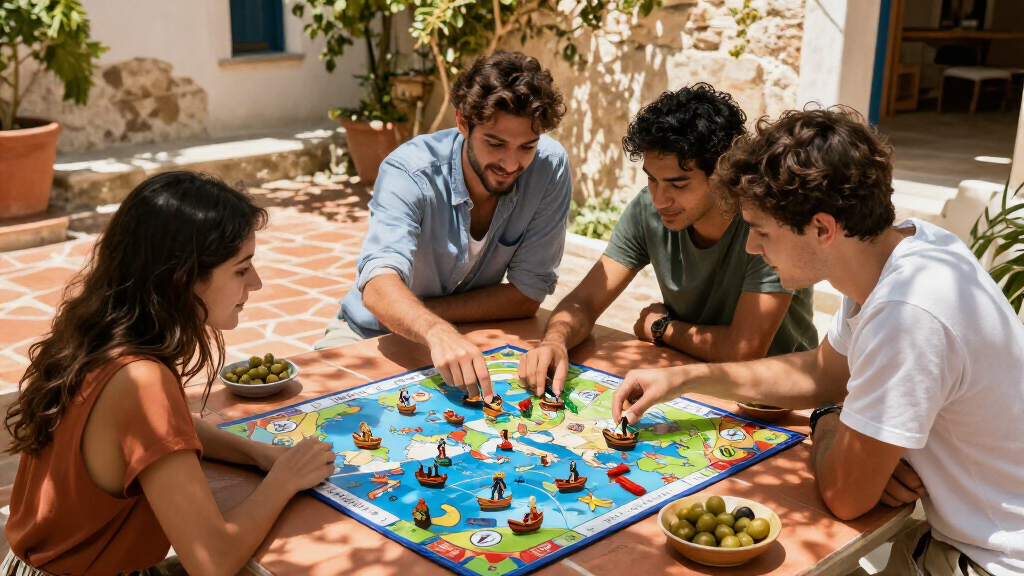
I ranked these games by how clearly Greek mythology shapes the experience, then weighed how easy each is to teach, the kind of group it suits, and whether its play style offers a distinct reason to choose it. A game that turns myths into cooperative challenges or strategic choices ranks ahead of one that mainly uses Greek figures as prompts or artwork.
The order also reflects audience fit, not a single measure of complexity. Horrified earns the top spot for combining a strong myth connection with cooperative play; Santorini and Cyclades split approachable and advanced strategy. The card, quiz, and trivia picks follow because they work best for narrower needs, such as short rounds, solo play, or mythology knowledge.
| Greek mythology board game | Brand | Material |
|---|---|---|
| What Do You Know About Greek M | — | — |
| Ravensburger Horrified: Greek | Ravensburger | — |
| Hercules and the 12 Labors Sol | Envy Born Games | Cardboard |
| Zeus on the Loose Card Game | Happy Camper | Cardstock |
| Top Trumps Greek Mythology Car | Top Trumps | Cardstock and plastic |
| Pantheum: Demigods of Olympia | — | Cardstock |
| Santorini: Second Edition Gree | Roxley Games | — |
| Cyclades: Legendary Edition Gr | — | Cardboard |
| Games Room Trivia: Mythology T | — | Cardboard |
Factors to Consider When Choosing Greek Mythology Board Games
Before choosing, decide what you want the mythology to do at the table. The right fit depends on your group’s appetite for strategy, its preferred pace, and whether players want to cooperate, compete, or answer questions.
Choose Theme Depth Over Greek Artwork
Some games use mythology as a backdrop, while others make gods, monsters, and legendary tasks part of the decisions players face. If you want the myths to feel present throughout play, look for rules that tie them to challenges, powers, or objectives. A themed trivia deck can be a better match when the main goal is recalling names and stories. A common mistake is buying based on the cover alone, then finding that the myth connection is mostly decorative. Think about whether your group wants to learn, recognize familiar stories, or inhabit a myth-inspired contest. That distinction can matter more than the number of mythological figures included.
Match Complexity to Your Regular Group
Strategy games ask players to track choices and consequences across a session, while card and quiz games usually make it easier to start playing quickly. Consider how often the same people will return to the game: a regular group may enjoy learning a deeper system, while casual gatherings may benefit from rules that can be explained in a few minutes. Complexity is not automatically a mark of quality; it only pays off when your group enjoys planning. Check the publisher’s player and age guidance before buying, and consider whether everyone at the table is comfortable with the expected decisions. When skill levels vary, a game with a simpler entry point can keep newcomers involved. A difficult first session can leave a strong game sitting unused.
Decide Whether the Table Should Cooperate
Cooperative play gives players a shared problem to solve, which can suit families or groups that prefer discussion over direct competition. Competitive games can create stronger tactical tension, but they may be less comfortable for players who dislike blocking or outmaneuvering friends. Trivia play has a different social rhythm: it rewards knowledge and quick recall, so consider whether that will feel fun across the group’s range of familiarity. Mixed-preference groups can benefit from agreeing on the desired mood before choosing. Also think about whether one confident player might dominate a cooperative game by directing everyone else. The best format is the one that gives each person a meaningful way to participate.
Check Player Count and Solo Needs
Player count affects more than whether everyone can sit down; it can change pacing, downtime, and the feel of competition. If you often host larger gatherings, verify the game’s supported count and consider whether turns keep everyone engaged. Solo buyers should confirm that the game has a designed solo mode rather than assuming that a single player can adapt multiplayer rules. A dedicated solo experience gives clearer objectives and avoids awkward rule changes. For households with changing attendance, flexible player counts can be more useful than a game tuned for one exact group size. Check the box and current edition details since specifications can vary between versions.
Balance Session Length With Replay Plans
A short game can be easy to bring out between other activities, while a longer strategy session needs a group willing to reserve the time. Look beyond a single advertised duration: teaching, setup, and first-play decisions can stretch a session for new players. Replay also depends on what changes from one game to the next, such as objectives, scenarios, or player choices. If your group tends to repeat favorites, variable setups can matter more than a large component count. If you mainly want an occasional mythology-themed activity, a compact quiz or card game may see more use. Choose for the time your group actually has, rather than the time it hopes to make.
Know What Kind of Learning You Want
Mythology games can reward prior knowledge, introduce familiar figures, or simply use stories as a setting for play. Trivia formats may frustrate younger or less-informed players if the group treats correct answers as the main measure of success. Strategy and cooperative formats can give players ways to engage without knowing every god or legend in advance. If learning is a goal, check whether the game provides explanations or context rather than only asking for answers. Consider how much reading the group is comfortable with and whether players will enjoy looking up unfamiliar names afterward. A game that invites curiosity can serve a different purpose from one designed to test what players already know.
Frequently Asked Questions
Which Greek mythology board game is best if my group wants the myths to shape gameplay?
I would start with Horrified: Greek Monsters because its mythological creatures drive the cooperative challenges. Cyclades: Legendary Edition is a stronger direction for groups looking for competitive strategy built around the Greek setting. The better choice depends on whether your group prefers a shared challenge or rivalry. For a lighter experience focused on recalling stories and names, a trivia game fits better. Check the rules and edition details to confirm the kind of myth content you want.
Can I find an option here for one player?
Hercules and the 12 Labors is the lineup’s solo-focused option. Before buying, check the specific edition’s instructions for player count and setup, since listings can omit details or refer to different versions. A game that works well solo is not necessarily a good fit for a group, so consider whether you need both modes. If you want a solo game that also plays well with others, look for explicit rules for both formats. Avoid relying on an unofficial solo adaptation unless you are comfortable changing the intended experience.
What should I choose for players who are new to board games?
Santorini is a good place to start if the group wants a tactical game with a more approachable entry point than Cyclades. For players who would rather avoid strategy, a quick card game or a quiz format may be easier to bring to the table. Think about how comfortable the group is with competition and learning rules, not just age. If players have very different experience levels, favor a format where turns are brief and the core idea is easy to explain. Check the publisher’s age guidance and teach a sample round before committing to a longer session.
Are the trivia games a good way to teach Greek mythology?
Trivia games can prompt players to recall or discuss mythological names and stories, but they may test existing knowledge more than teach it. If your group has uneven familiarity, players who know less could feel left out unless the rules make guessing enjoyable. Check whether the game includes answer explanations or contextual details; those can make a quiz more useful for learning. A cooperative or story-driven game may be a better fit if you want players to discover myths through play. Decide whether the goal is friendly recall, new information, or a mythology-themed activity.
When is a more complex strategy game worth choosing?
A heavier game makes sense when your group enjoys planning, can set aside time for learning, and expects to revisit it. Cyclades: Legendary Edition is aimed at that more involved strategy appetite, while Santorini offers a more direct tactical contest. Complexity can bring satisfying choices, but it also raises the chance of downtime and a longer teach. For an occasional family game night, the extra rules may not add enough value to justify the learning effort. Compare player count, session expectations, and the current edition’s rules before deciding.
Conclusion
I recommend Horrified: Greek Monsters as the best overall choice for groups that want mythology woven into cooperative play. For a more accessible strategy game, choose Santorini; for a deeper premium-style strategy experience, consider Cyclades: Legendary Edition. Hercules and the 12 Labors is my pick for solo play, while Zeus on the Loose suits quick, casual card rounds. Choose the quiz or trivia games when testing mythology knowledge is the main draw, and consider Pantheum: Demigods of Olympia for a board-game format outside the lineup’s most familiar picks. Match the game to your group’s preferred pace and level of strategy, and the choice becomes much clearer.