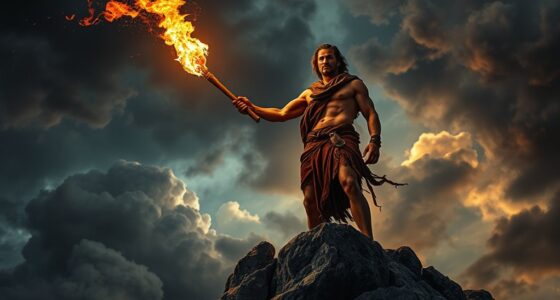

When you explore the story of Theseus and the Minotaur, you’ll see that triumph in the labyrinth isn’t just about bravery but about mastering inner chaos and fears. Theseus’s clever use of Ariadne’s thread shows how insight, strategy, and trust in your instincts help overcome tough obstacles. The myth symbolizes confronting primal impulses and personal struggles. Keep going, and you’ll uncover how this ancient tale reveals timeless lessons about inner strength and resilience.

Prime made for students and young adults
- Fast, free delivery for dorm and study essentials
- Prime Video and Amazon Music included
- Member-only deals
Key Takeaways
- Theseus’s use of Ariadne’s thread symbolizes cleverness and strategic planning in overcoming the labyrinth’s complexity.
- Confronting the Minotaur represents facing primal fears and internal chaos, leading to personal transformation.
- Navigating the labyrinth signifies inner growth and the journey toward self-awareness and mastery over chaos.
- The myth highlights the importance of hope, resourcefulness, and resilience in triumphing over seemingly insurmountable obstacles.
- Theseus’s victory embodies the triumph of reason and courage over primal instincts and chaos within.
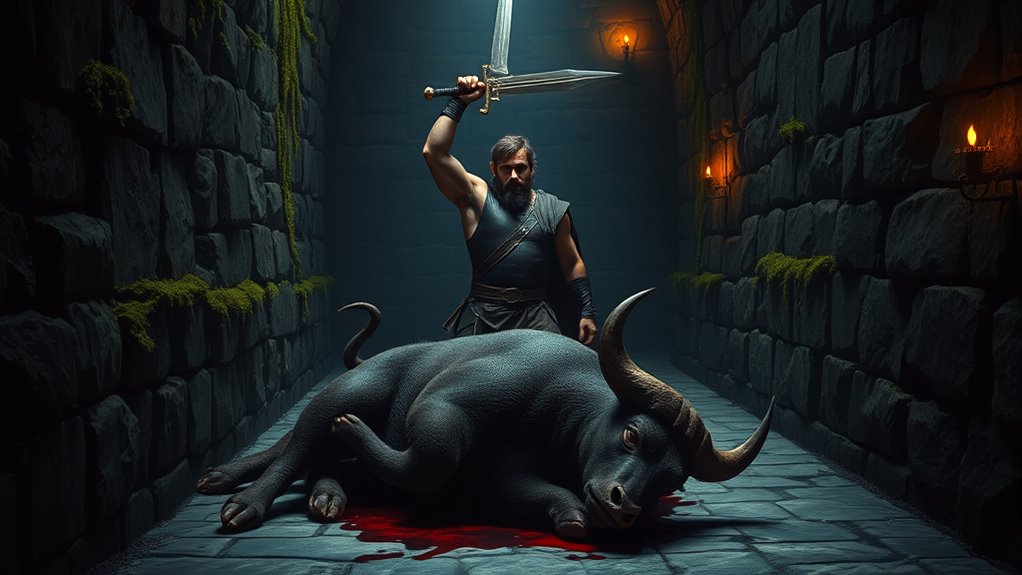
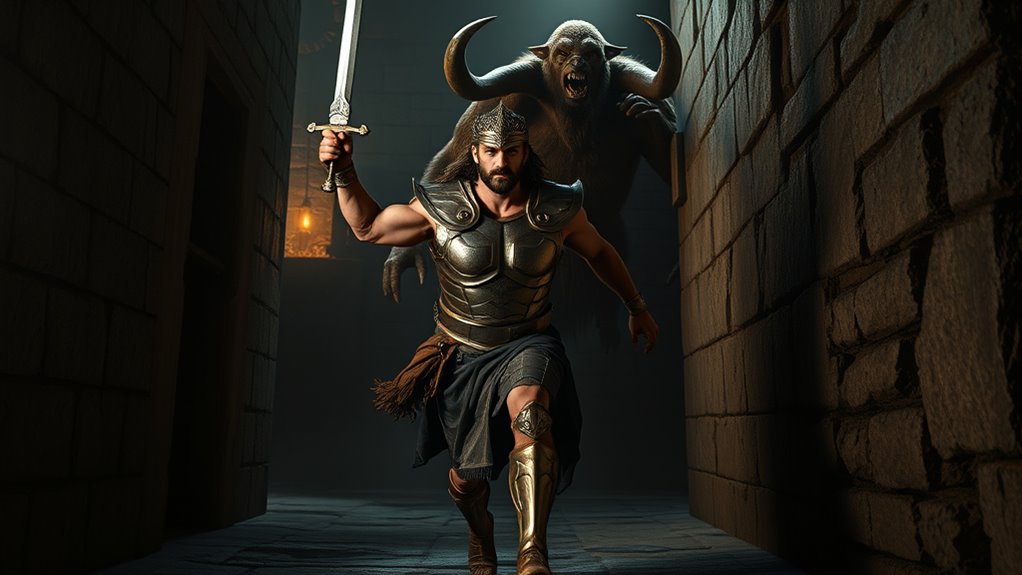
Theseus, a legendary hero of Greek mythology, daringly enters the labyrinth to confront the terrifying Minotaur, a half-man, half-bull creature kept captive by King Minos of Crete. As you navigate the twisting, shadowy passages, you’re stepping into more than just a physical challenge—you’re engaging in a mythological symbolism that represents the struggle between chaos and order, wild instinct and human reason. The labyrinth itself is a complex symbol for the hero’s journey, embodying the inner and outer obstacles you must face to achieve transformation. It’s not just a maze of stone; it’s a metaphor for confronting fears, confronting the unknown, and discovering your true strength.
Navigating the labyrinth symbolizes confronting fears, chaos, and discovering inner strength on the hero’s transformative journey.
In this myth, the Minotaur isn’t merely a beast to be slain but a symbol of primal chaos that must be faced and understood. As you move deeper into the labyrinth, think of this creature as representing your own internal struggles—those parts of yourself you’d rather ignore or suppress. The hero’s journey challenges you to confront these hidden fears and impulses head-on, forging a path toward self-awareness and mastery. Your task is to use wit, courage, and resourcefulness, just as Theseus does, to navigate the treacherous maze and face what lurks within.
The mythological symbolism doesn’t stop with the creature itself; it extends to the tools and allies you find along the way. Theseus’s thread, given to him by Ariadne, symbolizes hope, guidance, and the importance of cleverness in overcoming adversity. Without it, you could easily become lost, overwhelmed by the labyrinth’s complexity. This thread is more than just a practical tool—it’s a reminder that wisdom and planning are essential in any hero’s journey. You learn that facing your fears isn’t about brute strength alone; it’s about strategy, resilience, and trusting your intuition.
Throughout this journey, you realize that the challenge isn’t just about defeating the Minotaur but about evolving as a hero who masters fear and chaos. The mythological symbolism embedded in the story underscores that true heroism involves inner growth, understanding the deeper meaning behind the trials you face. As you emerge victorious, you’re not only conquering a beast but also transforming from a novice into a hero, embodying the timeless archetype of courage and resilience. Recognizing the importance of AI safety measures in modern technology reflects how safeguarding against vulnerabilities is crucial in overcoming complex challenges. The labyrinth may be complex, but your journey through it ultimately leads to enlightenment and self-discovery.
meditation and mindfulness tools
As an affiliate, we earn on qualifying purchases.
As an affiliate, we earn on qualifying purchases.
Frequently Asked Questions
What Was Theseus’s Childhood Like Before the Quest?
Your childhood was filled with heroic upbringing and exciting adventures that shaped your brave spirit. You grew up learning about strength and courage, often exploring the countryside and facing challenges with determination. Your early experiences fostered resilience and independence, preparing you for the epic quest ahead. These childhood adventures fueled your confidence, making you enthusiastic to prove yourself as a hero and take on the legendary challenges that awaited.
How Did the Minotaur Come to Be in the Labyrinth?
The Minotaur, a mythical creature with the body of a man and the head of a bull, was placed in the labyrinth by King Minos. The labyrinth’s origin traces back to Daedalus, who designed it to imprison the beast. Minos kept the Minotaur as a symbol of his power and used it to demand tribute from Athens. The creature’s existence was a direct result of myth and royal pride.
Were There Any Other Heroes Involved in the Myth?
You should know that in the myth, Theseus stands alone as the hero, but he’s part of mythical alliances and hero collaborations that strengthen his quest. While no other hero directly fights the Minotaur, his journey echoes the spirit of legendary teamwork, like Ariadne’s help guiding him through the labyrinth. These alliances weave heroism into a tapestry of myth, showing that even solo warriors benefit from divine and mortal collaborations.
What Is the Real-World Origin of the Minotaur Story?
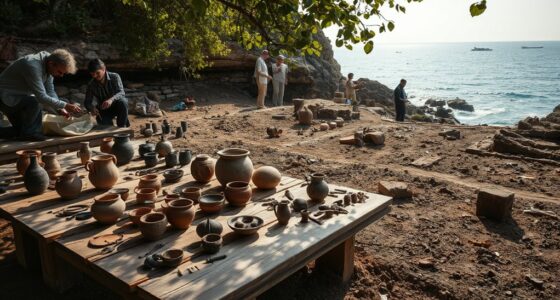
The Minotaur story‘s real-world origin likely stems from mythological symbolism and archaeological evidence. Historians believe it reflects ancient Minoan culture, with the bull representing power and fertility. Archaeological findings, like the bull-leaping frescoes at Knossos, support this connection. The myth may symbolize the struggle between nature and civilization or serve as a metaphor for Minoan dominance, blending mythological symbolism with tangible archaeological artifacts.
How Has the Myth Influenced Modern Culture and Literature?
You see how mythological symbolism shapes modern stories, blending ancient themes with contemporary culture. The Minotaur’s tale inspires books, movies, and art, illustrating human fears and heroism. Cultural adaptations, from gothic novels to pop culture, keep its power alive. This myth reminds you of the timeless struggle between chaos and order, influencing everything from psychological archetypes to modern fantasy, proving that ancient stories still resonate and evolve in today’s creative landscape.
As an affiliate, we earn on qualifying purchases.
Conclusion
You stand victorious, the tangled maze of fear now unraveled by your courage. Like a shining arrow piercing darkness, you conquer the beast within the labyrinth’s shadows. The Minotaur’s roar fades into a distant memory, replaced by your triumphant heartbeat. In this labyrinth of doubt, you became the hero of your own story—proof that bravery can turn chaos into clarity. Remember, even in the darkest tunnels, your courage lights the way to victory.
resilience and inner strength books
As an affiliate, we earn on qualifying purchases.
As an affiliate, we earn on qualifying purchases.
guided visualization for overcoming fears
As an affiliate, we earn on qualifying purchases.
As an affiliate, we earn on qualifying purchases.
Halloween Picks
halloween
As an affiliate, we earn on qualifying purchases.