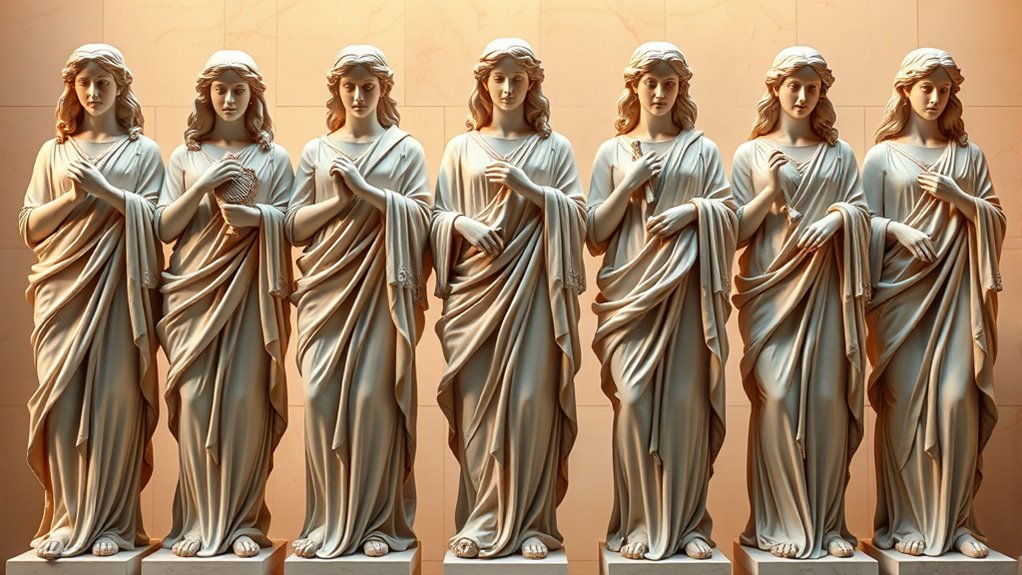

The Nine Muses are divine Greek goddesses who inspire different arts and creative pursuits. They include Calliope for epic poetry, Clio for history, Euterpe for music, Thalia for comedy, and Terpsichore for dance, among others. These goddesses are symbols of divine guidance, encouraging artists to reach their full potential. If you keep exploring, you’ll discover how each Muse influences specific areas of artistic expression and the cultural significance they hold.
Key Takeaways
- The Nine Muses are divine Greek goddesses representing different arts and inspiring creativity in poetry, music, dance, and storytelling.
- Each Muse oversees a specific domain, such as Calliope for epic poetry or Terpsichore for dance and chorus.
- They are believed to whisper ideas into artists’ minds, serving as divine sources of artistic inspiration.
- Artists historically invoked the Muses at the start of creative work to seek divine guidance and excellence.
- The Muses symbolize eternal inspiration, divine influence, and the close relationship between mythology and artistic expression.
Have you ever wondered which divine figures fueled creativity and inspiration in ancient Greece? The answer lies in the Nine Muses, powerful goddesses who embodied the arts and inspired countless artists, poets, and musicians. These divine beings weren’t just mythological figures; they were the very essence of poetic creativity and musical inspiration. When you seek inspiration for your art or craft, you can imagine calling upon these Muses to ignite your passion and elevate your work.
Invoke the Nine Muses to ignite your creativity and elevate your art with divine inspiration.
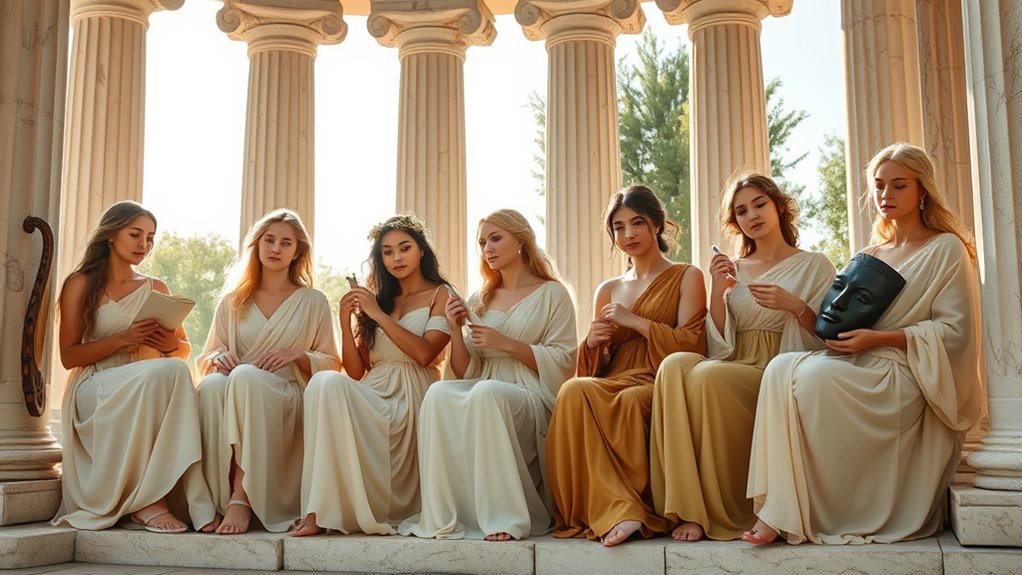
Each Muse presides over a specific domain, making them a diverse and essential source of artistic influence. For example, Calliope, the chief Muse, inspires epic poetry and eloquence, encouraging you to craft stories that resonate deeply. Clio, the Muse of history, urges you to explore the past and bring historical narratives to life through your words. Euterpe, the Muse of music and lyric poetry, is directly linked to musical inspiration, guiding your melodies and harmonies, helping you find the perfect tune or rhythm. To connect with her is to access a wellspring of musical creativity and emotional expression.
Imagine yourself sitting in a quiet space, seeking that elusive spark. You might envision the Muses whispering ideas into your mind, each one offering a different form of inspiration. Thalia, the Muse of comedy and idyllic poetry, encourages you to find humor and joy in your work, while Terpsichore, the Muse of dance and chorus, inspires movement and rhythm, fueling your physical and artistic expression. Polymnia inspires sacred poetry and hymnody, helping you craft spiritual or uplifting messages, and Erato sparks romantic poetry and love songs. These divine figures serve as a reminder that inspiration flows from both the mind and soul, guiding your creative process. Additionally, understanding the divine role of inspiration in Greek culture can deepen your appreciation for how closely art and mythology are intertwined.
In ancient Greece, artists and writers dedicated their works to the Muses, invoking them at the start of their creative endeavors. Their influence was seen as essential for producing great art, whether in poetry, music, dance, or storytelling. By understanding their roles, you can appreciate how deeply intertwined the divine with human creativity was in Greek culture. When you feel stuck or uninspired, think of the Muses as your celestial muses, ready to awaken your poetic creativity and musical inspiration. Their presence reminds you that inspiration isn’t random—it’s a divine gift waiting to be tapped into through devotion and imagination. Whether you’re writing, composing, or performing, the Nine Muses stand as timeless symbols of artistic passion and divine guidance.
Frequently Asked Questions
How Were the Muses Worshipped in Ancient Greece?
You worshipped the Muses through musical offerings and ceremonial processions, honoring their divine inspiration. People often sang hymns, played instruments, and recited poetry in their temples or sacred spaces. During festivals, you might have participated in processions, carrying offerings and performing arts to seek favor and inspiration. These rituals celebrated the Muses’ role in inspiring creativity and artistic excellence, reinforcing their importance in Greek cultural and religious life.
Did the Muses Have Any Specific Symbols or Representations?
Imagine the muses as shimmering stars guiding creative journeys; their symbols and representations light the way. You’ll find muse symbols like laurel wreaths, scrolls, and musical instruments in ancient art, each embodying their domain. Artistic representations often depict them with flowing robes, wings, or holding lyres and brushes, capturing their divine inspiration. These symbols serve as visual whispers of their eternal role in inspiring artistry and knowledge.
Are There Any Known Myths Involving All Nine Muses Together?
Yes, there are myths involving all nine muses together, often depicting mythical gatherings or collective worship. In these stories, the muses unite to inspire gods, poets, and artists, emphasizing their collective power. One famous myth shows the muses inspiring Apollo or other gods during divine gatherings, highlighting their importance in fostering creativity. These myths celebrate their unity and collective influence in inspiring human and divine arts.
How Did the Muses Influence Later Western Art and Literature?
You see the muses’ influence everywhere in Western art and literature. During the Renaissance, they inspired artists to pursue ideal beauty and divine creativity, shaping masterpieces. In modern times, writers and poets frequently reference the muses, seeking inspiration for their work. Their legacy encourages the pursuit of artistic excellence, reminding you that inspiration can come from divine sources, fueling creativity across centuries and genres.
Were the Muses Associated With Particular Regions or Cities?
You should know that each Muse had regional associations and was linked to specific cities through worship practices. For example, Calliope was associated with Mount Helicon, and Thalia with Thebes, reflecting city-specific worship. These regional ties helped shape local artistic traditions and festivals, emphasizing the cultural importance of each Muse. By honoring them locally, communities reinforced their connection to the divine inspiration that fueled arts and literature.
Conclusion
You can see how essential the Nine Muses were to ancient Greek culture—they inspired countless artists, writers, and performers. Curiously, over 80% of Greek artworks and literature from the classical period reference or honor the Muses in some way. This shows just how deeply these goddesses influenced creativity and imagination, encouraging you to think about the enduring power of inspiration. Their legacy reminds us that divine guidance can elevate human achievement across all arts.