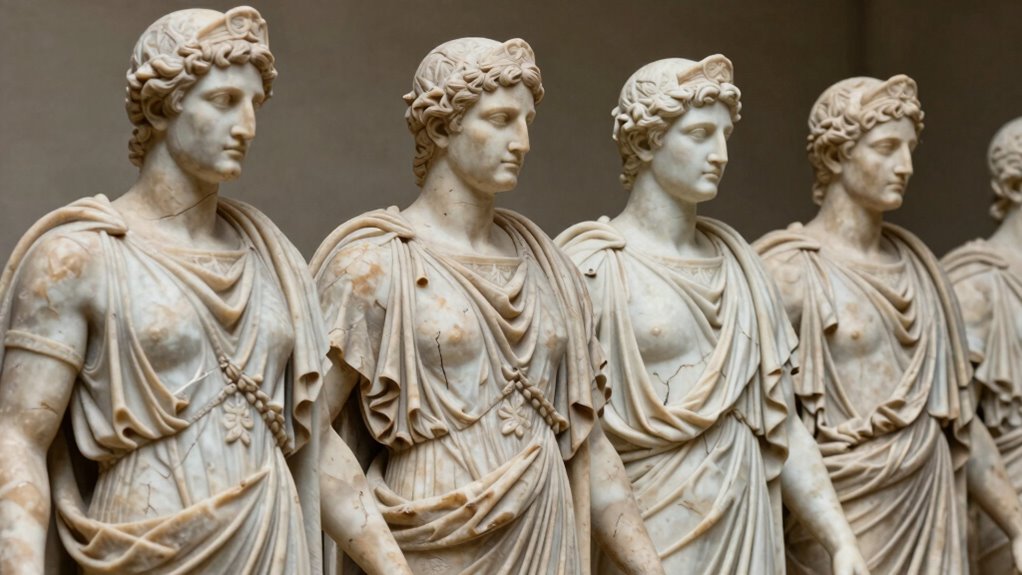

Greek mythology statues aren’t just decor; they’re powerful signals of your identity, values, and social standing. By displaying figures like Athena or Apollo, you showcase your appreciation for wisdom, beauty, and cultural refinement. These statues embody historical symbolism, telling stories that connect you to divine virtues and societal ideals. They also act as markers of education and prestige, letting others see your cultural literacy. Keep exploring to discover how these sculptures deepen your understanding of personal and collective identity.
Key Takeaways
- Greek mythological statues embody societal virtues, beliefs, and historical symbolism, serving as cultural identity markers.
- They reflect cultural ideals like beauty, harmony, and divine qualities, shaping societal aesthetic and moral standards.
- Ownership and display of mythological statues signal social status, education, and cultural sophistication.
- They encode personal and collective values, enabling self-expression and societal alignment through symbolic imagery.
- These statues preserve cultural legacy, connecting individuals to historical narratives, divine virtues, and shared heritage.
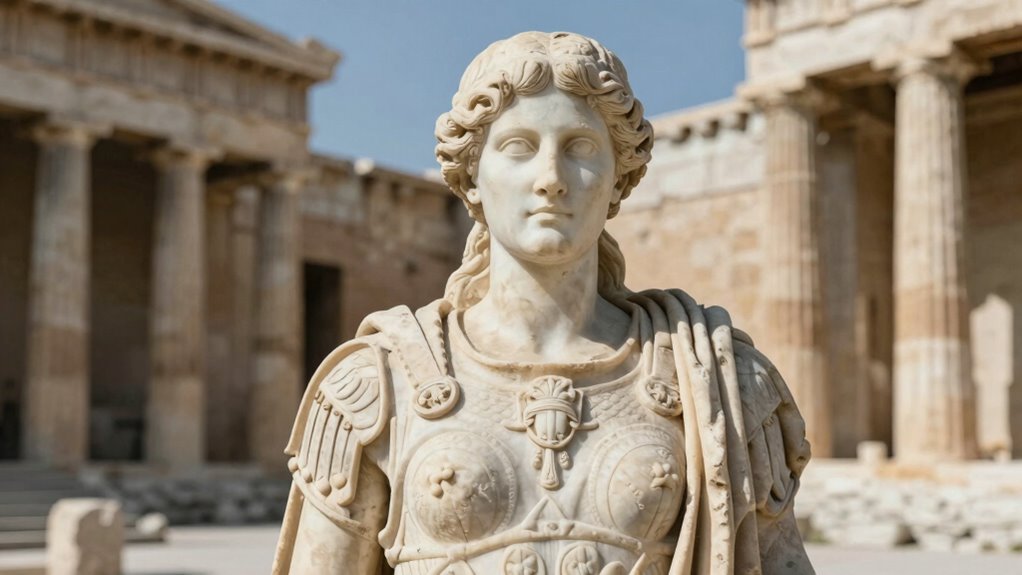
Greek mythology statues have long served as powerful symbols of identity, conveying values, beliefs, and social status through their intricate designs. When you look at these statues, you’re not just seeing art—they’re telling stories about the people who commissioned them and the society they belonged to. These sculptures often embody *historical symbolism*, reflecting the ideals, virtues, or divine qualities that a community wanted to project. For example, a statue of Athena might symbolize wisdom and strategic thinking, signaling to others that the owner or city-state valued intelligence and military prowess. By choosing to display such a figure, you’re aligning yourself with those virtues, making a statement about your identity and aspirations.
Greek mythology statues symbolize values and social status, reflecting virtues and ideals of the society they represent.
The influence of Greek mythology on art extends beyond simple aesthetic appeal. These statues act as *artistic influence* that shapes how societies express their identity visually. Their detailed craftsmanship, idealized forms, and symbolic motifs elevate them from mere decoration to powerful markers of personal and communal identity. When you see a statue of Apollo, with his youthful beauty and musical instrument, it’s not just a tribute to the god—it’s also a reflection of cultural ideals around harmony, beauty, and the arts. Displaying such a piece signals your appreciation for those values, positioning you within a tradition that venerates artistic excellence and divine inspiration.
Moreover, Greek mythology statues serve as a form of social signaling. They demonstrate your knowledge of history and mythology, which can elevate your status among peers. For aristocrats and wealthy individuals, commissioning or owning specific mythological statues was a way to showcase sophistication, education, and cultural refinement. These sculptures were often placed in prominent locations—public squares, private gardens, or homes—to project prestige. By doing so, you communicate your connection to the revered stories and divine figures of ancient Greece, aligning yourself with their virtues and social ideals. Displaying such statues can also serve as a sign of cultural literacy, further emphasizing your educated background.
In addition, understanding the symbolic significance of these statues enables viewers to interpret their deeper meanings and the values they embody, making their display a deliberate act of self-expression. As these symbols often reflect the cultural ideals of their creators, they help to reinforce societal norms and aspirations. Ultimately, Greek mythology statues are more than aesthetic objects—they’re deliberate symbols of identity. Their *historical symbolism* and *artistic influence* allow you to encode your values, social aspirations, and cultural affiliations through carefully chosen sculptures. Whether you display a heroic figure or a divine deity, you’re making a statement about who you are, what you believe in, and the legacy you want to uphold. These statues do not merely decorate space; they declare your place within a rich tradition of myth, history, and social meaning.
Greek mythology statues for home
As an affiliate, we earn on qualifying purchases.
As an affiliate, we earn on qualifying purchases.
Frequently Asked Questions
How Do Greek Statues Influence Modern Identity Expressions?
You influence modern identity expressions through Greek statues by embracing mythological symbolism that reflects qualities like strength, wisdom, or beauty. However, be mindful of cultural appropriation, as using these symbols without understanding their origins can be problematic. By thoughtfully incorporating mythological elements, you connect with historical narratives and values, showcasing your identity while respecting their cultural significance. This balance helps you express yourself authentically and thoughtfully in contemporary society.
Are Certain Greek Gods More Popular in Specific Regions?
Yes, certain Greek gods are more popular in specific regions due to regional myth preferences and cultural symbolism. For example, Athens often favors Athena, representing wisdom and civic pride, while Corinth might honor Poseidon, linked to maritime strength. These preferences reflect local history and values, influencing how people display statues and incorporate these deities into their cultural identity. Your environment shapes which gods resonate most with you.
What Materials Are Commonly Used for Greek Mythology Statues?
You’ll find that Greek mythology statues are commonly made from marble and bronze. Marble craftsmanship allows for highly detailed and durable sculptures, showcasing the artistry of ancient Greek artisans. Bronze casting, on the other hand, is perfect for creating dynamic, long-lasting statues with intricate features. Both materials reflect the Greeks’ mastery in sculpture, and their use depends on the statue’s purpose—whether for temples, public spaces, or personal collections.
How Do Collectors Authenticate Ancient Greek Statues?
You can authenticate ancient Greek statues through rigorous authenticity verification, which involves examining stylistic details, tool marks, and signature features. Provenance research is key—tracking the item’s history helps confirm its origin and legitimacy. Notably, experts also use scientific tests like radiocarbon dating and thermoluminescence analysis to detect modern forgeries, ensuring you invest in genuine pieces that truly reflect the grandeur of ancient Greece.
Can Greek Statues Be Considered Political Symbols Today?
Yes, Greek statues can be considered political symbols today. You might see them representing cultural symbolism, reflecting national pride or historical identity. They can also become tools of political activism, used to challenge or reinforce certain ideologies or messages. When you encounter these statues, think about how they serve as more than art—they embody complex cultural and political statements, shaping and reflecting societal values and debates.
classical Greek sculpture replicas
As an affiliate, we earn on qualifying purchases.
As an affiliate, we earn on qualifying purchases.
Conclusion
So, next time you spot a Greek mythology statue, remember it’s more than just decor—it’s like your vintage band tee, signaling your vibe. Whether you’re channeling Athena’s wisdom or Apollo’s artistry, these statues help you tell your story loud and clear. Just don’t forget, even in your most modern rooftop party, these ancient symbols still speak volumes about your identity—like a timeless hashtag that never goes out of style.
As an affiliate, we earn on qualifying purchases.
As an affiliate, we earn on qualifying purchases.