📊 Full opportunity report: Youth Pitching And Arm Load: Tracking Work Beyond The Season on IdeaNavigator AI — validation score, market gap, and execution plan.

Prime made for students and young adults
- Fast, free delivery for dorm and study essentials
- Prime Video and Amazon Music included
- Member-only deals
TL;DR
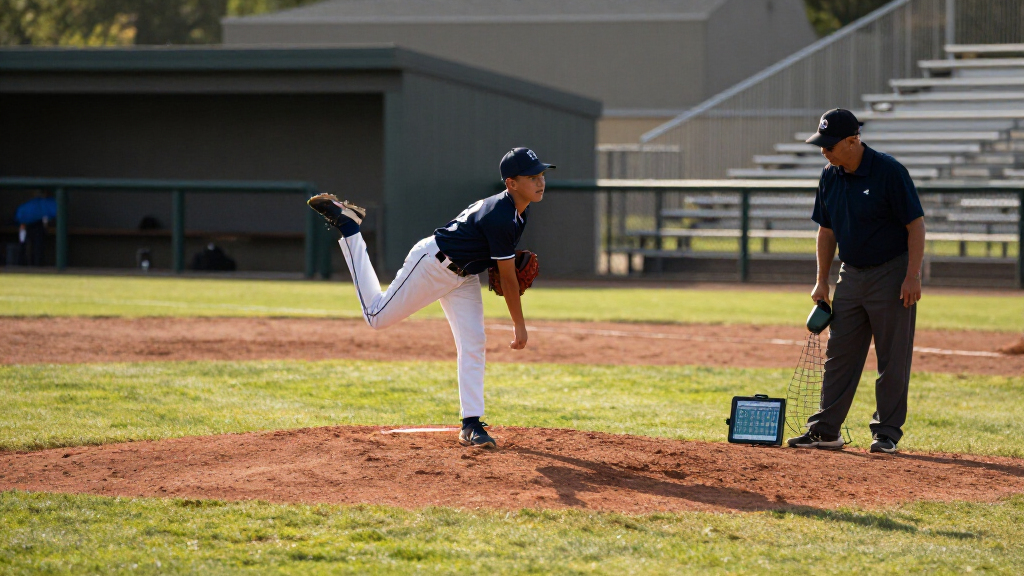
An IdeaNavigator AI proposal outlines an app for parents to track a young pitcher’s workload across school, travel and showcase teams. The concept has not been presented as a launched product or validated study; its proposed test would recruit 200 travel-ball families and track logging and rest decisions over a season.
IdeaNavigator AI has proposed an arm-load tracking app for parents of young pitchers who play for multiple teams, aiming to bring scattered outing records into one view. The concept would compare a child’s recorded workload with age-based guidelines, flag thresholds and provide coaches with a shareable report, but the proposal does not establish that an app has launched or that the approach reduces injuries.
The proposed first use case is a parent of a pitcher playing across school, travel and showcase seasons. The problem identified is that teams may maintain separate pitch records, leaving families without a single account of a player’s cumulative outings. The proposed app would let parents log appearances quickly or import records from GameChanger, then track workload across teams.
In the proposed minimum viable product, the app would use rolling workload measures and age-based guidelines to flag thresholds, suggest or schedule rest, and create a load report for each coach. These are planned features, not confirmed capabilities of an existing service. The outline does not specify which guidelines or thresholds the app would use, how data imports would work, or how it would handle incomplete or conflicting records.
The suggested business model is a family annual subscription, with team licensing as a possible expansion. To test demand and use, the proposal calls for recruiting 200 travel-ball families and tracking logging consistency over one season, while auditing whether app flags changed rest decisions. No results from that test are reported.
A cross-team record could help families and coaches see outings that might otherwise remain separated across school, travel and showcase schedules. That would address an information gap identified in the proposal: no single team necessarily sees a pitcher’s full schedule. A consistent record may make it easier to discuss rest, but the proposal does not show that tracking alone prevents arm injuries or establishes a safe workload.
The idea also places parents at the center of data collection. Its usefulness would depend on whether families can log outings reliably and whether coaches receive and act on the information. The planned season-long test is designed to examine both logging consistency and changes to rest decisions, rather than claim an injury-prevention outcome before evidence is available.
For readers considering youth sports tools, the distinction matters: a workload dashboard can organize information, but its flags are not a medical diagnosis. The outline does not describe clinical oversight, validation against injury outcomes, or how the app would communicate uncertainty when records are missing.
youth baseball pitch count tracker
As an affiliate, we earn on qualifying purchases.
As an affiliate, we earn on qualifying purchases.
Fragmented Schedules, Existing Guidance
The proposal describes youth pitchers moving among teams and competitions whose schedules and records are not shared. It says that Pitch Smart guidelines exist, while arguing that guidance is not automatically enforced across a player’s separate team commitments. The proposed app would therefore aggregate parent-entered or imported outing data rather than rely on a single team’s count.
The outline also says youth elbow-surgery rates are rising as travel baseball expands and that injuries involving the ulnar collateral ligament, or UCL, are appearing in high school. Those statements are presented as the rationale for the concept, but the proposal provides no rates, study citations, time period or comparison figures. They should not be read here as independently quantified findings.
The proposed workflow is narrower than a general injury-monitoring platform: it begins with one buyer, the parent of a year-round youth pitcher, and one task, consolidating workload across teams. Any wider team-license market would follow only if the family-focused approach proves useful.
baseball arm workload monitoring app
As an affiliate, we earn on qualifying purchases.
As an affiliate, we earn on qualifying purchases.
Evidence and Product Details Missing
No product launch, test results or injury outcomes are reported in the proposal. It is unclear whether a development team has been assembled, when a pilot might begin, or whether the proposed 200-family study has secured participants. The outline also does not identify an app name, price, privacy policy or data-sharing arrangements.
Several operational questions remain open: what counts as an outing, how the system would reconcile records from different teams, which age-based workload rules it would apply, and who would review or act on a risk flag. The proposal does not explain how the app would handle missed entries or distinguish between a scheduling prompt and individualized medical advice.
The claims about rising surgery rates and UCL injuries are not accompanied by supporting data in the outline. Until evidence and implementation details are supplied, the concept is best understood as a product proposal for testing, not proof that a particular tracking method is effective.
As an affiliate, we earn on qualifying purchases.
A Season-Long Pilot Would Test Use
The next step described is a season-long test with 200 travel-ball families. The proposed measures are whether parents log outings consistently and whether workload flags lead to different rest decisions. The outline does not give a recruitment date, study protocol, evaluation criteria or publication schedule.
If a pilot proceeds, its findings would help show whether families can maintain complete records across teams and whether coaches find the reports useful. Any claim that the workflow reduces injuries would require evidence beyond logging and decision changes; no such outcome is specified in the proposed validation plan.
Source: IdeaNavigator AI
baseball injury prevention equipment
As an affiliate, we earn on qualifying purchases.
As an affiliate, we earn on qualifying purchases.
Key Questions
Has the youth pitcher tracking app launched?
The proposal does not report a launch, product name or release date. It describes a possible app workflow and a proposed pilot.
What would the proposed app track?
Parents would log or import a young pitcher’s outings across teams. The app would aggregate workload over time, compare it with age-based guidelines, flag thresholds and produce coach-facing reports.
Does the proposal show that the app prevents injuries?
No. The suggested test would measure logging consistency and whether flags change rest decisions. It reports no injury-prevention results.
What evidence does the proposal give about youth elbow injuries?
It states that youth elbow-surgery rates are climbing and that UCL injuries are appearing in high school, but provides no cited studies, rates, time window or comparison baseline.
How would the concept be tested?
The proposed plan is to recruit 200 travel-ball families, follow logging over one season and audit whether app flags changed rest decisions. No start date or completed results are given.
Source: IdeaNavigator AI
Halloween Picks
halloween
As an affiliate, we earn on qualifying purchases.