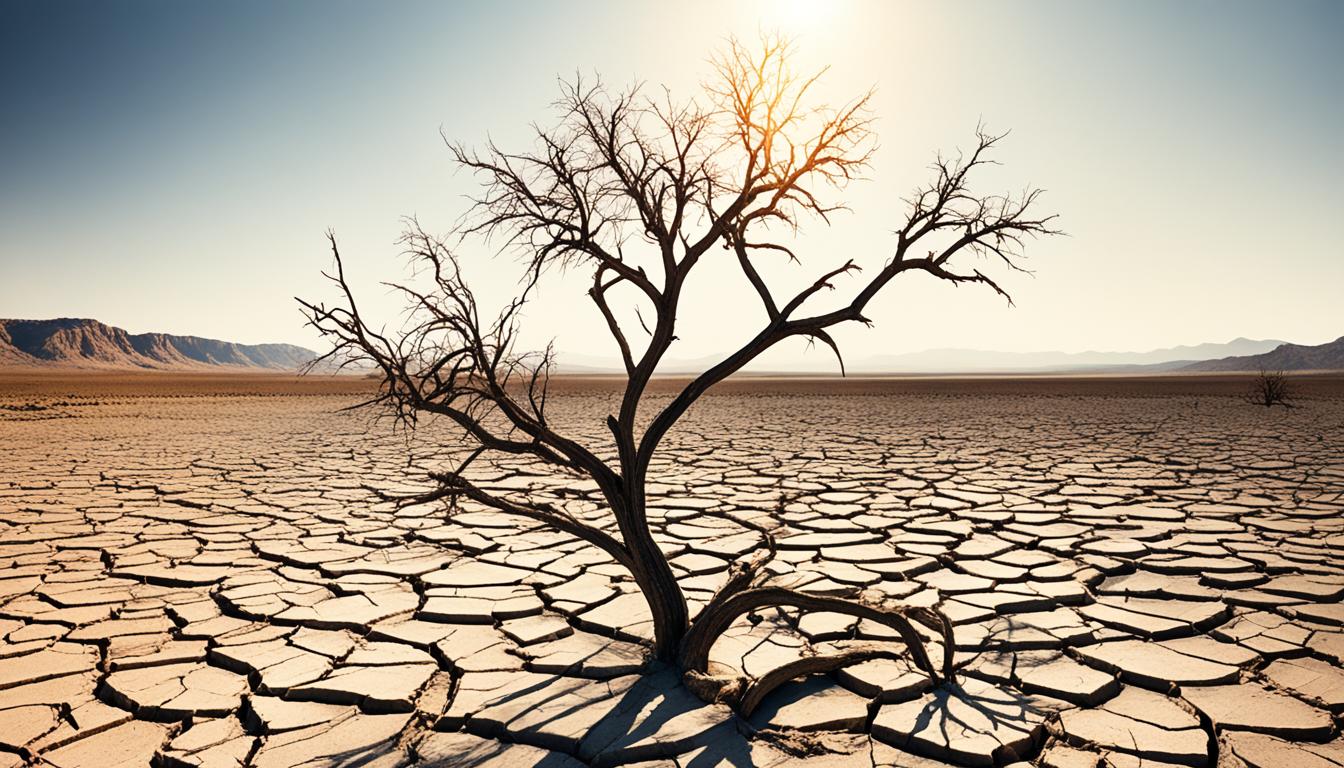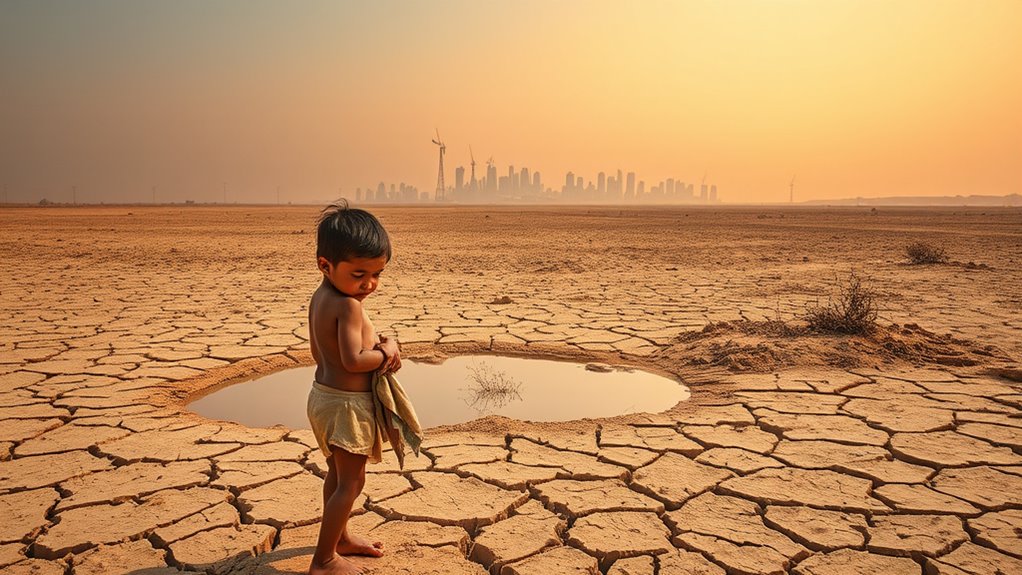

By 2025, water scarcity and pollution could severely impact your health. Contaminated water may increase your risk of waterborne diseases like cholera and typhoid. Long-term exposure to pollutants can cause cancers, neurological issues, and other chronic conditions. Agricultural runoff might make your food unsafe, and limited clean water could compromise hygiene. If you want to understand how these issues will affect you and your community, keep exploring the details ahead.
Key Takeaways
- Water scarcity increases reliance on unsafe sources, elevating risks of waterborne diseases like cholera and dysentery.
- Water pollution contaminates drinking water, causing long-term health issues such as cancers and neurological disorders.
- Contaminated irrigation water leads to toxic food crops, posing health risks through the human food chain.
- Limited access to safe water impairs hygiene, heightening vulnerability to infections and related health complications.
- Future health impacts depend on sustainable water management and pollution control practices now implemented.

Water Scarcity 2025
Will you be prepared for the water scarcity predicted by 2025? As global water supplies dwindle, it’s vital to understand what’s driving this crisis and how it could impact your health. One of the main culprits is water pollution, which contaminates freshwater sources, making them unsafe for drinking, sanitation, and agriculture. Water pollution results from various human activities, especially agricultural practices that often discharge fertilizers, pesticides, and animal waste into rivers and lakes. These pollutants not only threaten aquatic ecosystems but also pose serious health risks to communities relying on contaminated water. When water becomes polluted, the risk of waterborne diseases skyrockets, leading to illnesses like cholera, dysentery, and typhoid, which can be fatal if untreated. Furthermore, polluted water affects food safety, as crops irrigated with contaminated water can accumulate harmful chemicals and pathogens, entering the human food chain and causing long-term health problems.
Agricultural practices play a significant role in both water consumption and pollution. As the world’s population grows, so does the demand for food, leading to intensified farming methods that often overuse water resources and release pollutants into the environment. Excessive use of fertilizers and pesticides seeps into groundwater or washes into nearby water bodies, degrading water quality. Flood irrigation, a common technique, wastes large amounts of water and increases runoff, carrying pollutants into rivers and lakes. These practices not only deplete local water supplies but also contribute to the broader water pollution problem, making safe drinking water scarcer. If these agricultural activities continue unchecked, the strain on already limited freshwater sources will worsen, increasing the likelihood of health crises linked to unsafe water.
You might also overlook the interconnectedness of water pollution and agricultural practices with your health. Contaminated water doesn’t just cause immediate illnesses; it can lead to chronic health conditions, including cancers and neurological problems, due to long-term exposure to toxic chemicals. The contamination can seep into your home’s water supply, affecting your daily hygiene, cooking, and drinking habits. As water scarcity intensifies, communities may be forced to rely on unsafe sources, heightening health risks. Protecting water quality through sustainable agricultural practices and pollution controls isn’t just an environmental issue; it’s a direct health concern that you need to be aware of. The choices made today about farming and pollution management will determine whether clean, safe water remains accessible for future generations—and whether your own health can withstand the looming water crisis.
Additionally, advances in AI-powered data analytics] and monitoring can help identify pollution hotspots and optimize water resource management, potentially reducing health risks associated with water scarcity.

iSpring RCC7AK, NSF Certified, 75 GPD, Alkaline 6-Stage Reverse Osmosis System, pH+ Remineralization RO Water Filter System Under Sink, Patented Top-Mounted Faucet Design for Easy Installation
PATENTED DESIGN – The top-mounted fastener allows for easy countertop installation entirely from above, eliminating the hassle of…
As an affiliate, we earn on qualifying purchases.
As an affiliate, we earn on qualifying purchases.
Frequently Asked Questions
How Will Water Scarcity Affect Global Food Security by 2025?
By 2025, water scarcity will threaten your food security by reducing agricultural productivity, making crops harder to grow and lowering yields. This shortage disrupts food supply chains, causing shortages and higher prices. You may find it harder to access affordable, nutritious food, especially in vulnerable regions. The combined effect of decreased water availability and disrupted supply chains emphasizes the urgent need to address water management and sustainable farming practices.
What Innovative Technologies Can Mitigate Water Shortages Effectively?
Imagine turning salty ocean water into fresh, drinkable water—desalination breakthroughs make this possible, transforming scarcity into supply. You can also leverage smart water management systems that optimize usage, detect leaks, and forecast demand. These innovations work like a well-tuned orchestra, ensuring every drop counts. By adopting these technologies, you help mitigate water shortages effectively, securing essential resources for communities and ecosystems alike.
How Will Water Scarcity Influence Economic Growth in Developing Countries?
You’ll find that water scarcity hampers economic growth in developing countries by increasing costs and disrupting industries. To combat this, you should focus on implementing fair water pricing strategies that encourage conservation and investing in infrastructure development to improve water access. These measures can boost productivity, attract investments, and foster sustainable growth, helping your country better manage water resources amid growing demand and limited supplies.
What Role Does Climate Change Play in Accelerating Water Crises?
Climate change accelerates water crises by intensifying climate feedbacks and droughts, making water sources unreliable. You’ll see more severe droughts, decreasing rainfall, and unpredictable weather patterns, all fueled by rising global temperatures. These climate feedbacks create a vicious cycle, worsening water scarcity. As droughts intensify, communities face water shortages, threatening health, agriculture, and economic stability. You must act now to reduce emissions and adapt to these changing conditions.
Can Individual Actions Significantly Impact Global Water Conservation Efforts?
Yes, your actions can make a difference in global water conservation. By taking personal responsibility—like fixing leaks, using water-efficient appliances, and reducing waste—you help conserve water daily. Supporting community initiatives, such as local conservation programs or awareness campaigns, amplifies your impact. Small changes add up, inspiring others to act and creating a collective effort that can substantially alleviate water scarcity and its health impacts worldwide.

LifeStraw Go Series — Insulated Stainless Steel Water Filter Bottle for Travel and Everyday Use Removes Bacteria, Parasites and Microplastics, Improves Taste, 24oz Icelandic Blue
LifeStraw Go Series is the ULTIMATE SIDEKICK. The stainless steel BPA-Free bottle filters out nasties so you can…
As an affiliate, we earn on qualifying purchases.
As an affiliate, we earn on qualifying purchases.
Conclusion
As the world gently shifts toward a future of limited water, remember that every small action counts. By conserving, reusing, and valuing water more deeply, you help nurture a more resilient planet. Though challenges may arise, your mindful choices can create ripples of positive change, ensuring healthier communities and a brighter tomorrow. Embrace these subtle shifts, and together, we can turn the tide toward a more sustainable and harmonious world.

Varify 17in1 Complete Drinking Water Test Kit – 100 Strips + 2 Bacteria Tester Kits – Well, Tap, Home, City Water Testing Strip for Lead, Alkaline, Chlorine, Hardness, Iron, Fluoride, Copper & More
17 IMPORTANT PARAMETERS: The Varify Premium Drinking Water Test Kit offers an unrivaled, complete analysis of your drinking…
As an affiliate, we earn on qualifying purchases.
As an affiliate, we earn on qualifying purchases.

Legacy Food Storage Emergency Water Storage Containers, Long Term 5 Gallon Water Tank – 4 Stackable Food Grade Tanks Included, for Camping, Prepping, Survival – 20 Gallon Total Capacity
LONG TERM EMERGENCY WATER STORAGE – Made from heavy-duty, BPA-free food-grade plastic, each 5-gallon tank measures 15" x…
As an affiliate, we earn on qualifying purchases.
As an affiliate, we earn on qualifying purchases.