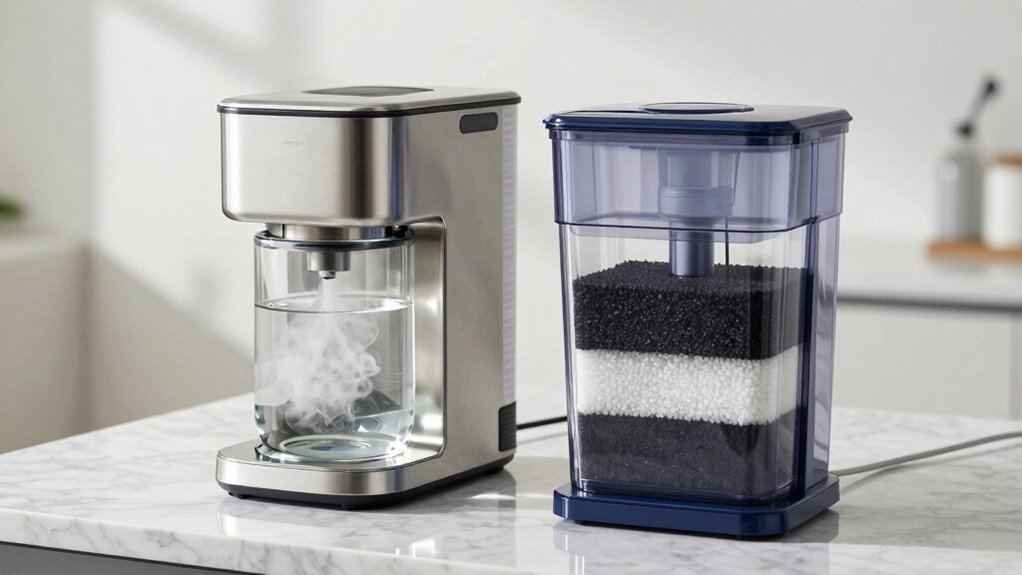
If you’re choosing between a water distiller and a filter, understand that their differences go beyond just removing impurities. A filter improves taste and odors and can reduce some microbes, but it doesn’t fully sterilize water. On the other hand, a distiller boils water, killing bacteria, viruses, and removing most chemicals and heavy metals, but it strips away beneficial minerals. To discover which method fits your needs best, keep exploring how each impacts water safety and quality.
Open a free Amazon Business account
Business pricing, bulk buying and tax-exempt orders.
As an affiliate, we earn on qualifying purchases.
Key Takeaways
- Water distillers remove a broader range of contaminants, including microbes, chemicals, and heavy metals, by boiling water.
- Water filters primarily trap impurities and improve taste but may not eliminate all microorganisms or dissolved chemicals.
- Distillation produces nearly pure water but strips away beneficial minerals, which some distillers can restore with mineralization.
- Filters vary in microbial removal capability, whereas distillation guarantees elimination of bacteria, viruses, and pathogens.
- The choice depends on safety needs: distillation offers comprehensive purification, while filters enhance taste and odor.
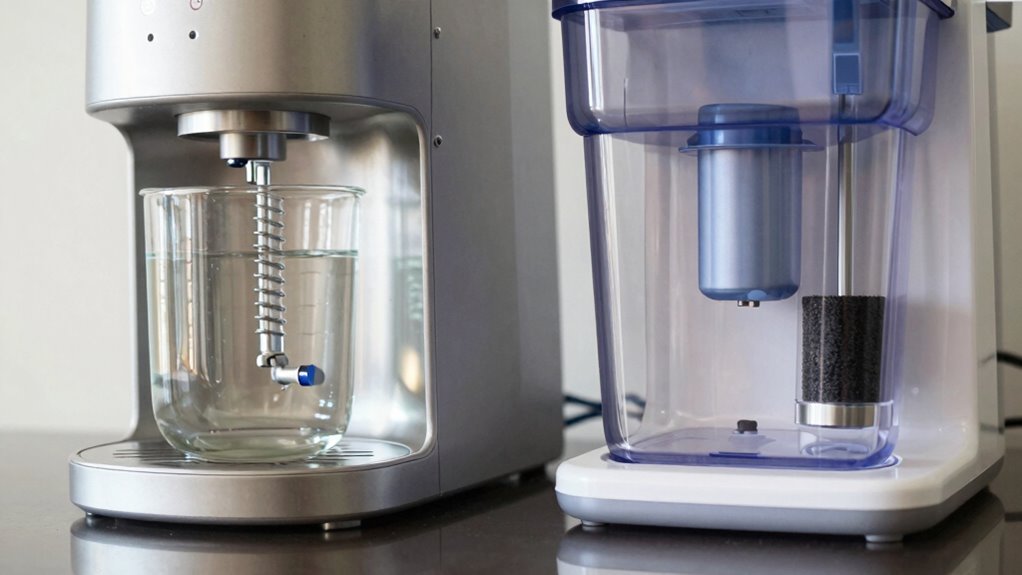
When it comes to guaranteeing clean drinking water, many people assume that a water filter and a water distiller serve the same purpose. However, the differences are more significant than they appear at first glance. Water filters primarily work by trapping impurities, including sediment, chlorine, and some bacteria, through various filtration media. They improve taste and odor, making tap water more palatable. But they don’t necessarily eliminate all contaminants, especially microorganisms or dissolved chemicals. That’s where a water distiller shines. It boils water, capturing steam to leave behind impurities, effectively removing microbes, chemicals, and heavy metals. This process produces nearly pure water, but it also strips away beneficial minerals, which is why some distillers now include alkaline mineralization features to restore essential minerals and improve taste. Mineral content can be an important factor for health and taste, influencing your choice of water purification methods.
Water filters improve taste but do not fully eliminate microorganisms or chemicals like distillers do.
Understanding microbial contamination is vital. Tap water can contain bacteria, viruses, or other pathogens that pose health risks. Water filters might reduce some microbial presence if they contain specific antimicrobial elements or are certified for such, but many are not designed for full sterilization. In contrast, distillation is a proven method to eliminate microbial contamination because the high temperature kills bacteria and viruses. When you use a distiller, you get water that’s free from microorganisms, drastically reducing the risk of waterborne illnesses. This makes distillation particularly suitable for households with compromised immune systems or areas with questionable water quality. Additionally, since microbes can sometimes develop resistance to certain filtration methods, relying on microbial elimination through distillation adds an extra layer of safety. Furthermore, distillation can be more consistent in removing a wide range of contaminants compared to some filtration systems, which may vary in performance. It’s also worth noting that water purification technologies continue to evolve, offering more comprehensive solutions for diverse needs. Incorporating advanced filtering technologies can further enhance water safety and quality, especially in regions with highly variable water sources.
water distiller with mineralization
As an affiliate, we earn on qualifying purchases.
As an affiliate, we earn on qualifying purchases.
Frequently Asked Questions
Which Option Is More Energy-Efficient for Daily Use?
A water filter is more energy-efficient for daily use because it consumes less energy compared to a distiller. Filters quickly improve water quality with minimal energy consumption, making them a practical choice for regular, everyday needs. Distillers, on the other hand, use more power to boil water, which increases energy consumption. If you’re focused on saving energy while maintaining good water quality, a filter is the smarter option.
Can Filters Remove Heavy Metals Better Than Distillers?
Filters can often remove heavy metals more effectively than distillers, especially when they’re designed with activated carbon or specialized media for chemical removal. While distillers do a great job at mineral retention and boiling out impurities, they may struggle with certain heavy metals. Think of filters as the superhero team for chemical removal, tackling metals head-on, whereas distillers excel at pure, mineral-rich water but might leave some metals behind.
How Long Does a Typical Water Distiller Last?
A typical water distiller lasts about 10 to 15 years with proper maintenance. You’ll enjoy consistent water purity, as distillers effectively remove impurities and contaminants. To guarantee system durability, clean your distiller regularly and replace parts as needed. Proper care helps extend its lifespan, so you can rely on it for long-term clean water. Investing in a quality unit and maintaining it properly keeps your water safe and your system working efficiently.
Are Filters More Cost-Effective Over Time Than Distillers?
Filters are generally more cost-effective over time compared to distillers because of their lower initial cost and maintenance expenses. Filtration technology allows you to replace filters periodically, which tends to be cheaper than the energy costs and parts replacements associated with distillers. When doing a cost comparison, you’ll find that filters save you money in the long run, making them a smarter choice if you’re focused on affordability.
What Maintenance Does Each System Require Regularly?
Think of maintaining your water system like tending a garden; regular care guarantees healthy growth. For water purity, filters need monthly replacement of cartridges and periodic cleaning to prevent buildup. Distillers require less frequent maintenance—just descaling every few months to remove mineral deposits. Both use different filtration methods, but consistent upkeep keeps your water clean and safe, saving you money and ensuring peak performance over time.
water filter for microbial removal
As an affiliate, we earn on qualifying purchases.
As an affiliate, we earn on qualifying purchases.
Conclusion
Choosing between a water distiller and a filter isn’t just about purity — it’s about safeguarding your future, much like the wise old owl guarding its wisdom. Remember, the choice you make today shapes the quality of tomorrow’s health. Don’t settle for surface clarity when true purity lies beneath. By understanding the difference, you’re not just filtering water — you’re making a mindful decision to nourish your well-being, echoing the timeless lesson that true value runs deeper.
As an affiliate, we earn on qualifying purchases.
As an affiliate, we earn on qualifying purchases.
Fall Picks
fall essentials
As an affiliate, we earn on qualifying purchases.