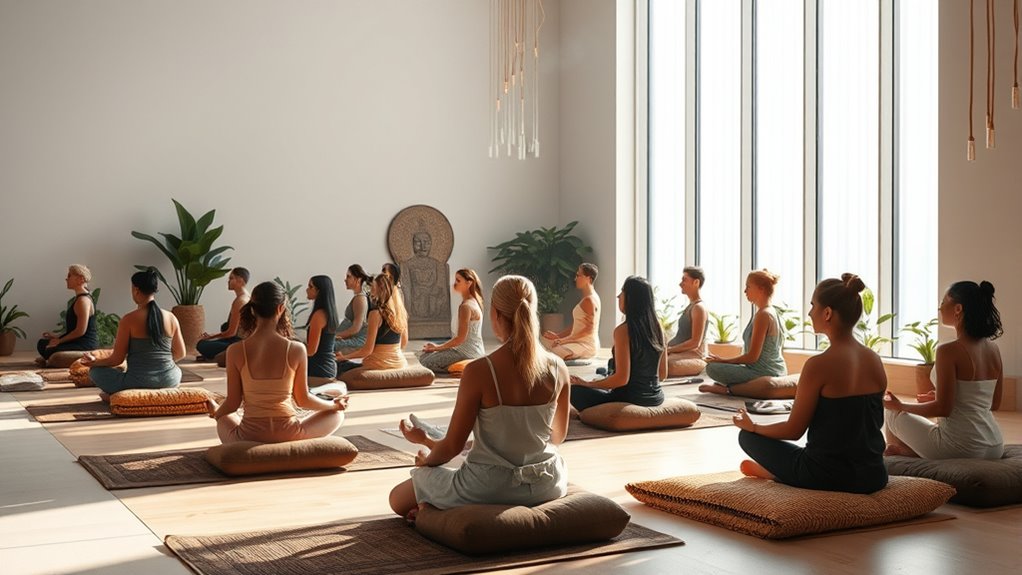

In 2025, meditation and mindfulness are thriving as essential tools for managing stress and boosting mental health. You can easily incorporate these ancient practices into your daily routine using simple techniques like focusing on your breath or body scans. They help reduce anxiety, improve sleep, and increase focus, fitting seamlessly into modern life. As their benefits remain timeless and adaptable, continuing to explore these practices can unleash even more ways to enhance your well-being.
Key Takeaways
- Meditation and mindfulness remain highly popular in 2025, integrated into daily routines for stress reduction and mental health.
- These ancient practices offer physical and emotional benefits, including reduced anxiety, better sleep, and increased resilience.
- They are easy to learn and adaptable, with techniques like breath focus and body scans fitting into busy lifestyles.
- Consistent practice enhances mental clarity, emotional stability, and overall well-being, making them timeless tools for modern life.
- Their enduring relevance is driven by accessibility, proven benefits, and growing global awareness of mental health support.
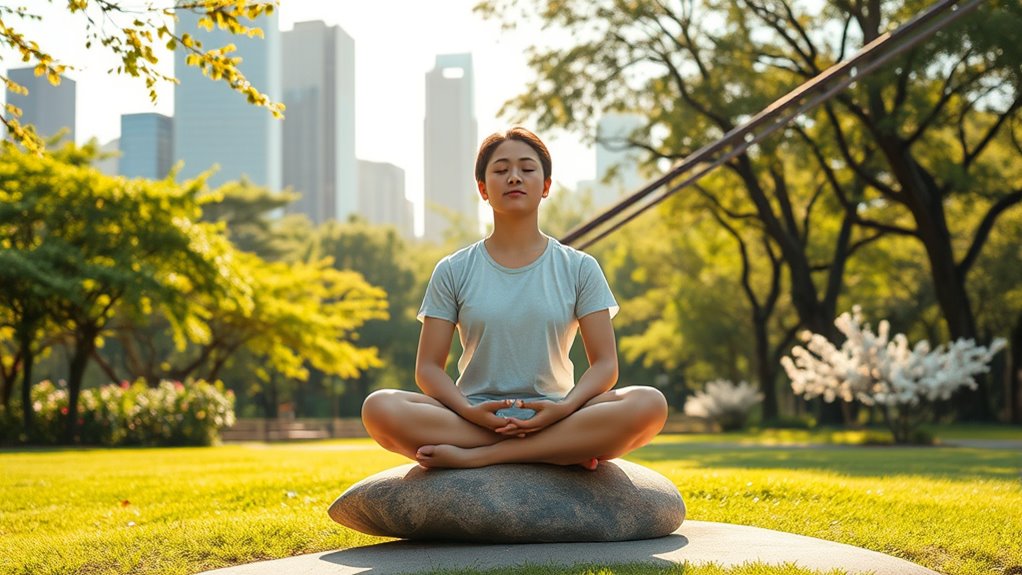
Meditation and mindfulness have become popular tools for reducing stress and enhancing mental well-being. You might have noticed how integrating mindfulness techniques into your daily routine can help clear your mind and bring a sense of calm amidst chaos. These practices aren’t just trendy; they’re backed by a growing body of research highlighting their numerous meditation benefits. When you sit quietly and focus on your breath or an anchor point, you activate a state of awareness that can improve your emotional resilience, sharpen your focus, and even boost your immune system. The beauty of mindfulness techniques is that they’re simple to learn and adaptable to any schedule, making it easy to incorporate them into your busy life.
Mindfulness techniques reduce stress, boost immunity, and enhance focus—easy to learn and perfect for busy routines.
You might wonder how exactly meditation benefits you in tangible ways. Regular meditation can lower cortisol levels, helping you manage anxiety and reduce feelings of overwhelm. It also encourages a non-judgmental attitude toward your thoughts and feelings, allowing you to observe them without getting caught up or reactive. This shift in perspective can make everyday challenges seem less intimidating. Many people find that meditation helps improve sleep quality, as calming the mind before bed becomes easier with consistent practice. Plus, increased attention span and better memory are common meditation benefits, as your brain develops greater capacity for sustained focus and cognitive flexibility. Incorporating mental health techniques such as mindfulness can also support overall well-being and resilience.
Getting started doesn’t require much—just a quiet space, a few minutes, and an intent to be present. You can explore different mindfulness techniques, such as body scans, loving-kindness meditation, or mindful breathing exercises, to find what resonates most. These techniques help you become more aware of your physical sensations, thoughts, and emotions without judgment. Over time, this heightened awareness naturally extends into your daily activities, making you more attentive and less reactive to stressors. Many find that the more they practice, the easier it becomes to access a peaceful state of mind even in challenging situations.
In essence, embracing meditation and mindfulness isn’t about perfection but consistency. With each session, you reinforce your ability to stay grounded, regardless of external circumstances. The ongoing popularity of these ancient practices in 2025 proves that their benefits are timeless and adaptable to modern life. As you explore mindfulness techniques and experience meditation benefits firsthand, you’ll discover a powerful toolkit for cultivating mental clarity, emotional stability, and overall well-being. Incorporate these practices into your routine, and you’ll likely notice a more balanced, centered version of yourself emerging each day.

Retrospec Sedona Zafu Meditation Cushion with Buckwheat Hull Fill – Adjustable Yoga & Pilates Equipment Support – 17in Crescent Cotton Cover
NATURAL COMFORT & SUPPORT: Filled with sustainable buckwheat hulls, this meditation cushion elevates your practice by aligning your…
As an affiliate, we earn on qualifying purchases.
As an affiliate, we earn on qualifying purchases.
Frequently Asked Questions
How Has Technology Enhanced Meditation Practices in 2025?
In 2025, technology has substantially enhanced meditation practices by offering immersive virtual reality experiences that transport you to calming environments, making meditation more engaging. AI-guided sessions personalize your practice, providing real-time feedback and tailored guidance to deepen your mindfulness. These innovations make meditation more accessible and effective, helping you stay consistent and focused, ultimately improving your overall mental well-being and making ancient practices more integrated into daily life.
Are There Cultural Differences in Modern Mindfulness Techniques?
You’ll notice that modern mindfulness techniques vary across cultures, blending traditional rituals with contemporary adaptations. While some cultures emphasize silent meditation or prayer, others incorporate dance or community practices. These cultural adaptations reflect local beliefs and histories, creating diverse approaches. This juxtaposition highlights how ancient rituals evolve, ensuring mindfulness remains relevant and meaningful worldwide, respecting cultural roots while embracing modern influences.
What Are the Scientific Benefits of Meditation Proven in 2025?
In 2025, scientific studies show that meditation boosts your mental health through neuroscience breakthroughs, revealing improved brainwave modulation. Regular practice reduces stress, enhances focus, and increases emotional resilience. You benefit from better memory, lowered anxiety, and improved sleep quality. These findings confirm that meditation actively rewires your brain, making it a powerful tool for mental well-being. Incorporating mindfulness into your routine can lead to lasting positive changes backed by cutting-edge neuroscience.
How Accessible Are Meditation Resources for Underserved Communities?
You’ll find that community outreach programs are making meditation resources more accessible for underserved communities. Organizations partner with local centers and online platforms to improve resource availability, ensuring everyone can participate. Despite some gaps, these initiatives actively work to bridge the divide, offering free or low-cost classes, bilingual materials, and outreach efforts tailored to diverse needs. Your involvement can help expand access further, making meditation benefits available to all.
Can Meditation Replace Traditional Mental Health Treatments?
Think of meditation as your wellness app in a world of clinical validation; it’s not a full substitute but a powerful supplement. While it can enhance self-care integration, it shouldn’t replace traditional mental health treatments, which are backed by evidence. You should consult professionals, as meditation supports recovery and stress management but isn’t a standalone cure. It’s a valuable tool, not a one-size-fits-all solution.

Mindfulness & Guided Sleep Meditation
Meditation to improve focus
As an affiliate, we earn on qualifying purchases.
As an affiliate, we earn on qualifying purchases.
Conclusion
As you embrace meditation and mindfulness in 2025, you might find they’re more than just trendy buzzwords. Some studies suggest these ancient practices genuinely boost mental clarity and reduce stress, making them worth your time. Think of it this way: if ancient monks could find peace through meditation centuries ago, there’s a good chance you can too. So, why not give it a try? You might discover a calm, focused version of yourself waiting beneath the chaos.

Liberate: Guided Meditation – Body Scan
As an affiliate, we earn on qualifying purchases.
As an affiliate, we earn on qualifying purchases.

Pro Timer P2 – Elegant Wooden Pomodoro Timer – an Original Productivity Tool with Magnetic Memo Board – High-End Quality Desk Device for Focus, Meditation & Productivity – Ideal for Work & Study
☑️Enhance Your Workspace: The P2 is more than a timer – It’s your tool for focus, calm, and…
As an affiliate, we earn on qualifying purchases.
As an affiliate, we earn on qualifying purchases.