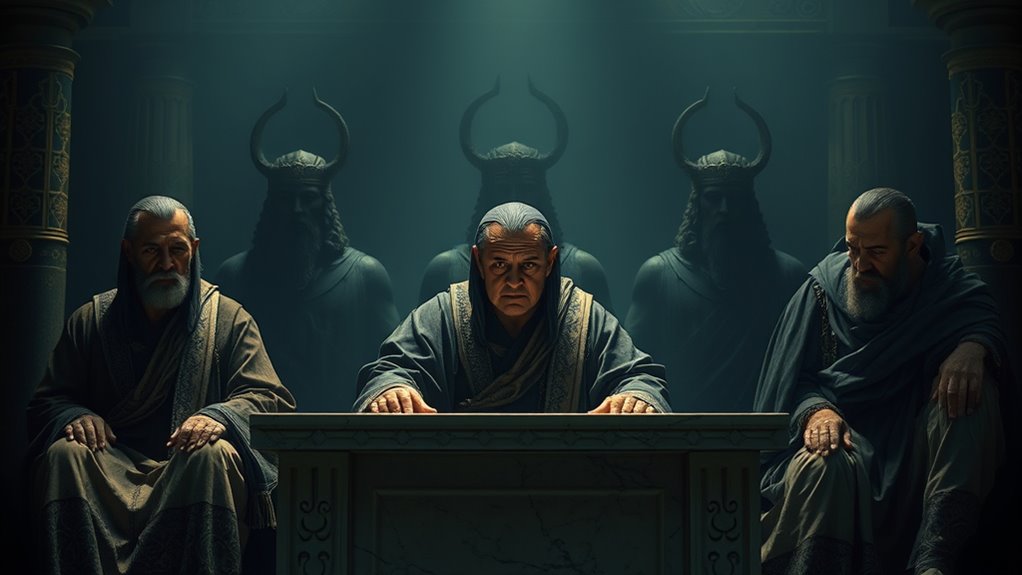

In ancient Greek mythology, the Judges of the Dead serve as divine arbitrators who decide your fate based on how you lived. After death, your actions are evaluated by figures like Minos, Rhadamanthus, and Aeacus, who judge your morality and virtue. Good deeds can lead to a blissful afterlife in Elysium, while bad actions result in punishment in Tartarus. Discover how this divine judgment shapes Greek beliefs about justice and morality beyond life.

Get school and study supplies delivered free — and shop member deals
- Fast, free delivery on millions of items
- Access to Prime Big Deal Days deals on October 6–7
- Prime Video, Amazon Music and more included
Key Takeaways
- The Judges of the Dead assess souls based on morality and virtue, determining their fate in the afterlife.
- Minos, Rhadamanthus, and Aeacus form a divine court that presides over the judgment process.
- Morally upright souls are rewarded with entry to Elysium, while wrongdoers face punishment in Tartarus.
- Justice in the Greek afterlife emphasizes moral accountability and the importance of virtuous living.
- The judgment reflects divine authority, symbolizing the eternal and unchangeable nature of justice.

In many mythologies and spiritual traditions, the Judges of the Dead serve as the final arbiters who determine a soul’s fate after death. For the ancient Greeks, this role was especially significant, as they believed that the journey of the soul didn’t end with physical death but continued into an underworld where judgment decided its ultimate destiny. When you pass from life, your soul is believed to be brought before these mythological figures, who assess your actions during your earthly existence. This soul judgment process is central to Greek notions of justice and morality, emphasizing the importance of living a virtuous life.
The ancient Greeks envisioned several mythological figures as part of this divine tribunal. Most prominent among them was Minos, who was considered the chief judge of the dead. Alongside him sat Rhadamanthus and Aeacus, each overseeing different sections of the underworld. Minos, often depicted as a stern and authoritative figure, was responsible for judging the souls of those who committed serious crimes or moral failings. Rhadamanthus, known for his fairness and wisdom, judged those who had led just lives. Aeacus, regarded as a protector of divine justice, presided over the souls of those who had been pious and upstanding. Together, these mythological figures formed a court where every soul’s deeds were weighed carefully.
Minos, Rhadamanthus, and Aeacus judged souls based on morality and virtue in the Greek underworld.
You should understand that in this mythological framework, the soul judgment wasn’t just about punishment or reward; it was a reflection of moral order. The dead’s actions—good or bad—were scrutinized, and the outcome was based on divine justice rather than chance. Good souls might be allowed to enter the Elysian Fields, a blissful afterlife, while others faced punishment in Tartarus. This differentiation reinforced the idea that morality and virtue mattered even after death. The mythological figures responsible for these judgments embodied divine authority, making their decisions final and binding.
As you explore Greek mythology, you’ll see that these figures symbolize the ancient Greeks’ belief in moral accountability. The Judges of the Dead serve as a reminder that justice isn’t confined to the living world but extends into the afterlife. Their roles reveal how the Greeks viewed the soul judgment as a sacred process, emphasizing integrity and morality in life, knowing that these qualities would influence one’s fate beyond death. Through mythological figures like Minos, Rhadamanthus, and Aeacus, Greek culture conveyed a profound message: justice is eternal, and the soul’s destiny hinges on the life it led.
Greek mythology book about Judges of the Dead
As an affiliate, we earn on qualifying purchases.
As an affiliate, we earn on qualifying purchases.
Frequently Asked Questions
How Did the Ancient Greeks Depict the Afterlife Beyond Judgment?
You explore mythical landscapes where the soul begins a journey beyond judgment, revealing a rich, layered afterlife. The Greeks depicted this domain as a series of mysterious, often shadowy worlds, where spirits wandered or sought peace. These soul journeys varied based on your deeds, guiding you through mythic regions like Elysium or Tartarus. This vivid imagery shapes your understanding of a complex, immersive afterlife beyond just divine judgment.
Were There Different Judges for Various Types of Sins?
You wonder if different judges handle various sin categories? In Greek myth, the Underworld’s courtroom is diverse, with each judge specializing in specific sins. For example, Minos, Rhadamanthus, and Aeacus act as gatekeepers, each overseeing different moral failings. This layered justice system means your fate depends on the sin you commit, and the judge you face, making the afterlife a nuanced domain of moral accountability.
How Did Individuals Prepare for Their Judgment in Ancient Greece?
You prepared for your judgment in ancient Greece by participating in funeral rituals and seeking soul purification. You’d often offer sacrifices and libations to honor the dead, aiming to cleanse your soul from sins. These rituals helped guarantee your soul’s smooth passage to the afterlife, where judges would assess your deeds. By maintaining proper rites, you increased your chances of favorable judgment and a peaceful existence beyond death.
What Role Did Mythological Figures Play in the Judgment Process?
In the judgment process, mythological figures symbolize divine justice and guide your fate. You see gods and mythological symbolism representing moral virtues and vices, influencing your outcome. Divine intervention occurs through these figures, ensuring fairness or punishment. Their presence reassures you that justice is rooted in divine authority, emphasizing the moral importance of your actions. These mythological symbols help you understand that justice is ultimately overseen by powerful, divine beings.
How Did Greek Beliefs About Justice Influence Their Legal Systems?
Greek beliefs about justice, rooted in mythology and morality, deeply shaped their legal systems. You see, religious rituals reinforced moral values, influencing laws and court procedures. Mythology provided divine authority to justice, making laws feel sacred and unchallengeable. This connection guaranteed that societal rules reflected moral principles, linking the spiritual and civic, and emphasizing that justice was not just legal but also a moral and religious obligation.
Ancient Greek mythology figurines
As an affiliate, we earn on qualifying purchases.
As an affiliate, we earn on qualifying purchases.
Conclusion
As you ponder the ancient Greeks’ view of justice, realize they saw the afterlife as a grand courtroom where your soul’s deeds are weighed. These judges serve as mirrors, reflecting your true self beyond death. Just like a ship’s anchor keeps it grounded, their judgment keeps moral order in the universe. Remember, in their eyes, your life’s choices carve the path you’ll walk in eternity—so choose wisely, for your conscience is your eternal judge.
As an affiliate, we earn on qualifying purchases.
Greek mythology educational poster
As an affiliate, we earn on qualifying purchases.
As an affiliate, we earn on qualifying purchases.
Halloween Picks
halloween
As an affiliate, we earn on qualifying purchases.