

📊 Full opportunity report: The Advantages Of Owning Your AI Model Through Mistral Forge on ThorstenMeyerAI.com — validation score, market gap, and execution plan.
TL;DR
Mistral announced Forge at Nvidia GTC 2026, enabling companies to develop and manage their own AI models internally. This approach offers increased control, security, and customization, but is suited mainly for data-rich, technically capable organizations.
Mistral’s Forge, announced at Nvidia’s GTC in March 2026, introduces a new approach for organizations seeking to own and operate their own AI models rather than relying on third-party APIs. This platform aims to meet the needs of companies with sensitive or highly specialized data by enabling in-house model development, training, and deployment. The development underscores a shift toward greater AI sovereignty and control, especially for organizations with substantial technical resources.
Forge is a comprehensive, end-to-end platform that supports data preparation, large-scale training, alignment, evaluation, lifecycle management, and deployment of proprietary AI models. It allows organizations to create domain-specific models that incorporate their own data, code, and rules, offering a deeper level of customization than retrieval-augmented generation (RAG) or fine-tuning alone. Mistral emphasizes that Forge is not a self-service builder but a managed program with embedded engineers, providing tailored support for complex AI projects.
Key features include synthetic data generation, support for multimodal architectures, and advanced post-training tools such as LoRA, RLHF, and distillation. Deployment options include private cloud, on-premises, or Mistral’s infrastructure, depending on security needs. The platform also incorporates lifecycle management with versioning, auditing, and rollback capabilities. The company highlights Forge’s suitability for organizations where AI reasoning must internalize proprietary knowledge, such as in aerospace, defense, and government sectors.
Early adopters like the European Space Agency and ASML are organizations with highly sensitive or complex data, for whom control and sovereignty are critical. Mistral’s approach involves deploying engineers directly within client teams, emphasizing a partnership model rather than a standalone product. This indicates a focus on large, technically capable organizations rather than mass-market adoption, which may find Forge overkill for simpler use cases.
Mistral Forge: owning the model, not just renting the API
Europe’s most valuable AI company is betting the next sovereignty fight isn’t which API you call — it’s whether you own the model at all. Forge builds a model adapted to your data, terminology & rules, run inside your own walls. A leap for the right buyer; overkill for most.
Your proprietary knowledge changes how the model reasons — engineering/code, industrial constraints, government language & law, security telemetry, agentic tool-use by your rules. High-consequence, data-mature, sovereignty-bound.
You want a knowledge assistant, doc search or support bot — RAG or light fine-tuning wins on cost, speed & updatability. Analysts warn most enterprises lack the clean, governed data Forge assumes.
Train on your data, in your jurisdiction, on infrastructure you control, with a non-US vendor — air-gapped if needed, keeping the models, infra & knowledge. In a year when model access proved to be a geopolitical variable, owning the model stops being philosophy and becomes a hedge. (US labs offer custom models too; Forge’s moat is the combination — full pre-training + EU residency + on-prem, one platform.)
Forge packages what used to require an in-house AI research team — deep adaptation, sovereign deployment, full lifecycle, with embedded engineers. For big, regulated, data-rich orgs with high-consequence use cases, that’s a real leap, and the European framing is a feature. For everyone else it’s a heavier commitment than the problem needs — climb the ladder (RAG → fine-tune → Forge) and demand proof, not marketing. The deeper signal: enterprise sovereignty is shifting from “which API?” to “do I own the model?”
Strategic Control and Data Sovereignty Benefits
The introduction of Forge marks a significant step toward greater AI sovereignty for organizations with sensitive data or strict compliance requirements. By owning their models, companies can better control data privacy, reduce dependency on external API providers, and tailor AI reasoning to their specific needs. This is especially relevant for sectors like aerospace, defense, and government, where data security and regulatory compliance are paramount.
However, Forge’s complexity and cost mean it is primarily suited for organizations with substantial technical capacity and high data quality. For most companies, lighter solutions like RAG or targeted fine-tuning remain more practical and cost-effective. The shift towards internal model ownership could reshape how enterprise AI is deployed, emphasizing control over convenience and speed.
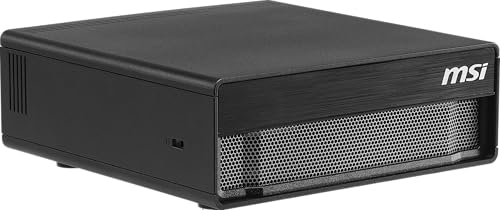
msi EdgeXpert AI Mini Desktop (DGX Spark Platform), NVIDIA GB10 Grace Blackwell, 128GB LPDDR5 Unified Memory, 4TB NVMe Gen5 SSD, WiFi 7, BT 5.3, NVIDIA DGX OS (Linux): 13SUS Black
AI Performance: Run Large AI Models Locally – Powered by NVIDIA GB10 Grace Blackwell architecture, delivering up to…
As an affiliate, we earn on qualifying purchases.
As an affiliate, we earn on qualifying purchases.
Evolution of Enterprise AI Deployment Strategies
For years, enterprise AI has largely revolved around using large, general-purpose models accessed via APIs, with companies customizing responses through prompts, retrieval pipelines, and governance layers. Mistral’s Forge challenges this paradigm by advocating for internal model development, especially for organizations with proprietary data and high security needs. The platform builds on existing practices like retrieval-augmented generation and fine-tuning but aims for deeper customization at the reasoning level.
Announced at Nvidia GTC 2026, Forge positions itself as a comprehensive solution for organizations that require a high degree of control and internal expertise. Early adopters include entities with structured, high-quality data and the technical capacity to manage complex AI training programs. Critics, such as Futurum analysts, note that this market segment may be narrower than Mistral suggests, given the data maturity and technical resources required.
“Forge enables organizations to develop AI models that truly reflect their domain knowledge, ensuring sovereignty and security.”
— Mistral spokesperson

Deep Learning at Scale: At the Intersection of Hardware, Software, and Data
As an affiliate, we earn on qualifying purchases.
As an affiliate, we earn on qualifying purchases.
Market Readiness and Adoption Challenges
It remains unclear how many organizations beyond early adopters like ESA or ASML will have the data maturity, technical expertise, and resources to implement Forge effectively. Critics from Futurum suggest that the broader market may find Forge overcomplex and costly, limiting its adoption to a niche segment of highly specialized, well-resourced entities.
Additionally, questions about the platform’s scalability, integration ease, and long-term cost-effectiveness are still developing, as Mistral has not publicly disclosed detailed case studies or user metrics.

Synology DS225+ Private Cloud Media Server – Stream, Back Up Photos & Share Files, Intel CPU for Hardware Transcoding (2-Bay Diskless NAS)
Your Personal Streaming Server – Build your own Netflix-style media library and stream 4K movies, shows and photos…
As an affiliate, we earn on qualifying purchases.
As an affiliate, we earn on qualifying purchases.
Next Steps for Forge Adoption and Development
Mistral is expected to continue engaging with early adopters to refine Forge’s capabilities and demonstrate its value in sensitive, high-stakes environments. The company may also expand its ecosystem through partnerships, training programs, and further technical enhancements. Broader market adoption will likely depend on how effectively Mistral can simplify the platform and demonstrate ROI for organizations with less mature data infrastructure.
Watch for upcoming case studies, user feedback, and potential updates that could make Forge more accessible to a wider range of enterprises seeking greater AI control.

Synthetic Data Generation: A Beginner’s Guide
As an affiliate, we earn on qualifying purchases.
As an affiliate, we earn on qualifying purchases.
Key Questions
Who is the ideal candidate for using Mistral Forge?
The ideal candidates are large organizations with sensitive or proprietary data, high technical capacity, and a need for customized AI reasoning, such as aerospace, defense, and government agencies.
How does Forge differ from lighter AI customization options?
Forge involves building and managing domain-specific models at the reasoning level, offering more control and internalization of proprietary knowledge than retrieval-based or fine-tuning solutions, which are simpler and more cost-effective but less deeply integrated.
What are the main challenges of adopting Forge?
Challenges include high cost, technical complexity, data maturity requirements, and the need for ongoing lifecycle management. It is mainly suitable for organizations with substantial AI expertise and structured, high-quality data.
When might a company consider Forge over other options?
When proprietary knowledge significantly influences AI reasoning, and the organization has the resources to develop, train, and maintain custom models internally, Forge offers a strategic advantage in control and sovereignty.
What is the future outlook for Forge in enterprise AI?
Forge is likely to see adoption in specialized sectors with high data security needs. Its success depends on how well Mistral can expand its capabilities, reduce complexity, and demonstrate clear ROI for broader enterprise markets.
Source: ThorstenMeyerAI.com