
Prime made for students and young adults
- Fast, free delivery for dorm and study essentials
- Prime Video and Amazon Music included
- Member-only deals
Step into the Simulated Solar Observatory
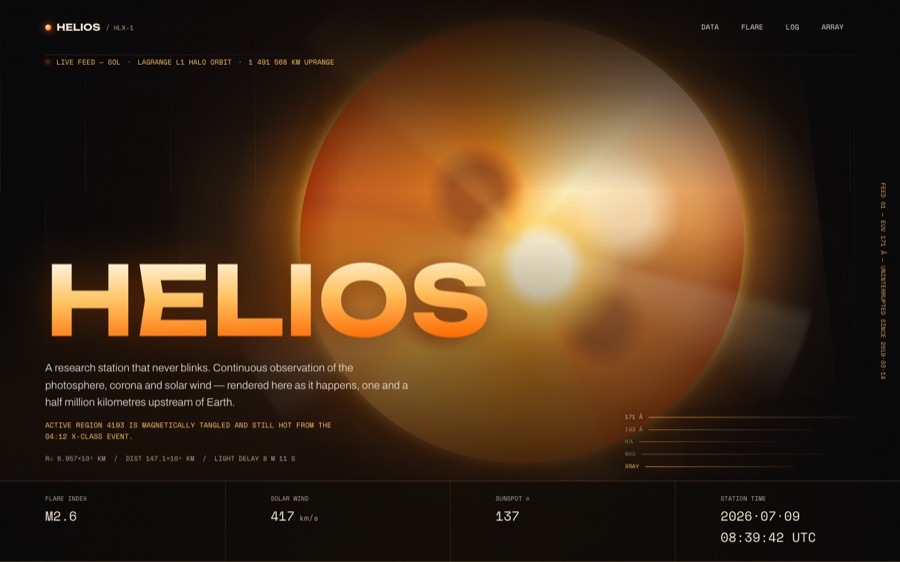
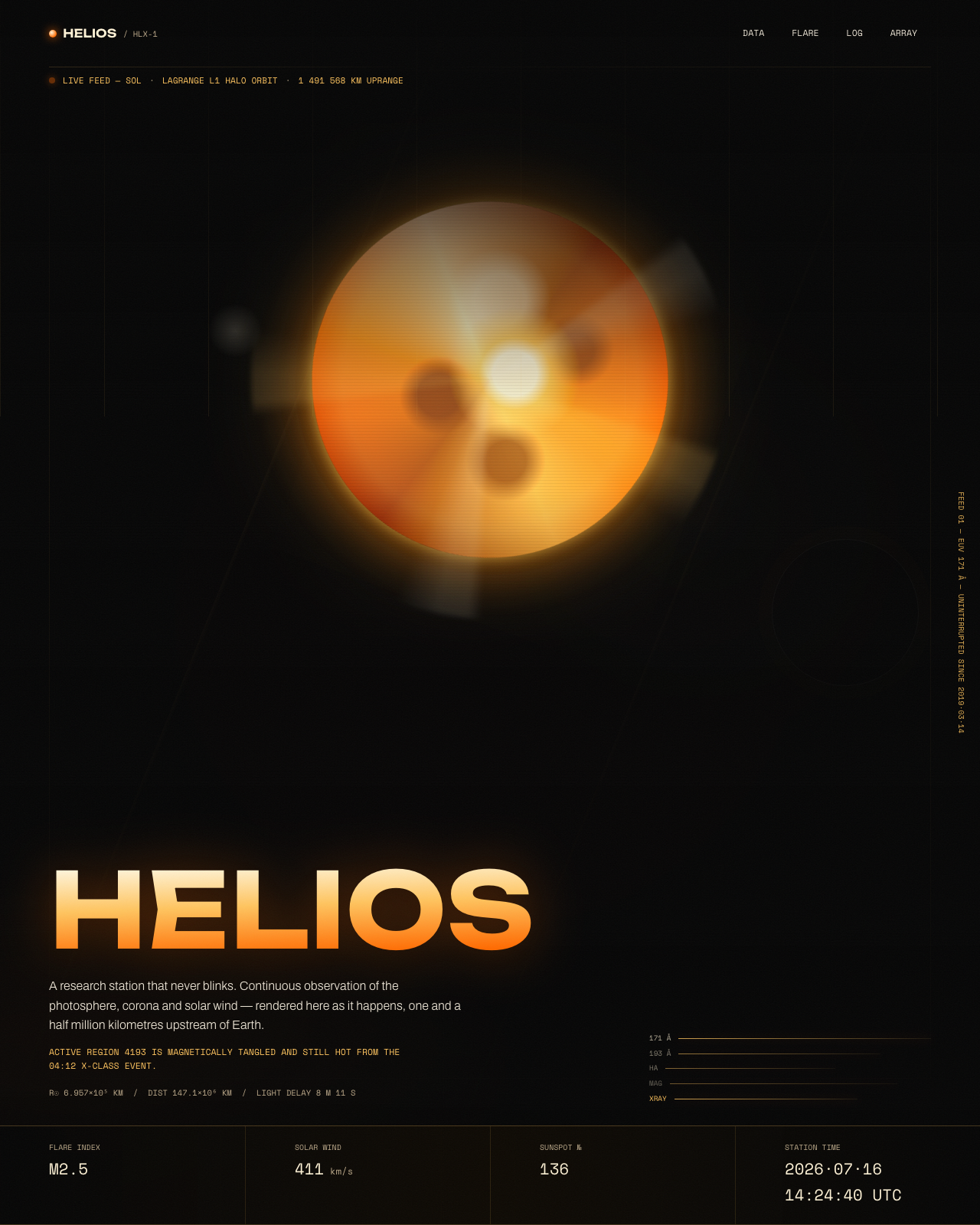
Imagine a web-based research station that presents a dynamically alive Sun, rendered entirely through AI-generated code. This virtual observatory transforms raw WebGL2 shaders into a vivid solar display, complete with turbulent surface features, corona streamers, and flare activity—all without a single image asset. Its signature technique leverages shader raymarching combined with domain-warped noise to create an endlessly lively solar surface that responds seamlessly to user interaction, showcasing the power of AI-driven visual synthesis in scientific visualization.
The Creation Pipeline: From Build to Critical Review
The process begins with constructing a minimal HTML structure integrated with a custom WebGL2 shader, designed to produce realistic solar phenomena. Next, a rigorous critique assesses visual fidelity, responsiveness, and technical performance, ensuring the Sun maintains its vitality across different screens. Finally, an art director certifies the output, verifying that the simulation convincingly portrays the Sun’s dynamic surface and flare activity, all guided by a detailed design brief. This approach, informed by expert oversight, ensures the observatory’s realism and technical robustness, even when generated solely through AI-driven development tools.
The full build notes live in the room’s design guide.
Design Breakdown: Palette, Interaction, and Technique
The observatory employs a restrained color scheme rooted in dark, almost black backgrounds contrasted with fiery oranges and warm creams—colors that evoke heat and turbulence while maintaining clarity. Typography relies on clean, modern fonts that reinforce an instrument-like precision, with amber lines and labels that mimic real telemetry interfaces. The core visual magic resides in the WebGL2 fragment shader, which renders the Sun using raymarching techniques. The shader maps a noisy sphere with domain warping to simulate the boiling photosphere, incorporating limb darkening, filament scars, and corona streamers to evoke a sense of danger and activity. Interaction is handled through mouse parallax, which adjusts the view to enhance depth and immersion, while staged ignition controls—represented by animated SVG diagrams—allow users to simulate flare triggers, creating a tactile sense of operating a real observatory. The interface’s minimalistic, dark control room aesthetic emphasizes restraint, with amber hairlines and grid overlays that reinforce the scientific mission. All elements—color, typography, shader effects—are crafted to ensure the Sun appears vibrant and alive across all device widths, thanks to responsive design techniques and performance-conscious animation loops.
Want this? Paste this into your AI coding agent
Build a single-page showcase website from this art-direction brief. Work like an elite creative frontend engineer; commit totally to the direction.
BRIEF (room 01 of 175, “helios”):
HELIOS — Solar Observatory. Fiction: a research station streaming live observations of the sun. Aesthetic: mission-control instrument meets art installation. Palette: void black #050505 base, incandescent solar gradient (#ff6a00 -> #ffc45e -> #fff3d6), white-hot accents; thin hairline rules rgba(255,196,94,.25). Fonts: unbounded (display), archivo (body), space-mono (data readouts). SIGNATURE: full-viewport hero = raymarched sun rendered in a raw WebGL2 fragment shader (no libraries): sphere SDF + layered fbm noise for the roiling photosphere, rim glow corona, slow rotation, subtle mouse parallax on the camera. HUD overlay with live-updating fake telemetry (flare index, wind speed km/s, sunspot count) in space-mono. Sections: hero; “Current conditions” data grid; “Anatomy of a flare” scroll-revealed diagram (SVG, animated stroke); “Observation log” timeline; footer. Unforgettable: the sun feels ALIVE — turbulent, glowing, slightly menacing.STACK: pure HTML/CSS/JS, no build step, no frameworks, no CDNs or external requests of any kind; self-hosted fonts only; every visual is code (CSS/SVG/canvas/WebGL) — no image assets required.
QUALITY BAR: flawless at 390px, 834px and 1440px with zero horizontal overflow; tap targets >= 44px; semantic landmarks, focus-visible styles, body-text contrast >= 4.5:1; prefers-reduced-motion pauses or simplifies heavy animation; rAF loops pause when the tab is hidden; hold 60fps (cap particle counts, avoid layout thrash); rich invented content everywhere — real-sounding names, numbers and program notes, never lorem ipsum; orchestrate one beautiful staggered load moment plus scroll and hover surprises. FORBIDDEN: Inter/Roboto/Arial/system-ui, purple-gradient-on-white, and cookie-cutter hero+cards+footer layouts.
PROCESS: iterate in three documented passes — (1) build plus builder self-critique, (2) merciless external critique finding and fixing at least ten real problems, (3) art-director elevation from good to unforgettable. Screenshot at all three widths every pass and fix everything you can see.
— Original brief by Claude Fable 5 (art director), executed by the FABLE/175 pipeline.
— This room lives at https://fable-25-830.netlify.app/sites/helios/
This is the verbatim art-direction brief that produced the room — exposed by the exhibition itself via the “Prompt” link in the room’s footer.
Explore the Live Solar Feed
Visit the AI-built Helios observatory to witness the Sun’s dance in real time. Browse through all 175 simulated sites at the hub to experience a universe created entirely by AI, pushing the boundaries of scientific visualization and web technology.
Visit the live room → · Browse all 175 rooms
FABLE / 175 is a finished exhibition of 175 fundamentally different websites, each built end-to-end by an AI. This article is part of our series walking through it room by room.
As an affiliate, we earn on qualifying purchases.
interactive solar system visualization software
As an affiliate, we earn on qualifying purchases.
As an affiliate, we earn on qualifying purchases.
AI-generated shader programming books
As an affiliate, we earn on qualifying purchases.
As an affiliate, we earn on qualifying purchases.
scientific visualization tools for web
As an affiliate, we earn on qualifying purchases.
As an affiliate, we earn on qualifying purchases.
Halloween Picks
halloween
As an affiliate, we earn on qualifying purchases.