
TL;DR

Prime made for students and young adults
- Fast, free delivery for dorm and study essentials
- Prime Video and Amazon Music included
- Member-only deals
A single video can generate an entire publishing kit—titles, clips, social posts—on your own device. This approach boosts privacy, cuts costs, and speeds up content repurposing, all without cloud dependency.
Imagine finishing a video and having a full set of social posts, clips, titles, and descriptions ready in minutes—without uploading your raw footage to the cloud. That’s the promise of a local-first, automated publishing workflow. It’s a game-changer for creators who value privacy and speed, and it turns a single video into a complete content package with minimal manual effort.
Today, most workflows rely heavily on cloud services for transcription, editing, and publishing. But what if you could keep everything on your own machine, avoiding the pitfalls of internet dependence and data privacy concerns? This article explores how a local, AI-powered workflow can transform your video production process, making it faster, cheaper, and more private.
Key Takeaways
- A local, AI-powered workflow can turn a single video into a full publishing kit—titles, clips, social posts—without cloud dependence.
- Processing happens on your device, boosting privacy, reducing costs, and speeding up the entire content pipeline.
- The assets produced include tailored titles, descriptions, clips, thumbnails, transcripts, and platform-specific posts—everything ready for publication.
- Compared to cloud solutions, local workflows excel in speed, control, and offline operation, though they may require some technical setup.
- This approach is ideal for solo creators, small teams, and anyone prioritizing privacy and rapid turnaround times.
As an affiliate, we earn on qualifying purchases.
How One Video Turns Into a Full Publishing Kit—Step by Step
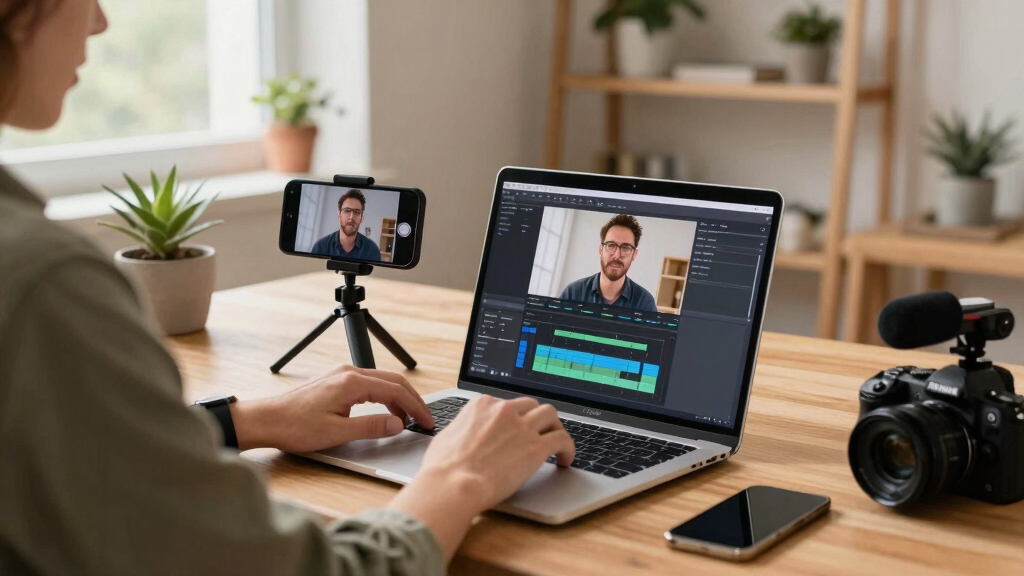
Think of your video as a raw diamond. The workflow is the skilled gem cutter that transforms it into a sparkling set of assets. First, you drop your video into the system or paste a link. The AI then analyzes it on four layers: audio, visuals, fused scene data, and intelligence. It identifies key moments, on-screen text, and speaker changes—creating a structured map of your content. From there, it automatically drafts titles, summaries, social posts, clips, and thumbnails.
Next, you review these assets in a dedicated studio interface. You can tweak, regenerate, or approve each piece. When ready, you dispatch everything to your platforms—YouTube, TikTok, Instagram, or your website—all from your local machine. The entire process takes minutes, not hours. And if you’re working offline, no problem—everything runs on your computer.
As an affiliate, we earn on qualifying purchases.
What Does ‘Without the Cloud’ Really Mean? It’s More Than Just Privacy
‘Without the cloud’ means all the heavy lifting happens right on your device or private server—no reliance on external servers. This setup offers faster turnaround times, no upload limits, and complete control over your data. It’s like having a personal publishing factory in your basement, not a rented warehouse in the cloud.
For example, a creator working in remote areas or with sensitive content benefits hugely—no need for stable internet or worrying about data leaks. Plus, processing on your own hardware reduces latency, so edits and iterations happen instantly. While cloud tools often boast scalability and collaboration, local workflows excel in privacy, cost control, and offline operation.
Recent advances in AI mean you can now get comparable results offline—no compromise on quality—making ‘without the cloud’ not just a privacy choice but a practical, high-performance option.
Understanding this distinction is crucial because it influences your workflow’s flexibility. Cloud-based tools often prioritize collaboration and easy sharing, but they come with ongoing costs and potential privacy risks. Local workflows, on the other hand, trade off some scalability for control, immediacy, and security. This means your assets stay on your machine, reducing exposure to breaches and third-party access, which is vital for sensitive or proprietary content. The tradeoff is that local setups may require more initial technical effort and hardware investment, but they pay off in privacy and speed.

privacy-focused video publishing software
As an affiliate, we earn on qualifying purchases.
As an affiliate, we earn on qualifying purchases.
What Assets Are in Your Complete Publishing Kit?
| Asset Type | Details |
|---|---|
| Titles & Descriptions | Multiple options scored for engagement, length, and platform fit, ready for quick selection or editing. |
| Clips & Shorts | High-retention moments cut into vertical and square formats, with auto-generated captions and summaries. |
| Thumbnails & Visuals | Concepts pulled from key moments, optimized for engagement, ready for upload. |
| Transcripts & Summaries | Accurate, timestamped transcriptions that feed into captions, blogs, and newsletters. |
| Social Posts & Threads | Platform-specific captions, hashtags, and thread drafts tailored to each network’s style. |
| Meta Data & Tags | Keyword-rich tags, SEO-friendly descriptions, all scored and ready to deploy. |
This kit is all in one folder, ready to publish or refine. It’s like having a content factory in your pocket, with every asset prepped for each channel.
Understanding the variety and depth of assets included helps you appreciate how much work is automated behind the scenes. These assets aren’t just random snippets—they’re crafted to maximize engagement and reach, tailored to different platforms’ nuances. This comprehensive package ensures you’re not just publishing content but doing so with strategic assets that elevate your presence across channels.

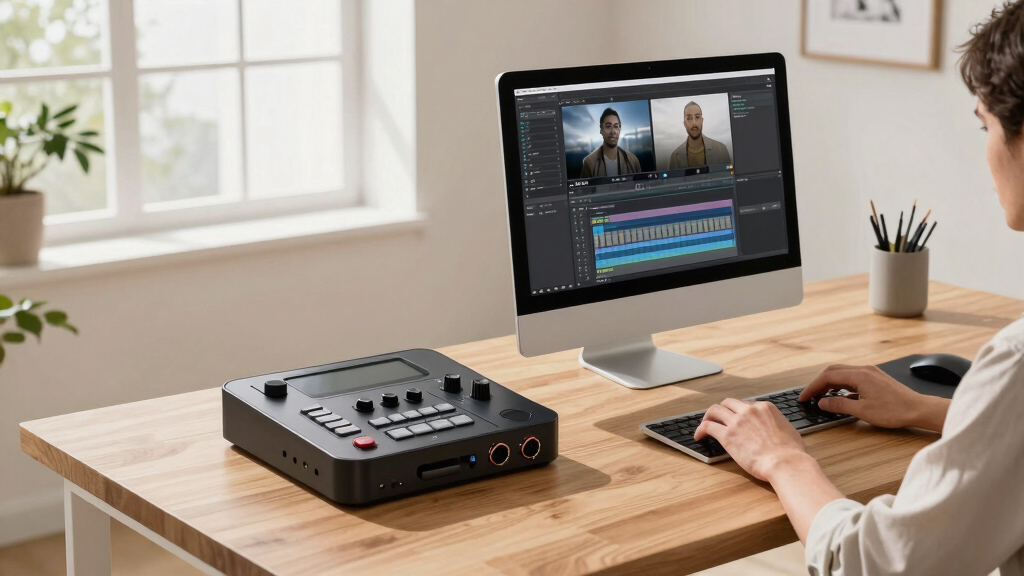
offline video editing workstation
As an affiliate, we earn on qualifying purchases.
As an affiliate, we earn on qualifying purchases.
How It Compares with Cloud-Based Video Publishing Tools
| Feature | Local Workflow | Cloud Workflow |
|---|---|---|
| Speed | Immediate processing, no upload wait | Dependent on upload & server speed |
| Privacy | Full control, no data leaves your device | Data stored on third-party servers |
| Cost | One-time hardware/software investment | Recurring subscription fees |
| Scalability | Limited by hardware | Almost unlimited, cloud-based scaling |
| Collaboration | Requires extra setup or sync | Built-in real-time sharing |
| Offline Use | Fully supported | Limited or unavailable |
While cloud tools excel in collaboration and scalability, local workflows shine in privacy, speed, and cost-effectiveness. For solo creators or teams with strict data policies, local processing offers a compelling alternative. However, it’s important to recognize that local workflows may face limitations in scalability and multi-user collaboration, which cloud platforms handle more seamlessly. The choice depends on your priorities: if control and speed are paramount, local is better; if large-scale collaboration and analytics matter most, cloud might still be necessary.

Best Use Cases for Creators Who Want Control and Speed
If you’re a solo creator, educator, or small team, this workflow is a dream. Imagine finishing a video in the evening and having a complete set of social posts, clips, and SEO metadata ready for the next morning’s upload. This rapid turnaround can be a huge advantage in fast-paced environments where timing matters—allowing you to stay ahead of trends and respond quickly to audience engagement. The privacy aspect ensures sensitive content remains protected, which is especially important for creators handling confidential or proprietary material.
Marketers and agencies handling sensitive client content also benefit. No need to upload confidential footage to third-party servers. Plus, the speed of local processing means you can iterate faster, testing different headlines or clip cuts on the fly. This agility allows for more creative experimentation and timely adjustments, which are often constrained by cloud-based delays or restrictions.
Even small publishers with limited budgets find this appealing—no cloud subscription fees, just a one-time setup, and you’re good to go. It’s like having your own publishing engine that runs faster and safer, giving you more control over your content lifecycle and reducing reliance on external platforms.
Limitations and When It Might Not Be The Best Fit
No system is perfect. Complex videos with lots of noise, poor lighting, or shaky audio can trip up even the best AI. The accuracy of transcripts and generated assets depends heavily on input quality, and in some cases, manual correction may still be necessary. For large-scale teams requiring real-time collaboration, analytics, or extensive cloud integrations, local workflows may fall short in scalability and ease of multi-user access.
Additionally, initial setup requires some technical know-how—installing software, configuring models, and maintaining hardware—which might be a barrier for less technical users. Over time, hardware upgrades may be needed to keep pace with larger projects or higher quality demands. For organizations that rely heavily on cloud-based analytics, audience insights, or multi-platform management, supplementing local processing with cloud services might be essential to meet their needs.
Therefore, understanding these limitations helps you decide whether a local workflow aligns with your project’s complexity, team size, and technical capacity. Sometimes, a hybrid approach—using local processing for quick, sensitive tasks and cloud tools for collaboration—can offer the best of both worlds.

Getting Started: What You Need and How Much Setup Is Required
Getting started isn’t complicated, but it does require some technical setup. You’ll need a decent PC or local server, compatible AI models, and some familiarity with command-line tools or software installation.
Visit [ChannelHelm](https://channelhelm.com/) to see detailed instructions. The process involves installing the software, downloading AI models, and configuring your environment—roughly a few hours for the first setup. While this initial investment may seem daunting, it pays off in long-term efficiency and control, especially if you produce content regularly.
Once configured, future videos are processed with just a few clicks, making this a smart investment for ongoing content production. The key is to plan your setup carefully, ensuring your hardware meets the recommended specifications and that you’re comfortable with the basic configuration steps.

Replacing or Complementing Existing Tools? Your Best Strategy
This workflow doesn’t have to replace everything you use. It’s a powerful addition—automating the most time-consuming parts of repurposing and publishing. You can keep your existing editing tools, analytics, and scheduling platforms in place.
Think of it as a content factory extension—handling the heavy lifting of asset creation, so you focus on strategy, creativity, and engagement. Over time, you might find that it replaces many manual steps, saving you hours each week.
For teams, integrating this local workflow with cloud-based tools for collaboration and analytics makes sense—use the best of both worlds. Combining local control with cloud connectivity allows you to leverage the speed and privacy benefits while maintaining seamless collaboration and data insights.
Frequently Asked Questions
What exactly comes out of one video?
You get a bundle of assets: multiple titles and descriptions, short clips optimized for different platforms, high-quality thumbnails, accurate transcripts, and tailored social posts. All designed to work seamlessly across YouTube, TikTok, Instagram, and more.
Is it really fully offline, or does it still need cloud services?
It’s fully offline once set up. All AI analysis, asset generation, and packaging happen on your device or private server. No need to upload videos or metadata to the cloud, which keeps your data private and processing fast.
What formats are included in the “publishing kit”?
The kit includes video clips in MP4, thumbnails in JPEG or PNG, transcripts in TXT or SRT, social captions in plain text, and metadata files compatible with your publishing platforms. Everything is ready to upload or schedule directly.
How accurate are the transcripts and summaries?
With high-quality audio, transcripts can reach 95% accuracy, and summaries capture main points effectively. Poor audio or noisy environments can reduce accuracy, so input quality still matters.
Can I customize the outputs for my brand or platform?
Yes. You can tweak titles, descriptions, and social captions to match your voice. The system also scores and suggests assets, but final edits are always under your control.
Conclusion
Choosing a local-first, automated publishing workflow means taking back control of your content. It’s fast, private, and comprehensive—like having your own mini media factory in your basement.
Remember, the key is not just speed but also ownership. When you keep your assets on your machine, you hold the power—and that’s a game-changer in today’s content landscape.

Halloween Picks
halloween
As an affiliate, we earn on qualifying purchases.