
Even if you’re printing less, you might still spend more due to the rise of advanced, multifunction printers with higher upfront costs and ongoing expenses like ink, toner, maintenance, and software updates. These devices offer better features and security, but that means your total cost of ownership increases despite lower printing volumes. If you want to understand how these smart printers impact your expenses and what strategies can help, keep exploring the details ahead.

Prime made for students and young adults
- Fast, free delivery for dorm and study essentials
- Prime Video and Amazon Music included
- Member-only deals
Key Takeaways
- Modern printers offer advanced features that increase upfront costs despite lower overall printing volumes.
- Consumables like ink and toner are more expensive, raising long-term expenses regardless of reduced printing.
- Software, security, and maintenance costs add layers of ongoing expenses beyond initial purchase.
- Multifunctionality and higher-quality capabilities justify increased spending even with decreased print jobs.
- Investment in smarter printers aims for efficiency and security, often leading to higher total ownership costs.
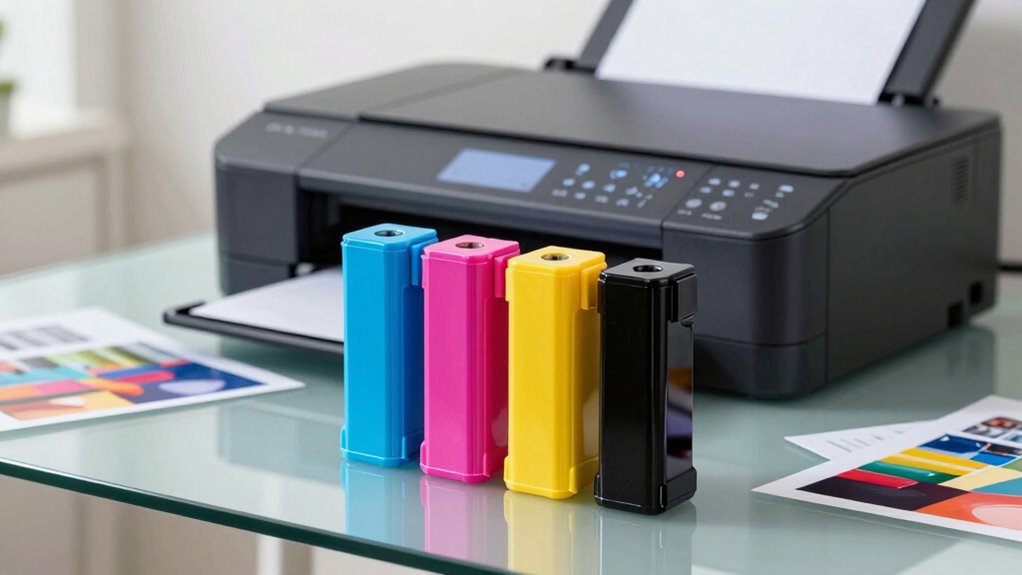
Despite printing less than ever before, many consumers and businesses are actually spending more on printers. This paradox stems from the ongoing digital shift, which has transformed how we work and communicate. You might assume that with most documents sent electronically, the demand for printers would decline, leading to lower expenses. However, the reality is quite different. Companies now invest in more sophisticated, feature-rich printers—multifunction devices capable of scanning, copying, and wireless connectivity—designed to meet modern needs. As a result, the initial purchase cost skyrockets, and it’s not just about buying a basic machine anymore. You need to contemplate the total cost analysis: maintenance, ink or toner replacements, and software updates, which can quickly add up over time.
Advanced printers cost more upfront but deliver greater efficiency and multifunctionality, increasing long-term expenses despite less frequent printing.
The digital shift has also changed how printers are used and perceived. Instead of being a simple tool for occasional printing, they’re now integral to daily workflows in many offices. This increased reliance means that even if you print less, you end up spending more on higher-end models that deliver speed, quality, and versatility. These advanced printers often come with premium features like duplex printing, color accuracy, and cloud integration, which, while beneficial, come at a higher price point. Plus, their maintenance and consumables—especially ink and toner—tend to be more expensive than traditional models. This shift in the type of printers purchased influences overall expenditure, emphasizing quality and capability over volume. Additionally, multifunctionality in printers has expanded their role beyond basic printing, further driving up costs. This evolution also means that understanding the total cost of ownership becomes more critical for consumers and businesses alike.
From a cost analysis perspective, you realize that the lower volume of printing doesn’t necessarily equate to lower costs. Instead, it shifts the expense toward better equipment and consumables that serve multiple functions. This means that the focus has moved from quantity to quality and efficiency, but with a trade-off: higher upfront costs and ongoing expenses. You also need to factor in potential software or security upgrades, especially in a business environment where data protection is critical. These added layers of investment contribute to the higher overall spend, despite the decrease in printed pages. Moreover, cost management strategies are essential in navigating these changing expenses and ensuring the most effective use of resources. Additionally, the digital shift has prompted a reevaluation of how printing resources are allocated, often leading to more strategic investments rather than routine purchases.
In the end, the digital shift has redefined what it means to spend on printing. You’re paying more because of smarter, more capable printers designed to fit modern workflows, but you’re printing less. This shift highlights a new economic reality: higher capital investment can lead to lower operational costs, but only if you plan carefully and perform thorough cost analysis. The irony is that, in a digital age, printing less often can still mean paying more, especially when you prioritize quality, security, and multifunctionality.
multifunction color laser printer
As an affiliate, we earn on qualifying purchases.
As an affiliate, we earn on qualifying purchases.
Frequently Asked Questions
How Has Remote Work Influenced Printer Demand in Recent Years?
Remote work has decreased your need for traditional printers, but it’s driven a digital shift and office automation. You now rely more on digital documents and online platforms, reducing printing frequency. However, some demand persists for home printers, especially multifunction devices. As businesses adopt more digital workflows, overall printer demand shifts, emphasizing efficiency and connectivity. You benefit from streamlined processes while adapting to the evolving landscape of office automation and remote work.
Are There Environmental Benefits to Printing Less Despite Higher Costs?
Cutting back on printing is like shedding unnecessary weight; it benefits the environment. By adopting eco-friendly practices, you reduce your carbon footprint, which helps combat climate change. Although printers might cost more upfront, less printing means less paper waste and fewer harmful emissions. Over time, this approach supports sustainability, saving trees and energy. So, reducing printing isn’t just good for your wallet—it’s a step toward a healthier planet.
How Do Printer Leasing Agreements Impact Overall Printing Expenses?
Printer leasing agreements impact your overall printing expenses by shifting costs from upfront purchases to predictable monthly payments. This simplifies cost analysis because leasing often includes maintenance and supplies, reducing unexpected expenses. However, over time, leasing might be more expensive than buying outright. You should compare lease terms and total costs carefully to determine which option best fits your budget and printing needs.
What Technological Innovations Could Reduce Printing Costs Further?
You can cut printing costs by adopting smart tech innovations like AI-powered printers that optimize ink cartridge usage and enhance paper efficiency. Imagine reducing ink waste by 30%, which directly lowers expenses. Advanced sensors and digital workflows help identify unnecessary prints, saving resources. These innovations make your printing more sustainable, efficient, and cost-effective, ensuring you get more value from each ink cartridge and less paper waste.
How Do Small Businesses Justify Increased Printer Spending?
You justify increased printer spending by conducting a thorough cost analysis, weighing upfront costs against long-term savings. Effective budget planning helps you see how investing in higher-quality, efficient printers can reduce maintenance and supplies expenses over time. You recognize that initial investments lead to better productivity and lower operational costs, making the expense worthwhile. This strategic approach guarantees your small business maximizes value while managing costs effectively.
office wireless all-in-one printer
As an affiliate, we earn on qualifying purchases.
As an affiliate, we earn on qualifying purchases.
Conclusion
So, as you navigate this paradox, remember that the world of printers is a maze of illusions. You might print less, but the costs swirl like a storm, making each page more precious than gold. Think of it as chasing rainbows—what seems simple hides a treasure chest of expenses. Stay savvy, question the shadows behind the ink, and turn this strange dance of economics into your own winning waltz.
high-yield toner cartridges for printers
As an affiliate, we earn on qualifying purchases.
As an affiliate, we earn on qualifying purchases.
printer maintenance and repair kit
As an affiliate, we earn on qualifying purchases.
As an affiliate, we earn on qualifying purchases.
Halloween Picks
halloween
As an affiliate, we earn on qualifying purchases.