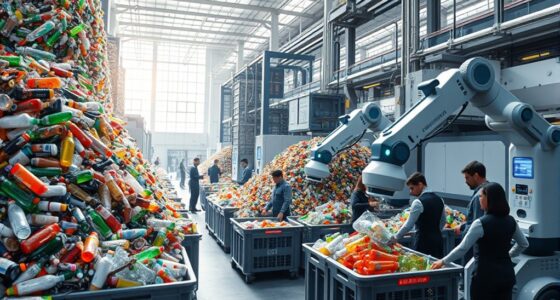
By 2025, your factory will undergo a major transformation through advanced automation and 3D printing. You’ll see increased efficiency, with robots handling manual tasks and 3D printing enabling rapid prototyping and on-demand production. Supply chains become more transparent with digital tracking and sustainable sourcing. As these technologies evolve, your workforce will shift toward oversight and strategic roles. Keep exploring to discover how these changes can unseal new growth opportunities for your manufacturing process.
Key Takeaways
- 3D printing enables rapid prototyping and on-demand production, reducing lead times and inventory costs.
- Automation streamlines manufacturing processes, increasing efficiency, consistency, and reducing manual labor requirements.
- Advanced digital systems integrate 3D printing and automation, enhancing real-time supply chain visibility and decision-making.
- Workforce roles shift toward oversight, troubleshooting, and strategic planning, emphasizing skill development in new technologies.
- Embracing these innovations fosters sustainable practices, ethical sourcing, and a competitive edge in the evolving manufacturing landscape.

As manufacturing evolves rapidly, 2025 promises to be a pivotal year driven by technological innovation and digital transformation. You’ll find that the industry is shifting toward more sustainable sourcing practices, emphasizing eco-friendly materials and ethical supply chains. This shift isn’t just about reducing environmental impact; it’s also about meeting consumer demand for transparency and responsibility. Manufacturers are increasingly scrutinizing their supply networks, opting for local and renewable sources whenever possible. This approach minimizes carbon footprints, shortens delivery times, and supports global sustainability goals. As a result, you’ll need to stay informed about new sourcing standards and integrate sustainable practices into your production processes. Incorporating vertical storage solutions can also help optimize space and improve inventory management in manufacturing facilities.
Alongside these changes, workforce retraining becomes essential. As automation and 3D printing streamline production lines, many traditional roles are evolving or becoming obsolete. You may find yourself needing to learn new skills to operate advanced machinery or manage digital systems. Companies are investing heavily in workforce retraining programs to equip employees with the technical expertise required for this new landscape. If you’re in manufacturing, embracing continuous learning will be vital for remaining competitive. Training isn’t just about technical know-how; it also involves understanding sustainable sourcing principles, ethical practices, and how to leverage new technologies effectively. By retooling your skills, you’ll be better positioned to adapt to the rapid changes and contribute meaningfully to your organization’s sustainability goals.
The integration of digital tools, like AI-driven analytics and IoT sensors, supports this shift, providing real-time insights into supply chains and production efficiency. This connectivity makes sustainable sourcing more manageable and transparent, enabling you to track materials from origin to finished product. Meanwhile, automation reduces manual labor, but it also shifts your role toward oversight, troubleshooting, and strategic planning. Workforce retraining ensures you’re prepared for these new responsibilities, helping you stay relevant and valuable within your workplace. You’ll need to develop a mindset that embraces technological change, viewing it as an opportunity rather than a threat.
3D printing rapid prototyping machine
As an affiliate, we earn on qualifying purchases.
As an affiliate, we earn on qualifying purchases.
Frequently Asked Questions
How Will 3D Printing Impact Global Supply Chain Stability?
3D printing boosts your supply chain resilience by enabling on-demand production, reducing dependency on distant suppliers. It minimizes delays and shipping costs, making your operations more adaptable to disruptions. However, you should also consider geopolitical implications, as increased local manufacturing might shift trade dynamics. Overall, 3D printing helps stabilize your global supply chain, but stay aware of geopolitical factors that could influence its long-term benefits.
What Are the Environmental Effects of Increased Automation?
You might think automation’s environmental impact is purely positive, but it’s more complex. Increased automation can boost energy consumption due to machinery and data centers, yet it also improves waste management by reducing material waste. This balance means you should consider both sides. While automation helps minimize waste, it’s vital to implement energy-efficient systems to lessen the environmental footprint and support sustainability efforts.
How Will Manufacturing Jobs Evolve With These Technologies?
You’ll see manufacturing jobs evolve as automation and 3D printing change workforce skillsets. Instead of manual labor, you’ll focus more on overseeing and maintaining advanced machines, requiring technical expertise. While some jobs may face displacement, new roles will emerge that demand higher skills. Adaptability is key; embracing ongoing learning guarantees you stay relevant in this transforming industry, turning technological advancements into opportunities for growth and innovation.
What Cybersecurity Challenges Accompany Smart Factories?
Did you know that 60% of manufacturing companies face cybersecurity vulnerabilities? As you adopt smart factory technologies, you must prioritize data protection to prevent cyberattacks. These vulnerabilities could allow hackers to disrupt operations or steal sensitive information. You should implement robust security measures, including encryption and regular system updates, to safeguard your smart factory’s digital infrastructure and guarantee continuous, safe manufacturing processes.
How Accessible Are These Advanced Manufacturing Technologies Worldwide?
Advanced manufacturing technologies like 3D printing and automation are becoming more accessible worldwide, but their adoption varies. You might find that technology adoption is quicker in developed countries with better infrastructure, while emerging markets face challenges like cost and skill gaps. Global accessibility is improving due to innovations and decreasing costs, yet disparities remain. If you want to leverage these technologies, consider regional factors and potential barriers to adoption.

Laser Welding Robot Arm System, 6-Axis Industrial Automation, Battery Box Welding Machine with Cooling Unit
AUTOMATION SYSTEM: Complete 6-axis robotic arm system designed for precise laser welding of battery boxes and energy storage…
As an affiliate, we earn on qualifying purchases.
As an affiliate, we earn on qualifying purchases.
Conclusion
By 2025, manufacturing is transforming faster than ever, with 3D printing and automation leading the charge. You’re on the cusp of a new era where factories breathe innovation, like engines fueled by limitless possibilities. Embrace these changes, because the future of manufacturing isn’t just coming—it’s already here, shaping your world one printed layer at a time. Stay adaptable, and you’ll ride the wave of progress rather than get left behind in the wake.

The Road to Outsourcing 4.0: Next-Generation Supply Chain
As an affiliate, we earn on qualifying purchases.
As an affiliate, we earn on qualifying purchases.
sustainable sourcing materials
As an affiliate, we earn on qualifying purchases.
As an affiliate, we earn on qualifying purchases.