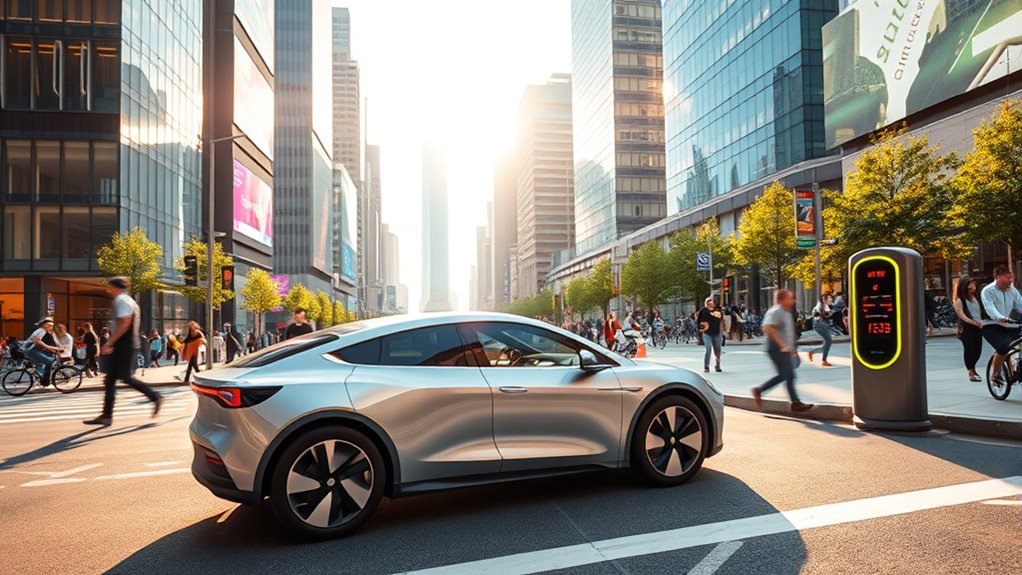

By 2025, advances in battery tech and expanding charging infrastructure are making electric vehicles more practical and popular worldwide. Faster charging, longer-range batteries, and more accessible public and home chargers reduce worries about range and long stops. Investment from automakers and governments further fuels adoption, making EVs an everyday choice. If you want to understand how these innovations are transforming transportation and what’s next, there’s more to explore.
Key Takeaways
- Battery tech improvements increase EV range, safety, and charging speed, making vehicles more practical for consumers.
- Widespread expansion of fast-charging networks reduces charging time and range anxiety globally.
- Industry investments drive innovation, lowering costs and enhancing user-friendly features for EV adoption.
- Infrastructure development supports long-distance travel and daily commuting, encouraging broader adoption.
- Technological advances and infrastructure growth are set to make EVs mainstream worldwide by 2025.

By 2025, electric vehicles (EVs) are set to become a mainstream choice for drivers worldwide. As more people consider switching from traditional gas-powered cars, the focus shifts to the core factors that make EVs practical and appealing: battery technology and charging infrastructure. Advances in battery technology are transforming EV performance, range, and affordability. You’ll notice that batteries now charge faster, last longer, and hold more energy, making EV ownership more convenient. Lithium-ion batteries have improved considerably, with some models offering ranges of over 300 miles on a single charge. Researchers are also exploring solid-state batteries, which promise even higher energy density and enhanced safety. These technological leaps mean you don’t have to plan your trips around limited range or long charging times, easing concerns that have historically slowed EV adoption.
Equally important is the expansion and improvement of charging infrastructure. By 2025, you’ll find charging stations more widespread and accessible, both in urban areas and along highways. Public charging networks are growing rapidly, allowing you to recharge your vehicle quickly and efficiently—often in under 30 minutes at fast chargers. Home charging options are also becoming more affordable and easier to install, giving you the convenience of plugging in overnight. As charging stations multiply and become more reliable, range anxiety diminishes, making EVs a feasible option for daily commuting, road trips, and family outings.
The synergy between advancements in battery technology and charging infrastructure is key to the mass adoption of EVs. Faster charging capabilities mean you spend less time waiting and more time on the road, while better batteries extend your driving range and reduce the frequency of charging stops. These improvements are driven by considerable investments from automakers, governments, and tech companies enthusiastic to push EVs into the mainstream. You’ll also benefit from smarter charging solutions that integrate with your daily routines, such as mobile apps that locate nearby stations or optimize charging times based on electricity rates.

130W 3-Port USB C Super Fast Car Charger (with Voltage Display) for Samsung
- Power Output: 130W fast charging for multiple devices
- Charging Ports: 2 USB-C and 1 USB-A ports
- Simultaneous Charging: Charge up to 3 devices at once
As an affiliate, we earn on qualifying purchases.
As an affiliate, we earn on qualifying purchases.
Frequently Asked Questions
What Are the Most Common Misconceptions About Electric Vehicle Safety?
You might think electric vehicles aren’t safe, but that’s a charging myth. Battery safety is a top priority, with advanced systems preventing fires and overheating. Modern EVs undergo rigorous testing, and their safety features are designed to protect you. Don’t believe the misconceptions about battery safety or that EVs are more prone to accidents. In reality, they’re built with high safety standards, making them just as safe—if not safer—than traditional cars.
How Will EV Charging Infrastructure Be Integrated Into Existing Urban Planning?
As urban landscapes evolve, you’ll see EV charging stations seamlessly integrated into urban planning through infrastructure development that prioritizes accessibility and sustainability. Cities are embedding charging points into parking lots, streets, and public spaces, ensuring they blend naturally with existing infrastructure. This urban integration helps create a connected, efficient system, making EV charging convenient and encouraging adoption—showing how thoughtful planning coincides with a cleaner, smarter future for your city.
What Are the Key Challenges in Recycling EV Batteries Effectively?
You face key challenges in battery recycling, especially with material recovery. Efficiently extracting valuable materials like lithium, cobalt, and nickel requires advanced processes to minimize waste and environmental impact. You must develop scalable, cost-effective methods to handle growing battery waste, ensure safety during recycling, and establish global standards. Overcoming these hurdles will improve sustainability, reduce reliance on raw material mining, and support the widespread adoption of electric vehicles.
How Do Electric Vehicles Impact Electricity Grid Stability?
You might notice that electric vehicles impact grid stability by increasing grid load, especially during peak charging times. However, when paired with renewable integration, like solar or wind power, you can help balance supply and demand more effectively. Smart charging technologies enable you to charge your EV when renewable energy is abundant, reducing strain on the grid and promoting a more stable, sustainable energy system.
What Incentives Are Most Effective for Encouraging EV Adoption Worldwide?
Think of incentives as your EV adoption compass. You’ll find government subsidies and tax incentives act like a gentle push, steering you toward greener roads. These incentives make electric vehicles more affordable, like opening a treasure chest of savings. When governments offer attractive subsidies or tax breaks, it transforms the decision into a no-brainer, encouraging more people worldwide to embrace EVs and accelerate the shift to cleaner, sustainable transportation.

EV Battery Health: Understanding Degradation, Range, and Long-Term Care (EV Owner & Service Series)
As an affiliate, we earn on qualifying purchases.
As an affiliate, we earn on qualifying purchases.
Conclusion
By 2025, electric vehicles will dominate the roads, with global sales expected to hit over 14 million units annually. You’ll notice more charging stations popping up, making EV ownership even easier. This rapid growth isn’t just a trend—it’s a shift towards cleaner, sustainable transportation. So, as you consider your next car, remember that by embracing EVs now, you’re part of a movement that’s transforming our planet’s future, one charge at a time.

EVIQO Level 2 EV Charger J1772 40A NEMA 14-50 – 240V Wall Charging Station
- J1772 Connector Compatibility: Works with all North American EVs and PHEVs
- Tesla Compatibility: Supports Tesla with J1772-to-NACS adapter (sold separately)
- Secure Rubberized Connector: Durable, ergonomic SAE J1772 connector with metal latch
As an affiliate, we earn on qualifying purchases.
As an affiliate, we earn on qualifying purchases.

Commercial Wall Mounted Cell Phone Charging Station with 6 Charging Cables
- Includes 6 Charging Cables: Type-C, Lightning, Micro-USB included
- Fast Charging Ports: Up to 5V/2.4A per port
- Secure Enclosed Pocket: Prevents device slipping and falling
As an affiliate, we earn on qualifying purchases.
As an affiliate, we earn on qualifying purchases.