
📊 Full opportunity report: Build vs Buy a Prebuilt AI Workstation on ThorstenMeyerAI.com — validation score, market gap, and execution plan.
TL;DR
In 2026, prebuilt AI workstations often match or surpass DIY prices due to supply chain issues. The decision depends on speed, customization, and ownership preferences, with hybrid options gaining popularity.
In 2026, prebuilt AI workstations now often match or beat the cost of building your own due to supply chain disruptions and component shortages, making the decision more nuanced than in previous years. The choice hinges on factors such as deployment speed, customization needs, and long-term control, impacting professionals and organizations investing in AI infrastructure.
Recent data indicates that prebuilt AI workstations from vendors like Lambda and Puget now frequently offer comparable or lower prices than DIY setups, thanks to bulk purchasing and supply chain efficiencies. These systems arrive fully assembled, tested, and supported, reducing setup time and operational risks, especially for mission-critical workloads.
Conversely, building your own rig provides maximum control over hardware choices, security, and future upgrades, but requires significant technical expertise, time, and ongoing management. Hidden costs such as troubleshooting, maintenance, and compliance can outweigh initial savings if not carefully considered.
Deployment timelines have shifted, with prebuilt systems typically arriving within 1–2 weeks, while DIY builds can extend beyond a month due to sourcing and assembly delays. This speed advantage is crucial for organizations needing rapid deployment to meet project deadlines or market opportunities.
Build vs buy
an AI workstation.
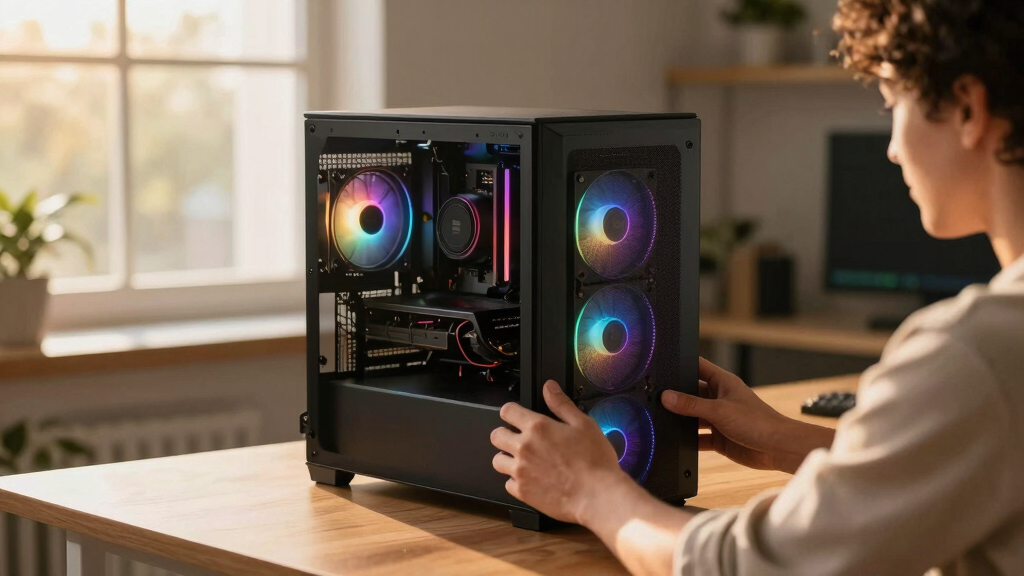
The real question behind this whole series: do you pull the five heat-and-noise levers yourself, or buy a prebuilt where the vendor pulled them for you? And in 2026, the old “building is cheaper” rule has broken. Match your situation in Part 3.
Impact of Market Shifts on AI Infrastructure Choices
This shift in the build versus buy landscape in 2026 affects how organizations and professionals plan their AI infrastructure investments. The reduced cost advantage of DIY setups and the reliability of prebuilt systems influence operational risk, deployment speed, and total ownership costs, making hybrid approaches increasingly attractive. Understanding these dynamics helps stakeholders make informed decisions aligned with their strategic goals and resource capabilities.As an affiliate, we earn on qualifying purchases.
2026 Supply Chain Disruptions and Market Trends
Over the past year, global chip shortages and price spikes have significantly impacted the cost and availability of high-end components necessary for AI workstations. As a result, DIY builds that once offered clear cost advantages now often cost more due to component scarcity and inflated prices. Meanwhile, vendors leveraging bulk purchasing and pre-validated configurations have maintained competitive pricing and faster delivery timelines.
This environment has shifted the traditional wisdom that building was always cheaper and faster, prompting a reevaluation of the build versus buy decision for AI workloads. The trend toward prebuilt solutions with integrated support and validation has gained momentum, especially for organizations prioritizing reliability and quick deployment.
"Our prebuilt systems undergo rigorous thermal and stability testing, ensuring consistent performance and reducing downtime for users."
— A representative from Lambda
As an affiliate, we earn on qualifying purchases.
Unresolved Questions About Long-term Cost and Upgradability
It remains unclear how future supply chain developments and technological advances will influence the cost-effectiveness of DIY versus prebuilt solutions beyond 2026. Additionally, the long-term upgradability and security implications of each approach require further analysis, as hardware obsolescence and software compatibility pose ongoing challenges.
high performance AI workstation GPU
As an affiliate, we earn on qualifying purchases.
As an affiliate, we earn on qualifying purchases.
Monitoring Market Trends and Technological Advances
Stakeholders should continue to monitor supply chain developments, component pricing, and vendor offerings. As the market stabilizes or evolves, the relative advantages of build versus buy may shift again. Additionally, hybrid solutions combining prebuilt reliability with custom upgrades are expected to grow in popularity, offering flexible pathways for AI infrastructure development.
As an affiliate, we earn on qualifying purchases.
Key Questions
Is it still cheaper to build my own AI workstation in 2026?
Not necessarily. Due to supply shortages and rising component prices, prebuilt systems now often match or exceed the cost-effectiveness of DIY builds, especially when factoring in support and validation.
How long does it take to deploy a prebuilt AI workstation?
Most prebuilt systems can be delivered and set up within 1–2 weeks, whereas DIY builds may take over a month due to sourcing and assembly delays.
What are the main advantages of buying a prebuilt AI workstation?
Prebuilt systems offer quick deployment, validated hardware for stability, warranties, and reduced operational risk, making them suitable for mission-critical AI workloads.
Can I upgrade a prebuilt AI workstation easily?
Upgradability varies by model, but many prebuilt systems allow hardware upgrades. However, they may be less flexible than custom builds in terms of component choices.
Should I consider a hybrid approach?
Yes, hybrid setups combining prebuilt reliability with custom upgrades can offer a balanced solution, aligning speed, control, and long-term flexibility.
Source: ThorstenMeyerAI.com