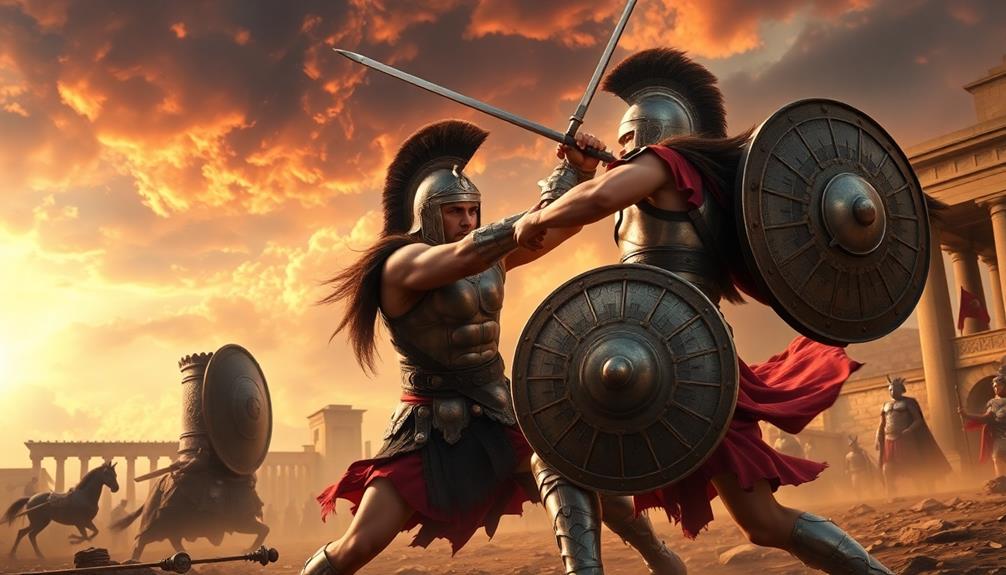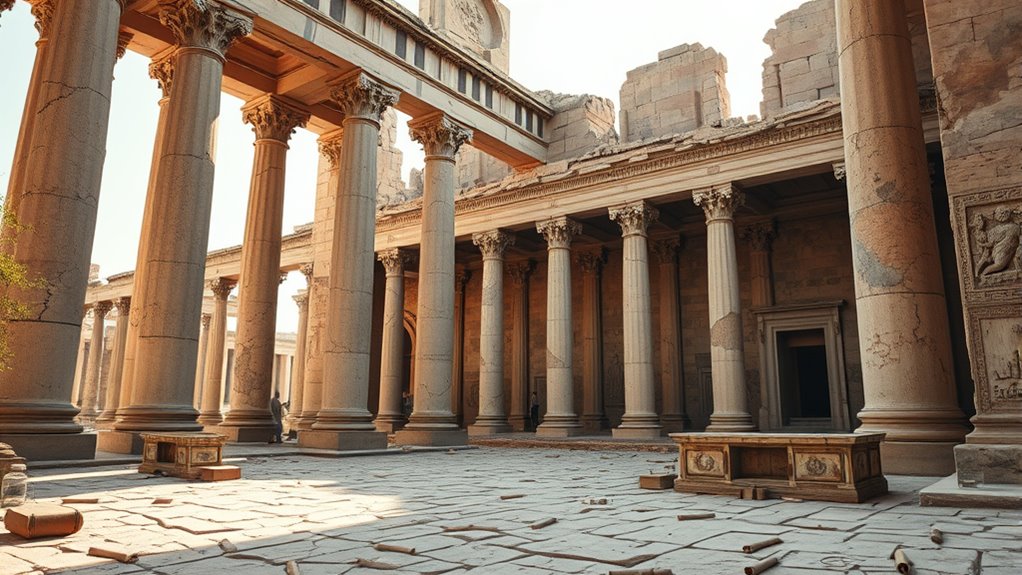

The Great Library of Alexandria was meant to be a central hub for scholars, symbolizing human knowledge and pursuit of learning. While legendary accounts suggest it housed hundreds of thousands of scrolls, the true size and fate remain uncertain due to myth and historical gaps. Stories about its destruction are often exaggerated or unclear, blending fact and fiction. To understand what really happened and why it matters, keep exploring these fascinating truths.

Get school and study supplies delivered free — and shop member deals
- Fast, free delivery on millions of items
- Access to Prime Big Deal Days deals on October 6–7
- Prime Video, Amazon Music and more included
Key Takeaways
- The Library of Alexandria symbolized the pursuit of universal knowledge and served as a cultural and scholarly center.
- Its collection included hundreds of thousands of scrolls covering philosophy, science, literature, and history.
- The exact events and timeline of its destruction are uncertain, with myths often exaggerating or oversimplifying the story.
- Stories of its burning, such as Julius Caesar’s fire, are debated; the decline was likely gradual due to political turmoil.
- Modern efforts to preserve ancient knowledge and honor the library’s legacy continue to inspire scholarly and cultural initiatives.

Have you ever wondered what it would be like to access the world’s knowledge in one place? The Great Library of Alexandria was meant to be just that—a hub where scholars gathered to learn, share, and debate. It was more than a building; it was a symbol of intellectual pursuit, a place that aimed to compile all human knowledge. But much of what we think we know about the library is wrapped in myth and legend, making it essential to separate fact from fiction. Today, you can explore the stories about ancient manuscripts that once filled its shelves, and the heated scholarly debates that surrounded its existence and destruction.
The library’s collection was legendary, supposedly housing hundreds of thousands of scrolls, texts from all over the known world. These ancient manuscripts covered everything from philosophy and science to literature and history. They were carefully curated, copied, and studied by scholars from different cultures and backgrounds. However, the exact size and scope of the library remain a mystery, as no definitive records survived. What we do understand is that it attracted some of the greatest thinkers of antiquity, who used its resources to advance knowledge and challenge existing ideas. These manuscripts served as the backbone of learning, fueling debates and discoveries that shaped civilizations.
Despite its grandeur, the library also became a focal point of scholarly debates that continue to fascinate historians. Some argue that its destruction was a tragic loss of classical knowledge, a blow to human progress. Others suggest that the library’s decline was gradual, influenced by political upheavals, fires, and neglect over centuries. The details are murky, but the debate persists about whether the library truly held the sum of all human knowledge or if it was more symbolic than practical. Many stories about its destruction—such as Julius Caesar’s fire or later Muslim conquests—are likely exaggerated or simplified, adding to the mythic aura surrounding it.
The true fate of Alexandria’s library remains uncertain, blending myth, history, and ongoing scholarly debate.
In the end, the Great Library of Alexandria embodies the universal quest for knowledge, even if much of its history remains uncertain. It inspires us to value the pursuit of understanding, to cherish ancient manuscripts, and to keep alive the scholarly debates that push human civilization forward. While we may never fully reconstruct what was lost, the stories and debates about the library continue to motivate our own efforts to gather knowledge in the modern age.
ancient manuscript preservation tools
As an affiliate, we earn on qualifying purchases.
As an affiliate, we earn on qualifying purchases.
Frequently Asked Questions
Who Funded the Construction of the Library of Alexandria?
You learn that the Ancient Egyptian Ptolemaic Dynasty funded the construction of the Library of Alexandria. They aimed to create a center of knowledge and culture, supporting scholars and collecting works from across the known world. The Ptolemies, successors of Alexander the Great, invested heavily in this project to boost Alexandria’s status as a hub of learning, making the library a symbol of their intellectual and cultural ambitions.
How Many Scrolls and Manuscripts Did It House?
Imagine a vast ocean of knowledge, and you’re in the middle of it. The library housed approximately 40,000 to 400,000 scrolls and manuscripts, a remarkable scroll collection that reflected incredible manuscript diversity. You’d find texts on philosophy, science, and literature from various cultures. This treasure trove made the library a beacon of learning, drawing scholars from all over the ancient world to explore its endless wealth of knowledge.
What Caused the Library’s Ultimate Destruction?
You learn that the library’s destruction was caused by a combination of events, including an ancient fire and ongoing political unrest. During the Roman period, Julius Caesar‘s forces set fire to Alexandria’s docks, which spread to the library, damaging many scrolls. Later, political turmoil and neglect further contributed to the library’s decline, ultimately leading to its loss of invaluable knowledge.
Were Women Allowed to Access or Contribute to the Library?
Did women have access or contribute to the library? Yes, women’s access and female contributors likely existed, though records are scarce. Some scholars believe women worked as scribes or scholars within the library, but societal norms of the time often limited their roles. Are we underestimating the influence women may have had? While details are limited, it’s clear that women’s involvement was possible, even if not widely documented.
Did the Library Influence Modern Research Institutions?
Yes, the library influenced modern research institutions by pioneering the collection and organization of ancient knowledge. You can see its legacy in today’s libraries and research centers, which prioritize preserving and disseminating knowledge. The library’s emphasis on systematic study and cross-disciplinary collaboration laid foundational ideas for modern research practices, inspiring the development of scientific inquiry, academic libraries, and knowledge-sharing platforms that continue to shape how you access and build on information today.
scroll storage and display cases
As an affiliate, we earn on qualifying purchases.
As an affiliate, we earn on qualifying purchases.
Conclusion
As you picture the ruins of the Great Library, you can almost hear the whispers of ancient scholars and feel the weight of lost knowledge. Though it’s shrouded in myth, its legacy sparks your imagination, reminding you that the pursuit of knowledge is timeless. The Library’s story invites you to cherish the quest for understanding, standing as a beacon of curiosity amid the sands of time—a reminder that knowledge, like history, is forever worth seeking.
As an affiliate, we earn on qualifying purchases.
ancient knowledge library replica
As an affiliate, we earn on qualifying purchases.
As an affiliate, we earn on qualifying purchases.
Halloween Picks
halloween
As an affiliate, we earn on qualifying purchases.