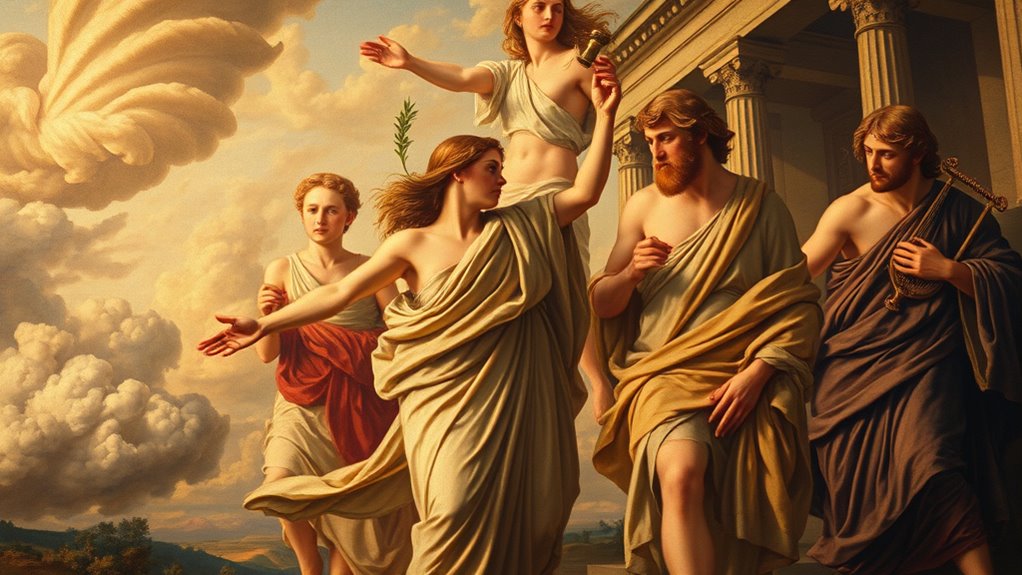

During the Renaissance, Greek myths heavily inspired art and science by using mythological symbols and stories to express universal truths, moral lessons, and human aspirations. Artists like Botticelli and Michelangelo incorporated mythological figures to convey beauty, divine inspiration, and moral qualities. Scientific thinkers also used myth as allegory to explain natural phenomena and explore human limits. This revival created a deep connection between past traditions and innovative ideas—if you explore further, you’ll discover how myths shaped Renaissance culture.

Prime made for students and young adults
- Fast, free delivery for dorm and study essentials
- Prime Video and Amazon Music included
- Member-only deals
Key Takeaways
- Greek myths provided symbolic motifs that conveyed universal themes in Renaissance art and scientific thought.
- Artists and scholars used mythological stories to explore human virtues, morality, and divine inspiration.
- Mythology served as a bridge connecting classical knowledge with emerging scientific ideas and natural philosophy.
- Classical myth motifs were incorporated into artworks and scientific illustrations to symbolize complex concepts.
- The revival of Greek myths fostered a cultural continuity that inspired innovation in art, science, and understanding of the cosmos.

During the Renaissance, myths from ancient Greece and Rome sparked a wave of inspiration that transformed both art and science. You might notice how artists and scholars drew upon classical symbolism and mythological motifs to express complex ideas and elevate their work. These mythological themes weren’t just decorative; they embodied universal truths and human virtues, making them powerful tools for communication. When you look at Renaissance paintings, you’ll see how gods, goddesses, and legendary figures are woven into scenes that explore human emotion, morality, and the natural world. These figures serve as symbols, representing concepts like justice, love, or wisdom, allowing you to interpret layered meanings within the artwork. Additionally, the use of mythological symbolism helped artists and scientists connect their work to a shared cultural heritage, reinforcing the timeless relevance of these stories. In science, mythological motifs influenced the way thinkers approached understanding the universe. The Renaissance was a time of rediscovery and curiosity, and many scholars used these stories as allegories to explain natural phenomena. For example, the myth of Icarus soaring too close to the sun could symbolize hubris and the limits of human knowledge, encouraging a humble pursuit of scientific discovery. You’ll find that mythological symbolism helped bridge the gap between the ancient worldview and emerging scientific ideas, providing a familiar narrative framework that made complex concepts more accessible. This integration of myth and science fostered a sense of continuity with the past while pushing forward new ideas. Artists like Botticelli and Michelangelo often incorporated mythological motifs into their works, transforming classical stories into visual allegories that resonate with Renaissance ideals. Their use of mythological symbolism conveyed not just beauty but also moral and philosophical messages. For instance, Botticelli’s *The Birth of Venus* showcases mythological symbolism that celebrates beauty, love, and divine inspiration, making it a timeless emblem of human aspiration. Similarly, in scientific illustrations, mythological figures or stories might be used to personify elements of nature or to symbolize the pursuit of knowledge itself. By embedding these motifs into their work, Renaissance creators reinforced the connection between myth, art, and scientific inquiry, emphasizing that understanding the universe was a noble, almost divine, endeavor. As you explore Renaissance art and science, it’s clear how deeply mythological motifs and classical symbolism run through both fields. They serve as a bridge, linking ancient traditions with innovative ideas, and transforming how you perceive the world. The Renaissance’s embrace of these themes highlights a period where myth and reality intertwined, inspiring new ways of thinking about human potential, the cosmos, and the divine. It’s this dynamic interplay that continues to influence your appreciation of art and scientific discovery today.
Renaissance art mythological prints
As an affiliate, we earn on qualifying purchases.
As an affiliate, we earn on qualifying purchases.
Frequently Asked Questions
How Did Greek Myths Influence Renaissance Architecture?
Greek myths influenced Renaissance architecture through classical motifs and architectural symbolism. You see this in the use of columns, pediments, and friezes inspired by ancient temples, which symbolize strength, stability, and beauty. These elements help convey cultural ideals and stories, making buildings like palaces and churches reflect the mythic grandeur of Greece. By incorporating classical motifs, you connect modern structures to the rich mythological heritage of the ancient world.
Were Any Myths Considered Controversial During the Renaissance?
Imagine scrolling through ancient social media, and you’d see debates about Mythical figures that sparked controversy. During the Renaissance, some myths stirred Ancient controversies, especially those involving gods like Zeus or Aphrodite, which challenged religious norms. Artists and scholars debated these stories’ morality and symbolism, making them quite controversial at times. You’d find that mythological themes often pushed boundaries, sparking lively discussions and sometimes censorship.
How Did Greek Myth Symbolism Evolve in Renaissance Art?
You see that Greek myth symbolism in Renaissance art evolves through myth reinterpretation, blending classical themes with contemporary ideas. Artists reframe symbols to express new concepts, highlighting humanism and individualism. This symbolic evolution allows myths to serve different narratives, making ancient stories relevant to Renaissance values. By reinterpreting myths, artists create layered works that reflect both admiration for classical culture and fresh perspectives on human experience.
Did Renaissance Scientists Believe Myths Had Literal Truth?
Imagine mythic figures as towering trees, their roots deep in truth. You’d find that many Renaissance scientists embraced mythic literalism, believing some myths held literal truth, blending science with allegory. They saw myths as scientific allegory, offering moral lessons and natural insights. For them, myths weren’t just stories but symbolic truths, guiding exploration and understanding of the natural world, blurring lines between fact and allegory in pursuit of knowledge.
Were Women Myth Figures More Prominent in Renaissance Artworks?
You’ll notice that women myth figures gained more prominence in Renaissance artworks, especially in mythological portrayals. Artists started emphasizing female representation, showcasing goddesses like Venus and Athena with greater detail and importance. This shift reflects a growing appreciation for female myth figures, highlighting their roles in stories and symbolisms. Overall, female representation in mythological portrayals became more significant, enriching the visual and cultural narrative of Renaissance art.
As an affiliate, we earn on qualifying purchases.
Conclusion
You might be surprised to learn that over 60% of Renaissance art features mythological themes, showcasing how deeply Greek myths influenced creativity and discovery. As you explore this era, remember how these stories fueled breakthroughs in science and inspired masterpieces that still captivate us today. The revival of Greek myths wasn’t just art—it was a catalyst for innovation, bridging ancient legends with modern ideas. Embrace this fascinating connection, and see how myths continue to shape our world.
Renaissance scientific illustration books
As an affiliate, we earn on qualifying purchases.
As an affiliate, we earn on qualifying purchases.
Classical mythology inspired artwork
As an affiliate, we earn on qualifying purchases.
As an affiliate, we earn on qualifying purchases.
Fall Picks
fall essentials
As an affiliate, we earn on qualifying purchases.




![Terence Tao: Math 2.0 [Pdf]](https://greeksceptic.com/wp-content/uploads/2026/10/terence-tao-math-2-0-pdf-featured-260x140.jpg)