🔍 Read the full analysis: Gemini 4 Carbon Now Available With A Second-Place MKA Score on ThorstenMeyerAI.com

Prime made for students and young adults
- Fast, free delivery for dorm and study essentials
- Prime Video and Amazon Music included
- Member-only deals
TL;DR
Google opened Gemini 4 Carbon to paying developers, businesses and Google AI Ultra subscribers on November 10, 2026. It scored 54.3% on the new MKA benchmark, placing second behind Claude Fable 5.2 at 56.6%; Google DeepMind reports Carbon costs $5.63 per MKA task, compared with $35.28 for Fable. The benchmark was co-developed by Google DeepMind, and its private tasks cannot be independently inspected.
Google opened Gemini 4 Carbon to paying developers, businesses and Google AI Ultra subscribers on November 10, while a new benchmark ranked it second among tested models for tasks involving documents such as blueprints, scans and charts. Carbon scored 54.3% on MKA, behind Anthropic’s Claude Fable 5.2 at 56.6%; Google DeepMind says Carbon’s cost per task on the test was substantially lower.
Carbon is available through the paid Gemini API and Google AI Studio, and to business customers. In the Gemini app and AI Mode in Search, access is limited to Google AI Ultra subscribers. Google’s announced introductory API prices are $2 per million input tokens and $10 per million output tokens through November 30. From December 1, those rates rise to $4 per million input tokens and $20 per million output tokens.
Google describes Carbon as its top-tier model for demanding work, including complex coding and debugging and open-ended scientific research. Its model card says it uses more “thinking tokens” than Gemini 4 Argon to work through hypotheses and verification. Carbon accepts text, images, audio and video, produces text, and has a context window of up to one million tokens, counting input and output together. Google says Argon remains the better fit for most software engineering and knowledge work.
The MKA benchmark, announced by Google DeepMind and Artificial Analysis, contains 200 expert-built tasks across 10 sectors. The published results put Claude Fable 5.2 at 56.6%, Carbon at 54.3% and Claude Opus 5.5 at 53.0%. Google DeepMind’s report gives Carbon a cost of $5.63 per task, against $35.28 for Fable 5.2. The source material says the top scores are within the benchmark’s margin of error, so the ranking should not be read as a clear performance gap.
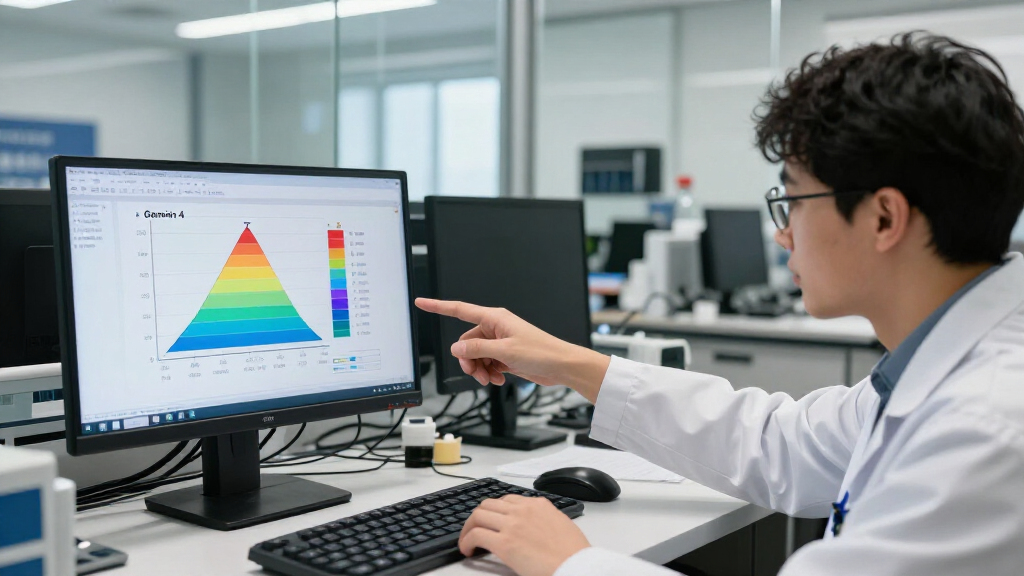
Gemini 4 Carbon Ranks Second on MKA
Google opened Carbon to paying users on November 10, 2026. Its benchmark score is close to the leader, while reported task costs are lower.
What the ranking shows
The top three scores are within the benchmark’s margin of error.
| Model | MKA score |
|---|---|
| Claude Fable 5.2 | 56.6% |
| Gemini 4 Carbon | 54.3% |
| Claude Opus 5.5 | 53.0% |
Who can use Carbon
Access depends on the Google product.
- Gemini API and Google AI Studio
- Business customers
- Gemini app
- AI Mode in Search
- Google AI Ultra subscribers only
API price change
Introductory rates apply through November 30, 2026.
$2 per million input tokens and $10 per million output tokens.
$4 per million input tokens and $20 per million output tokens.
What to weigh before choosing
Private tasks
MKA’s 200 expert-built tasks cannot be independently inspected or reproduced from task materials.
Cost and time
MKA costs are benchmark-specific. Carbon took 25.6 minutes per Intelligence Index task, versus a 12.6-minute median for comparable models.
Price and Performance in Agent Tasks
The release gives developers a new option for work where AI systems must interpret visual or structured documents, not just answer questions from plain text. A model’s position on a benchmark is only one consideration: businesses also weigh price, speed, reliability and how well a system handles their own tasks. On MKA, Carbon’s reported cost advantage over Fable is large, but the score difference is small and the test’s limits matter.
Other published results offer a broader, but still incomplete, picture. Google’s model card gives Carbon the leading score in 15 of 17 tests it selected; those results are not a neutral comparison, and the card does not include Claude Fable 5.2, released November 9. On Artificial Analysis’ Intelligence Index v5.0.1, Carbon scores 60, below Fable 5.2 at 62 on its high setting and 65 at maximum. Artificial Analysis also reports that Carbon takes 25.6 minutes per index task, compared with a 12.6-minute median for comparable models. Buyers face a trade-off between benchmark performance, cost and time.
Popular right now

Bose QuietComfort True Wireless Earbuds with Active Noise Cancellation, Bluetooth 5.3, USB-C Charging, IPX4, Black

Philips 3300 Series Fully Automatic Espresso Machine with Milk Frother, Grinder, Hot and Iced Coffee Presets, SilentBrew, 15-Bar Pressure (E

De'Longhi Rivelia Automatic Espresso Machine with Grinder and Milk Frother, Beige
As an affiliate, we earn on qualifying purchases.
From Limited Access to Paid Availability
Carbon was initially made available to a small group of cyber defenders through Google’s Fairwind Program, about two weeks before its wider paid release. Artificial Analysis lists October 28 as its release date. Google says stronger security features remain restricted to verified defenders; the public launch does not, on the information provided, extend those features to all customers.
The model card’s comparison was based on results “as of October 2026” and covered Gemini 4 Argon, OpenAI’s GPT-6 Astra, Claude Opus 5.5 and Claude Fable 5.1. Among its examples, Carbon scored 96.2% on GraphWalks, compared with 71.8% for the best rival listed there. It trailed GPT-6 Astra on FrontierSWE 2, a coding test, and Claude Opus 5.5 on OSWorld-2.1, a desktop-use test. Test selection and model selection shape those comparisons.
“tasks that test the limits of a model’s intelligence”
— Google DeepMind, Gemini 4 Carbon model card
Limits of the MKA Comparison
MKA was developed by Google DeepMind and Artificial Analysis, and the tasks are private. That means outside researchers cannot inspect the full test set or independently reproduce its results from the task materials. The reported cost figures come from Google DeepMind’s report; they are benchmark-specific and do not establish what a customer will pay for a different workload.
The published scores also leave open how reliably the models perform across sectors and real-world deployments. The source says the top three MKA results fall within the margin of error, but provides no numerical margin here. Google’s own model card reports hallucinations, occasional slowness or timeouts, and higher token use at higher thinking levels. Actual response times and costs will depend on task, settings and usage. The supplied information does not state when further independent MKA testing or a public release of its tasks might occur.
Pricing Changes and Independent Testing
The immediate date for developers to watch is December 1, 2026, when Google’s announced Carbon API rates increase from the introductory $2/$10 per-million-token prices to $4/$20. Customers considering the model can compare its performance and cost on their own tasks, while accounting for Google’s warning about token use and occasional delays. The availability details provided here do not specify any broader free access.
Further comparisons could change the picture as benchmarks and model versions are updated. For now, the MKA result is a published comparison rather than an independently inspectable test, and Carbon’s second-place score is close to the leader. Its practical standing remains open until users and outside evaluators can assess performance across a wider range of tasks and report how the benchmark’s cost and timing figures translate to everyday use.
Key Questions
Who can use Gemini 4 Carbon?
It is available through the paid Gemini API and Google AI Studio, and to business customers. In the Gemini app and AI Mode in Search, Google limits access to AI Ultra subscribers.
What was Carbon’s MKA score?
Carbon scored 54.3% on MKA, behind Claude Fable 5.2 at 56.6% and ahead of Claude Opus 5.5 at 53.0%. The source says the top three results are within the margin of error.
How much does Carbon cost on MKA?
Google DeepMind’s report puts Carbon’s MKA cost at $5.63 per task, compared with $35.28 for Claude Fable 5.2. This is a benchmark-specific estimate, not a general price for every customer task.
When do Carbon’s API prices change?
The introductory rates of $2 per million input tokens and $10 per million output tokens apply through November 30, 2026. Google’s announced rates from December 1 are $4 and $20, respectively.
Can outside researchers verify the MKA results?
Not by inspecting the tasks: the source says MKA’s tasks are private. Google DeepMind co-developed the benchmark, so the reported results should be read with that limitation in mind.
Source: ThorstenMeyerAI.com