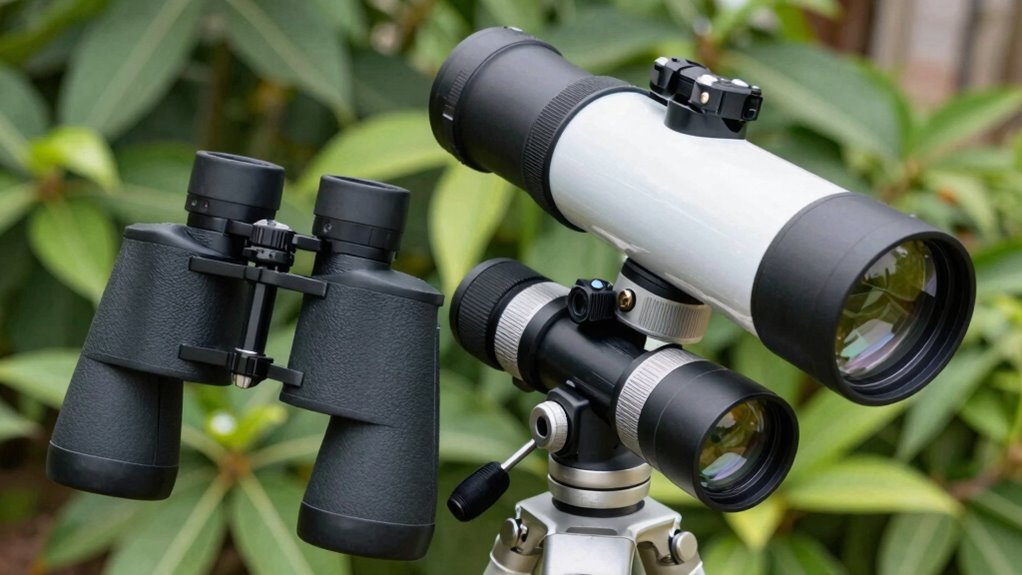
If you’re curious about wildlife up close, binoculars are perfect due to their quick, broad views and portability. For detailed, distant wildlife or scenery, a spotting scope with higher magnification and stability on a tripod works best. If you’re into astronomy or viewing distant celestial objects, a telescope provides the necessary high magnification. Each tool suits a different curiosity, and exploring more will help you choose the right one for your adventures.
Key Takeaways
- Binoculars are ideal for quick, broad wildlife views and casual outdoor activities due to their portability and wider field of view.
- Spotting scopes offer higher magnification and brighter images, suitable for detailed observation of distant wildlife or landscape features.
- Telescopes are designed for celestial observation, providing high magnification for viewing stars and astronomical objects.
- Stability and extended viewing are better supported by spotting scopes mounted on tripods, whereas binoculars are more portable for quick use.
- Choice depends on curiosity type: binoculars for general wildlife, spotting scopes for detailed distant viewing, and telescopes for astronomy.
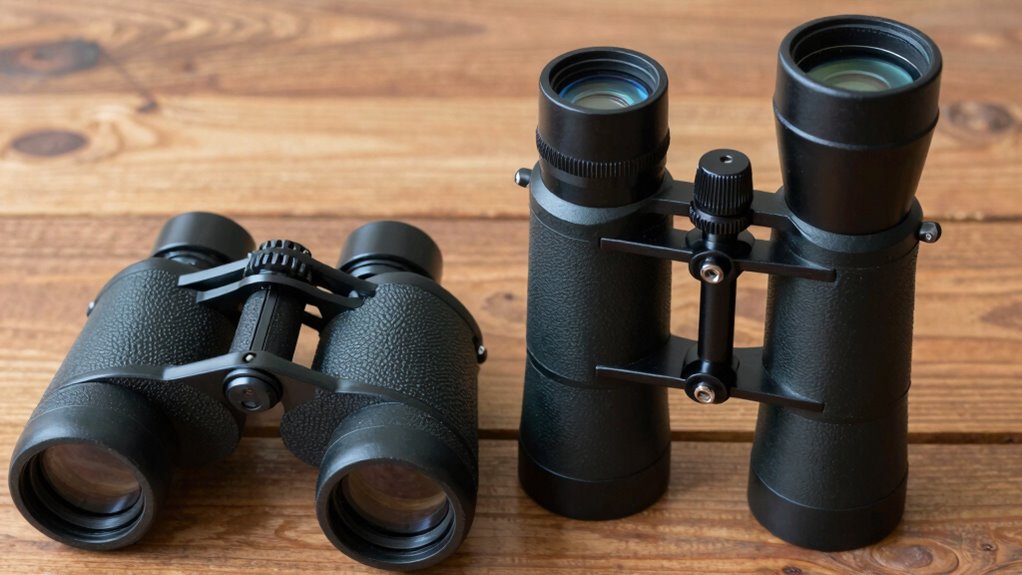
Whether you’re a seasoned birdwatcher, an avid stargazer, or someone simply curious about distant objects, understanding the differences between binoculars, spotting scopes, and telescopes is essential. Each tool is designed with specific uses in mind, and choosing the right one can markedly enhance your experience. If your primary goal is wildlife observation, binoculars are usually the best fit. They’re compact, lightweight, and easy to carry, making them perfect for quick glances at birds in the trees or animals in the wild. Binoculars with a magnification of 8x or 10x provide a broad field of view, which is ideal for tracking movement and scanning large areas. Their versatility allows you to quickly switch from one spot to another without much hassle, making them the go-to choice for casual nature hikes or birding excursions.
On the other hand, if you’re delving into more detailed observation of distant wildlife, a spotting scope offers a clear advantage. Spotting scopes typically feature higher magnification, often between 20x and 60x, allowing you to see fine details on animals that are far away. They are usually mounted on tripods, providing stability that prevents shaky images during long viewing sessions. This stability makes them excellent for wildlife observation where clarity and precision matter. Additionally, spotting scopes are more suitable for longer viewing sessions because they come with better optics, which gather more light and produce brighter images. This makes them particularly useful in low-light conditions, such as dawn or dusk, when many animals are most active. Proper care and hygiene of your spotting scope and binoculars, including cleaning lenses and maintaining their integrity, can extend their lifespan and maintain optimal performance. Furthermore, understanding the contrast ratio of your optical device can significantly influence the quality of your viewing experience, especially in challenging lighting conditions. Recognizing the importance of philosophical insights into observation and perception can also deepen your appreciation of the natural world and enhance your overall experience. Being aware of optical qualities like light transmission and lens coatings can help you make more informed choices when selecting or maintaining your equipment.
8×42 binoculars for birdwatching
As an affiliate, we earn on qualifying purchases.
As an affiliate, we earn on qualifying purchases.
Frequently Asked Questions
How Do I Choose the Right Magnification for My Needs?
To select the right magnification, first consider your typical viewing distance. A magnification range of 8x to 10x is versatile for general use, while higher magnifications suit detailed observation but can be shaky. Check the eye relief distance to guarantee comfort during longer sessions. Balance magnification with stability and comfort, choosing a tool that offers clear, steady images suited to your specific interests and viewing environment.
What Maintenance Is Required for Each Optical Device?
You need to regularly clean lenses with a soft, lint-free cloth to keep your optics clear. Avoid touching glass surfaces directly to prevent smudges. Store your devices in a cool, dry place, preferably in protective cases to prevent dust and damage. Keep them away from extreme temperatures and moisture. Proper storage tips guarantee your binoculars, spotting scopes, or telescopes stay in top condition, ready for your next adventure.
Are There Budget-Friendly Options for High-Quality Optics?
You can find high-quality optics without breaking the bank by exploring affordable brands like Celestron and Orion, which offer excellent clarity and durability. Look for optical coatings, like multi-coated lenses, that enhance brightness and reduce glare, giving you a near-professional experience. These budget-friendly options deliver crisp images and sturdy builds, making your outdoor adventures or stargazing sessions both memorable and affordable.
How Do Weather Conditions Affect Optical Performance?
Weather impact can greatly affect your optical performance. Humidity, fog, and rain cause moisture to condense on lenses, blurring your view. Temperature fluctuations can lead to lens fogging or misalignment, reducing clarity. Wind can shake your equipment, making sharp images harder to capture. To minimize weather impact, keep your optics dry, use protective covers, and avoid changing temperatures abruptly. Proper care ensures your tools perform well regardless of weather conditions.
Can I Use These Tools for Astrophotography?
You can use binoculars, spotting scopes, and telescopes for astrophotography, but each has its limitations. Focus on astrophotography techniques that suit your equipment, like long exposure shots for telescopes or stacking images for binoculars. Make certain your device’s optical sensor compatibility with your chosen camera or adapter. With proper technique and compatible gear, you’ll capture stunning celestial images, regardless of the tool you select.
high magnification spotting scope with tripod
As an affiliate, we earn on qualifying purchases.
As an affiliate, we earn on qualifying purchases.
Conclusion
Now that you know the differences, imagine holding binoculars in your hands, perfect for quick wildlife glimpses, while a spotting scope rests steady on a tripod, revealing distant landscapes in vivid detail. Telescope lenses stretch your view to the vast universe, where stars sparkle like distant fires. Each tool offers a unique window—whether to nearby animals, sweeping scenery, or the endless cosmos—helping you satisfy your curiosity, no matter how close or far your fascination takes you.
beginner astronomical telescope for stargazing
As an affiliate, we earn on qualifying purchases.
As an affiliate, we earn on qualifying purchases.