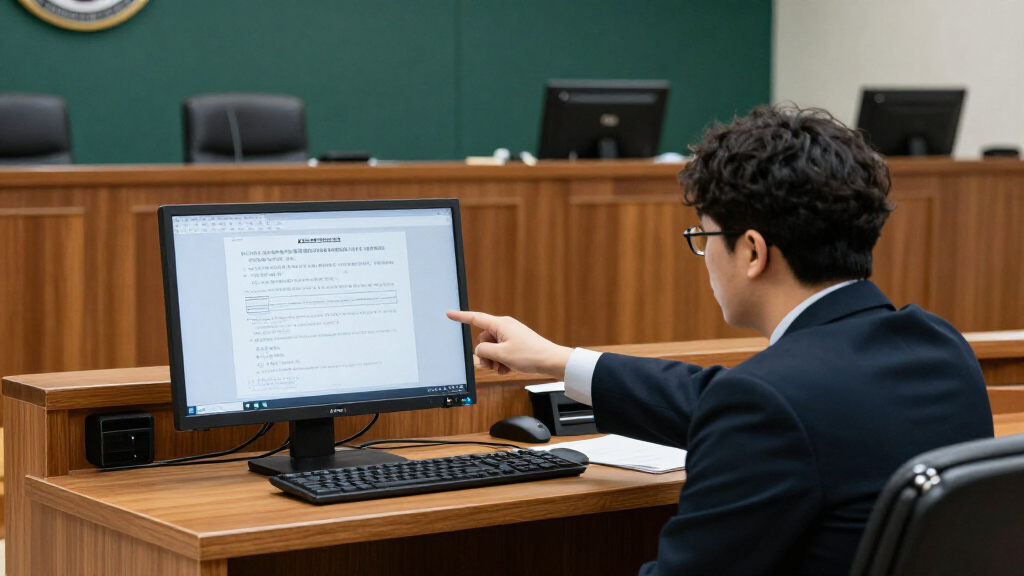

🔍 Read the full analysis: 360 Korean Judges Share Their Views On AI And Fake Court Cases on ThorstenMeyerAI.com

Prime made for students and young adults
- Fast, free delivery for dorm and study essentials
- Prime Video and Amazon Music included
- Member-only deals
TL;DR
South Korea’s National Court Administration published a survey in which judges reported encountering fabricated or distorted citations in court filings. The figures describe judges’ experiences, not the share of filings containing false citations; respondents called for institutional measures including fines and rules on verification and AI disclosure.
South Korea’s National Court Administration said a survey of 360 judges found that about 80% of responding judges handling civil, family and administrative cases had encountered filings citing false or nonexistent precedents. The results, published November 2, also show strong support among respondents for formal measures to address fabricated or distorted legal citations, including citations associated with AI-generated material.
The survey was conducted from October 6 to 16 among judges at courts at all levels. The court administration reported that, among judges who had encountered false citations, 196 (80.7%) identified precedents that did not exist, while 159 (65.4%) identified real precedents cited with false content. Respondents could select more than one type of citation.
The widely reported “about 80%” figure needs a specific denominator: it refers to responding judges handling civil, family and administrative cases, not all 360 people surveyed. The Korean daily Kyunghyang Shinmun reported that 243 of all 360 respondents (67.5%) said they had encountered false citations. The court administration’s release did not print that overall figure. The survey records judges’ reported experiences; it does not establish what proportion of court filings contain false material.
Asked who submitted false material, 164 judges (69.5%) selected the litigants themselves, and 136 (57.6%) selected lawyers acting as representatives or defense counsel. These responses do not mean that judges admitted to citing false cases. A discrepancy in an English-language version of the report attributed the 164 instances to judges themselves, but the Korean wording identifies the parties to the cases as the source.
Rules for AI-Era Court Filings
The findings put a practical strain on courts in focus: judges and opposing parties may have to spend time checking citations that appear formal but cannot be verified. The court administration said false citations can burden the opposing party and hinder the speedy progress of trials. The survey does not measure how much time is lost or how often cases are delayed, so the scale of that impact remains unquantified.
Judges expressed broad support for an institutional response: 91.7% of respondents said one was needed, and 64.8% described it as very necessary. The most frequently selected proposals were a legal basis for fines (61.4%), a duty to verify citations (61.1%), and a duty to disclose AI use (60.6%). These are survey responses, not rules already in force.
The reported examples also show why citation accuracy and AI disclosure are linked. The court administration described fabricated judgments formatted to resemble Supreme Court decisions, real rulings represented inaccurately, and text from AI conversations or litigation-strategy notes left in filings. The examples make the issue more concrete, but the release does not say how common each type is.
Popular right now

LG 85-Inch QNED84B Mini LED 4K Smart TV (2026)

Ninja Luxe Café Mini Plus Espresso and Drip Coffee Machine with AutoFroth, Stainless Steel (ES351)

LG 85-Inch QNED73B Mini LED 4K Smart TV (2026)
As an affiliate, we earn on qualifying purchases.
What the Court Survey Measured
The National Court Administration is the administrative arm of South Korea’s Supreme Court. Its survey focused on judges’ encounters with false or nonexistent precedents and related material. The administration said AI hallucinations can produce fabricated legal citations, but the reported results are based on what judges said they had seen—not an audit of filings or a finding that AI generated every false citation.
The survey also recorded reports of false or nonexistent statutes, selected by 41 judges (16.9%), and false or nonexistent papers and literature, selected by 10 (4.1%). Percentages in the release are based on respondents to the relevant questions, and some questions allowed multiple answers.
The administration said it plans to propose changes to South Korea’s Civil and Criminal Procedure Acts to allow fines. The source article placed that proposal alongside enforcement actions in the United States and United Kingdom, but the survey release itself does not provide details of those cases. The immediate development is the Korean survey and the stated plan to propose legislative changes.
Limits of the Survey Findings
The release does not state how many judges were invited, provide the exact wording of its questions, or establish whether respondents represent judges nationwide in a statistical sense. It measures judges’ recollections and observations, not the number or share of filings containing false citations. The overall 243-of-360 figure was reported by Kyunghyang Shinmun rather than printed in the court administration’s release.
It is also unclear how many cases involved AI-generated citations, as opposed to other sources of error or fabrication. The administration described AI hallucinations as a concern and gave examples of AI-related material, but the survey figures do not isolate AI as the cause. The proposed legislative changes are plans, not enacted law; their wording, timing and final passage remain undetermined.
Legislative Proposals Ahead
The National Court Administration said it plans to propose amendments to the Civil and Criminal Procedure Acts that would create a legal basis for fines. The survey also indicates support for citation-verification and AI-disclosure duties, but the release does not say whether those measures will be included in the proposed amendments or how they would be applied.
The next concrete steps are the publication and consideration of any draft changes, followed by legislative decisions on whether penalties or filing duties will become law. Until then, the survey documents judges’ reported experiences and preferences; it does not itself impose new requirements on lawyers or litigants.
Key Questions
What did South Korea’s survey find?
The National Court Administration reported that about 80% of responding civil, family and administrative judges had encountered false or nonexistent precedents. That figure applies to those judges, not all 360 survey participants.
Did the survey show that 80% of court filings contain fake cases?
No. It measured judges’ reported experiences, not the proportion of filings containing false citations. The release does not provide a filing-level audit or an overall rate for false material in court documents.
Were lawyers named as a source of false citations?
Yes. 136 judges (57.6%) selected lawyers acting as representatives or defense counsel, while 164 (69.5%) selected the parties themselves. Respondents could choose more than one source.
What measures did judges support?
The most frequently selected proposals were a legal basis for fines (61.4%), a duty to verify citations (61.1%), and a duty to disclose AI use (60.6%). The survey records preferences; these measures are not yet established as law.
What happens next?
The court administration said it plans to propose changes to South Korea’s Civil and Criminal Procedure Acts to allow fines. The timing, final wording and legislative outcome have not been specified.
Source: ThorstenMeyerAI.com