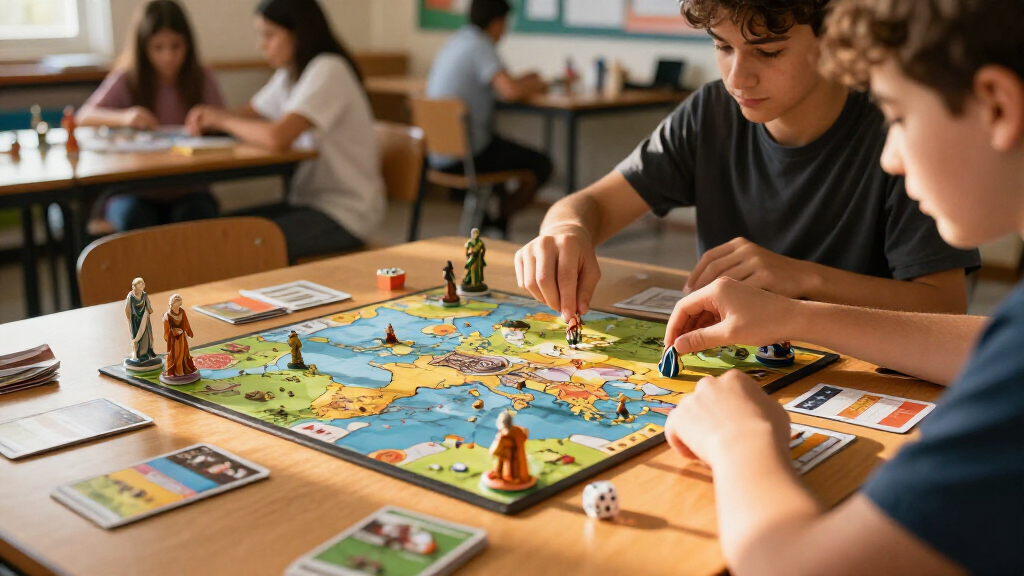

Greek mythology board games range from tactical battles to quick card games, trivia, and cooperative quests, so the right pick depends on how your group likes to play. I rank Santorini: Second Edition as the best overall for its accessible strategy and strong mythic theme, while Horrified: Greek Monsters stands out for cooperative play and Cyclades: Legendary Edition for a more substantial strategy experience. The main tradeoff is depth versus approachability: larger strategy games ask for more time and rules learning, while compact card games offer faster starts but less strategic weight. Player count, solo support, and whether mythology is central to the gameplay also separate these choices. Read on for the full breakdown and a recommendation matched to your table.

Prime made for students and young adults
- Fast, free delivery for dorm and study essentials
- Prime Video and Amazon Music included
- Member-only deals
Key Takeaways
- Santorini: Second Edition earns the lead by pairing approachable spatial strategy with a strong connection to Greek myth, rather than relying on mythology as a decorative theme.
- Horrified: Greek Monsters is the clearest choice for players who want to solve problems together; it serves a different table mood than the competitive strategy of Cyclades.
- Cyclades: Legendary Edition is the lineup’s premium strategy pick, but its heavier commitment makes it a less natural fit for casual groups seeking a quick game.
- Sirens and Hercules and the 12 Labors address smaller groups and solo play, while most picks are better suited to shared multiplayer sessions.
- Ridley’s Mythology Trivia and Top Trumps Greek Mythology favor knowledge or quick comparisons over layered board-game strategy, making them easier to bring out but less suited to players seeking a substantial tactical challenge.
| Santorini: Second Edition Greek Strategy Board Game |  | Best Overall for Tactical Greek-Themed Play | Brand: Roxley Games | Edition: Second Edition | Game type: Strategy board game | VIEW LATEST PRICE | See Our Full Breakdown |
| Olympus Fluxx Card Game |  | Best for Unpredictable Group Play | Brand: Looney Labs | Game type: Card game | Players: 2–6 | VIEW LATEST PRICE | See Our Full Breakdown |
| Ravensburger Horrified: Greek Monsters Cooperative Strategy Board Game |  | Best Cooperative Monster Adventure | Brand: Ravensburger | Game type: Cooperative strategy board game | Players: 1–5 | VIEW LATEST PRICE | See Our Full Breakdown |
| Ridley’s Mythology Trivia |  | Best for Mythology Knowledge and Group Quizzes | Brand: Games Room | Number of questions: 140 | Players: 2+ | VIEW LATEST PRICE | See Our Full Breakdown |
| Hercules and the 12 Labors: Solo Card and Dice Game |  | Best Solo Greek Mythology Adventure | Players: 1 | Play time: 30–60 minutes | Game type: Solo card and dice strategy game | VIEW LATEST PRICE | See Our Full Breakdown |
| Cyclades Legendary Edition Greek Mythology Strategy Board Game |  | Best for Strategic Group Play | Brand: Hachette Boardgames | Edition: Legendary Edition | Players: 2–6 | VIEW LATEST PRICE | See Our Full Breakdown |
| Top Trumps Greek Mythology Card Game |  | Best for Mythology Learning on the Go | Brand: Top Trumps | Theme: Greek mythology | Game type: Card game | VIEW LATEST PRICE | See Our Full Breakdown |
| Sirens: Greek Mythology Card-Drafting Game for 1–2 Players, Ages 12+ |  | Best Compact Two-Player Pick | Brand: Envy Born Games | Players: 1–2 | Recommended age: 12+ | VIEW LATEST PRICE | See Our Full Breakdown |
| Zeus on the Loose: A Greek Mythology Card Game |  | Best for Quick Mental-Math Play | Brand: Happy Camper | Edition: New & Improved Happy Camper Edition | Players: 2–5 | VIEW LATEST PRICE | See Our Full Breakdown |
| Greek mythology board game | Players | Brand | Recommended age | Included components |
|---|---|---|---|---|
| Santorini: Second Edition Gree | 2–4 | Roxley Games | Ages 8+ | — |
| Olympus Fluxx Card Game | 2–6 | Looney Labs | 8 years and up | 100 cards and 1 instruction booklet |
| Ravensburger Horrified: Greek | 1–5 | Ravensburger | 10 years and up | Gameboard, monster mats and figures, hero tiles and standees, legend standees, tokens, cards, dice, item bag, and rulebook |
| Ridley’s Mythology Trivia | 2+ | Games Room | 13 years and up | Cards |
| Hercules and the 12 Labors: So | 1 | — | — | — |
| Cyclades Legendary Edition Gre | 2–6 | Hachette Boardgames | 14 years and up | 5 god tiles |
| Top Trumps Greek Mythology Car | 2 or more | Top Trumps | 6 years and up | Deck of 33 cards |
| Sirens: Greek Mythology Card-D | 1–2 | Envy Born Games | 12+ | Cards and game-specific pieces |
| Zeus on the Loose: A Greek Myt | 2–5 | Happy Camper | 8 years and up | 55 cards, Zeus figurine |
More Details on Our Top Picks
Santorini: Second Edition Greek Strategy Board Game
Santorini is my strongest pick for players who want Greek mythology tied directly to the decisions they make: players take the roles of gods, then race to build and climb a three-dimensional island city. Its clear move-and-build turn gives newcomers an easy entry point, while 32 god powers change how players approach the same compact board. Compared with Olympus Fluxx, Santorini offers a more structured contest of spatial strategy rather than rules that shift during play; it also takes far less time than Horrified: Greek Monsters. That focus is its tradeoff: the mythology frames an abstract strategy game, rather than a story-driven tour through Greek legends, and the player count tops out at four. I’d choose it for repeatable head-to-head play, not for a large group or lore-heavy adventure.
Pros:- Three-dimensional buildings make height and positioning central to play.
- 32 god powers create different strategic approaches across sessions.
- Simple move-and-build turns are approachable while leaving room for tactical choices.
- 15–20-minute games make it easy to fit in rematches.
Cons:- Supports only 2–4 players.
- Its abstract spatial strategy may feel less thematic than a myth-focused adventure game.
- The race to reach the third building level may not appeal to players who prefer cooperative goals.
Best for: Players ages 8 and up who want short, tactical games with Greek-god powers and a board that rewards spatial planning.
Not ideal for: Groups of five or more, or buyers who want mythological stories and monster encounters to drive the gameplay.
- Brand:Roxley Games
- Edition:Second Edition
- Game type:Strategy board game
- Players:2–4
- Playing time:15–20 minutes
- Recommended age:Ages 8+
- God powers:32 unique abilities
- Language:English
Our verdict“Choose Santorini for brisk, replayable Greek-god strategy, but skip it if your group needs five-player support or a story-led mythic adventure.”
Olympus Fluxx Card Game
Olympus Fluxx brings Greek and Roman figures into a card game where the rules—and the route to winning—can change as cards are played. That makes it a livelier, less predictable choice than Santorini, whose movement and building rules stay consistent from turn to turn. Its 2–6 player range also suits gatherings that exceed Santorini’s four-player limit, while the card format is easier to carry than Horrified: Greek Monsters and its full board-game setup. The tradeoff is that players must keep adapting to new draw, play, and win conditions; anyone who prefers a stable strategy can find that fluidity frustrating. With 21 mythological characters and games ranging from about five to 30 minutes, I’d pick it for casual groups more interested in changing fortunes than in a focused Greek myth narrative.
Pros:- Changing rules and win conditions give rounds an unpredictable flow.
- Includes 21 Greek and Roman mythological characters.
- Supports up to six players, more than Santorini or Horrified: Greek Monsters.
- Compact card-based format is convenient to bring to gatherings.
Cons:- Frequent rule changes may frustrate players who prefer a stable strategy.
- The 5–30-minute play range means session length can vary.
- Its broad character theme does not provide the focused monster challenges found in Horrified: Greek Monsters.
Best for: Casual groups of 2–6, including families with players ages 8 and up, who enjoy changing rules and portable card games.
Not ideal for: Players who want a consistent ruleset, carefully planned long-term strategy, or a game centered on one Greek mythic storyline.
- Brand:Looney Labs
- Game type:Card game
- Players:2–6
- Recommended age:8 years and up
- Playing time:5–30 minutes
- Theme:Greek and Roman mythology
- Included components:100 cards and 1 instruction booklet
- Package dimensions:6 x 8 x 3 inches
Our verdict“Pick Olympus Fluxx for a portable, flexible group game, but choose Santorini instead if you want steadier tactical decisions.”
Ravensburger Horrified: Greek Monsters Cooperative Strategy Board Game
Horrified: Greek Monsters is my pick for players who want Greek mythology to shape the whole adventure, not just the artwork. The group works together to protect Elysium from six creatures—including Medusa, Cerberus, and the Minotaur—with each monster bringing a distinct challenge. That cooperative structure contrasts with the competitive building race in Santorini and the shifting card rules of Olympus Fluxx: here, players share the problem and plan as a team. It also supports solo play, a useful alternative to games that require a group. The tradeoff is time and table commitment: a session runs about 60 minutes, with many boards, tokens, cards, and figures to manage. I’d choose this for a dedicated game night, not for a quick filler round or a group that wants simple setup and fast turns.
Pros:- Six Greek monsters offer distinct challenges and strategies.
- Cooperative play gives the group shared goals instead of direct competition.
- Supports 1–5 players, including solo sessions.
- Detailed monster figures and themed components reinforce the mythic setting.
Cons:- Around 60 minutes is a longer commitment than Santorini or many Olympus Fluxx rounds.
- The large assortment of cards, tokens, figures, and boards can mean more setup and handling.
- The recommended age of 10 and up makes it less suited to younger children than Santorini.
Best for: Cooperative-game fans ages 10 and up who want a roughly hour-long Greek monster challenge for one to five players.
Not ideal for: Players seeking a quick, lightweight game, or groups that prefer direct competition and minimal component setup.
- Brand:Ravensburger
- Game type:Cooperative strategy board game
- Players:1–5
- Recommended age:10 years and up
- Estimated playing time:60 minutes
- Monsters:6
- Included components:Gameboard, monster mats and figures, hero tiles and standees, legend standees, tokens, cards, dice, item bag, and rulebook
- Model number:60002045
Our verdict“Choose Horrified: Greek Monsters for a substantial cooperative mythic challenge, but opt for Santorini or Olympus Fluxx when you want a shorter, lighter session.”
Ridley’s Mythology Trivia
Ridley’s Mythology Trivia takes a different route from the strategy games in this roundup: its appeal is testing what players know about gods, heroes, beasts, and folklore through 140 multiple-choice questions. It is the clearest fit for a group that wants conversation and knowledge challenges rather than board tactics. Unlike Horrified: Greek Monsters, it does not ask players to coordinate against creatures, and it is much more compact than Santorini. The wider world-mythology scope is both a strength and a limitation for this Greek-mythology roundup: it broadens the subject matter, but Greek legends are not the sole focus. I’d treat it as a portable trivia activity for parties or travel, not as a strategy game or a dedicated Greek myth adventure. Its 13+ recommendation also makes it less suitable for younger family groups.
Pros:- 140 multiple-choice questions cover gods, heroes, magical beasts, and monsters.
- Includes myths and folklore from cultures around the world.
- Compact box is easy to carry to gatherings or on trips.
- Packaging uses FSC-certified and recycled materials.
Cons:- It is a trivia set, not a strategy board game or story-driven adventure.
- Its subject matter ranges beyond Greek mythology, so Greek myths are not the exclusive focus.
- The recommended age of 13 and up limits its fit for younger family groups.
Best for: Trivia-loving groups ages 13 and up who want a compact, question-led activity spanning Greek mythology and other world folklore.
Not ideal for: Buyers seeking Greek mythology as the exclusive theme, tactical board play, or a game designed for younger children.
- Brand:Games Room
- Number of questions:140
- Players:2+
- Recommended age:13 years and up
- Included components:Cards
- Game mechanics:Trivia
- Educational objective:World mythologies and folklore
- Item dimensions:2.25 x 3.63 x 5 inches
Our verdict“Choose Ridley’s Mythology Trivia for portable, broad mythology quizzes, but pick Horrified: Greek Monsters if you want Greek creatures to shape strategic play.”
Hercules and the 12 Labors: Solo Card and Dice Game
Hercules and the 12 Labors makes the most sense for a buyer who wants a Greek mythic journey without needing other players. Its solo structure centers on dice allocation, heroic abilities, relics, story cards, and encounters with mythological creatures as Hercules progresses toward Olympus. That gives it a more narrative, character-led focus than the spatial contest in Santorini; it also avoids the group coordination required by Horrified: Greek Monsters. The single-player design is its defining tradeoff, not a minor limitation: it cannot serve as a shared group game. A 30–60-minute play time also asks for more attention than a quick round of Olympus Fluxx. I’d select it for a solo player drawn specifically to Hercules’s labors and dice-driven decisions, rather than for a flexible game-night option.
Pros:- The 12 Labors give the solo experience a clear Greek myth narrative.
- Dice allocation and heroic abilities provide strategic decisions.
- Relics, story cards, and mythological foes add variety to the journey.
- Solo-only design suits players who want a game without coordinating a group.
Cons:- Designed for one player, so it cannot accommodate a shared group session.
- The 30–60-minute play time is a larger commitment than Santorini or Olympus Fluxx.
- The available product details do not specify a recommended age or component count.
Best for: Solo players who want to follow Hercules through the 12 Labors using dice decisions, abilities, relics, and story cards.
Not ideal for: Couples, families, or game-night hosts looking for a multiplayer Greek mythology game.
- Players:1
- Play time:30–60 minutes
- Game type:Solo card and dice strategy game
- Core myth:Hercules and the 12 Labors
- Core mechanisms:Dice allocation, heroic abilities, relic collection, and story cards
- Objective:Progress through the Labors toward Olympus
Our verdict“Choose Hercules and the 12 Labors if you want a solo, story-led Greek myth game; skip it if you need multiplayer support.”
Cyclades Legendary Edition Greek Mythology Strategy Board Game
Cyclades Legendary Edition turns Greek mythology into a contest of auctions and territorial control: players seek favor from the gods, develop their position, and bring mythological monsters into play. Its mix of area control, resource management, and bidding gives it more strategic weight than the quick card games in this roundup. The range of competitive, team, and 1v1 modes also makes it a more flexible group choice than Sirens, which is built for only one or two players.
The tradeoff is a longer, more demanding session: 60–90 minutes and an age recommendation of 14+ make this a better fit for experienced players than casual family play. Choose it for a group that wants shifting tactical decisions; skip it if you want a short, low-rules mythology game.
Pros:- Combines auctions, area control, and resource management for layered strategic choices.
- Supports competitive, team, and 1v1 modes.
- Accommodates two to six players.
- Builds Greek gods and mythological monsters into the central gameplay.
Cons:- The 14+ age recommendation limits its fit for younger family groups.
- A 60–90-minute session is longer than quick options such as Zeus on the Loose.
Best for: Strategy-game groups of two to six who want Greek gods, monster encounters, and several ways to play.
Not ideal for: Families with younger children or players seeking a quick, simple session; the 14+ recommendation and 60–90-minute playtime may not fit.
- Brand:Hachette Boardgames
- Edition:Legendary Edition
- Players:2–6
- Recommended age:14 years and up
- Playing time:60–90 minutes
- Game mechanics:Area control, auction, resource management
- Included components:5 god tiles
- Material:Cardboard
Our verdict“Choose Cyclades if your group wants a substantial Greek-mythology strategy game, not a short family card game.”
Top Trumps Greek Mythology Card Game
Top Trumps Greek Mythology makes the theme accessible through a straightforward loop: choose an attribute, compare card values, and try to collect the deck. That simplicity suits children ages six and up and gives the game a clearer educational angle than Zeus on the Loose, which uses mythology alongside mental-math practice. The 33-card deck is also easier to pack for a trip or classroom activity than the larger strategic setup of Cyclades Legendary Edition.
The main compromise is that the decisions stay within the attribute-comparison format; players looking for varied actions, evolving rules, or a shared story may find it repetitive. It also requires at least two players, so it cannot fill the solo niche served by Sirens. Pick it for an easy-to-teach mythology-themed activity, rather than a deep strategy game.
Pros:- Introduces Greek mythology facts through a simple card-game format.
- Age recommendation of six and up suits younger family and classroom groups.
- Compact 33-card deck is convenient for travel.
- Supports two or more players for family, party, or classroom use.
Cons:- Requires at least two players, so it does not support solo play.
- Repeated attribute comparisons offer less mechanical variety than Sirens or Cyclades.
Best for: Parents and teachers seeking a portable, easy-to-explain Greek mythology card game for children and groups.
Not ideal for: Solo players or buyers who want varied tactical play beyond comparing card attributes.
- Brand:Top Trumps
- Theme:Greek mythology
- Game type:Card game
- Players:2 or more
- Recommended age:6 years and up
- Included components:Deck of 33 cards
- Materials:Cardstock, plastic
- Edition:Standard Edition
Our verdict“Choose Top Trumps for a portable, child-friendly introduction to Greek mythology, not for layered strategy.”
Sirens: Greek Mythology Card-Drafting Game for 1–2 Players, Ages 12+
Sirens stands apart from the larger group games here by pairing a compact footprint with solo or two-player card drafting. Players build a row to create a high-scoring melody, and the rules change between rounds, giving a short game more variation than the repeated attribute comparisons in Top Trumps Greek Mythology. At about 15–20 minutes, it is also an easier fit for a quick session than Cyclades, whose auctions and area control ask for a longer commitment.
Its narrow player range is the defining tradeoff: this is not the choice for a family table or a party, and the 12+ recommendation makes it less suited to young children than Top Trumps. The small, lightweight box travels easily, but its components can be misplaced. Choose it when portability and thoughtful card play matter more than group capacity.
Pros:- Supports solo play as well as two-player games.
- Round-to-round rule changes add variety to the card-drafting format.
- Short 15–20-minute playtime suits quick sessions.
- Lightweight box is easy to carry.
Cons:- Limited to one or two players, unlike Cyclades or Top Trumps.
- Small components may be easy to misplace.
- The 12+ recommendation excludes younger players who can join Top Trumps.
Best for: Solo players and pairs ages 12 and up who want a portable Greek-mythology game with changing round rules.
Not ideal for: Families or groups of three or more, and younger children who need a game recommended for their age.
- Brand:Envy Born Games
- Players:1–2
- Recommended age:12+
- Estimated playing time:15–20 minutes
- Game format:Two-round card drafting
- Theme:Greek mythology
- Box dimensions:4.3 x 4.3 x 1 inch
- Weight:Less than 5 oz
- Included components:Cards and game-specific pieces
Our verdict“Choose Sirens for portable, brief card drafting with one other player or solo, but skip it for group play.”
Zeus on the Loose: A Greek Mythology Card Game
Zeus on the Loose is the quick family pick when the mythology theme should come with a practical learning hook: its card play encourages mental-math practice, and a full-color Zeus figurine gives the game a tangible centerpiece. At about 15 minutes, it asks for far less time than Cyclades and supports two to five players, making it a more group-friendly short option than the two-player-only Sirens. Its compact format also suits travel or a brief game between other activities.
The age recommendation starts at eight, so Top Trumps Greek Mythology is the more suitable choice for younger children. Zeus on the Loose also needs at least two players and offers a brisk card-game experience rather than the broad strategic decisions found in Cyclades. Choose it for short, math-minded family play; look elsewhere for solo gaming or a longer strategy session.
Pros:- Gameplay encourages mental-math practice.
- Includes a full-color Zeus figurine as a distinctive game piece.
- About 15 minutes of play suits short family sessions.
- Supports two to five players in a portable format.
Cons:- Requires at least two players and cannot serve as a solo game.
- The eight-and-up recommendation makes it less accessible to younger children than Top Trumps.
Best for: Families with children ages eight and up who want a brief Greek-mythology card game that practices mental math.
Not ideal for: Solo players, children younger than eight, or strategy groups looking for the deeper decisions of Cyclades.
- Brand:Happy Camper
- Edition:New & Improved Happy Camper Edition
- Players:2–5
- Recommended age:8 years and up
- Playing time:15 minutes
- Included components:55 cards, Zeus figurine
- Material:Cardstock
- Educational objective:Enhance mental math skills
- Dimensions:5.75 x 4.75 inches
Our verdict“Choose Zeus on the Loose for short, math-focused family play, rather than solo gaming or deep strategy.”
How We Picked
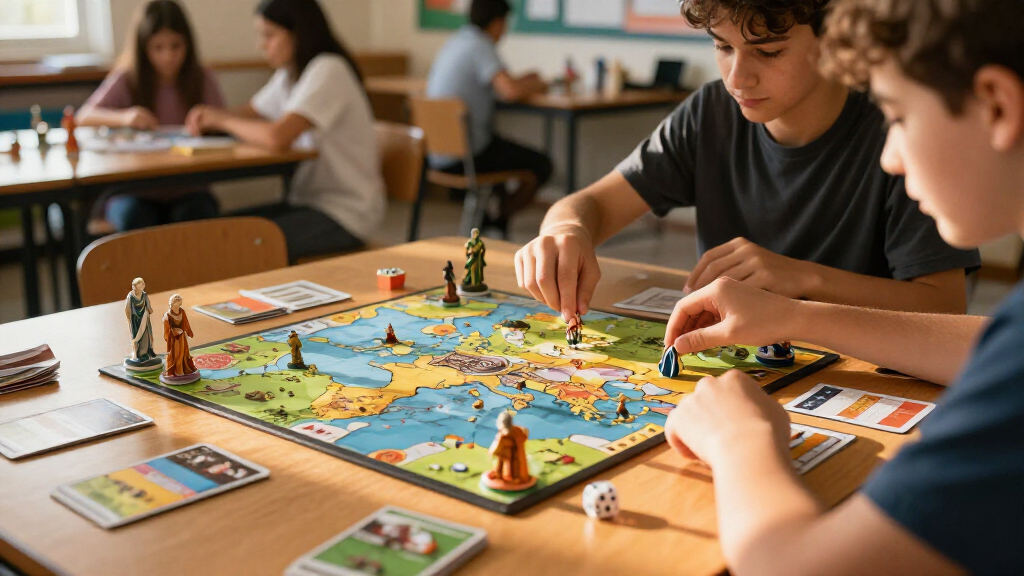
I compared the nine games by how clearly Greek mythology shapes play, how quickly a new group can understand the rules, and what kind of session each game supports. I also weighed player-count flexibility, solo options, the balance between meaningful decisions and rules overhead, and whether a game’s format—board strategy, cooperative play, trivia, or cards—matches the expectations suggested by its theme.
The ranking favors games that combine a satisfying play experience with a recognizable mythic identity and a clear audience. That puts Santorini first as the strongest all-around fit, while Horrified and Cyclades rank highly for distinct cooperative and heavyweight strategy needs. Short-form card and trivia games remain useful picks for specific groups, but they rank lower for buyers seeking sustained tactical play. I treat value as breadth of use and ease of getting a game to the table, not as a price claim.
| Greek mythology board game | Game type |
|---|---|
| Santorini: Second Edition Gree | Strategy board game |
| Olympus Fluxx Card Game | Card game |
| Ravensburger Horrified: Greek | Cooperative strategy board game |
| Ridley’s Mythology Trivia | — |
| Hercules and the 12 Labors: So | Solo card and dice strategy game |
| Cyclades Legendary Edition Gre | — |
| Top Trumps Greek Mythology Car | Card game |
| Sirens: Greek Mythology Card-D | — |
| Zeus on the Loose: A Greek Myt | — |
Factors to Consider When Choosing Greek Mythology Board Games
Before choosing a title, I’d decide what you want the mythology to contribute: a setting, a source of strategic powers, a cooperative story, or the subject of a quiz. That choice often matters more than the box’s theme or artwork, and it helps avoid buying a game that sounds right but plays at the wrong pace for your group.
Decide Whether Mythology Should Shape Play
Some games use Greek myth mainly as a setting, while others build decisions around gods, monsters, heroes, or legends. If your group wants to feel connected to the source material, check whether myths affect goals and tactics rather than appearing only in names and illustrations. A thematic game can still take liberties with stories, so readers who want historical or literary accuracy should check the game’s approach before buying. Trivia makes knowledge the activity itself, but that can leave less room for strategy. A common mismatch is choosing a myth-themed title for its subject and then finding its actual play revolves around an unrelated puzzle or competition. Pick the kind of connection your group will talk about after the game ends.
Match Rules Weight to Your Regular Group
Think about how much explanation your group will tolerate before play begins, not just how complex you personally enjoy a game. A heavier strategy title can reward repeat sessions, but it may sit unused if casual guests need a long rules briefing. Simple card games are easier to teach, though their shorter decision arcs may not satisfy players who want a strategic contest. Check whether the game includes ways to ease new players in or whether everyone needs to learn several systems at once. Avoid treating a famous myth or elaborate theme as a sign that the rules will be accessible. If your group changes often, fast teaching and clear turns may matter more than strategic depth.
Choose Competitive, Cooperative, or Solo Play First
Player interaction changes the feel of a myth-themed game as much as its setting does. Competitive games suit groups that enjoy reading opponents and accepting that someone will lose; cooperative games give players a shared challenge but can invite one person to make every decision. Solo play calls for a different check: confirm the game has a designed solo mode rather than assuming one player can simply control multiple roles. For two people, look for rules and decisions that still feel balanced at that count. The frequent mistake is buying for a household’s maximum group size when the game will usually be played by fewer people. Choose around the table you have most often, then treat extra flexibility as a bonus.
Set Expectations for Session Length and Replay
A quick card game and a long strategy session may share a mythic theme but solve very different needs. Consider whether you want a game for a short gap, a regular game night, or a title that can anchor an evening. Replayability can come from changing setups, varied objectives, different player choices, or simply enjoying repeated rounds; these are not interchangeable. Trivia and comparison games can be easy to replay casually, but players who memorize answers or card values may find them less surprising over time. Strategy games can sustain repeat play through interaction, yet only if your group enjoys learning from earlier sessions. Match the source of replay to what your group likes doing, rather than assuming more rules automatically mean more variety.
Check the Physical Format and Table Fit
“Board game” can describe a large board, a small card deck, or a game built around dice and cards, and each format has different practical demands. A compact game is easier to store and carry, while a board-heavy strategy game may need more table space and room for player areas. Check the listed player count and age guidance against your household, and make sure the format suits the setting where you expect to play. Small cards can be convenient but may be less comfortable for players who prefer large, visible pieces. A common buying mistake is focusing on theme and overlooking setup, storage, or table footprint. If space is limited, prioritize how the game is laid out during play, not just the box size.
Pay More for the Experience You Will Use
A larger, more elaborate game makes sense when your group wants sustained strategy, detailed components, or a centerpiece for regular sessions. It is a weaker fit if you mainly need something easy to teach or carry to a gathering. Smaller card and trivia games can deliver a useful change of pace, but they may not replace a deeper game for a group that wants long-term tactical choices. Think about how often the game will reach the table and whether its specific strengths match that use. Avoid paying for complexity or production that your group will rarely engage with. The best fit is the one whose play style, not just its presentation, earns repeat sessions.
Frequently Asked Questions
Which Greek mythology game is the safest choice for a mixed-experience group?
I’d start with Santorini: Second Edition if your group wants a strategic game that is less demanding than a heavier title such as Cyclades. For players who prefer collaboration over competition, Horrified: Greek Monsters is a better direction, though cooperative play suits groups willing to discuss decisions together. If guests have very little patience for rules, a card or trivia game may get to the first turn faster. Think about whether your group prefers competing or solving a shared problem before choosing. The easiest game to teach is not always the one everyone wants to replay.
Which option should I pick if I want a game for one player?
Look first at titles explicitly presented for solo play, including Hercules and the 12 Labors and Sirens, rather than assuming a multiplayer game will work alone. Then decide whether you want a solo challenge built around cards and dice or a card-drafting experience designed for a small player range. Check the current edition’s player information and rules before ordering, since product listings can vary. A game that supports solo play may still feel quite different alone than it does with a group. Choose based on whether you want a puzzle to solve by yourself or a game that can also serve a regular two-player table.
Are Greek mythology trivia and card games good substitutes for strategy games?
They can be good substitutes when your priority is a short, informal activity, but they do not offer the same kind of sustained planning as a strategy game. Ridley’s Mythology Trivia centers on what players know, while Top Trumps Greek Mythology and other card-focused options favor quick comparisons or turns. That makes them easier to bring out with casual guests, but less suitable for a group seeking complex tactical choices. Knowledge games can also favor players who already know the myths, so consider the group’s familiarity. Pick them for the conversation and pace you want, not just because the theme matches.
How can I choose between cooperative play and competitive Greek mythology games?
Choose cooperative play if your group enjoys sharing information, planning together, and winning or losing as a team. Horrified: Greek Monsters is the standout here, while Santorini and Cyclades better fit groups that enjoy direct competition and distinct winners. Cooperative games can be more welcoming to players who dislike head-to-head conflict, but they may let a confident player dominate the discussion. Competitive games give each player more independent decisions, though they can be a poor match for a group that wants a shared story. Ask whether your group wants to solve a challenge together or test its plans against other players.
Is a premium strategy game a better long-term choice than a compact card game?
Not automatically: a larger strategy game can offer more room for planning, while a compact game may see more use because it is simple to teach and store. Cyclades: Legendary Edition makes the most sense when your group wants a substantial strategy session, whereas a short-form card game suits flexible, casual play. Consider how often the same players meet and how much time they usually have. A group that plays irregularly may get more practical use from quick setup than from greater rules depth. Let your routine decide whether added complexity or convenience will be the better long-term fit.
Conclusion
For the best overall balance of approachable strategy and mythic identity, I’d choose Santorini: Second Edition. Best for cooperative groups: Horrified: Greek Monsters; best premium strategy: Cyclades: Legendary Edition, for players who want a fuller strategic commitment. For a lower-commitment, easy-to-bring-out option, I’d look to the compact card and trivia choices, with Zeus on the Loose serving casual card play and Ridley’s Mythology Trivia suiting players who enjoy testing their knowledge. Best for beginners depends on the group: Santorini suits newcomers ready for a strategy puzzle, while trivia or a quick card game is a gentler start for guests wary of rules. If you need solo play, compare Hercules and the 12 Labors with Sirens against your preferred style; the best choice is the one that fits your usual player count and session length.