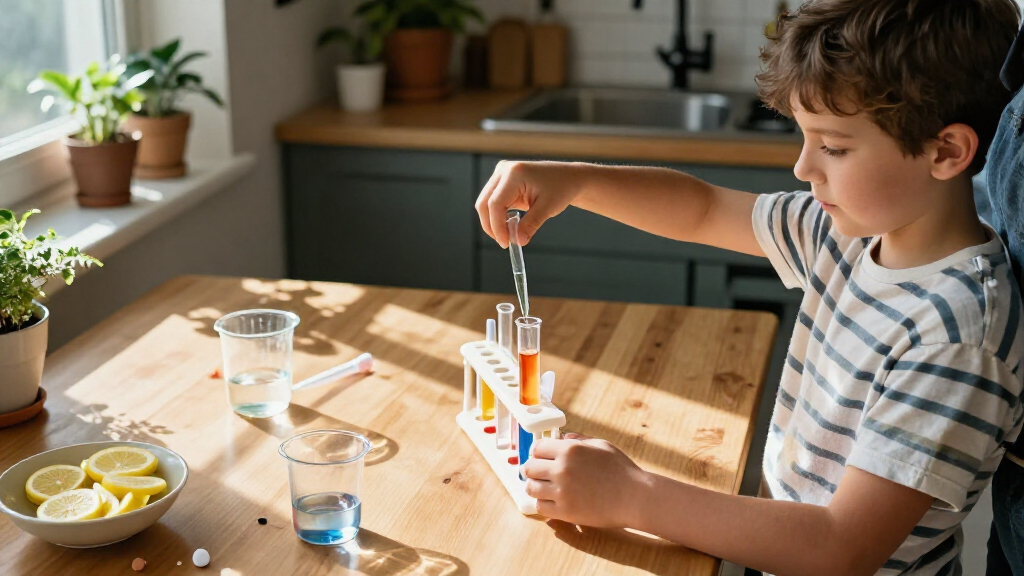
Among science lab kits for kids, I rank the National Geographic Amazing Chemistry Set as the best overall for its broad chemistry focus and 100+ experiments. The Doctor Jupiter My First Science Experiments Kit is a better starting point for younger children, while the UNGILINGA 150 Experiments Science Kit suits families seeking a large activity selection. The key tradeoff is not simply how many experiments a box lists, but whether its activities fit a child’s age, interests, and tolerance for adult help. Some kits focus on chemistry, while others add role play, magic, gross science, or earth science. Read on for the full comparison and help matching a kit to the child who will use it.

Prime made for students and young adults
- Fast, free delivery for dorm and study essentials
- Prime Video and Amazon Music included
- Member-only deals
Key Takeaways
- The National Geographic Amazing Chemistry Set leads this comparison for families who want a chemistry-centered kit with a large stated experiment count; broad activity range matters more than count alone.
- Age fit changes the shortlist: Doctor Jupiter is aimed at ages 4+, while several National Geographic sets target ages 8–12, so the youngest child should not automatically get the biggest kit.
- Role-play kits serve a different purpose from chemistry sets: INNOCHEER and the two scientist role-play kits pair activities with dress-up, which may help imaginative play but is not the same as a wider science curriculum.
- Special-interest kits can beat broad sets for the right child: Gross Science, Science Magic, and Earth Science each offer a clearer theme than a general chemistry box.
- Experiment count is not a reliable measure of convenience or depth. The 45- to 50-experiment sets may be easier to approach, while kits listing 100 or more activities call for a closer look at setup, supervision, and repeat use.
| INNOCHEER Kids Science Experiment Kit with Lab Coat and Role Play Costume for Ages 6+ |  | Best for Science Role Play | Number of items: 28 | Recommended age: 36 months–12 years (product title specifies ages 6+) | Material: Plastic | VIEW LATEST PRICE | See Our Full Breakdown |
| UNGILINGA 150 Experiments Science Kit for Kids STEM Chemistry Lab | 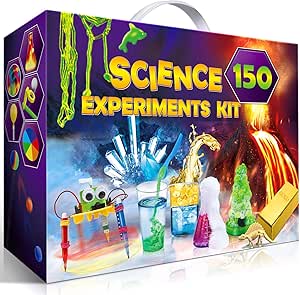 | Best for Experiment Variety | Number of experiments: 150 | Age range: 8 years and up | Item dimensions: 11.42 x 8.67 x 3.94 inches | VIEW LATEST PRICE | See Our Full Breakdown |
| Science Kit for Kids – 80 Experiments and Scientist Role Play |  | Best All-in-One Role-Play Kit | Number of experiments: 80 | Age guidance: Children over 6 years (listed range: 36 months–12 years) | Included components: Goggles, chemical materials, petri dishes, balloons, pigment, effervescent tablets, measuring cups, test tubes, gloves, droppers, and other tools | VIEW LATEST PRICE | See Our Full Breakdown |
| Doctor Jupiter My First Science Experiments Kit for Kids Ages 4+ |  | Best for Young Beginners | Number of experiments: Over 100 | Recommended age: 4 years and up | Included equipment: 2 beakers, conical flask, spatula, stirring sticks, spray bottles, cups, funnel, goggles, and tray | VIEW LATEST PRICE | See Our Full Breakdown |
| National Geographic Amazing Chemistry Set with 100+ Experiments for Ages 8-12 |  | Best Chemistry-Focused Pick | Number of experiments: Over 100 | Age range: 8 years and up | Set name: Amazing Chemistry Set | VIEW LATEST PRICE | See Our Full Breakdown |
| National Geographic Junior Chemistry Set with 50 Experiments for Kids |  | Best for Preschool Science Starters | Brand: Blue Marble | Set name: National Geographic Junior Chemistry Set | Recommended age: 4 years and up | VIEW LATEST PRICE | See Our Full Breakdown |
| Ooze Labs: Chemistry Station Experiment Set |  | Best for a Dedicated Lab-Station Setup | Brand: Thames & Kosmos | Recommended age: 72 to 300 months | Experiment count: 20+ | VIEW LATEST PRICE | See Our Full Breakdown |
| National Geographic Science Magic Kit with 100+ Experiments for Kids 8-12 |  | Best for Science-Magic Variety | Brand: National Geographic | Product type: Science magic kit | Recommended age: 8–12 years | VIEW LATEST PRICE | See Our Full Breakdown |
| UNGLINGA 70 Lab Experiments Science Kit for Kids Chemistry Set |  | Best for Varied Hands-On Projects | Recommended age: 8 years and up | Experiment count: 70 | Product category: Science kit and chemistry set | VIEW LATEST PRICE | See Our Full Breakdown |
| Science Kit for Kids – 120 Experiments and Scientist Role Play |  | Best for Experiment Count and Role Play | Recommended age: 8+ years | Experiment count: 120 | Material: Plastic | VIEW LATEST PRICE | See Our Full Breakdown |
| UNGLINGA 50+ Science Lab Experiments Kit for Kids, STEM Activities |  | Best for Broad, Household-Based Exploration | Age range: 8 years and up | Experiment count: 50+ | Science themes: Earth science, chemistry, and science-themed magic | VIEW LATEST PRICE | See Our Full Breakdown |
| National Geographic Chemistry Set with 45 Experiments for Kids 8-12 |  | Best for Focused Chemistry Activities | Age range: 8 years and up; designed for ages 8–12 | Experiment count: 45 | Set name: Stunning Chemistry Set | VIEW LATEST PRICE | See Our Full Breakdown |
| National Geographic Gross Science Kit with 45 Experiments for Kids 8-12 |  | Best for Reluctant Scientists Who Like Gross-Out Fun | Age range: 8 years and up; designed for ages 8–12 | Experiment count: 45 | Set name: Gross Science Kit | VIEW LATEST PRICE | See Our Full Breakdown |
| National Geographic Earth Science Kit with 100+ Activities for Kids 8-12 | 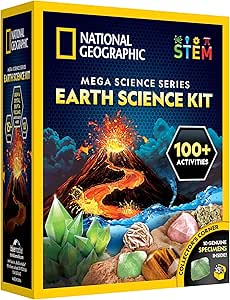 | Best for Earth Science Enthusiasts | Recommended age: 8–12 years | Activities: 100+ listed | Experiments: Over 15 described | VIEW LATEST PRICE | See Our Full Breakdown |
| National Geographic Mega Science Lab with 75 Experiments for Kids 8-12 |  | Best Multi-Topic Lab Kit | Age range: 8 years and up | Experiment count: 75 | Science themes: Earth science, chemistry, and science magic | VIEW LATEST PRICE | See Our Full Breakdown |
| science lab kits for kid | Experiment count | Recommended age |
|---|---|---|
| INNOCHEER Kids Science Experim | — | 36 months–12 years (product title specifies ages 6+) |
| UNGILINGA 150 Experiments Scie | — | — |
| Science Kit for Kids | — | — |
| Doctor Jupiter My First Scienc | — | 4 years and up |
| National Geographic Amazing Ch | — | — |
| National Geographic Junior Che | 50 | 4 years and up |
| Ooze Labs: Chemistry Station E | 20+ | 72 to 300 months |
| National Geographic Science Ma | 100+ | 8–12 years |
| UNGLINGA 70 Lab Experiments Sc | 70 | 8 years and up |
| Science Kit for Kids | 120 | 8+ years |
| UNGLINGA 50+ Science Lab Exper | 50+ | — |
| National Geographic Chemistry | 45 | — |
| National Geographic Gross Scie | 45 | — |
| National Geographic Earth Scie | — | 8–12 years |
| National Geographic Mega Scien | 75 | — |
More Details on Our Top Picks
INNOCHEER Kids Science Experiment Kit with Lab Coat and Role Play Costume for Ages 6+
The INNOCHEER kit makes scientific play feel like a lab session by pairing experiment tools with a washable coat and customizable name badge. That role-play emphasis gives it a different appeal from the Science Kit for Kids – 80 Experiments and Scientist Role Play, which lists a larger, more specific collection of activities and safety gear. INNOCHEER’s 28 items may suit a child who is more motivated by dressing the part than working through a long experiment sequence, but the supplied description does not detail the experiments or provide a clear instruction count. Its BPA-free materials are a reassuring feature, though small components call for adult oversight around younger siblings. I’d choose it for imaginative STEM play, not for families seeking the most clearly documented experiment program.
Pros:- Washable lab coat and customizable badge make scientist role play part of the activity.
- Includes 28 items for hands-on exploration.
- BPA-free materials are specified.
- Combines imaginative play with STEM learning.
Cons:- The product information does not specify the number or details of experiments.
- Detailed experiment instructions are not confirmed in the supplied description.
- Small components may need close supervision around younger children.
Best for: Families with children six and older who are drawn to dressing as a scientist and want hands-on STEM play alongside role-play accessories.
Not ideal for: Buyers who want a clearly listed experiment count and detailed, step-by-step activity guidance, or homes with very young children who may access small components.
- Number of items:28
- Recommended age:36 months–12 years (product title specifies ages 6+)
- Material:Plastic
- Size:One size
- Item weight:0.65 kg
- Manufacturer:INNOCHEER
- Noted accessories:Washable lab coat and customizable name badge
Our verdict“Choose INNOCHEER for a child who will be energized by lab-coat role play, but pick a kit with a documented experiment sequence for more structured activities.”
UNGILINGA 150 Experiments Science Kit for Kids STEM Chemistry Lab
With 150 listed experiments spanning chemistry, earth science, physics, and surface tension, this UNGILINGA kit is the breadth pick in this group. It reaches beyond the chemistry focus of the National Geographic Amazing Chemistry Set, which centers on reactions and crystal growing, so it may keep a curious child moving between different science topics. The illustrated manual is a practical advantage for children ready to follow activity steps, although some projects rely on household items and may call for an adult to help gather materials or supervise. Its 8+ age guidance also makes it a less suitable starting point than Doctor Jupiter’s kit, which is designed for younger children. I’d favor it when variety matters more than a tightly focused chemistry theme.
Pros:- Lists 150 experiments across chemistry, earth science, physics, and surface tension.
- Illustrated manual is described as easy to follow for children.
- Offers broader subject coverage than chemistry-focused kits.
- Compact box dimensions make storage straightforward.
Cons:- Some experiments require household items beyond the kit contents.
- Adult supervision may be needed for selected activities.
- The age guidance excludes younger beginner scientists.
Best for: Families with children eight and older who want a broad home activity collection across several science topics and are comfortable helping with household materials.
Not ideal for: Caregivers seeking a kit for preschool or early elementary beginners, or buyers who want every project’s materials contained in the box.
- Number of experiments:150
- Age range:8 years and up
- Item dimensions:11.42 x 8.67 x 3.94 inches
- Material:Plastic
- Topics:Earth science, chemistry, physics, and surface tension
- Instructions:Illustrated manual
Our verdict“Pick UNGILINGA for an older child who wants varied science activities, rather than a younger beginner or a chemistry-only project set.”
Science Kit for Kids – 80 Experiments and Scientist Role Play
This kit pairs 80 guided experiments with a substantial spread of listed equipment, chemical materials, and safety gear, giving it a more activity-centered profile than the INNOCHEER Kids Science Experiment Kit, whose standout feature is its lab coat and badge. Here, goggles, gloves, measuring tools, and guidance cards support projects such as rainbow rain and an erupting volcano, so children have more concrete prompts for exploring scientific ideas. That combination makes it a strong choice for families who want role play to accompany the experiments rather than define the kit. The tradeoff is that bottle-stored chemical materials need careful handling, and some activities may require adult supervision. The supplied dimensions are listed as 1 x 1 x 1 inches, which may not help buyers judge storage needs.
Pros:- Includes 80 experiments with guidance cards.
- Lists goggles and gloves alongside experiment tools and materials.
- Activities include accessible visual projects such as rainbow rain and an erupting volcano.
- Combines experiment guidance with scientist role play.
Cons:- Some chemical materials require careful handling and adult supervision.
- The listed dimensions of 1 x 1 x 1 inches may not be useful for planning storage.
- The age listing is broad, while the description specifies children over six.
Best for: Families with children over six who want a guided set of experiments plus lab-style safety gear and scientist-themed play.
Not ideal for: Buyers who need a clearly stated, reliable box size or children who are not ready to handle chemical materials with adult guidance.
- Number of experiments:80
- Age guidance:Children over 6 years (listed range: 36 months–12 years)
- Included components:Goggles, chemical materials, petri dishes, balloons, pigment, effervescent tablets, measuring cups, test tubes, gloves, droppers, and other tools
- Material:Plastic
- Item dimensions:1 x 1 x 1 inches
- Item weight:0.75 kg
- Instructions:Guidance cards
Our verdict“Choose this kit for guided experiments with safety gear and role-play elements, but plan to supervise activities involving its chemical materials.”
Doctor Jupiter My First Science Experiments Kit for Kids Ages 4+
Doctor Jupiter is the most age-accessible choice among these five: its 4+ guidance and illustrated instructions are aimed at introducing younger children to hands-on science. The set lists over 100 experiments and includes beakers, a flask, goggles, a tray, and small quantities of experiment ingredients, providing more direction for a first lab experience than the INNOCHEER kit description does. It also contrasts with the UNGILINGA 150 Experiments kit, which starts at age eight and covers a wider range of topics. That broader activity count should not be read as a guarantee that every project is self-contained; the listing notes that extra components may be needed for extended experiments. Adult help remains sensible for young users, and older children may outgrow its beginner-friendly approach.
Pros:- Designed for children as young as four.
- Lists over 100 experiments and includes an extra experiment booklet.
- Illustrated instructions can help adults guide young children through activities.
- Includes basic lab-style equipment such as beakers, a conical flask, goggles, and a tray.
Cons:- Some activities may need adult supervision.
- Additional components may be needed for extended experiments.
- Its beginner focus may be less engaging for older children.
Best for: Parents or caregivers introducing a child aged four to seven to simple, guided science activities with adult participation.
Not ideal for: Families shopping for an older child who wants more challenging projects, or buyers expecting every experiment to have all materials included.
- Number of experiments:Over 100
- Recommended age:4 years and up
- Included equipment:2 beakers, conical flask, spatula, stirring sticks, spray bottles, cups, funnel, goggles, and tray
- Included materials:Food essence, food additives, dried leaves, and food colours
- Instructions:Instruction manual and bonus experiment booklet
- Model number:DJ Junior Science
- Manufacturer:Metis Learning Solutions Pvt. Ltd.
Our verdict“Choose Doctor Jupiter as a guided first science kit for a young child, not as a challenging lab set for an older experimenter.”
National Geographic Amazing Chemistry Set with 100+ Experiments for Ages 8-12
For children who specifically want chemistry projects, this National Geographic set keeps its focus on crystal growing and chemical reactions, with over 100 hands-on experiments listed. That narrower subject angle sets it apart from the UNGILINGA 150 Experiments kit, which ranges across earth science, physics, and other topics. The National Geographic option may be the clearer match for a child who would rather repeat and explore chemistry ideas than switch subjects. Its stated age range is 8 years and up, so it is less suitable for younger beginners than Doctor Jupiter’s kit, and some activities may need adult supervision. The supplied listing highlights test tubes and beakers, but gives less detail about the full component inventory than Doctor Jupiter’s does; buyers wanting a precise tool list may prefer that clearer breakdown.
Pros:- Focuses on chemistry activities such as crystal growing and chemical reactions.
- Lists over 100 experiments and STEM projects.
- Includes lab-style tools such as test tubes and beakers.
- A narrower subject focus can suit children especially interested in chemistry.
Cons:- Age guidance starts at eight, making it a poor fit for younger beginners.
- Some activities may require adult supervision.
- The supplied product details do not itemize the full kit contents.
Best for: Families with children aged eight to twelve who want a chemistry-centered kit featuring reactions and crystal-growing activities.
Not ideal for: Caregivers shopping for children under eight, or buyers who want a fully itemized list of experiment tools before choosing.
- Number of experiments:Over 100
- Age range:8 years and up
- Set name:Amazing Chemistry Set
- Educational objective:STEM
- Highlighted activities:Crystal growing, chemical reactions, and hands-on STEM projects
- Item dimensions:8.78 x 3.19 x 11.93 inches
- Item weight:1.8 pounds
- Manufacturer:JMW Sales, Inc.
Our verdict“Choose this National Geographic set for an older child who wants chemistry to be the main event, rather than a broad, multi-subject science sampler.”
National Geographic Junior Chemistry Set with 50 Experiments for Kids
For a young child’s first science kit, this one pairs 50 guided experiments with more than 20 child-safe tools, including test tubes and goggles. Its illustrated instructions and age recommendation of 4+ make the activities more approachable than the older-child kits in this lineup, such as the UNGLINGA 70 Lab Experiments Science Kit, which is aimed at ages 8 and up. The use of household items can also make it easier to revisit activities without relying on a large supply of kit-specific materials. The tradeoff is scope: the experiments focus on basic chemistry, so older children may want more challenging projects. Some activities call for adult supervision, and the supplied details do not identify specific safety certifications.
Pros:- Includes more than 20 lab tools, including test tubes and goggles.
- Offers 50 hands-on experiments using household items.
- Illustrated instructions are designed to support young children.
- Age guidance starts at 4 years.
Cons:- Activities are limited to introductory chemistry concepts.
- Some experiments require adult supervision.
- No specific safety certifications are listed in the supplied product details.
Best for: Families introducing children aged 4 and up to simple, adult-guided chemistry activities with familiar household materials.
Not ideal for: Older children who want advanced experiments, or caregivers seeking a kit with clearly stated safety certifications.
- Brand:Blue Marble
- Set name:National Geographic Junior Chemistry Set
- Recommended age:4 years and up
- Experiment count:50
- Lab tools:Over 20, including test tubes and goggles
- Educational objective:STEM
- Dimensions:11 x 4.22 x 9.64 inches
- Weight:0.72 kg
Our verdict“Choose this set for a young beginner who benefits from simple illustrated directions and a broad selection of starter tools.”
Ooze Labs: Chemistry Station Experiment Set
The standout here is the large plastic chemistry station: it gives experiments a defined workspace and keeps the included vessels and tools together. With a syringe, pipette, petri dish, funnel and other equipment, it has a more station-based feel than the National Geographic Junior Chemistry Set, which is aimed at younger children and emphasizes illustrated starter activities. Ooze Labs lists experiments involving slime, fizzing reactions and chromatography, with a full-color manual and 20+ activities to guide children from one project to the next. Its recommended age begins at six, making it a better fit for kids ready to follow more involved instructions. The station takes up more room than a simple kit, and small parts need careful handling; younger children may need close adult supervision.
Pros:- Large station provides a dedicated workspace for activities.
- Includes varied tools such as a syringe, pipette, petri dish and funnel.
- Manual covers more than 20 experiments, including slime and chromatography.
- Product details describe the included chemicals as non-hazardous.
Cons:- The station and assortment of tools require more storage space than a compact kit.
- Small parts can pose a choking hazard if mishandled.
- Younger users may require adult supervision.
Best for: Caregivers of children aged 6 and up who want a reusable-feeling lab workspace with varied tools and a guided experiment manual.
Not ideal for: Families with limited storage space or children who still need close help handling small lab pieces.
- Brand:Thames & Kosmos
- Recommended age:72 to 300 months
- Experiment count:20+
- Workspace:Large plastic chemistry station
- Included equipment:Vessels, syringe, measuring cup, pipette, spatula, tube, petri dish and funnel
- Included chemicals:Non-hazardous chemicals
- Instructions:Full-color manual and experiment cards
- Warranty:1 year
Our verdict“Pick Ooze Labs when a child is ready for a more organized, equipment-focused chemistry setup rather than a basic starter set.”
National Geographic Science Magic Kit with 100+ Experiments for Kids 8-12
This kit suits children who are drawn to surprising demonstrations as much as conventional lab activities: its central hook is 100+ experiments framed around science and magic. That gives it a different appeal from the Ooze Labs: Chemistry Station Experiment Set, which names specific chemistry activities and supplies a dedicated station and a detailed equipment list. Here, the supplied information emphasizes breadth, creativity and an age range of 8–12, but does not name particular experiments or spell out what tools and materials come in the box. That lack of detail makes it harder to judge how much of the activity range centers on chemistry, or what household supplies might be needed. It is a promising pick for a curious child who likes variety, but less suitable for a buyer who wants a clearly specified chemistry lab setup.
Pros:- Advertises more than 100 experiments.
- Magic theme can appeal to children who enjoy surprising demonstrations.
- Designed for the 8–12 age range.
- Product description highlights creativity and scientific curiosity.
Cons:- Supplied details do not identify the experiments included.
- The product information does not specify lab tools or included materials.
- The available description does not clarify how much of the kit focuses on chemistry.
Best for: Children aged 8–12 who enjoy science demonstrations with a magic theme and want a large advertised range of activities.
Not ideal for: Caregivers seeking a chemistry-focused kit with a published equipment list or named experiments before buying.
- Brand:National Geographic
- Product type:Science magic kit
- Recommended age:8–12 years
- Experiment count:100+
- Educational focus:Science, creativity and scientific curiosity
- Brand support:Dedicated U.S. team
Our verdict“Choose this for an older child motivated by science-themed magic, but pick Ooze Labs if you want a defined chemistry station and named activities.”
UNGLINGA 70 Lab Experiments Science Kit for Kids Chemistry Set
With 70 experiments spanning volcano eruptions, crystal growing and fruit circuits, this kit reaches beyond a narrowly chemistry-centered activity list. That variety distinguishes it from the National Geographic Junior Chemistry Set, whose 50 projects and age-4+ positioning make it more suited to young starters and basic concepts. UNGLINGA is recommended for ages 8 and up, so it better matches children ready to follow more involved instructions and explore different kinds of science activities. The included manual is described as easy to follow, though the product details give little information about which ingredients are supplied. Some projects may call for extra household items, and younger users may need supervision. Buyers who want certainty about the kit’s contents should compare its sparse materials information with a product listing specific equipment and chemicals.
Pros:- Includes 70 experiments across several activity types.
- Projects include volcanoes, crystal growing and fruit circuits.
- Recommended age of 8+ suits older elementary-age learners.
- Manual is described as easy to follow and educational.
Cons:- Some experiments may require additional household items.
- Available details provide limited information about included ingredients.
- Younger children may need adult supervision.
Best for: Families with children aged 8 and up who want a varied set of science projects and are comfortable supplying some household materials.
Not ideal for: Buyers who need a detailed ingredient and equipment list, or families seeking a kit for preschool-age beginners.
- Recommended age:8 years and up
- Experiment count:70
- Product category:Science kit and chemistry set
- Material:Plastic
- Dimensions:8.66 x 11 x 3.54 inches
- Example activities:Volcano eruptions, crystal growing and fruit circuits
- Instructions:Easy-to-follow manual
Our verdict“Choose this for an older child who values activity variety and can work with a caregiver to gather any extra supplies.”
Science Kit for Kids – 120 Experiments and Scientist Role Play
Among these five picks, this kit makes the biggest promise on activity volume, advertising 120 experiments alongside a scientist costume. That pairing may appeal to children who like imaginative dress-up as much as hands-on projects. Compared with the UNGLINGA 70 Lab Experiments Science Kit, it offers a higher stated experiment count and adds role play, while UNGLINGA names example activities such as crystal growing and fruit circuits. The description here mentions rainbow rain and erupting volcanoes, but gives little detail on the full experiment selection. Its listed dimensions are an unusually small 1 x 1 x 1 inches, which leaves the actual package size unclear rather than proving that the experiments themselves are small. The kit is aimed at ages 8+, and stored chemicals may deteriorate over time.
Pros:- Advertises 120 experiments.
- Includes a scientist costume for role play.
- Names activities such as rainbow rain and erupting volcanoes.
- Designed for children aged 8 and up.
Cons:- The full experiment selection and included materials are not detailed in the supplied description.
- Listed dimensions of 1 x 1 x 1 inches make package size unclear.
- Bottled chemicals may deteriorate over time.
- Younger users may need adult supervision.
Best for: Children aged 8 and up who enjoy scientist role play and want a kit advertised with a large number of activities.
Not ideal for: Buyers who need a detailed list of experiments, reliable package-size information or assurance that stored chemicals will remain usable long term.
- Recommended age:8+ years
- Experiment count:120
- Material:Plastic
- Included components:Science kit with experiments and scientist costume
- Listed dimensions:1 x 1 x 1 inches
- Example activities:Rainbow rain and erupting volcanoes
Our verdict“Pick this for an older child drawn to role play and a high advertised activity count, but choose UNGLINGA if named project examples matter more.”
UNGLINGA 50+ Science Lab Experiments Kit for Kids, STEM Activities
With 50+ experiments spanning earth science, chemistry, and science-themed magic, this kit suits kids who like to switch topics rather than follow one narrow lab track. Activities such as volcano eruptions, gemstone creation, and color-changing flowers offer a mix of visible results and chances to ask what caused them. Compared with the National Geographic Chemistry Set, which centers on chemical reactions, UNGLINGA gives curious kids more variety across science themes. That breadth comes with a practical tradeoff: experiments use household materials, so families may need to gather supplies before starting, and some activities call for adult oversight. It is a better fit for guided, hands-on sessions than for independent, open-ended play. I’d choose it for variety, not for a tightly focused chemistry curriculum.
Pros:- Offers more than 50 activities across earth science, chemistry, and science-themed magic.
- Household-material experiments can connect kit activities to everyday items.
- Volcanoes, gemstone creation, and color-changing flowers provide varied demonstrations.
- Aimed at children 8 and older.
Cons:- Some required household liquids and materials are not included.
- Certain activities may need adult supervision.
- Its guided educational activities may not suit children seeking free-play toys.
Best for: Families with children 8 and older who want a wide range of guided experiments and are willing to supply common household materials.
Not ideal for: Buyers seeking a chemistry-only kit with every experiment material included, or a toy intended for unstructured solo play.
- Age range:8 years and up
- Experiment count:50+
- Science themes:Earth science, chemistry, and science-themed magic
- Example activities:Volcano eruptions, gemstone creation, and color-changing flowers
- Materials:Plastic
- Package measurements:9.8 x 7.5 x 3.2 inches
Our verdict“Choose this for an 8+ child who wants variety across science topics and can do experiments with household supplies nearby.”
National Geographic Chemistry Set with 45 Experiments for Kids 8-12
This is the most focused chemistry choice in this group: its 45 experiments center on chemical reactions, with volcano, geyser, and rocket activities giving kids dramatic ways to see cause and effect. The described illustrated, kid-friendly instructions help make the activities approachable for its intended 8–12 age range. Compared with the UNGLINGA 50+ kit, which spreads its activities across earth science, chemistry, and magic, this set offers a clearer subject focus; the tradeoff is less variety beyond chemistry. The National Geographic Mega Science Lab covers earth science and magic alongside chemistry, so it is the broader pick for a child who wants to change topics. This set makes more sense when the goal is to explore reactions, though some experiments need supervision and small parts call for care around younger children.
Pros:- Includes 45 chemistry-focused experiments.
- Features volcano, geyser, and rocket activities.
- Instructions are described as easy to follow and illustrated.
- Hands-on activities introduce chemical reactions and the scientific process.
Cons:- Its chemistry emphasis offers less subject variety than the National Geographic Mega Science Lab.
- Some experiments may require adult supervision.
- Small parts may pose a choking hazard to younger children.
Best for: Families with children ages 8–12 who want guided, hands-on activities centered on chemical reactions and visible demonstrations.
Not ideal for: Children who want a broad mix of earth science and magic, or households looking for an activity set for children under 8.
- Age range:8 years and up; designed for ages 8–12
- Experiment count:45
- Set name:Stunning Chemistry Set
- Educational objective:STEM
- Highlighted activities:Volcano eruption, geyser, and rocket activities
- Included components:Mega Science Kit with 100 Plus Easy Experiments (as listed in product data)
- Item dimensions:8.78 x 3.19 x 11.93 inches
- Item weight:2.9 pounds
- Model number:NGMEGACHEMX
Our verdict“Pick this for an 8–12-year-old who wants guided reaction experiments rather than a multi-topic science kit.”
National Geographic Gross Science Kit with 45 Experiments for Kids 8-12
Gross-out activities are the hook here, but the kit also introduces polymers, chemical reactions, and pH science through 45 experiments, including boiling-booger and glowing-worm themes. That playful framing may draw in a child who would pass on a conventional chemistry set. Compared with the National Geographic Chemistry Set, this one leans harder on humorous, messy demonstrations rather than volcanoes, geysers, and rockets; the chemistry set is the better match for kids who prefer those classic effects. The gross format is not just a style choice: activities may make a mess, rely on household items, and need supervision. I’d pick it for an 8–12-year-old who enjoys silly science and can work at a prepared table, but skip it if cleanup or gross themes are likely to sour the activity.
Pros:- Uses gross-out themes to make science activities appealing to reluctant participants.
- Includes 45 experiments.
- Introduces polymers, chemical reactions, and pH science through hands-on activities.
- Instructions are described as kid-friendly and easy to follow.
Cons:- Some experiments may be messy and require adult supervision.
- Certain activities rely on household items that may not be on hand.
- The gross-out theme may not suit every child.
Best for: Families with 8–12-year-olds who respond to humor and gross-out themes and have an adult available to supervise messy experiments.
Not ideal for: Children who dislike gross-themed activities, or families who need low-mess experiments with all materials supplied.
- Age range:8 years and up; designed for ages 8–12
- Experiment count:45
- Set name:Gross Science Kit
- Educational objective:STEM
- Concepts covered:Polymers, chemical reactions, and pH science
- Example activities:Boiling boogers and glowing worms
- Model number:NGMEGAGRS
- Manufacturer:JMW Sales, Inc.
Our verdict“Choose this for a child who likes gross humor and hands-on science, provided your household is comfortable with mess and supervision.”
National Geographic Earth Science Kit with 100+ Activities for Kids 8-12
For a child drawn to rocks, weather-like effects, and geological processes, this kit gives earth science a more prominent place than the chemistry-led options in this roundup. Its listed activities include water tornadoes, an erupting volcano, crystal growing, and geologic dig kits, supported by a detailed learning guide. The product data lists 100+ activities while also describing over 15 experiments, so I would treat the activity count as a broad bundle rather than assume that every item is a distinct experiment. Compared with the National Geographic Mega Science Lab, this is the more focused earth science choice; the Mega Lab trades that focus for chemistry and science magic as well. Some activities may need extra materials and adult supervision, so it suits families ready to help set up and explore.
Pros:- Focuses its activities on earth science topics.
- Includes crystal growing, volcano, water tornado, and geologic dig activities.
- A detailed learning guide supports discovery beyond the demonstrations.
- Designed for activities children can share with family or friends.
Cons:- Its earth science focus offers less subject variety than the National Geographic Mega Science Lab.
- Some experiments may require adult supervision.
- Additional materials may be needed for some activities.
Best for: Families with children ages 8–12 who are especially interested in crystals, volcanoes, and other earth science activities.
Not ideal for: Kids who want chemistry and science magic in the same kit, or families seeking experiments that need no extra materials or adult help.
- Recommended age:8–12 years
- Activities:100+ listed
- Experiments:Over 15 described
- Science focus:Earth science
- Included activity types:Water tornadoes, erupting volcano, crystal growing, and geologic dig kits
- Learning support:Detailed learning guide
Our verdict“Choose this for an 8–12-year-old who would rather explore earth science than rotate among chemistry, earth science, and magic.”
National Geographic Mega Science Lab with 75 Experiments for Kids 8-12
The Mega Science Lab is the broadest all-in-one choice among these five, bringing together earth science, chemistry, and science magic across 75 experiments. That mix gives kids room to move from crystals or volcanoes to chemical reactions and magic-style demonstrations without committing to one subject. Compared with the National Geographic Earth Science Kit, it sacrifices some subject focus for wider variety; compared with the Chemistry Set, it offers less of a chemistry-only path. That breadth is its main advantage, but product details are limited on the specific materials included, making it harder to plan which household supplies may be needed. Some activities may also require adult supervision, and the kit is presented as guided learning rather than casual free play. I’d favor it when variety matters more than a tightly defined curriculum.
Pros:- Combines earth science, chemistry, and science magic in one kit.
- Includes 75 experiments.
- Activities can support critical thinking and observation skills.
- Offers more topic variety than the Earth Science Kit or Chemistry Set.
Cons:- Specific included materials are not clearly detailed in the supplied product information.
- Some experiments may require adult supervision.
- The guided educational emphasis may be less appealing for unstructured play.
Best for: Families with children 8 and older who want one kit that mixes earth science, chemistry, and science-themed magic.
Not ideal for: Buyers who want detailed information about included materials before choosing, or children seeking unstructured play or a single-subject chemistry course.
- Age range:8 years and up
- Experiment count:75
- Science themes:Earth science, chemistry, and science magic
- Educational objectives:Critical thinking, observation skills, and STEM
- Number of packs:1
- Number of items:1
- Model number:NGMEGASCIKIT
- Manufacturer:JMW Sales, Inc.
Our verdict“Pick this for an 8+ child who wants the widest mix of science topics in one guided experiment kit.”
How We Picked
I compared these kits on the details that shape a child’s actual use: stated age range, subject focus, number and variety of activities, whether the concept is easy for a beginner to understand, and whether the kit adds a distinctive hook such as role play or a focused theme. I also weighed how clearly a product suits a particular buyer, since a chemistry set, a magic-themed activity box, and an earth science kit solve different needs.
The ranking gives priority to usable breadth and clear audience fit, not the largest experiment count by itself. A focused kit can rank well for its intended child, but it sits below more adaptable choices when it serves a narrower interest. Product titles and listed features do not establish how much adult help an activity needs or whether every experiment can be repeated, so I treat those as points for buyers to check rather than claims about performance.
Factors to Consider When Choosing Science Lab Kits For Kids
Before choosing, I would start with the child’s age and interests, then check what the experiment count actually means for your household. These broader questions can prevent a common mismatch: buying the largest box when a simpler, more focused kit would get used more often.
Check What the Kit Does Not Promise to Include
A product title may name experiments and a central theme without spelling out every material needed for each activity. Review the contents and instructions before purchase, and check whether household items or replacement supplies are expected. This can affect how quickly a child can begin and whether activities remain practical after the first session. Avoid assuming that a higher experiment count means every required item is packed in the box. Families who want a ready-to-start activity should look for explicit contents information and make a short supply check before a planned project. That small step can prevent a promising kit from sitting unused while you gather extra materials.
Frequently Asked Questions
Which science lab kit is the best choice for a child who is new to experiments?
I would start with the Doctor Jupiter My First Science Experiments Kit if the child is in its stated age range, since it is specifically positioned for ages 4+. For an older beginner, the National Geographic Junior Chemistry Set may be a better age match than moving straight to a kit with a much larger experiment count. Choose based on the child’s reading, patience, and interest rather than assuming the simplest-sounding title is right for every age. An adult can make a first session smoother by helping set up and read directions. The best beginner kit is one the child can approach without feeling overwhelmed.
Should I choose a kit with 150 experiments over one with fewer activities?
Not automatically. A larger listed count can be appealing, but it does not tell you how distinct, time-consuming, or easy to set up the activities are. A focused 45- or 50-experiment kit may suit a child who wants a clear theme, while a larger set may appeal to a child who likes choosing from many activities. Check the activity list and stated age range before comparing counts. I would also consider whether your household has the time and supplies to support regular experiment sessions.
Are role-play science kits a good substitute for chemistry sets?
They serve different preferences. INNOCHEER and the scientist role-play kits add dress-up or pretend-lab elements, which can make play more imaginative for a child who enjoys acting out a scientist’s role. A chemistry set places more emphasis on activities within that subject, so it may be the better choice when hands-on chemistry is the main goal. Role play does not tell you how broad or challenging the experiment selection is, so check the kit details separately. Choose based on whether the child is more drawn to imaginative play, experiments, or both.
How do I choose between a general chemistry kit and a themed science kit?
Use the child’s existing interests as your guide. A general chemistry kit can provide a more direct route into chemistry activities, while Science Magic, Gross Science, and Earth Science make a particular theme the main attraction. A themed set may be easier to motivate a child to open, but it can be less suitable if they want varied activities across different subjects. If you are unsure, look at the activity descriptions rather than relying on the product name alone. For a child with a strong interest, choosing the theme they already enjoy can matter more than getting the broadest subject mix.
What should I check before buying a kit for siblings to share?
First, check whether the kit’s stated age range fits both children and whether the younger sibling will need an adult beside them. Then look for activities that can be done together without requiring each child to have separate materials. A kit with a focused theme may bring siblings together if they share that interest, while a broad set can offer more choice if their preferences differ. Think about whether you can supervise the sessions and help manage setup and cleanup. Sharing works best when the children can take turns and the activity pace suits both of them.
Conclusion
For most families seeking one adaptable chemistry-centered choice, I recommend the National Geographic Amazing Chemistry Set as best overall, with its stated 100+ experiments and clear subject focus. For best value in activity range, the UNGILINGA 150 Experiments Science Kit is the standout to compare, provided its age fit and activity details suit your child. The Doctor Jupiter My First Science Experiments Kit is my beginner pick for younger children, while the National Geographic Junior Chemistry Set is a sensible option for families seeking a chemistry kit aimed at kids. For a premium-style broad activity choice, consider the National Geographic Mega Science Lab; for specific interests, choose Science Magic, Gross Science, or Earth Science rather than defaulting to general chemistry. Match the subject and age range first, then use experiment count to break a close decision.
Halloween Picks
halloween
As an affiliate, we earn on qualifying purchases.