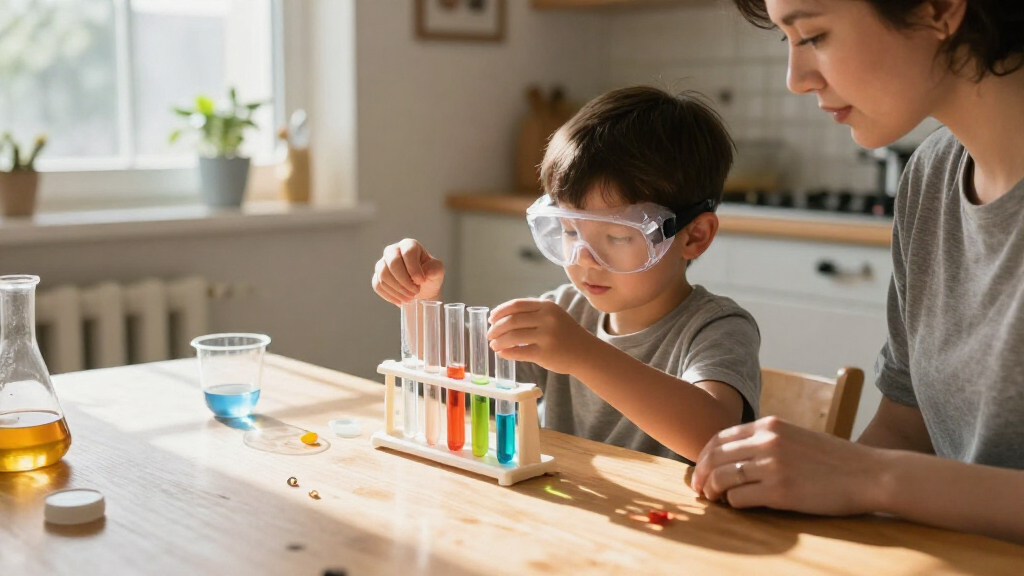

Choosing the right chemistry sets for kids requires balancing safety, educational depth, and engagement. My top recommendation is the UNGLINGA 150 Experiment Science Kit because it offers a wide variety of experiments with clear instructions and high-quality components. For younger children, the Doctor Jupiter My First Science Experiments Kit stands out for its age-appropriate, safe materials that build foundational skills without overwhelming complexity. If you prefer a brand with strong educational backing, the National Geographic Mega Science Lab provides rigorous content suitable for older children. The main tradeoff in this category is between the number of experiments offered and the depth of scientific explanation provided. Continue reading to see how these options compare in detail and which one fits your child’s specific needs.

Prime made for students and young adults
- Fast, free delivery for dorm and study essentials
- Prime Video and Amazon Music included
- Member-only deals
Key Takeaways
- Sets with 150+ experiments often include repetitive or trivial activities, so focusing on kits with 45-100 well-curated experiments yields better engagement.
- The UNGLINGA line dominates the high-volume category but requires more parental supervision for organization than smaller, themed kits.
- Age labeling is inconsistent across brands; some ‘ages 4+’ kits contain small parts unsuitable for younger siblings, while some ‘ages 8+’ kits are too simple for advanced learners.
- National Geographic kits excel in educational rigor and safety standards but often lack the ‘wow factor’ visual reactions found in entertainment-focused sets.
- Reusability is a hidden cost factor; kits with consumable chemicals run out quickly, whereas kits using household staples offer longer-term value.
| UNGLINGA 150 Experiment Science Kit for Kids – Chemistry Lab STEM Toys | 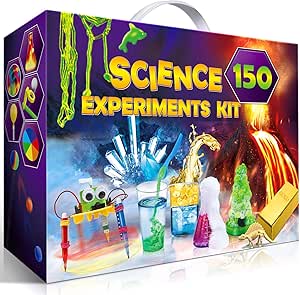 | Best for Broad STEM Variety | Brand: UNGLINGA | Age range: 8 years and up | Experiment count: 150 | VIEW LATEST PRICE | See Our Full Breakdown |
| National Geographic Science Magic Kit for Kids |  | Best for Science-Magic Demonstrations | Brand: Blue Marble | Age range: 8 years and up | Experiments included: 20, plus a booklet with 85+ additional experiments | VIEW LATEST PRICE | See Our Full Breakdown |
| Doctor Jupiter My First Science Experiments Kit for Kids Ages 4+ |  | Best for Preschool and Early Elementary Beginners | Brand: Doctor Jupiter | Model: DJ Junior Science | Age range: 4 years and up | VIEW LATEST PRICE | See Our Full Breakdown |
| UNGLINGA 272-Experiment Science Kit for Kids – Chemistry Set |  | Best for Maximum Experiment Variety | Brand: UNGLINGA | Age range: 8 years and up | Experiment count: 272 | VIEW LATEST PRICE | See Our Full Breakdown |
| Thames & Kosmos Ooze Labs Chemistry Station Experiment Set |  | Best Dedicated Chemistry Station | Brand: Thames & Kosmos | Age range: 6 years and up | Number of pieces: 57 | VIEW LATEST PRICE | See Our Full Breakdown |
| Kids’ Science Kit with 80 Experiments |  | Best for Younger Beginners | Brand: Kuovei | Experiment count: 80 | Recommended age: 6 years and up | VIEW LATEST PRICE | See Our Full Breakdown |
| National Geographic Mega Science Lab: 75 Experiments for Kids Ages 8–12 |  | Best for Variety Beyond Chemistry | Brand: Blue Marble | Age range: 8 years and up | Experiment count: 75 | VIEW LATEST PRICE | See Our Full Breakdown |
| National Geographic Chemistry Set with 45 Experiments for Kids Ages 8–12 |  | Best for Classic Chemistry Activities | Experiment count: 45 in title; included-components field says 100+ | Recommended age: 8 years and up | Educational focus: STEM and chemistry | VIEW LATEST PRICE | See Our Full Breakdown |
| Smartivity My First Science Experiment Kit for Kids 6-14 Years |  | Best for Siblings Sharing a Kit | Brand: Smartivity | Age range: 6–14 years | Experiment count: 50+ | VIEW LATEST PRICE | See Our Full Breakdown |
| National Geographic Amazing Chemistry Set, 100+ Experiments for Ages 8–12 |  | Best for Extending Experiments with Household Supplies | Brand: Blue Marble | Age range: 8 years and up | Experiment count: 100+ total: 15 with included materials and 85 using household items | VIEW LATEST PRICE | See Our Full Breakdown |
| National Geographic Gross Science Kit with 45 Experiments for Kids 8-12 |  | Best for Gross-Out Chemistry | Brand: Blue Marble | Sub-brand: National Geographic | Age range: 8 years and up | VIEW LATEST PRICE | See Our Full Breakdown |
| National Geographic Magic Chemistry Set with 10 Tricks for Kids Ages 8-12 |  | Best for Science-Magic Performances | Brand: Blue Marble | Sub-brand: National Geographic | Age range: 8 years and up | VIEW LATEST PRICE | See Our Full Breakdown |
| UNGLINGA 70-Experiment Science Kit for Kids |  | Best for Broad STEM Variety | Brand: UNGLINGA | Number of experiments: 70 | Recommended age: 8 years and up | VIEW LATEST PRICE | See Our Full Breakdown |
| Discovery Super Reactions Science Kit – 66 Experiments STEM Lab for Kids |  | Best for Guided Chemistry with DIY Extensions | Brand: Discovery | Age range: 8 years and up | Number of experiments: 66 | VIEW LATEST PRICE | See Our Full Breakdown |
| National Geographic Junior Chemistry Set with 50 Experiments |  | Best for Young Beginners | Brand: Blue Marble | Sub-brand: National Geographic | Age range: 4 years and up | VIEW LATEST PRICE | See Our Full Breakdown |
| chemistry sets for kid | Brand | Age range | Experiment count | Model number |
|---|---|---|---|---|
| UNGLINGA 150 Experiment Scienc | UNGLINGA | 8 years and up | 150 | — |
| National Geographic Science Ma | Blue Marble | 8 years and up | — | — |
| Doctor Jupiter My First Scienc | Doctor Jupiter | 4 years and up | More than 100 | — |
| UNGLINGA 272-Experiment Scienc | UNGLINGA | 8 years and up | 272 | — |
| Thames & Kosmos Ooze Labs Chem | Thames & Kosmos | 6 years and up | — | — |
| Kids’ Science Kit with 80 Expe | Kuovei | — | 80 | — |
| National Geographic Mega Scien | Blue Marble | 8 years and up | 75 | NGMEGASCIKIT |
| National Geographic Chemistry | — | — | 45 in title; included-components field says 100+ | NGMEGACHEMX |
| Smartivity My First Science Ex | Smartivity | 6–14 years | 50+ | SMRT1276 |
| National Geographic Amazing Ch | Blue Marble | 8 years and up | 100+ total: 15 with included materials and 85 using household items | NGMEGACHEMAR |
| National Geographic Gross Scie | Blue Marble | 8 years and up | — | NGMEGAGRS |
| National Geographic Magic Chem | Blue Marble | 8 years and up | — | NGSCIMAGIC |
| UNGLINGA 70-Experiment Science | UNGLINGA | — | — | HZDZKH030 |
| Discovery Super Reactions Scie | Discovery | 8 years and up | — | 1019069 |
| National Geographic Junior Che | Blue Marble | 4 years and up | — | — |
More Details on Our Top Picks
UNGLINGA 150 Experiment Science Kit for Kids – Chemistry Lab STEM Toys
The 150-experiment spread makes this a strong choice for families who want chemistry alongside physics and earth science rather than a chemistry-only path. Illustrated, step-by-step directions and included plastic tools give children a starting point for independent activities, while the mix of subjects can keep the kit useful after one kind of experiment loses its appeal. Compared with the Thames & Kosmos Ooze Labs Chemistry Station, which centers on roughly 20 chemistry activities and a dedicated lab setup, this UNGLINGA kit favors breadth over a focused chemistry experience. That larger menu can also feel like a lot for a child who prefers a short, clearly sequenced program. Some projects call for household supplies beyond the kit, so parents should expect occasional preparation and sourcing.
Pros:- 150 activities span chemistry, physics, earth science, and other subjects.
- Illustrated step-by-step instructions help children follow experiments.
- Plastic tools and kid-friendly materials are included for hands-on work.
- The range of topics can sustain interest beyond a single chemistry project.
Cons:- The large experiment count may be overwhelming for some children.
- Some experiments require common household items that are not included.
Best for: Families with children ages 8 and up who want one kit spanning chemistry and other STEM topics, and do not mind gathering a few household supplies.
Not ideal for: Buyers seeking a chemistry-focused station with a compact, curated activity sequence; the wide experiment mix may feel overwhelming, and some projects need extra materials.
- Brand:UNGLINGA
- Age range:8 years and up
- Experiment count:150
- Subjects:Chemistry, physics, earth science, and more
- Material:Plastic
- Dimensions:8.67 x 11.42 x 3.94 inches
Our verdict“Choose this for an 8-and-up child who wants a broad assortment of hands-on STEM activities rather than a chemistry-only set.”
National Geographic Science Magic Kit for Kids
This kit suits children who are drawn to the surprise and performance side of science: it supplies materials for 20 experiments and adds a booklet with more than 85 further magic experiments. The manual format and no-battery design make it easy to use for demonstrations at home, though the supplied materials cover only part of the activity collection. Compared with the UNGLINGA 150 Experiment Science Kit, this is a narrower, more theatrical option, not a broad mix of chemistry and other sciences. It also differs from the Ooze Labs Chemistry Station, which offers dedicated chemistry equipment and experiment cards. The one-player design is a notable limit for siblings hoping to work together, and the magic framing may be less appealing to children who want a conventional chemistry lab.
Pros:- Includes materials for 20 hands-on magic experiments.
- Booklet adds more than 85 additional experiment ideas.
- Manual operation means no batteries are required.
- The performance angle can make science demonstrations engaging.
Cons:- Designed for one player, which limits shared sibling or group use.
- The supplied materials cover 20 experiments, not the full booklet collection.
- Magic demonstrations offer a less direct chemistry-lab focus than Ooze Labs.
Best for: Ages 8 and up who enjoy performing science tricks independently and are comfortable using a booklet for additional activities.
Not ideal for: Families looking for a chemistry-focused lab with shared activities or a large supply of included experiment materials; many listed activities are booklet-based.
- Brand:Blue Marble
- Age range:8 years and up
- Experiments included:20, plus a booklet with 85+ additional experiments
- Players:1
- Power source:Manual; no batteries required
- Item weight:1.5 pounds
- Dimensions:8.86 x 3.15 x 12 inches
- Materials:Metal and paper
Our verdict“Pick this for a solo child who prefers science tricks and demonstrations over a conventional chemistry station.”
Doctor Jupiter My First Science Experiments Kit for Kids Ages 4+
With an age range starting at 4 years, this is the gentlest entry point in this group for young children who need visual guidance and simple hands-on exploration. The kit includes beakers, a flask, goggles, a tray, and familiar ingredients such as food colorings and starches; the illustrated instructions and bonus booklet give adults a way to guide activities without having to assemble a lab from scratch. Its 100+ experiments offer more variety than the roughly 20 activities in the Ooze Labs Chemistry Station, but the age focus is quite different: older children may want more challenging chemistry. Compared with the UNGLINGA kits for ages 8 and up, Doctor Jupiter is more accessible to little learners, though some experiments can make a mess and call for adult cleanup.
Pros:- Designed for young children, with an age range beginning at 4 years.
- Includes beakers, a flask, goggles, tray, and other hands-on tools.
- Illustrated instructions support guided parent-child activities.
- Includes more than 100 experiments and a bonus experiment booklet.
Cons:- Some activities can create messes that require adult cleanup.
- The age focus may leave older children wanting more challenging experiments.
Best for: Parents of children ages 4–8 who want guided, screen-free science activities with basic lab tools and adult participation.
Not ideal for: Older children seeking demanding chemistry experiments, or caregivers who want activities that require little setup or cleanup.
- Brand:Doctor Jupiter
- Model:DJ Junior Science
- Age range:4 years and up
- Experiment count:More than 100
- Included equipment:Beakers, conical flask, spatula, stirring sticks, spray bottles, cups, funnel, goggles, and tray
- Included materials:Food essence, food additives, dried leaves, and food colors
- Instructions:Illustrated instruction manual and bonus experiment booklet
- Safety information:Meets ASTM F963-17 toy safety standards
Our verdict“Choose Doctor Jupiter for a young beginner who benefits from adult-guided instructions and age-appropriate hands-on activities.”
UNGLINGA 272-Experiment Science Kit for Kids – Chemistry Set
For families prioritizing an unusually large activity menu, this 272-experiment kit offers a wider assortment than the UNGLINGA 150 Experiment Science Kit. The described projects range from volcano eruptions and crystal growing to holographic projections, with test tubes, beakers, a flask, and an illustrated guide to support hands-on work. That breadth makes it a better match for children who enjoy sampling different activities than for those who want a focused chemistry curriculum. By comparison, the Thames & Kosmos Ooze Labs Chemistry Station has fewer experiments but a dedicated station and cards that keep each activity close at hand. The UNGLINGA tools are plastic, which keeps the kit child-oriented but may feel less substantial than realistic lab equipment; younger users may also find the huge selection hard to choose from.
Pros:- Offers 272 hands-on experiments for extensive activity variety.
- Includes test tubes, beakers, and a conical flask for lab-style play.
- Illustrated guide helps children follow experiment steps.
- Activities include crystal growing and volcano experiments.
Cons:- The large experiment menu may overwhelm younger children.
- Plastic components may feel less substantial than metal lab tools.
Best for: Children ages 8 and up who enjoy choosing among many different experiments and families seeking a broad, longer-running activity collection.
Not ideal for: Younger children who need a tightly guided sequence, or buyers who prefer sturdier-feeling lab tools and a compact chemistry curriculum.
- Brand:UNGLINGA
- Age range:8 years and up
- Experiment count:272
- Material:Plastic
- Equipment:Test tubes, beakers, and conical flask
- Guide:Illustrated experiment guide
- Dimensions:7.7 x 9.8 x 4 inches
- Example activities:Volcano eruptions, crystal growing, and holographic projections
Our verdict“Pick this for an 8-and-up child who values an expansive activity menu more than a dedicated, tightly organized chemistry station.”
Thames & Kosmos Ooze Labs Chemistry Station Experiment Set
The chemistry-station format is this kit’s key advantage: its 57 pieces include familiar lab vessels and tools, while experiment cards clip onto the station for easy reference during activities. Around 20 experiments cover effects such as glowing slime, fizzing reactions, and chromatography, giving children a more focused chemistry experience than the broader UNGLINGA 150- and 272-experiment kits. It is also rated for ages 6 and up, making it an option for younger children than those two sets, though adult supervision remains appropriate for hands-on activities. The tradeoff is a smaller activity count, and chemical supplies are finite, so frequent use may mean replacing materials. Small parts may also be a handful for younger children, despite the organized station.
Pros:- 57 pieces provide a substantial collection of lab-style equipment.
- Approximately 20 experiments focus on chemistry, including slime and chromatography.
- Experiment cards clip onto the station for convenient reference.
- Uses non-hazardous chemicals and does not contain borax.
Cons:- The experiment count is much lower than the UNGLINGA 150- and 272-experiment kits.
- Chemical supplies are finite and may need replacement after extensive use.
- Numerous small parts may be difficult for younger children to manage.
Best for: Families with children ages 6 and up who want a dedicated chemistry setup, easy-to-follow experiment cards, and a defined collection of activities.
Not ideal for: Buyers seeking hundreds of experiments, a broad range of science subjects, or a kit whose chemical supplies can be reused indefinitely.
- Brand:Thames & Kosmos
- Age range:6 years and up
- Number of pieces:57
- Number of experiments:Approximately 20
- Included components:Chemistry station, experiment cards, vessels, syringe, measuring cup, pipette, spatula, tube, petri dish, funnel, chemicals, and manual
- Safety:Non-hazardous chemicals; does not contain borax
- Warranty:1 year against manufacturer defects
Our verdict“Choose Ooze Labs for a child who wants a chemistry-centered station with organized experiment cards rather than the broadest possible activity count.”
Kids’ Science Kit with 80 Experiments
For families introducing hands-on science around age six, this kit pairs a large activity count with familiar, visual experiments such as a volcano eruption, rainbow effects, and balloon inflation. Its goggles, gloves, droppers, test tubes, and measuring tools give children equipment to handle rather than relying entirely on demonstrations. Compared with the National Geographic Mega Science Lab, this pick is aimed at a younger starting age and stays focused on activity variety rather than mixing chemistry with geology and science magic. That breadth does not mean every activity is equally simple: chemical materials need careful adult oversight, and the listing gives inconsistent age information. The tiny listed dimensions also do not clarify how much storage space the complete kit needs. I’d choose it for an adult-led first science kit, not as a fully independent activity set.
Pros:- Lists 80 guided experiments, giving families many activities to work through
- Includes goggles, gloves, measuring tools, test tubes, and droppers for hands-on practice
- Combines visual activities such as rainbow effects, volcanoes, and balloon inflation
- Recommended for children ages six and up in the supplied specs
Cons:- Experiments involving chemical materials call for attentive adult supervision
- Age guidance varies across the listing, making the intended starting age less clear
- The provided item dimensions are unusually small and do not offer useful storage guidance
Best for: Families with children around age six who want varied, adult-guided experiments and basic lab tools in one kit
Not ideal for: Caregivers seeking a clearly age-labeled set for independent use, or older children wanting a focused, progressive chemistry course
- Brand:Kuovei
- Experiment count:80
- Recommended age:6 years and up
- Item weight:0.75 kg
- Item dimensions:1 x 1 x 1 inches
- Included components:Goggles, chemical materials, petri dishes, ping-pong ball, pigments, effervescent tablets, measuring cups, test tubes, gloves, rubber bands, droppers, straws, toothpicks, rotary needles, measuring spoons, balloons, twisting rods, rainbow candy, color-changing flower, and other items
Our verdict“Choose this for a younger child who will explore varied experiments with an adult nearby, but skip it if you need unambiguous age guidance or independent use.”
National Geographic Mega Science Lab: 75 Experiments for Kids Ages 8–12
This is the broadest subject sampler in this group: its 75 activities span Earth science, chemistry, and science magic, and the kit includes rock, mineral, and crystal specimens. That mix suits a child whose interest in chemistry may sit alongside collecting stones or trying visual tricks. Compared with the National Geographic Chemistry Set with 45 Experiments, the Mega Science Lab trades a more chemistry-centered experience for more subject variety. It also gives families a guide to 30 further activities using household items, though those bonus projects depend on having the suggested materials at home. The stated age range starts at eight years, so it is less suited to the younger audience of the Kuovei 80-experiment kit. I’d rank it for curious children who want several kinds of science, rather than a concentrated chemistry sequence.
Pros:- Combines 45 kit activities with a guide to 30 more household-item experiments
- Covers Earth science, chemistry, and science magic in one set
- Includes rock, mineral, and crystal specimens for tangible exploration
- Names critical thinking, observation, and STEM among its educational objectives
Cons:- Its three-subject mix offers less chemistry focus than the National Geographic Chemistry Set
- The 30 bonus activities require families to supply common household items
- Recommended age begins at eight, limiting its fit for younger beginners
Best for: Children ages eight and up who enjoy chemistry alongside rocks, minerals, crystals, and science-themed tricks
Not ideal for: Families seeking a chemistry-only kit or children younger than eight who need a lower age recommendation
- Brand:Blue Marble
- Age range:8 years and up
- Experiment count:75
- Subjects:Earth science, chemistry, science magic
- Educational objectives:Critical thinking, observation skills, STEM
- Included components:Earth science kit, chemistry kit, science magic kit
- Model number:NGMEGASCIKIT
Our verdict“Pick this for an eight-and-up science enthusiast who wants chemistry as one part of a wider kit, not as the sole focus.”
National Geographic Chemistry Set with 45 Experiments for Kids Ages 8–12
Volcanoes, a geyser, and a launched rocket give this set a clear chemistry-lab feel, while its illustrated, kid-friendly instructions help children follow each activity and encounter safe science practices. Compared with the National Geographic Mega Science Lab, this is the more chemistry-directed choice; the Mega Science Lab adds Earth science and science magic instead. There is, however, a substantial listing inconsistency: the title promises 45 experiments, while the included-components field refers to a Mega Science Kit with 100+ easy experiments. Buyers cannot tell from the supplied details which count or kit configuration applies. The listed dimensions and weight suggest a compact package, but they do not resolve that uncertainty. I’d favor this for a child drawn to classic reaction demonstrations, provided the experiment count is confirmed before purchase.
Pros:- Features hands-on volcano, geyser, and rocket activities
- Illustrated instructions support step-by-step participation
- Introduces basic chemistry alongside safe scientific practices
- Does not require batteries
Cons:- The title says 45 experiments while the included-components field says 100+
- The supplied information does not clarify the discrepancy or confirm the kit contents
- The listing provides limited detail about the specific tools and materials included
Best for: Families shopping for an eight-and-up child who wants guided, recognizable chemistry activities such as volcano and geyser experiments
Not ideal for: Buyers who need a reliably stated activity count or a clearly documented list of included experiment materials
- Experiment count:45 in title; included-components field says 100+
- Recommended age:8 years and up
- Educational focus:STEM and chemistry
- Included-components listing:Mega Science Kit with 100+ easy experiments
- Item dimensions:8.78 x 3.19 x 11.93 inches
- Item weight:2.9 pounds
- Batteries:Not required
- Model number:NGMEGACHEMX
Our verdict“Consider this for classic guided chemistry activities if the seller confirms the actual experiment count and kit contents first.”
Smartivity My First Science Experiment Kit for Kids 6-14 Years
Smartivity’s main distinction is its unusually broad stated age span: ages six to fourteen, with more than 50 hands-on science and chemistry activities. That could make it easier for siblings at different stages to share a kit than the National Geographic Chemistry Set, which is listed for ages eight and up. The supplied contents, though, are described as 26 parts and an instruction manual, and the data does not itemize those parts or name particular experiments. A wide age range also does not mean every activity will suit every child; the youngest users may need more help than the older end of the range. Unlike the Kuovei kit, no goggles or gloves are listed, so adults may need to arrange suitable protective gear. I’d choose it for shared family exploration, not for buyers who want a clearly itemized chemistry lab.
Pros:- Lists more than 50 hands-on science and chemistry experiments
- Broad stated age range may suit families with children at different stages
- Includes an instruction manual with the kit
- Promotes STEM learning, problem-solving, and hands-on exploration
Cons:- The supplied listing does not name specific experiments or explain how activities vary by age
- Only 26 parts are specified, with no detailed component inventory
- Goggles and other protective accessories are not listed among the included components
- The youngest children may find some activities too complex without adult help
Best for: Families with siblings from early elementary through early teens who want one kit for shared science activities
Not ideal for: Buyers who want named experiments, detailed tool listings, or included protective gear for young children
- Brand:Smartivity
- Age range:6–14 years
- Experiment count:50+
- Number of items:26
- Included components:26 parts and instruction manual
- Number of packs:1
- Model number:SMRT1276
- Manufacturer:Smartivity Labs Pvt Ltd
Our verdict“Choose Smartivity for siblings who can share adult-guided experiments, but pick a more fully itemized kit if protective equipment and activity details are priorities.”
National Geographic Amazing Chemistry Set, 100+ Experiments for Ages 8–12
This set separates its activity count into two very different parts: 15 experiments use included materials, while 85 more are presented as household-item projects. That split can stretch the kit beyond its boxed supplies for families who enjoy finding and gathering materials, but the 100+ headline should not be read as 100 fully supplied experiments. The included tools—test tubes, beakers, and pipettes—give children familiar lab equipment, and the supplied activities include color-changing solutions, glowing test tubes, and a bouncy ball. Compared with the National Geographic Chemistry Set with 45 Experiments, this option is more explicit about the limited number of experiments with kit materials; the 45-experiment listing, by contrast, has a confusing count discrepancy of its own. I’d choose this for a household comfortable sourcing supplies, not for a ready-to-run activity in every session.
Pros:- Supplies materials for 15 experiments and adds a guide to 85 household-item activities
- Includes test tubes, beakers, and pipettes for hands-on lab-style work
- Features varied activities including crystals, color-changing solutions, glowing test tubes, and a bouncy ball
- Lists a clear age recommendation of eight years and up
Cons:- Only 15 experiments have materials included
- The additional 85 experiments require families to find common household items
- The 100+ headline may overstate how many activities are ready to perform straight from the box
Best for: Families with children ages eight and up who have common household supplies available and like extending experiments beyond a kit
Not ideal for: Gift buyers or families who expect materials for all 100+ activities to come in the box
- Brand:Blue Marble
- Age range:8 years and up
- Experiment count:100+ total: 15 with included materials and 85 using household items
- Educational objective:STEM
- Included tools:Test tubes, beakers, and pipettes
- Dimensions:8.78 x 3.19 x 11.93 inches
- Weight:1.8 pounds
- Model number:NGMEGACHEMAR
Our verdict“Pick this for a resourceful family that welcomes household-supply experiments, but not if you expect a box containing materials for all 100+ activities.”
National Geographic Gross Science Kit with 45 Experiments for Kids 8-12
Gross-themed chemistry is the draw here: slime, brain dissection, and other deliberately yucky activities give kids a playful way to encounter polymers, chemical reactions, and pH. The kit supplies materials for 15 experiments, while instructions for 30 more use household items, so the headline total offers more ideas than ready-to-run activities. Compared with the National Geographic Junior Chemistry Set, this is a better match for older kids who like gross jokes than for younger first-timers; the Junior set starts at age four and emphasizes child-safe tools. Its mix of supplied and household materials also makes it less immediately complete than the National Geographic Magic Chemistry Set, which lists all necessary tools and materials. Skip it if gross themes put your child off or you want every activity’s materials in the box.
Pros:- Supplies materials for 15 experiments and adds instructions for 30 household-item activities.
- Uses slime and other gross themes to introduce polymers, reactions, and pH.
- Designed for children ages eight and up.
Cons:- Materials for 30 of the listed experiments are not included.
- Vomit- and booger-themed activities may not suit every child.
Best for: Families with children ages eight and up who enjoy gross-out humor and are happy to gather household supplies for additional experiments.
Not ideal for: Parents seeking a younger child’s first chemistry kit or a set with materials supplied for every listed activity.
- Brand:Blue Marble
- Sub-brand:National Geographic
- Age range:8 years and up
- Number of experiments:45
- Experiments with included materials:15
- Additional household-item activities:30
- Educational objective:STEM
- Model number:NGMEGAGRS
Our verdict“Choose this for an older child who finds gross science motivating and can work with an adult to source extra materials.”
National Geographic Magic Chemistry Set with 10 Tricks for Kids Ages 8-12
This kit makes chemistry a small performance: children learn 10 experiments designed as tricks, including floating coins and instant snow, then use the wand, gloves, and illustrated guide to present them. The guide connects the illusion to its scientific explanation, making the format more than a collection of props. Compared with the larger UNGLINGA 70-Experiment Science Kit, it offers far fewer activities and a narrower chemistry experience, but its magician framing gives each experiment a clear reason to repeat and explain it. The listed tools and materials support getting started without sourcing household items, unlike kits that pair included experiments with DIY ideas. The tradeoff is limited breadth: children seeking a long sequence of varied lab activities may outgrow its 10 tricks sooner. Its age guidance also starts at eight.
Pros:- Presents 10 chemistry experiments as magic tricks.
- Includes a wand, white gloves, tools, and an illustrated guide.
- Explains the science behind the illusions.
- Listed as having the tools and materials needed to get started.
Cons:- Ten activities provide less variety than the UNGLINGA 70-Experiment kit.
- Its magic-performance theme may not appeal to children who prefer straightforward lab activities.
- Designed for ages eight and up, so it is not aimed at younger beginners.
Best for: Children ages eight and up who enjoy performing for family and want chemistry demonstrations with explanations they can share.
Not ideal for: Families looking for a broad experiment collection, or children younger than eight who need an age-targeted starter set.
- Brand:Blue Marble
- Sub-brand:National Geographic
- Age range:8 years and up
- Number of experiments:10
- Included components:Magic wand, white gloves, experiment guide, chemistry tools
- Manufacturer:JMW Sales, Inc.
- Model number:NGSCIMAGIC
Our verdict“Pick this for a budding performer who values chemistry tricks and explanations over a high experiment count.”
UNGLINGA 70-Experiment Science Kit for Kids
Variety is its main advantage: the 70 activities range from crystal growing and volcanoes to balloon rockets and fruit circuits, giving children ways to move between chemistry and other hands-on STEM topics. An illustrated guide explains both the steps and the science, which helps the set feel more instructive than a list of projects. Compared with the National Geographic Magic Chemistry Set, UNGLINGA is much broader but lacks a single playful performance theme; compared with the Discovery Super Reactions Science Kit, its description does not separate activities into included-material and household-item groups. The compact 11-by-8.66-by-3.54-inch box is easy to store, though the supplied details do not say which experiments have all materials included. Some activities may need adult supervision, so the high activity count should not be read as a promise of independent play.
Pros:- Offers 70 activities across chemistry and broader STEM topics.
- Includes an illustrated guide explaining procedures and scientific ideas.
- Combines projects such as crystal growing, volcanoes, and fruit circuits.
- Compact listed dimensions make storage straightforward.
Cons:- Some experiments may require adult supervision.
- The provided product details do not specify which activity materials are included.
- Its broad STEM mix is less focused on chemistry than a dedicated chemistry set.
Best for: Families with children ages eight and up who want one compact set covering chemistry alongside other STEM activities.
Not ideal for: Buyers who need a clearly specified list of included ingredients or want a chemistry-only kit with a narrower focus.
- Brand:UNGLINGA
- Number of experiments:70
- Recommended age:8 years and up
- Set name:Comprehensive Science Experiment Set
- Material:Plastic
- Dimensions:11 x 8.66 x 3.54 inches
- Model number:HZDZKH030
Our verdict“Choose this for a child who wants many kinds of projects in one compact kit and has adult help available when needed.”
Discovery Super Reactions Science Kit – 66 Experiments STEM Lab for Kids
The 26 guided experiments with included materials give this kit a clearer starting point than sets whose activity totals lean heavily on household supplies; 40 more DIY ideas extend the play once families are ready to gather extra items. Its listed components—test tubes, a volcano mold, slime mix, citric acid, and red cabbage powder—support reaction-focused activities such as volcanoes, slime, and glowing potions. Compared with the National Geographic Gross Science Kit, Discovery offers a more explicit split between supplied experiments and DIY projects, without leaning as strongly on gross humor. It also has fewer total activities than the UNGLINGA 70-Experiment Science Kit, but the chemistry and reaction emphasis is more direct. Adult supervision is recommended, and the extra 40 ideas still depend on household materials.
Pros:- Clearly distinguishes 26 guided activities with included materials from 40 DIY ideas.
- Includes lab tools and chemistry materials such as test tubes, citric acid, and red cabbage powder.
- Focuses on reaction-based activities including volcanoes, slime, and glowing potions.
- Guide provides step-by-step instructions.
Cons:- Adult supervision is recommended for safe use.
- Materials for the 40 DIY ideas are not included.
- Has fewer listed experiments than the UNGLINGA 70-Experiment kit.
Best for: Families with children ages eight and up who want a set of ready-to-start chemistry activities plus additional projects using household supplies.
Not ideal for: Children expected to work without adult supervision, or buyers who want materials provided for all 66 activities.
- Brand:Discovery
- Age range:8 years and up
- Number of experiments:66
- Guided experiments with included materials:26
- DIY activities:40
- Included components:Volcano mold, test tubes, slime mix, citric acid, red cabbage powder, balloons, instruction guide
- Educational objective:STEM, Chemistry, Critical Thinking
- Model number:1019069
Our verdict“Choose Discovery for a chemistry-focused set with a useful ready-to-run core, provided an adult can support experiments and source supplies for the DIY extras.”
National Geographic Junior Chemistry Set with 50 Experiments
Among these five options, this is the clearest fit for a younger first-time experimenter: it is listed for ages four and up and includes more than 20 child-safe lab tools, with illustrated steps to guide activities using kit contents and common household items. That makes it a better starting point for early learners than the National Geographic Gross Science Kit or Discovery Super Reactions Science Kit, both aimed at ages eight and up. Its 50 experiments offer plenty of activity ideas, though the household-item requirement means the count does not mean every project is ready from the box. The listed test tubes and goggles help create a lab-like experience, but parents should still check each activity’s directions and provide suitable supervision. Older children seeking more advanced chemistry or reaction challenges may prefer the Discovery set.
Pros:- Designed for children as young as four.
- Includes more than 20 child-safe lab tools, including test tubes and goggles.
- Illustrated, step-by-step instructions support younger readers and learners.
- Offers 50 activities using included tools and common household items.
Cons:- Some activities depend on household items rather than kit-supplied materials.
- Its junior positioning may be less engaging for older children seeking advanced chemistry.
- Adult supervision remains appropriate for activities involving household materials.
Best for: Families introducing children ages four and up to simple, supervised science activities with child-safe tools and illustrated instructions.
Not ideal for: Older children seeking more advanced chemistry challenges, or families who want every experiment’s materials supplied in the kit.
- Brand:Blue Marble
- Sub-brand:National Geographic
- Age range:4 years and up
- Number of experiments:50
- Lab tools:20+
- Included components:Test tubes, goggles, and other lab tools
- Dimensions:11 x 4.22 x 9.64 inches
- Weight:0.72 kg
- Battery required:No
Our verdict“Pick this as a first chemistry set for a young child who benefits from child-safe tools and clear visual instructions.”

How We Picked
I evaluated these products based on four core criteria: age appropriateness, experiment variety, safety profile, and educational value. I looked for kits that provide clear instructions, require minimal additional purchases, and offer a balance between immediate fun and scientific learning. Products were ranked higher if they included comprehensive safety guidelines and if the experiments demonstrated clear scientific principles rather than just visual tricks.
I also considered the longevity of interest. Kits that offer a wide range of difficulty levels or themed experiments (like slime, crystals, or color changes) were prioritized over those with repetitive activities. Brand reputation for safety and customer support also played a role in the final ranking.
Factors to Consider When Choosing Chemistry Sets For Kids
Selecting a chemistry set involves more than just counting the number of experiments. You need to consider your child’s maturity level, your tolerance for mess, and what you hope they learn from the experience. Here are the key factors to weigh before making a purchase.Age Appropriateness and Maturity Level
Age recommendations on packaging are often marketing tools rather than strict guidelines. A set labeled for ages 8-12 might contain experiments too simple for an advanced 10-year-old or too complex for a beginner. You should read the specific experiment list to gauge if the concepts align with your child’s current understanding. Younger children benefit from kits focusing on sensory play and basic reactions, while older kids need sets that introduce variables and hypothesis testing. Always check for small parts if younger siblings are present, regardless of the main user’s age.
Safety Standards and Supervision Requirements
All reputable sets meet basic safety standards, but the level of active supervision required varies widely. Some kits involve mild acids, bases, or heating elements that demand constant adult presence. Others use household items like vinegar and baking soda, allowing for more independent play. Determine how much time you can dedicate to overseeing the experiments. If you need a set your child can use with minimal intervention, prioritize kits that explicitly state ‘no hazardous chemicals’ and avoid those requiring heat sources or sharp tools.
Experiment Quality vs. Quantity
It is tempting to buy the kit with the highest number of experiments, but quantity often dilutes quality. A set with 300 experiments may include trivial activities like mixing colors, which offers little scientific insight. A well-curated set with 50 distinct experiments that teach specific principles (like pH, density, or crystallization) provides deeper learning. Look for reviews that mention the uniqueness of the activities. I recommend prioritizing kits where each experiment teaches a different concept over those that repeat similar reactions with different colors.
Mess Management and Cleanup Effort
Chemistry experiments can be messy, and some kits generate more waste than others. Sets involving slime, goo, or colored liquids require significant cleanup and can stain surfaces. Kits using dry chemicals or small-scale reactions are easier to manage. Consider where your child will conduct experiments; a kitchen counter might not be suitable for a set that produces sticky residue. Look for kits that include protective mats or easy-to-clean containers. Understanding the cleanup burden beforehand prevents frustration and ensures the activity remains enjoyable for everyone.
Educational Depth and Instruction Quality
The effectiveness of a chemistry set depends heavily on the quality of its instructions. Look for kits that explain the ‘why’ behind each reaction, not just the ‘how’. Clear diagrams, step-by-step photos, and scientific explanations help children connect the activity to real-world concepts. Poorly written instructions can lead to failed experiments and frustration. Check if the manual is age-appropriate in its language and if it encourages critical thinking by asking questions. A set that acts as a teacher rather than just a list of steps adds significant value.
Frequently Asked Questions
Are chemistry sets safe for children with allergies?
Safety for children with allergies requires careful review of the ingredient list, which is often printed on the box or available on the manufacturer’s website. Many kits contain common allergens like latex, gluten, or specific food dyes. If your child has known sensitivities, look for sets that use inert chemicals or clearly label all components. You may need to substitute certain ingredients with safer alternatives found in your kitchen. Always conduct a patch test or consult with a pediatrician if you are unsure about specific compounds.
Do I need to buy extra supplies for these kits?
Most chemistry sets are designed to be self-contained, but many rely on common household items for certain experiments. Check the product description for a ‘supplies needed’ list. Kits that require you to buy baking soda, vinegar, or salt separately can become more expensive over time. However, this approach often reduces packaging waste and allows for larger-scale experiments. If you prefer a plug-and-play experience, choose kits that include all necessary reagents, even if the initial price is higher.
How do I store a chemistry set to keep it fresh?
Proper storage extends the life of your chemistry set and ensures experiments work correctly. Keep chemicals in a cool, dry place away from direct sunlight, which can degrade certain compounds. Ensure all containers are sealed tightly to prevent moisture absorption or evaporation. Some reagents, especially liquids, may have expiration dates; check these before starting experiments. Organizing components in the original case with dividers helps prevent spills and makes it easier for children to find what they need.
What is the difference between a chemistry set and a STEM kit?
While the terms are often used interchangeably, there is a distinction. A chemistry set specifically focuses on chemical reactions, molecular structures, and lab techniques. A STEM kit is broader and may include biology, physics, or engineering projects alongside chemistry. If your child is specifically interested in mixing substances and understanding reactions, a dedicated chemistry set offers more depth. If they enjoy a variety of scientific disciplines, a broader STEM kit might provide more diverse engagement opportunities.
Can two children share one chemistry set?
Sharing a chemistry set is possible but requires careful management of resources. Many kits contain single-use packets or limited quantities of reagents, meaning two children might exhaust the supplies after a few experiments. Look for kits with larger volumes of common chemicals or those that use household staples, which are easier to replenish. You may also need additional glassware or tools if the kit only includes one set of equipment. Planning ahead for shared use ensures both children have a positive experience without competition for materials.
Conclusion
Choosing the right chemistry sets for kids depends on your child’s age, your supervision capacity, and their specific interests. For a balanced mix of variety and quality, the UNGLINGA 150 Experiment Science Kit remains my top pick for its comprehensive content. If you are looking for the best value for younger children, the Doctor Jupiter My First Science Experiments Kit offers safe, simple activities that build confidence. For parents seeking rigorous educational content backed by a trusted brand, the National Geographic Mega Science Lab is the ideal choice. Ultimately, the best set is one that matches your child’s curiosity level and your family’s lifestyle, ensuring that science remains a fun and accessible adventure.