
A science reference books set can serve wildly different purposes — a curriculum-supporting study guide for a middle schooler, a visual encyclopedia box set for a curious 8-year-old, or a laminated quick reference for a college student — and the best choice depends on which job you need done. For most buyers, DK’s Knowledge Encyclopedia Boxset of 8 Books is the strongest all-around pick because it covers the broadest range of science topics with the visual depth DK is known for. If budget is the constraint, the Everything You Need to Ace Science Big Fat Notebook delivers more exam-relevant value per dollar than any encyclopedia on this list, while Science: The Definitive Visual Guide stands out as the most authoritative single-volume option for teens and adults. The main tradeoff you’ll face is breadth versus depth: multi-book children’s box sets look impressive on a shelf but often repeat content, whereas single-volume and study-guide formats pack in more usable knowledge. Read on for the full breakdown of all 12 options.

Prime made for students and young adults
- Fast, free delivery for dorm and study essentials
- Prime Video and Amazon Music included
- Member-only deals
Key Takeaways
- Visual encyclopedia box sets (DK Knowledge Encyclopedia line) dominated the top spots because their illustrated spreads make complex science concepts accessible without dumbing them down — but expect overlapping content if you buy multiple sets from the same publisher.
- The Big Fat Notebook study guides were the only picks built around curriculum standards, making them far better for test prep than any encyclopedia, though they sacrifice the browsing appeal that makes encyclopedias engaging.
- QuickStudy laminated guides are the cheapest options reviewed but serve a completely different buyer — they condense university-level material into reference sheets, not children’s learning tools.
- Several 6-book children’s collections reviewed here are near-duplicates of each other with different packaging; price per book varied by over 40% for nearly identical content.
- Age grading was the single most common mismatch: buyers frequently purchase encyclopedias pitched at 8–12 year olds for teens, who outgrow the simplified explanations within a year.
| Knowledge Encyclopedia: The World as You’ve Never Seen It Before | 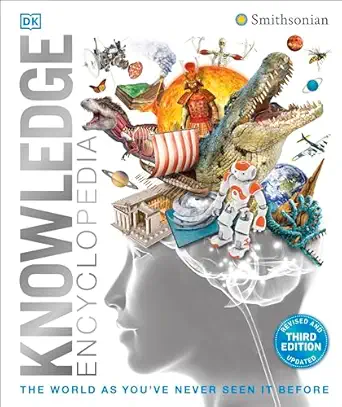 | Best Overall | Format: Hardcover | Publisher: DK | Coverage: Science, history, geography, technology | VIEW LATEST PRICE | See Our Full Breakdown |
| National Geographic Little Kids First Big Book of Science |  | Best for Youngest Readers | Format: Hardcover | Publisher: National Geographic Kids | Target age: 3 to 7 years | VIEW LATEST PRICE | See Our Full Breakdown |
| Materials Science: A QuickStudy Laminated Reference Guide |  | Best Compact Reference | Format: Laminated quick-reference guide | Publisher: QuickStudy / BarCharts | Length: 6 pages | VIEW LATEST PRICE | See Our Full Breakdown |
| Forensic Science: QuickStudy Laminated Reference & Study Guide |  | Best for Exam Prep on the Go | Format: Laminated reference and study guide | Publisher: QuickStudy / BarCharts | Length: 6 pages | VIEW LATEST PRICE | See Our Full Breakdown |
| Everything You Need to Ace Computer Science and Coding in One Big Fat Notebook |  | Best Study Guide for Middle Schoolers | Format: Paperback study guide | Publisher: Workman Publishing | Series: Big Fat Notebooks | VIEW LATEST PRICE | See Our Full Breakdown |
| Space Collection of 6 Books: Knowledge Encyclopedia for Children |  | Best for Young Astronomers | Format: Physical book collection | Number of Books: 6 | Subject Focus: Space, planets, stars, space exploration | VIEW LATEST PRICE | See Our Full Breakdown |
| Science Knowledge Encyclopedia for Children: Collection of 6 Books (Box Set) |  | Best General-Science Starter Set | Format: Boxed set | Number of Books: 6 | Subject Focus: General science, multiple topics | VIEW LATEST PRICE | See Our Full Breakdown |
| Knowledge Encyclopedia: Human Body |  | Best Single-Subject Deep Dive | Format: Single hardcover-style encyclopedia | Number of Books: 1 | Subject Focus: Human body, anatomy, biology | VIEW LATEST PRICE | See Our Full Breakdown |
| Science Essentials: Science Made Easy Boxed Set (6 Books) |  | Best for Reluctant Readers | Format: Boxed set | Number of Books: 6 | Subject Focus: General science, simplified concepts | VIEW LATEST PRICE | See Our Full Breakdown |
| Knowledge Encyclopedia – Boxset of 8 Books for Children |  | Best Breadth per Dollar | Format: Boxed set | Number of Books: 8 | Subject Focus: General knowledge across multiple subjects | VIEW LATEST PRICE | See Our Full Breakdown |
| Science: The Definitive Visual Guide |  | Best Visual Reference for Lifelong Learners | Format: Hardcover single-volume visual reference | Coverage: All major scientific disciplines and history of science | Reading Level: Young adult to adult | VIEW LATEST PRICE | See Our Full Breakdown |
| Everything You Need to Ace Science in One Big Fat Notebook: The Complete Middle School Study Guide |  | Best Study Guide for Middle Schoolers | Format: Paperback notebook-style study guide | Target Level: Middle school (grades 6-8) | Content Style: Student-note layout with diagrams, highlighted terms, and mnemonics | VIEW LATEST PRICE | See Our Full Breakdown |
| science reference books set | Format | Reading level | Publisher |
|---|---|---|---|
| Knowledge Encyclopedia: The Wo | Hardcover | Ages 8 to adult | DK |
| National Geographic Little Kid | Hardcover | — | National Geographic Kids |
| Materials Science: A QuickStud | Laminated quick-reference guide | — | QuickStudy / BarCharts |
| Forensic Science: QuickStudy L | Laminated reference and study guide | — | QuickStudy / BarCharts |
| Everything You Need to Ace Com | Paperback study guide | — | Workman Publishing |
| Space Collection of 6 Books: K | Physical book collection | Introductory | — |
| Science Knowledge Encyclopedia | Boxed set | Introductory to intermediate | — |
| Knowledge Encyclopedia: Human | Single hardcover-style encyclopedia | Introductory to intermediate | — |
| Science Essentials: Science Ma | Boxed set | Beginner | — |
| Knowledge Encyclopedia | Boxed set | Introductory | — |
| Science: The Definitive Visual | Hardcover single-volume visual reference | Young adult to adult | DK |
| Everything You Need to Ace Sci | Paperback notebook-style study guide | — | — |
More Details on Our Top Picks
Knowledge Encyclopedia: The World as You’ve Never Seen It Before
This is the pick I would put at the top of any science reference shelf, because it does what the narrower titles in this roundup can’t: it ties science to history, geography, and technology in one visually unified volume. Compared with the Knowledge Encyclopedia – Boxset of 8 Books for Children, it trades sheer volume for a single, cohesive reading experience that works just as well on a coffee table as at a desk. The cutaway illustrations and 3D-style renderings do much of the teaching, which makes dense topics approachable for a wide age range. The tradeoff is depth — this surveys broadly rather than deeply, so a student who needs exam-grade detail will still want a dedicated guide like Science: The Definitive Visual Guide alongside it.
Pros:- Stunning cutaway illustrations that teach visually
- Broad coverage spanning science, history, geography, and technology
- Accessible to a wide age range, roughly 8 through adult
- Works as both a study reference and a browsing book
Cons:- Surveys topics broadly without deep dives into any single field
- Heavier and less portable than quick-reference formats
Best for: Families and multi-age households who want one visually rich reference that covers science and the wider world
Not ideal for: Students preparing for specific exams who need curriculum-aligned depth rather than a broad survey
- Format:Hardcover
- Publisher:DK
- Coverage:Science, history, geography, technology
- Reading level:Ages 8 to adult
- Visual style:Cutaway illustrations and 3D renderings
- Structure:Single-volume encyclopedia
Our verdict“Buy this if you want the single most versatile and visually engaging reference in the roundup; skip it if you need exam-focused depth.”
National Geographic Little Kids First Big Book of Science
Every roundup needs a true entry point, and this is the one aimed at the preschool and early-elementary crowd. While the Knowledge Encyclopedia assumes readers can handle dense captions, this book scaffolds basic science concepts with big, colorful photography and short, read-aloud-friendly text. Compared with the Science Knowledge Encyclopedia for Children: Collection of 6 Books, it is far less intimidating — one oversized book a child can grow into rather than a box set to work through. National Geographic’s photo credentials show: the imagery carries real informational weight, not decoration. The honest limitation is lifespan; a strong reader will age out of it within a couple of years, whereas the encyclopedias in this guide stay useful for a decade.
Pros:- Genuine National Geographic photography rather than generic clip art
- Short text blocks designed for read-aloud and early readers
- Introduces foundational concepts like weather, animals, and simple machines
- Sturdy oversized format easy for small hands to explore
Cons:- Content is quickly outgrown by advanced readers
- No depth for older siblings or multi-age use
Best for: Parents of children ages 3 to 7 who want a first science book for shared reading
Not ideal for: Families with readers above roughly second grade, who will find the content too basic too quickly
- Format:Hardcover
- Publisher:National Geographic Kids
- Target age:3 to 7 years
- Series:Little Kids First Big Books
- Visual style:Full-color photography with simple captions
- Reading support:Read-aloud friendly text blocks
Our verdict“This makes the most sense as a child’s very first science book — buy it young, then graduate to the encyclopedias later.”
Materials Science: A QuickStudy Laminated Reference Guide
This is the most specialized item here, and that is exactly its value. Where the Knowledge Encyclopedia spreads hundreds of pages across every discipline, this six-page laminated guide compresses materials science essentials — crystal structures, material classes, properties, testing terminology — into something that fits in a binder. For an engineering or chemistry student, that portability and durability genuinely matter: it survives a backpack, a lab bench, and spilled coffee. The tradeoff is unavoidable — there is no room for explanations, worked examples, or context, so it works as a memory aid for someone already taught the material, not as a way to learn it cold. Compared with the Forensic Science QuickStudy guide, it serves a narrower but more technically demanding audience.
Pros:- Fits in a binder or backpack for constant access
- Laminated surface withstands labs and travel
- Condenses a dense subject into scannable tables and definitions
- Inexpensive relative to any textbook in the field
Cons:- No explanatory depth — useless without prior coursework
- Minimal diagrams compared with full reference books
Best for: Engineering and materials science students who need durable, glanceable formula and terminology refreshers
Not ideal for: Self-learners or general readers, who will get definitions without any of the explanatory context needed to understand them
- Format:Laminated quick-reference guide
- Publisher:QuickStudy / BarCharts
- Length:6 pages
- Subject:Materials science
- Audience:Students and professionals
- Durability:Spill-resistant lamination
Our verdict“A supplementary memory tool for coursework, never a standalone reference — buy it for the durability and speed, not for learning.”
Forensic Science: QuickStudy Laminated Reference & Study Guide
Structurally, this is the twin of the Materials Science QuickStudy guide — same lamination, same binder-friendly footprint — but it earns a separate slot because it serves a different buyer: the criminal justice or forensic studies student cramming terminology before an exam. It maps out forensic techniques, evidence types, and key vocabulary in a format that rewards repetition, and the durability means it can live in a bag all semester. Compared with the Everything You Need to Ace Science notebook, it offers none of the pedagogy — no practice questions, no narrative explanation — but it is a fraction of the size and price. That is the honest framing: this is a revision aid, not a course companion, and buyers expecting self-teaching material will be disappointed.
Pros:- Organizes a terminology-heavy field into scannable sections
- Laminated format survives semesters of handling
- Small enough to review anywhere — commutes, breaks, exam lines
- Cheap enough to pair with a full textbook
Cons:- No practice questions or self-assessment tools
- Explanations are stripped to bare definitions
- Coverage stops short of advanced forensic coursework
Best for: Criminal justice and forensic science students who need rapid terminology and technique review before exams
Not ideal for: Curious general readers and true-crime fans, who will find a dense glossary without any storytelling or case examples
- Format:Laminated reference and study guide
- Publisher:QuickStudy / BarCharts
- Length:6 pages
- Subject:Forensic science
- Audience:Students and professionals
- Use case:Exam revision and terminology review
Our verdict“A smart add-on for a forensic studies student who already has the textbook; a frustrating dead end for anyone trying to learn the subject from scratch.”
Everything You Need to Ace Computer Science and Coding in One Big Fat Notebook
This is the only pick here that functions as an actual curriculum-aligned study tool rather than a reference to browse. Borrowing the style of a smart student’s notebook — handwritten-style notes, doodles, highlighted definitions — it walks middle schoolers through coding logic, Scratch and Python basics, and core computer science concepts with practice questions along the way. Compared with the Everything You Need to Ace Science in One Big Fat Notebook, it goes deeper into a single discipline, which makes it the better buy for a student with a specific CS class or interest. The casual notebook aesthetic is its biggest strength and its limit: it motivates reluctant learners, but a student wanting a formal reference to keep for years will outgrow the tone and outpace the scope.
Pros:- Explains abstract CS concepts through a fun, notebook-style layout
- Includes practice questions and study tips, unlike the reference titles here
- Covers both computational thinking and hands-on coding basics
- Cheaper and more focused than a general encyclopedia
Cons:- Content level caps out around eighth grade
- Notebook-style layout is less useful as a durable long-term reference
Best for: Middle school students (roughly grades 6–8) taking computer science or coding and needing a friendly, exam-oriented study companion
Not ideal for: High schoolers and adults, who will find the reading level and scope too limited for serious programming study
- Format:Paperback study guide
- Publisher:Workman Publishing
- Series:Big Fat Notebooks
- Target grade:Middle school (grades 6–8)
- Subjects:Computer science and coding fundamentals
- Study features:Practice questions, mnemonics, and highlighted key terms
- Visual style:Illustrated student-notebook format
Our verdict“If your middle schooler has a computer science class or wants to start coding, this is the most practical, results-oriented pick in the roundup.”
Space Collection of 6 Books: Knowledge Encyclopedia for Children
Most science sets spread themselves thin across every subject, but this one goes all-in on space, and that focus pays off for kids who already know they love the stars. Six volumes give planets, stars, and space exploration enough room to breathe — something a single-volume option like Science: The Definitive Visual Guide simply can’t match for depth at a child’s reading level. Compared with the Science Knowledge Encyclopedia box set, this collection trades breadth for a deeper dive into one domain, which keeps a space-obsessed reader engaged far longer. The tradeoff is obvious: a child who wants variety will finish these and ask what’s next. Content also leans introductory, so advanced readers may outgrow it quickly. Still, as a themed gift for a young astronomer, this pick makes more sense than any general-purpose set in the lineup.
Pros:- Deep, focused coverage of space and astronomy across six volumes
- Engaging format tailored to young readers
- Multiple books allow progressive learning on one subject
- Great themed gift for kids already interested in space
- Accessible explanations of planets, stars, and exploration
Cons:- Single-subject focus limits overall value for general learners
- Content may be too basic for advanced or older readers
- Sparse publisher detail on age range and specifications
Best for: Parents of space-obsessed kids aged roughly 6–10 who want a themed collection rather than a general science set
Not ideal for: Families seeking broad subject coverage — six books on one topic won’t satisfy a child with wide-ranging curiosity
- Format:Physical book collection
- Number of Books:6
- Subject Focus:Space, planets, stars, space exploration
- Target Audience:Children / young readers
- Reading Level:Introductory
- Style:Educational encyclopedia for children
Our verdict“Buy this for a child who wants nothing but space — skip it if you need one set that covers everything.”
Science Knowledge Encyclopedia for Children: Collection of 6 Books (Box Set)
Where the Space Collection drills into one subject, this box set does the opposite: six books that roam across multiple science topics, giving a curious child a taste of everything. That makes it the natural first purchase for a family building a home reference shelf — you get chemistry, physics, biology, and more in one purchase, with colorful illustrations carrying the explanations. Compared with the Knowledge Encyclopedia 8-book boxset, you sacrifice two volumes and some topical range, but you also get a tighter, less overwhelming package for younger readers. The big drawback is transparency: the publisher gives little detail on which topics each book covers or what age it targets, so there’s guesswork involved before it arrives. For buyers who prefer certainty, the single-subject Human Body encyclopedia is easier to predict — but this set offers far more variety for roughly the same shelf space.
Pros:- Broad coverage across multiple science disciplines
- Bright, child-friendly illustrations throughout
- Boxed format keeps the set organized on a shelf
- Fosters general curiosity rather than narrow interest
- Good foundation set before buying subject-specific titles
Cons:- No clear age range or topic breakdown from the publisher
- Lacks customer reviews to verify quality
- Depth per topic is shallower than single-subject alternatives
Best for: Families buying a first science box set for children aged roughly 6–10 who want broad topic coverage in one purchase
Not ideal for: Buyers who need clear age ratings and topic lists upfront — the vague product details make it a bit of a gamble
- Format:Boxed set
- Number of Books:6
- Subject Focus:General science, multiple topics
- Target Audience:Children / young learners
- Illustrations:Full-color throughout
- Reading Level:Introductory to intermediate
- Style:Illustrated encyclopedia collection
Our verdict“A sensible all-rounder for a first home science library, provided you’re comfortable buying without detailed content information.”
Knowledge Encyclopedia: Human Body
Sometimes one well-made book beats six thin ones. This Human Body encyclopedia takes a single subject and treats it properly — anatomy, biology, and body facts supported by rich color illustrations that do the explaining where text alone would fail a child. Next to the Science Knowledge Encyclopedia six-book set, this volume offers noticeably more depth on its subject, because nothing is diluted across a boxed collection. It also pairs well with the Space Collection of 6 Books if you’re assembling a themed library piece by piece — body one month, cosmos the next. The tradeoff is simple economics: you’re paying boxed-set attention for one book, so value per dollar is weaker than multi-book sets, and like its siblings, the publisher leaves the age range unstated. This option makes the most sense for a child specifically curious about how bodies work — or as a classroom supplement.
Pros:- Deep, focused treatment of human biology in one volume
- High-quality color illustrations that clarify anatomy
- Works as a classroom or homeschool supplement
- Easier buying decision than vague multi-topic sets
Cons:- Single subject means limited long-term reading variety
- Weaker value per dollar than multi-book boxed sets
- No stated age range from the publisher
Best for: Parents or teachers of children fascinated by biology who want deeper anatomy content than a general set provides
Not ideal for: Value-focused buyers — one book costs shelf-space efficiency compared to six-book sets at a similar price point
- Format:Single hardcover-style encyclopedia
- Number of Books:1
- Subject Focus:Human body, anatomy, biology
- Target Audience:Children / young learners
- Illustrations:Full-color anatomical artwork
- Reading Level:Introductory to intermediate
Our verdict“The pick when depth on one subject matters more than variety across many.”
Science Essentials: Science Made Easy Boxed Set (6 Books)
The promise here is in the name: science made easy. This set’s strength is simplification — taking concepts that intimidate kids and rendering them in illustrated, digestible form, which positions it differently from the Science Knowledge Encyclopedia box set’s broader survey approach. For a child who finds textbooks off-putting, this is the friendliest entry point in this batch, and a gentler on-ramp than the denser Science: The Definitive Visual Guide aimed at older audiences. Six books give a structured, curriculum-friendly progression that also suits homeschool families wanting a sequence rather than random reference dips. The downside cuts both ways: heavy simplification means advanced readers will find it thin, and the publisher provides almost no detail about which topics or ages the books target — less transparency than even the Human Body volume offers. As a confidence-builder for struggling or hesitant young readers, though, it earns its place.
Pros:- Simplifies complex concepts for early learners
- Illustrated format keeps hesitant readers engaged
- Six-book structure supports sequential learning
- Good confidence-builder before harder reference titles
Cons:- Oversimplified for advanced or older children
- Very little publisher detail on topics and age range
- Less useful as a long-term reference than encyclopedic sets
Best for: Parents of reluctant or struggling readers aged roughly 6–9, and homeschoolers wanting a simple structured sequence
Not ideal for: Strong or advanced readers — the heavy simplification will feel shallow and quickly outgrown
- Format:Boxed set
- Number of Books:6
- Subject Focus:General science, simplified concepts
- Target Audience:Early learners / reluctant readers
- Illustrations:Illustrated throughout
- Reading Level:Beginner
- Style:Concept-simplification learning set
Our verdict“Choose this set to win over a hesitant young reader, not to challenge an eager one.”
Knowledge Encyclopedia – Boxset of 8 Books for Children
Eight books in one box — this is the widest net cast in the entire batch, and that’s its whole argument. Where the Science Knowledge Encyclopedia set covers six science books and the Space Collection stays in one lane, this boxset ranges across general knowledge topics well beyond science alone, making it closer to a starter home library than a science reference. For gift-givers and grandparents who don’t know what a child is into yet, that variety is the safest bet: something in eight books will land. The cost of breadth is depth — none of these volumes will match the Human Body encyclopedia’s focused detail on its subject, and the set won’t serve a middle-schooler the way the Big Fat Notebook study guides do. Add the familiar frustrations of no stated age range and no content breakdown, and you’re buying on faith. But if coverage per dollar is the goal, nothing else here competes.
Pros:- Eight volumes offer the broadest coverage in this batch
- Covers topics beyond science for all-around learning
- Safe gift choice when a child’s interests are unknown
- Boxed packaging keeps the full set organized
Cons:- Breadth comes at the expense of subject depth
- Mixes non-science topics, diluting its value as a science reference
- No age range or content descriptions from the publisher
Best for: Gift-givers and families wanting maximum topic variety for a child with broad or undecided interests
Not ideal for: Buyers wanting serious science depth — the wide-ranging volumes skim topics rather than exploring them
- Format:Boxed set
- Number of Books:8
- Subject Focus:General knowledge across multiple subjects
- Target Audience:Children
- Reading Level:Introductory
- Style:General-knowledge encyclopedia collection
- Coverage:Broad, multi-subject
Our verdict“The most variety you can buy in one box here — ideal for generalists, wrong for anyone wanting deep science content.”
Science: The Definitive Visual Guide
Where Knowledge Encyclopedia: The World as You’ve Never Seen It Before leans playful and child-oriented, this title is the grown-up visual reference in the lineup — a single-volume survey that treats science as a continuous story from ancient discovery to modern physics. The page design carries the load here: timelines, cutaway diagrams, and annotated spreads let a reader grasp how plate tectonics or quantum theory fits together rather than memorizing isolated facts.
The tradeoff is density. Compared with the Science Knowledge Encyclopedia for Children: Collection of 6 Books, this is not something a nine-year-old will browse happily; it rewards readers who already bring some curiosity and vocabulary. And because it is one volume, depth in any single discipline is limited — the QuickStudy guides beat it for exam-specific detail.
Pros:- Genuinely extensive visual content — diagrams and timelines make complex concepts intuitive
- Broad coverage across all major scientific disciplines in one volume
- Works as both a browse-worthy coffee table book and a starting point for deeper research
- Durable, gift-worthy format that suits a permanent home library
Cons:- Single-volume format means each topic gets breadth, not depth
- Not aligned to any school curriculum, so it won’t directly help with test prep
- Text density and vocabulary skew too advanced for younger children
Best for: Adults, high schoolers, and families wanting one authoritative, visually rich science reference for the home bookshelf
Not ideal for: Elementary-age readers and anyone needing curriculum-matched study support — the reading level and scope are well beyond middle school needs
- Format:Hardcover single-volume visual reference
- Coverage:All major scientific disciplines and history of science
- Reading Level:Young adult to adult
- Content Style:Timelines, annotated diagrams, and photographic spreads
- Publisher:DK
- Best Use:Home reference and general science literacy
Our verdict“Buy this if you want the most complete, visually driven one-volume science reference on the shelf; skip it if you need a structured study guide for a specific grade.”
Everything You Need to Ace Science in One Big Fat Notebook: The Complete Middle School Study Guide
This is the only entry in the roundup built specifically to raise a science grade rather than build a library. Where Science: The Definitive Visual Guide inspires general curiosity, this notebook works like borrowed class notes — doodles, highlighted key terms, mnemonics, and worked examples in the voice of the smartest kid in class. That framing is why it clicks with students who tune out traditional textbooks.
The practice questions are the real differentiator; none of the encyclopedias in this lineup, including the Knowledge Encyclopedia – Boxset of 8 Books, offer self-assessment at all. The cost is scope: it stops at the middle school curriculum, so a curious kid wanting to go beyond the syllabus will hit a ceiling, and there is nothing here for high school biology or chemistry.
Pros:- Curriculum-aligned coverage of the full middle school science sequence
- Notebook-style layout with highlights and mnemonic doodles that feel approachable, not intimidating
- Includes practice questions for genuine self-assessment
- Affordable single volume that covers what most study guides split across multiple books
Cons:- Strictly limited to middle school level — no headroom for accelerated students
- Depth is sacrificed for reviewability; it summarizes rather than teaches from scratch
- Paperback construction wears quickly under daily backpack use
Best for: Middle school students (roughly grades 6-8) who need curriculum-matched review, and parents helping with homework or homeschool science
Not ideal for: Advanced or high school students and adult learners — the content deliberately stops at an eighth-grade level
- Format:Paperback notebook-style study guide
- Target Level:Middle school (grades 6-8)
- Content Style:Student-note layout with diagrams, highlighted terms, and mnemonics
- Study Features:Practice questions and unit review sections
- Subjects Covered:General middle school science curriculum
- Series:Big Fat Notebooks
Our verdict“If your goal is a better report card rather than a reference shelf, this is the pick — it is a study tool first and an encyclopedia never.”

How We Picked
My ranking logic starts with a simple question: how well does each set do the job it was bought for? I grouped the 12 products into three intended uses — general home reference, school curriculum support, and specialized quick reference — because judging a laminated study guide against a children’s encyclopedia box set makes no sense. Within each group, I weighed content depth and accuracy, age-appropriateness of the explanations, visual quality (a huge differentiator for encyclopedias), and durability of the physical format, since reference books get handled far more than novels.
Value played a major role in ordering. A box set that costs three times a single volume needs to deliver three times the usable content, and I flagged collections where books overlapped heavily. I also favored sets with logical internal organization — indexed, topic-divided volumes — over loosely themed bundles, because a reference set you can’t navigate quickly stops being a reference. Finally, I penalized sets with vague age labeling, since mismatched reading levels are the most common reason these purchases disappoint.
| science reference books set | Publisher | Reading level |
|---|---|---|
| Knowledge Encyclopedia: The Wo | DK | Ages 8 to adult |
| National Geographic Little Kid | National Geographic Kids | — |
| Materials Science: A QuickStud | QuickStudy / BarCharts | — |
| Forensic Science: QuickStudy L | QuickStudy / BarCharts | — |
| Everything You Need to Ace Com | Workman Publishing | — |
| Space Collection of 6 Books: K | — | Introductory |
| Science Knowledge Encyclopedia | — | Introductory to intermediate |
| Knowledge Encyclopedia: Human | — | Introductory to intermediate |
| Science Essentials: Science Ma | — | Beginner |
| Knowledge Encyclopedia | — | Introductory |
| Science: The Definitive Visual | DK | Young adult to adult |
| Everything You Need to Ace Sci | — | — |
Factors to Consider When Choosing Science Reference Books Set
Before choosing a science reference set, it helps to understand what actually separates a purchase that gets used for years from one that gathers dust. These are the factors that mattered most across this comparison.Match the Format to the Reader’s Age — Not the Publisher’s Marketing
Publisher age labels on science encyclopedias tend to be optimistic, and this is where most buyers go wrong. A box set labeled for ages 8–12 often explains concepts at a level a 10-year-old will outgrow within eighteen months, while a ‘definitive’ adult guide can overwhelm a 13-year-old who’s otherwise ready for the content. My rule of thumb: buy at the upper edge of the stated range, because kids grow into reference books far better than they grow out of them. For middle schoolers specifically, curriculum-aligned study guides usually beat encyclopedias for actual learning, while encyclopedias win for curiosity-driven browsing. If you’re buying for a classroom or multiple children of different ages, a multi-volume set with one topic per book lets each child work at their own level. Also watch vocabulary density — flip through a few pages and count how many terms would need explaining before the page makes sense.
Beware of Overlapping Content in Multi-Book Sets
The biggest hidden cost in this category is duplication. Publishers often assemble 6- and 8-book collections that share illustrations, chapters, and even page layouts across titles, meaning you’re paying for the same space or dinosaur content twice. This comparison found several children’s collections with near-identical interiors sold under different packaging — a difference of 40% or more in price for essentially the same material. Before buying any box set, check whether each volume covers a genuinely distinct discipline (human body, space, earth science) or whether the titles are marketing variations on a theme. One well-edited single-volume encyclopedia frequently outperforms a redundant six-book set in total information delivered. When a set does have distinct volumes, that’s when the box format earns its price and shelf space.
Visual Quality Determines Whether the Set Gets Opened
Reference books live or die on whether children voluntarily pick them up, and in this category that comes down to visual design. The DK-style rendered illustrations — cutaway diagrams, annotated cross-sections, layered anatomical views — consistently outperform stock-photo collections for holding attention and actually explaining mechanisms. A labeled cutaway of a volcano teaches more in ten seconds than a page of text about volcanology. When comparing sets, look at how diagrams are annotated: callout labels tied to specific structures beat decorative imagery that looks good but explains nothing. This is also where price differences are justified — the visual encyclopedias that top this roundup cost more because the illustration work is the product, not a garnish. Cheap sets with grainy images and dense text blocks end up unread regardless of how good the writing is.
Curriculum Guides and Encyclopedias Do Different Jobs
Buyers frequently conflate two products that serve different purposes. Study guides like the Big Fat Notebook series are organized around what exams actually test — definitions, processes, worked problems — with a notebook-style layout designed for revision. Encyclopedias are organized for exploration and won’t align with any school’s sequence of topics. If the goal is grades, a fifteen-dollar study guide will outperform a hundred-dollar box set. If the goal is building genuine scientific literacy and curiosity, the reverse is true. The strongest home library often includes one of each: an encyclopedia for browsing and a study guide for school pressure. The mistake to avoid is buying the encyclopedia expecting it to help with next week’s test, or buying the study guide expecting hours of voluntary reading.
Physical Durability and Binding Quality
Reference books are handled differently from reading books — flipped through, left open flat, carried between rooms — and binding quality varies more in this category than almost anywhere else in publishing. Laminated quick-reference guides survive backpack abuse but hold very little content; hardcover encyclopedias last a decade but cost more and are awkward for small hands; paperback box sets sit in the middle and are where cheap collections cut corners. Check whether the spines are sewn or glued, since glued spines crack after a year of heavy use in children’s books. Also weigh shelf space honestly: an 8-book box set demands a permanent home, and sets that get stored in a closet stop being reference material. If storage is tight, a single comprehensive volume beats a sprawling set that lives in a box.
When to Pay More — and When Not To
Premium pricing in this category is justified in exactly two situations: when you’re buying authoritative single-volume references aimed at teens and adults (where editorial rigor and expert contributors matter), and when you’re buying illustrated encyclopedias with original rendered artwork. Beyond that, price mostly tracks page count and packaging rather than quality. The budget end of this list includes genuinely excellent tools — laminated reference sheets and middle-school study guides that cost less than a pizza and do their jobs as well as anything pricier. What you should never pay extra for is a themed ‘collection’ that’s really one book’s worth of content spread across six thin volumes. Compare cost per genuinely distinct topic rather than cost per book, and the value picture clarifies quickly. Gifts are the exception: a substantial box set has presence under a tree that a study guide never will.
Frequently Asked Questions
Are science encyclopedia box sets worth it, or should I just buy one big encyclopedia?
It depends entirely on whether the volumes overlap. A well-structured box set — one book per discipline like space, human body, and earth science — is worth the premium because each volume stands alone and can be handed to a child individually. But this comparison found several collections where the books recycled the same content with different covers, which makes the single-volume encyclopedia the smarter buy. As a rule, an 8-book set needs roughly eight distinct topics to justify its price over one definitive guide. Check the table of contents of each volume before buying, and if three or more books cover the same ground, go with the single comprehensive volume instead.
What age is too old for a children’s science encyclopedia set?
Most children’s encyclopedias in this roundup are pitched at ages 8–12, and readers past 13 or 14 typically start finding the explanations thin. That said, visual encyclopedias age out slower than you’d expect — the diagrams remain genuinely informative even when the text feels simple, so teens still browse them for overview-level understanding. The real ceiling hits around high school, when coursework demands depth and terminology these books don’t provide. At that point, a teen is better served by an adult-level visual guide like Science: The Definitive Visual Guide or curriculum-specific study guides. If you’re buying for a 12- or 13-year-old, I’d lean toward the older-skewing options to extend the useful lifespan.
Do the Big Fat Notebook study guides work as a standalone science reference, or only for test prep?
They work best as curriculum companions rather than standalone references, and knowing that distinction prevents disappointment. The content is organized around standard middle-school science standards, which means it covers exactly what tests assess but skips the tangential topics that make encyclopedias fun to browse. The layout — student-handwriting-style notes, highlighted definitions, doodle-style diagrams — is engineered for retention during revision, not for leisurely exploration. If your child is struggling with science grades, this format is arguably more effective than any encyclopedia on this list. But if the goal is nurturing general scientific curiosity, pair it with a visual encyclopedia rather than treating it as a replacement.
Can laminated QuickStudy guides replace a textbook for high school or college science?
No — and they’re not designed to. Laminated reference guides condense reference material: formulas, definitions, periodic table data, and process summaries that you’d otherwise flip to the back of a textbook for. They excel as a supplement during problem sets and exam revision, where fast lookup matters more than explanation. What they can’t do is teach concepts from scratch, since there’s no room for worked examples or narrative explanation on a few laminated pages. Think of them as the science equivalent of a formula card: indispensable for the right moment, useless for first-time learning. For high schoolers, they pair well with a study guide; for college students, they’re a cheap insurance policy against mental blanks during exams.
Which set is best if I’m buying a gift and don’t know the child’s reading level?
For gifting blind, a multi-volume visual encyclopedia box set is the safest bet because a child can grow into it over several years. The DK-style collections work particularly well here — the illustrations carry understanding even before reading skills catch up, so a 7-year-old browses the pictures while a 12-year-old reads the text. A single-volume definitive guide is riskier for gifts since it skews older and lacks the unwrapping impact. Avoid study guides as gifts unless you know the child specifically wants academic help; they read as homework, not presents. If the recipient is between 6 and 9, the National Geographic Little Kids series is the gentlest entry point, while the 8-book knowledge encyclopedias suit roughly 8 to 14.
Conclusion
The right pick here depends less on quality — most of these sets are competent — and more on matching format to purpose. For best overall, the Knowledge Encyclopedia Boxset of 8 Books covers the widest age range, the most topics, and the strongest visual work in the lineup. The best value pick is the Everything You Need to Ace Science Big Fat Notebook, which costs a fraction of a box set and delivers more direct academic payoff. For a premium single purchase, Science: The Definitive Visual Guide offers the most authoritative content for teens and adults. Best for young beginners goes to the National Geographic Little Kids First Big Book of Science, aimed squarely at the 4–8 crowd. For specific needs: the QuickStudy laminated guides for exam-season reference, the Big Fat Notebook for Computer Science for coding-curious middle schoolers, and the Knowledge Encyclopedia: Human Body for anatomy-obsessed readers. Buy one encyclopedia for the shelf, one study guide for the backpack, and you’ve covered the category.
Halloween Picks
halloween
As an affiliate, we earn on qualifying purchases.