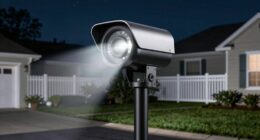
Smart bird feeders became a gateway drug for backyard science because they make observing bird behaviors and ecological patterns easy and engaging. By placing feeders thoughtfully and trying different food types, you can see how various species respond, fostering curiosity and understanding. These feeders encourage you to experiment, monitor environmental effects, and support natural behaviors. Keep exploring, and you’ll discover even more ways your backyard can become a vibrant outdoor classroom.

Prime made for students and young adults
- Fast, free delivery for dorm and study essentials
- Prime Video and Amazon Music included
- Member-only deals
Key Takeaways
- Smart bird feeders enable detailed monitoring, encouraging scientific observation and data collection for backyard ecology studies.
- They facilitate experimentation with feeder types and food varieties, fostering hypothesis testing and pattern recognition.
- Real-time data and app connectivity promote curiosity and deeper understanding of bird behaviors and ecological relationships.
- Their customizable features support educational activities, inspiring outdoor learning and environmental awareness.
- Smart feeders help users observe environmental impacts on bird activity, linking technology with ecological research.

Setting up bird feeders in your backyard isn’t just about attracting feathered friends; it’s also a fantastic way to explore science firsthand. When you decide where to place your feeder, you’re engaging with an opportunity to observe bird behavior, understand their habits, and learn about different species. Feeder placement is vital—not too close to windows where birds might collide, but within sight so you can watch without disturbing them. You might find that placing feeders near trees or shrubs encourages birds to feel safe, leading to more frequent visits. Each spot offers different insights; a low perch might attract ground-feeding birds, while hanging feeders at eye level draw in a variety of species.
Placing feeders near trees or shrubs helps birds feel safe and encourages frequent visits.
As you experiment with feeder placement, you also get to explore bird food varieties. Different foods attract different kinds of birds, giving you a real-world lesson in ecology and adaptation. Offering sunflower seeds might bring in finches and chickadees, while suet cakes can appeal to woodpeckers and nuthatches. Seed blends, nectar, or mealworms serve as specialized diets that cater to specific species, helping you understand their dietary needs. Watching which foods draw certain birds and how they respond helps you grasp concepts like food preferences, seasonal changes, and competition among species. It’s a hands-on way to see natural selection and resource management in action.
Your curiosity leads you to experiment with different combinations, observing how birds react to various feeder types and food varieties. Over time, you’ll notice patterns—perhaps certain species prefer hanging mesh feeders over platform feeders, or they favor specific seed mixes. These observations deepen your understanding of bird ecology and help you fine-tune your backyard setup. The more you learn, the more you realize that these choices influence which birds visit and how often. This ongoing process mirrors scientific inquiry: hypothesizing, testing, observing, and adjusting. Additionally, monitoring bird activity can help you understand the impact of environmental factors such as weather and habitat changes on bird populations. Recognizing the importance of proper feeder placement can also prevent issues like bird dependency on specific food sources, promoting healthier natural behaviors. Incorporating native plants into your landscape can further support local bird species by providing natural shelter and additional food sources.
Smart bird feeders are more than simple decorative items; they’re gateways into the natural world. They inspire curiosity about animal behavior, ecology, and environmental changes. By paying attention to feeder placement and bird food varieties, you become a backyard scientist, constantly learning from the birds that visit. This simple activity turns your outdoor space into a living classroom, where every visit offers a lesson. Additionally, understanding bird behavior can help you create a more welcoming environment for local wildlife and foster a deeper appreciation for nature’s interconnectedness. Recognizing how environmental factors influence bird populations can further enrich your understanding of ecological dynamics. Over time, your backyard transforms from a passive outdoor area into an engaging, educational environment—showing you that science is all around, even in your own backyard.
smart bird feeder with app connectivity
As an affiliate, we earn on qualifying purchases.
As an affiliate, we earn on qualifying purchases.
Frequently Asked Questions
How Do Smart Bird Feeders Connect to Home Wi-Fi Networks?
You connect a smart bird feeder to your home Wi-Fi by following the manufacturer’s app instructions, which typically involve placing the feeder near your router and syncing via Bluetooth or Wi-Fi setup. Once connected, you can monitor bird activity and adjust settings remotely. Regular bird feeder maintenance guarantees birds meet their energy requirements, attracting a variety of species and making your backyard a lively, educational space for observing bird behavior.
What Types of Sensors Are Used in Advanced Bird Feeders?
Advanced bird feeders use sensors like cameras with AI for bird species recognition and weight sensors to monitor feeding activity. You should regularly calibrate these sensors to guarantee accurate identification and data collection. Calibration involves adjusting sensors so they correctly detect and distinguish different bird species, helping you track visitor patterns precisely. These sensors make your feeder smarter, turning backyard birdwatching into an engaging science project.
Can Smart Bird Feeders Identify Individual Bird Species Automatically?
Yes, smart bird feeders can identify individual bird species automatically. They use advanced sensors and machine learning algorithms for species recognition, enabling accurate bird identification. When a bird visits, the system captures images or sounds, analyzes them, and matches them to known species data. This technology makes bird watching more engaging and educational, allowing you to learn about different species effortlessly and encouraging a deeper connection with backyard wildlife.
How Is Data From Bird Feeders Shared With Citizen Science Projects?
Did you know that data from smart bird feeders helps over 10,000 citizen scientists track bird migration and behavior? When you share your feeder data, it’s automatically uploaded to cloud platforms connected to research projects. These platforms compile and analyze your observations, contributing valuable insights into migration patterns and bird behavior. Your backyard becomes an essential part of scientific research, helping scientists understand and protect bird populations worldwide.
Are Smart Bird Feeders Safe for Outdoor Use in All Weather Conditions?
Smart bird feeders are generally safe for outdoor use, but their weather resilience varies. To guarantee bird safety, look for models with weatherproof seals and durable materials that withstand rain, snow, and wind. Regularly check for damage or malfunctions, especially after severe weather. Choosing a high-quality, weather-resistant feeder helps protect the device and the birds, ensuring your backyard science activities continue smoothly regardless of outdoor conditions.
As an affiliate, we earn on qualifying purchases.
Conclusion
So, could smart bird feeders really be the gateway to backyard science? It’s tempting to think they’re just for birdwatchers, but they actually open a door to curiosity and discovery. As you monitor those tiny wings and intricate behaviors, you might find yourself questioning what you thought you knew. Maybe, just maybe, these feeders aren’t just about birds—they’re about sparking your inner scientist. Are you ready to see what secrets your backyard holds?
As an affiliate, we earn on qualifying purchases.
wildlife observation bird feeder
As an affiliate, we earn on qualifying purchases.
As an affiliate, we earn on qualifying purchases.
Halloween Picks
halloween
As an affiliate, we earn on qualifying purchases.