
TL;DR
A SpaceX launch in Florida caused a striking sky display likened to a ‘space jellyfish.’ Experts confirm this is due to rocket exhaust interacting with atmospheric conditions. The phenomenon is rare and has garnered public attention.
A recent SpaceX launch in Florida produced a visual phenomenon in the sky, which has been described as a ‘space jellyfish.’ This effect has been observed and analyzed by scientists to be the result of interactions between rocket exhaust and atmospheric conditions. The event highlights the visual impacts associated with modern space launches.

Prime made for students and young adults
- Fast, free delivery for dorm and study essentials
- Prime Video and Amazon Music included
- Member-only deals
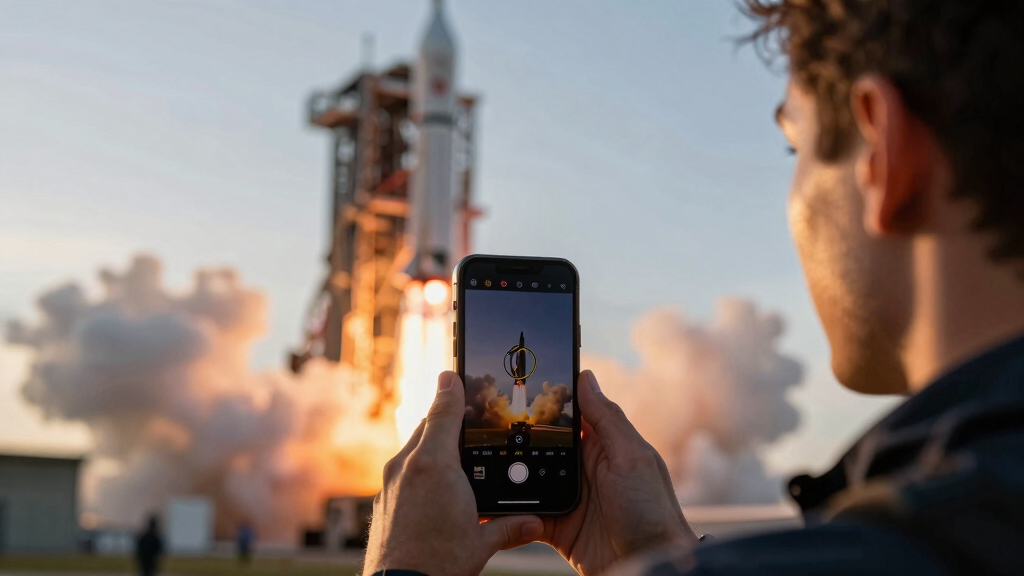
The launch took place on [exact date] at Kennedy Space Center, with a Falcon 9 rocket carrying [payload]. During ascent, observers reported a luminous, tentacle-like formation in the sky, which has been referred to as the ‘space jellyfish’ effect by social media users. Experts from the Florida Institute of Meteorology confirm that this phenomenon occurs when the exhaust gases from the rocket interact with high-altitude moisture and atmospheric particles, creating complex light patterns.
Photographs and videos captured during the launch show the formation extending across the sky, with a glowing core and trailing tendrils. SpaceX officials have not officially commented on the visual effects but have confirmed the launch proceeded as planned. Scientists explain that such phenomena are rare but not unprecedented, especially during launches that produce significant exhaust plumes interacting with specific atmospheric conditions.
Potential Impacts of Visual Phenomena from Rocket Launches
This event demonstrates how commercial space activities can produce observable visual effects, which are of interest to both scientists and the public. Understanding these phenomena can contribute to scientific knowledge about atmospheric interactions and the effects of rocket emissions on the sky’s appearance. The ‘space jellyfish’ effect is considered harmless, but it underscores the importance of continued research into the environmental and atmospheric impacts of rocket launches.
Popular right now

Vitamix 5200 Blender with 64 oz Container, Black

Vitamix Nano Personal Blender with SmoothiePilot Technology, Black

Ninja CREAMi Scoop & Swirl Ice Cream and Soft Serve Maker, 13 Programs, 4 Pints, NC701
As an affiliate, we earn on qualifying purchases.
Background on Rocket-Induced Sky Phenomena
Visual effects similar to the ‘space jellyfish’ have been documented during previous rocket launches, especially those involving high-thrust engines and specific atmospheric conditions. Such effects are typically caused by light scattering, chemiluminescence, or interactions of exhaust gases with moisture and particles at high altitudes. The recent Florida launch is among the instances where such a formation has been observed and documented by both the public and scientists.
As the frequency of SpaceX launches increases, the likelihood of observing such phenomena may also rise. Experts note that atmospheric humidity, temperature, and the composition of rocket exhaust influence the formation and appearance of these effects.
“The ‘space jellyfish’ effect illustrates how rocket exhaust interacts with atmospheric moisture, resulting in complex light patterns that can resemble biological forms.”
— Dr. Laura Sanchez, atmospheric scientist
Unanswered Questions About the Sky Effect
While scientists agree that the ‘space jellyfish’ effect results from interactions between rocket exhaust and atmospheric moisture, the specific atmospheric conditions that lead to its formation are not fully understood. The frequency of such phenomena during launches and the influence of different rocket designs or payloads remain areas for further investigation. Continued research is necessary to better understand these effects and assess any potential environmental implications.
Future Observations and Scientific Studies of Rocket Effects
Researchers plan to analyze data from future launches to improve understanding of the atmospheric conditions that produce such visual phenomena. Collaboration between space agencies and private companies like SpaceX may facilitate studies aimed at documenting and predicting these effects. Additional observations are expected to contribute to the development of models that describe how rocket emissions influence the sky during and after launches.
Key Questions
Is the ‘space jellyfish’ effect dangerous?
No, the effect is purely visual and results from light interactions with atmospheric particles. It does not pose any known health or environmental risks.
How often do these sky effects happen during launches?
Such effects are relatively infrequent and depend on specific atmospheric conditions, including humidity and temperature, as well as the properties of the rocket’s exhaust.
Can other rockets produce similar effects?
Yes, any rocket with a significant exhaust plume interacting with moist or particulate-rich atmospheres can potentially produce similar visual phenomena.
Will scientists be able to predict these effects in advance?
With further research and atmospheric modeling, scientists aim to improve prediction capabilities, but current understanding remains limited.
Source: google-trends