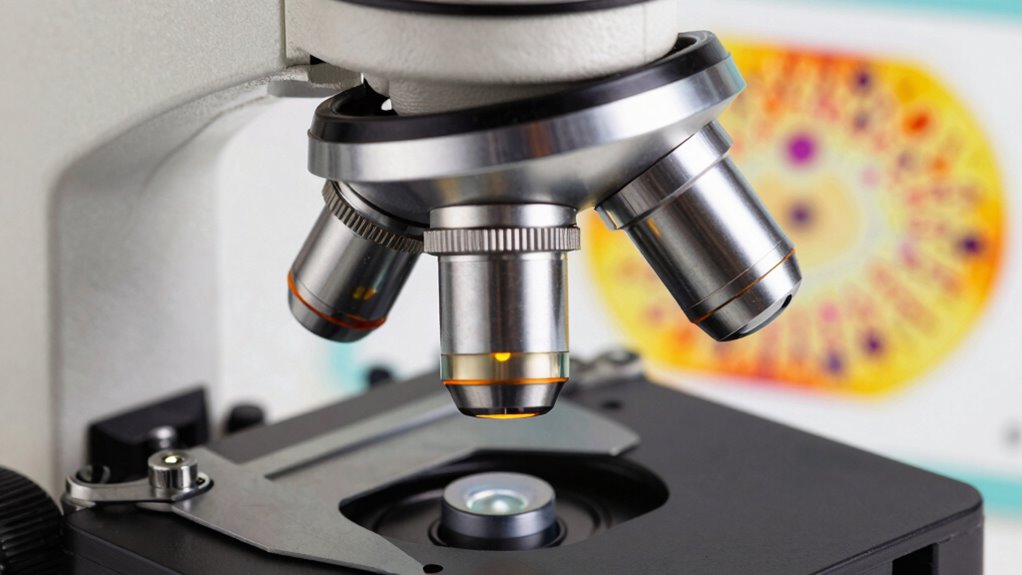

If you’re choosing between a digital microscope and a compound microscope, consider what you need most. Compound microscopes offer high optical magnification for detailed views of tiny structures, perfect for scientific or research purposes. Digital microscopes focus on easy image capturing and sharing, making them ideal for quick inspections and documentation. Both have strengths—pick based on your priority for detail or convenience. Want to see the real differences in action? Keep exploring to find out more.

Prime made for students and young adults
- Fast, free delivery for dorm and study essentials
- Prime Video and Amazon Music included
- Member-only deals
Key Takeaways
- Compound microscopes provide higher optical magnification and detailed views of tiny structures like cells.
- Digital microscopes focus on image capture, sharing, and ease of use, suitable for quick observations.
- Compound microscopes require manual adjustments and technical skill for precise focusing.
- Digital microscopes feature built-in cameras and screens for simple documentation and reporting.
- Choose based on whether detailed inspection or easy image sharing aligns with your specific needs.

When choosing a microscope, understanding the differences between digital and compound models is essential for making the right decision. Both types serve unique purposes, and knowing how they compare can help you select the best tool for your needs. A key aspect to consider is optical magnification, which determines how much detail you can see through the lenses. Compound microscopes typically offer higher optical magnification, often ranging from 40x to 1000x or more. This allows you to observe tiny structures, such as cells or bacteria, with great clarity. Digital microscopes, on the other hand, usually have lower optical magnification but compensate with advanced image capture capabilities. They often combine a camera and a display screen, making it easier to view and analyze specimens without peering directly through eyepieces.
When looking at optical magnification, it’s important to understand that a higher magnification doesn’t always mean better detail. The quality of the lenses and the clarity of the optics matter just as much. Compound microscopes excel here, providing crisp, detailed images at high magnifications, which is crucial for scientific research, education, or detailed inspections. Digital microscopes, however, tend to prioritize ease of use and versatility, making them ideal for quick observations, documentation, or sharing images with others. Their image capture feature allows you to save still images or videos directly to your computer or device, which is a huge advantage if you need to document your findings or create reports. Additionally, understanding the importance of color accuracy can significantly enhance the quality of the images you capture and analyze.
Another critical difference lies in how you interact with the microscope. With a compound microscope, you’re often directly manipulating the focus and adjusting the lenses manually, giving you precise control over what you see. Digital microscopes usually have user-friendly interfaces, with buttons and software controls that simplify focusing and image adjustments. If you prefer a straightforward setup that doesn’t require much technical know-how, a digital model might be more appealing. Conversely, if you need high-resolution detail and fine control for scientific work, a compound microscope might be the better choice. Furthermore, optical quality plays a vital role in achieving clear and accurate images, especially at higher magnifications.
Ultimately, your decision hinges on what you prioritize: if you want maximum optical magnification and detailed views, go for a compound microscope. If capturing images easily and sharing your observations matter most, a digital microscope will serve you well. Both types have their strengths, so understanding how each aligns with your goals will help you make a confident choice.
Popular right now

Hisense 85 U6 Pro Series Mini-LED ULED 4K UHD HDR Gaming AI Smart Fire TV (85U6SF Pro)

iRobot Roomba 105 Vac Robot Vacuum

Shark Navigator Robot Vacuum with Self-Empty Base, Dark Grey (RV2120AE)
As an affiliate, we earn on qualifying purchases.
Frequently Asked Questions
Can Digital Microscopes Be Used for Professional Laboratory Research?
Yes, digital microscopes can be used for professional laboratory research. They offer remote connectivity, allowing you to share live images with colleagues or access data remotely, which boosts collaboration. Their portable design makes them convenient for on-site inspections or fieldwork. However, guarantee the digital microscope’s resolution and magnification meet your research needs, as some models may lack the precision required for detailed scientific analysis.
Which Microscope Type Offers Better Image Quality for Detailed Observations?
You’ll find that a compound microscope offers superior image quality for detailed observations, providing incredible magnification clarity and sharp image resolution that almost makes the tiniest details leap out at you. Imagine peering into a world so crisp and vivid, it’s as if you could count individual molecules. Digital microscopes, while convenient, often lack that level of clarity and resolution, making them less ideal for the most precise, detailed scientific work.
Are Digital Microscopes Suitable for Educational Purposes?
Yes, digital microscopes are great for educational purposes. They enable virtual exploration, allowing students to view specimens on screens, which boosts student engagement. Digital microscopes make it easy to share observations with the whole class, fostering collaborative learning. Plus, their user-friendly interface helps students focus on understanding samples rather than operating complex equipment. Overall, digital microscopes enhance the learning experience by making microscopy more accessible and interactive for students.
How Much Do Digital Microscopes Typically Cost Compared to Compound Microscopes?
Stepping into the world of microscopes might feel like a leap from the Renaissance to the digital age! Digital microscopes typically cost between $100 and $500, making them more affordable for most budgets. Compound microscopes, especially high-end models, can range from $200 to over $1,000. When considering price comparison and your budget considerations, digital microscopes offer a modern, budget-friendly option, while compound microscopes might suit those seeking higher magnification and traditional features.
Do Digital Microscopes Require Special Software for Image Analysis?
Digital microscopes often require specialized software for image analysis, but many models come with user-friendly programs that guarantee software compatibility. You’ll find that high image resolution enhances your ability to analyze details precisely. Depending on the brand, you might need to download specific software or use cloud-based tools. Always check the product specifications to confirm the software options and make sure they meet your analysis needs.
Conclusion
So, whether you’re marveling at tiny details through a digital display or peering into the microscopic world with a traditional compound scope, the choice boils down to your needs. Ironically, in trying to simplify science, we often end up complicating it—digital microscopes make it easy to share, but sometimes you just want that classic, hands-on experience. Either way, you’re zooming into a world that’s just waiting to be discovered—no magnifying glass required.