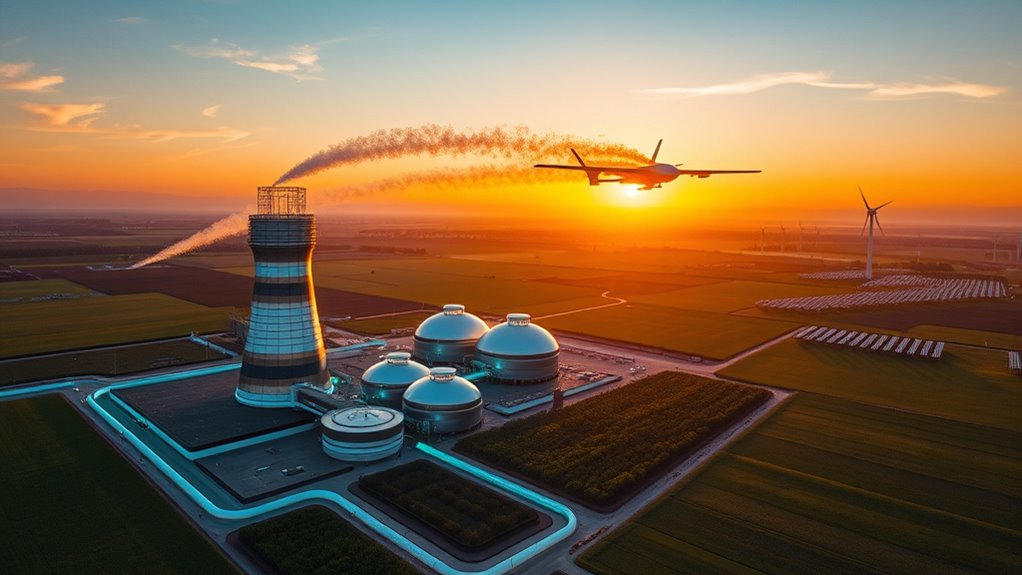

By 2025, you’ll see major breakthroughs in climate technology, including large-scale carbon capture and innovative geoengineering methods. These solutions actively remove CO₂ from the atmosphere and help manage global temperatures, integrating seamlessly into infrastructure. Renewable energy advances make these processes more efficient and affordable. If you explore further, you’ll discover how these bold approaches are shaping a sustainable, climate-resilient future for all.
Key Takeaways
- Large-scale direct air capture plants powered by renewable energy significantly increase atmospheric CO₂ removal efficiency.
- Integration of carbon removal technologies into infrastructure makes climate mitigation a standard societal practice.
- Advances in renewable energy and monitoring systems enable real-time tracking and larger-scale CO₂ extraction.
- Geoengineering methods like solar radiation management provide temporary cooling while long-term solutions develop.
- By 2025, climate solutions such as carbon capture and geoengineering are transitioning from concept to operational strategies.
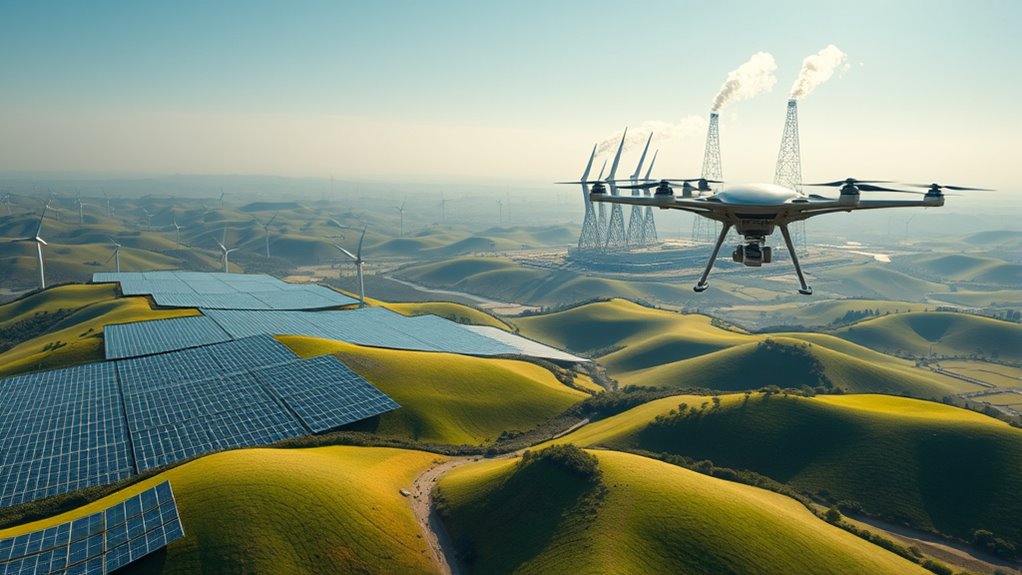
What if the breakthroughs in climate technology by 2025 could fundamentally reshape how we tackle global warming? Imagine a future where carbon removal isn’t just a niche effort but a central strategy in our fight against climate change. Advances in renewable innovation would make this possible, enabling us to extract excess CO₂ from the atmosphere more efficiently and at a much larger scale. You’d see cutting-edge techniques like direct air capture plants operating across regions, pulling carbon out of the sky and storing it safely underground or repurposing it for industrial use. These innovations could dramatically reduce the planet’s greenhouse gas concentration, helping to stabilize global temperatures. Additionally, the development of advanced monitoring systems will be crucial to track the effectiveness and safety of these technologies in real-time.
In this future, carbon removal becomes integrated into everyday infrastructure. Large-scale facilities might be paired with renewable energy sources—solar, wind, or next-generation nuclear—to power the entire process sustainably. The key is that renewable innovation drives down costs and increases efficiency, making carbon removal not just feasible but economically viable. You’d witness governments and private firms investing heavily in these technologies, turning them into essential features of a climate-resilient economy. As a result, the atmosphere’s carbon levels could be actively managed, not just passively affected by emissions reductions. This shift could buy us precious time, allowing for more aggressive decarbonization efforts and mitigating the worst impacts of climate change.
Beyond carbon removal, breakthroughs in geoengineering might also play a role in reshaping our climate strategies. Techniques like solar radiation management could help temporarily cool the planet while we ramp up emissions cuts. Although controversial, these bold solutions could provide critical buffer periods, buying more time for renewable innovation and sustainable development. You’d witness scientific advancements in aerosol dispersal or reflective surfaces that could be deployed with precision to avoid unintended consequences. Such measures, combined with robust carbon removal efforts, offer a multi-layered approach to climate intervention—one that balances risk with urgency.
The big picture is that by 2025, these bold solutions are not merely theoretical—they’re becoming operational tools. Your understanding of climate tech will evolve as these technologies mature, offering new hope for reversing some of the damage already done. They’ll reshape policies, investments, and societal priorities toward a more resilient and sustainable future. With each breakthrough, you’ll see a world where climate solutions are more integrated, proactive, and effective, ultimately transforming how we address the crisis and securing a healthier planet for generations to come.

Extract-All Portable Air Cleaner Fume Extractor and Source Capture for Airborne Contaminants Removes Dust Smoke Fume with HEPA Filter
FUME EXTRACTOR SYSTEM: If you're an artisan, DIYer, or an individual whose work environment is packed with chemical…
As an affiliate, we earn on qualifying purchases.
As an affiliate, we earn on qualifying purchases.
Frequently Asked Questions
What Are the Potential Long-Term Ecological Impacts of Geoengineering?
You might not realize it, but geoengineering could threaten ecological resilience by disrupting natural systems. It could also pose biodiversity risks, as altering climate patterns may harm vulnerable species and habitats. Long-term impacts are uncertain, and unintended consequences might reduce ecosystem stability. You should consider that while geoengineering offers potential solutions, it could fundamentally change ecological balances, making it crucial to thoroughly assess risks before widespread deployment.
How Cost-Effective Are Current Carbon Capture Technologies at Scale?
You might think carbon capture is highly cost-effective, but the reality is more complex. Current technologies often struggle with cost analysis and economic viability at scale, making them expensive compared to traditional methods. While some projects show promise, large-scale deployment still faces significant financial hurdles. As a result, the true cost-effectiveness of carbon capture varies, and ongoing innovations are necessary to improve its economic viability for widespread use.
What Ethical Concerns Surround Climate Geoengineering Methods?
You should consider that climate geoengineering raises significant ethical concerns, including moral dilemmas about manipulating Earth’s systems and potentially unforeseen consequences. You might worry about technological risks, such as unintended environmental impacts or unequal effects across regions. These methods challenge natural processes and raise questions about who gets to decide such interventions. It’s essential to weigh these ethical issues carefully before deploying geoengineering solutions, acknowledging their profound moral and technological implications.
Can Climate Tech Solutions Be Implemented Equitably Worldwide?
Imagine a future where climate tech solutions are accessible to all, fostering hope and fairness. You can help guarantee equitable implementation by advocating for investments in global infrastructure and prioritizing technological accessibility. When these solutions are shared worldwide, they become powerful tools for addressing climate change collectively. Your support can bridge gaps, making advanced climate technologies a reality for vulnerable communities and creating a more balanced, sustainable future for everyone.
How Do Regulatory Policies Influence the Development of Climate Tech?
Regulatory policies greatly influence climate tech development by shaping the environment for innovation. When policies include strong incentives, like tax credits or grants, you’re more likely to see new solutions emerge. Conversely, policy gaps or excessive regulation can create barriers that delay progress. You need balanced policies that encourage innovation while ensuring safety and equity. Clear, consistent policies motivate you to invest in and adopt climate tech solutions faster.

Sntieecr Electric Circuit Motor Kit with Solar Panel, Solar Motor Kit for Kids Science Experiment Educational Montessori Learning Kits, DIY STEM Science Project for Boys and Girls
【Value Package】Comes with one instruction, 1 x AA size battery holder (2 x 1.5V), 1 x solar panel,…
As an affiliate, we earn on qualifying purchases.
As an affiliate, we earn on qualifying purchases.
Conclusion
As you envision the future of climate tech in 2025, bold solutions like carbon capture and geoengineering stand on the brink of transformation. Will these innovations be enough to halt rising temperatures or will unforeseen challenges emerge? Picture a world where these technologies either become your greatest allies or unforeseen obstacles. The path ahead is uncertain, but one thing’s clear—what you choose to support today could shape the climate of tomorrow in ways you can’t yet imagine.

Design of Smart Power Grid Renewable Energy Systems (Wiley – IEEE)
As an affiliate, we earn on qualifying purchases.
As an affiliate, we earn on qualifying purchases.
large-scale carbon capture plant
As an affiliate, we earn on qualifying purchases.
As an affiliate, we earn on qualifying purchases.